When the Byram River Comes Indoors, You Need More Than a Mop
Port Chester floods — and when it does, it moves fast. We provide 24/7 emergency water damage repair for Port Chester homeowners who can’t afford to wait.
I needed a professional consultation explanation of procedure for safe removal of Asbestos in my apartment complex. Without having an account yet, I was very impressed with the caring, knowledgeable and generous advice offered by Jessica, and will look forward to doing business in the future. Thank you so much! I feel much more informed about a sometimes scary endeavor. Peace. Nancy Silva Mineola, NY.
Mia Munoz
Used this company to clean up some water flood in my house. They were fast and easy to work with.very professional, Would recommend to anyone!
Nini Valle
Great company, had a flood and they responded quickly and efficiently. Billed my insurance company directly. I highly recommend this company!
joe colapietro, jr
I had pipe freeze in my basement right before a snow storm and they made to within an hour to help start the clean up process. They we by our side throughout the entire process and even helped with the insurance company. They did such a great job with the cleanup, repair, remidiation, I contracted them to perform the repairs and finishes in the basement. They came with enough manpower and material to get the job done. Leo and Jessica were nothing but a pleasure to deal with!!
Cristian Arredondo c
I had some water damage in my home and Green Island was able to take care of my issue quickly and effectively. I am very pleased with the work they did. They responded quickly and were very professional.
Michael M
Outstanding service! From the office to the field crew everyone was friendly, helpful and responsive. I highly recommend Green Island Group.
Water Damage Restoration Services Near Port Chester
What Your Home Looks Like When the Work Is Done Right
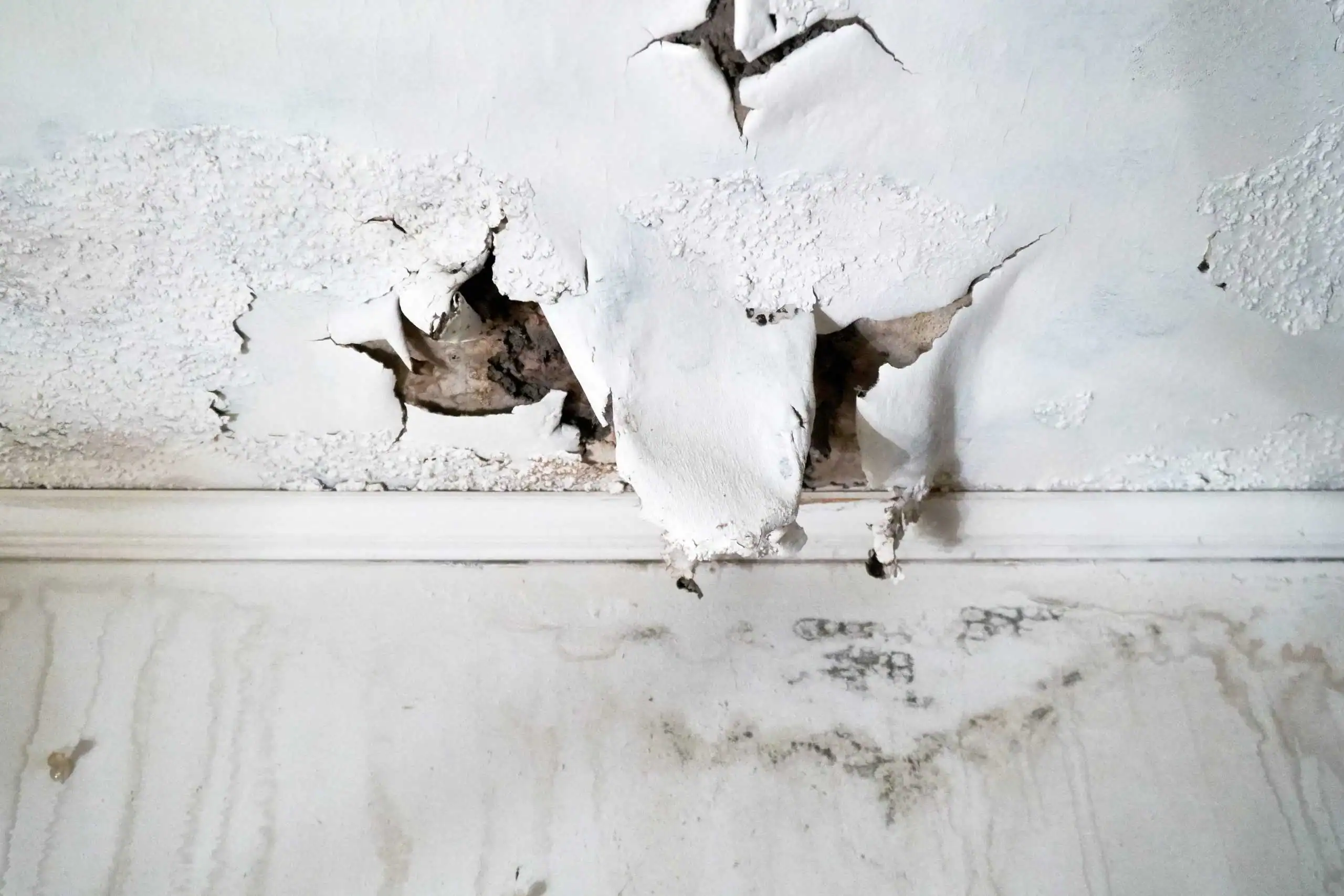
When water gets into your Port Chester home — whether it came from the Byram River overflowing onto Glen Avenue, a backed-up storm drain in the Glendale neighborhood, or a burst pipe in a pre-war building on the north end of the village — the visible mess is only part of the problem. Moisture works its way into wall cavities, under flooring, and into the framing of your home. If it stays there, mold follows. Mold can start growing within 24 to 48 hours of a water event, and in Port Chester’s older housing stock, it doesn’t take long to become a serious health issue.
What proper water damage restoration actually delivers is the removal of moisture you can’t see — not just the water you can. That means industrial drying equipment running until moisture readings come back clean, not just until the floor looks dry. It means checking behind walls, under subfloors, and inside ceiling cavities with moisture meters and thermal imaging before anyone calls the job done.
For Port Chester homeowners specifically, there’s another layer most restoration companies don’t mention: a significant portion of homes here were built between 1940 and 1969, with many dating back even further. That means there’s a real chance that the materials being removed during a water damage job — pipe insulation, floor tiles, drywall joint compound — contain asbestos. We handle both water damage restoration and asbestos abatement, so you’re not stuck coordinating two separate contractors while the clock ticks on your mold window.
Water Damage Restoration Company Serving Port Chester, NY
12 Years In, and We Still Answer the Phone at Midnight
We’ve been handling environmental restoration across the New York metro area for over 12 years. That includes everything from flooded basements in Westchester County to full mold remediation jobs in converted industrial buildings — the kind of work that requires real experience, not just a van and a wet-vac.
Port Chester is a community we know well. The Byram River flooding that devastated parts of the village during Hurricane Ida in 2021 wasn’t a surprise to anyone who understands how this area is built — dense, older construction, close to the water, with a stormwater system that gets overwhelmed fast. We’ve worked in homes like yours, and we understand what that kind of flood leaves behind.
As a NYS and NYC M/WBE Certified Contractor, we’re held to a standard of accountability that most local restoration companies aren’t. We’re fully insured — liability and workers’ compensation both — and we work directly with your insurance company so you’re not stuck navigating that process alone. That matters everywhere, but it matters especially in Port Chester, where over 43% of residents were born outside the United States and may be dealing with a major insurance claim for the first time.
Emergency Water Removal Process in Port Chester, NY
No Guesswork — Here's Exactly How the Restoration Unfolds
When you call, someone actually picks up — day or night. The first thing that happens is an emergency assessment, where we identify the source of the water intrusion, determine what category of water you’re dealing with, and figure out how far the moisture has spread. In Port Chester, flooding from the Byram River or a storm drain backup is typically gray or black water — contaminated water that carries bacteria and sewage. That changes the protocols. It’s not a clean-water job, and treating it like one leaves health hazards behind.
Once the assessment is done, extraction comes first. We remove standing water using commercial-grade equipment, then set up industrial air movers and dehumidifiers to begin the drying process. This phase takes time — usually several days — and we monitor moisture levels throughout, not just at the start. Walls, subfloors, and structural framing all get checked before drying is called complete.
From there, damaged materials get removed and documented. In Port Chester’s older homes, this step sometimes reveals asbestos-containing materials that need to be abated before reconstruction can begin. Because we handle abatement in-house, that doesn’t mean starting over with a new contractor — it means the job keeps moving. Everything is documented for your insurance claim, and we handle the billing directly with your insurer. When the work is done, you’ll have a dry, safe home and a closed claim — not a stack of paperwork to sort through on your own.
Water Damage Restoration Services in Port Chester, NY
Full-Scope Restoration Built for How Port Chester Actually Floods
Water damage in Port Chester isn’t one-size-fits-all. A burst pipe in a Rye Brook-adjacent colonial is a different job than a black water flood in a converted warehouse apartment near the harbor, and both are different from a slow basement leak in a 1940s home on the northwest side of the village. Our restoration services cover the full range: emergency water extraction, structural drying, mold remediation, asbestos abatement, and reconstruction — all under one roof.
The mold remediation side is worth understanding clearly. New York State requires a licensed professional to handle mold assessment and a separately licensed party to handle remediation — it’s a two-step legal process, not just a best practice. We’re fully licensed to perform mold remediation in New York, which means the work we do isn’t just thorough, it’s legally compliant. That matters when you’re filing an insurance claim and need documentation that holds up.
For Port Chester homeowners dealing with flood damage, we also offer financing up to $200,000 at 0% APR. No local competitor offers this. If your insurance claim is delayed, disputed, or only partially covers the damage, you don’t have to put the job on hold or pull from savings. The restoration starts when you need it to start. And with a 100% Satisfaction Guarantee backing every job, you’re not signing off on anything until the work is actually done to your standard — not just ours.
Does homeowners insurance cover Byram River flooding in Port Chester, NY?
This is one of the most common questions we hear after a major flood event in Port Chester, and the honest answer is: it depends on your policy and the source of the water. Standard homeowners insurance typically covers sudden and accidental water damage — like a burst pipe or an appliance failure — but it usually does not cover flooding from an external water source like the Byram River overflowing its banks. That type of flooding is generally only covered under a separate flood insurance policy through the National Flood Insurance Program (NFIP) or a private flood insurer.
If your basement flooded because a storm drain backed up into your home, that may fall under a sewer or water backup rider, which is a separate add-on to your homeowners policy. The distinction matters a lot when it comes to what gets covered and how much. When we respond to your Port Chester property, we document everything — the source of the intrusion, the category of water, the extent of the damage — in a format that supports your claim, regardless of which policy applies. We also bill your insurance company directly, so you’re not managing that back-and-forth on your own.
How quickly does mold start growing after a flood in my home?
Mold can begin growing within 24 to 48 hours of a water intrusion event. In Port Chester’s older housing stock, where many homes were built between 1940 and 1969, the conditions are often ideal: older wood framing, less vapor-resistant materials, and basements that have seen moisture before.
The part that catches most homeowners off guard is that mold doesn’t start in the obvious places. It starts inside wall cavities, under subfloors, and behind baseboards — places you can’t see until the problem is already significant. By the time you smell it or see discoloration on a wall, you’re usually looking at a remediation job, not just a cleanup. That’s why the speed of the initial response matters so much. The faster moisture is extracted and the drying process begins, the smaller the window for mold to take hold. Waiting a day or two to “see if it dries out on its own” is one of the most common and costly mistakes homeowners make after a flood.
What's the difference between water damage categories, and why does it matter?
Water damage is classified into three categories based on contamination level, and the category determines everything about how the job gets done. Category 1 is clean water — a supply line break, a leaking faucet, an overflowing bathtub. It’s the least dangerous and the most straightforward to remediate. Category 2 is gray water, which comes from sources like washing machine overflows or dishwasher leaks. It contains contaminants but isn’t immediately hazardous. Category 3 is black water — sewage-contaminated water, river overflow, or storm drain backups — and it’s the most dangerous category by a significant margin.
In Port Chester, flooding events tied to the Byram River or the village’s stormwater system almost always produce Category 3 black water. That water contains bacteria, pathogens, and sewage byproducts that don’t just dry up and disappear. Materials that come into contact with black water — drywall, insulation, carpet, wood flooring — typically need to be removed entirely, not dried in place. Attempting to dry black water-saturated materials without proper removal creates a serious long-term health hazard. This is one of the main reasons professional restoration isn’t just a convenience after a Byram River flood event — it’s a health and safety necessity.
Do I need a permit for water damage repairs in Port Chester, NY?
For the cleanup and drying phase of water damage restoration — water extraction, structural drying, mold remediation — no permit is typically required from the Village of Port Chester Building Department. That work can begin immediately, which is exactly what you want given the 24 to 48 hour mold window.
Where permits come into play is during the reconstruction phase. If the restoration work involves replacing drywall, repairing or replacing structural framing, or making changes to plumbing or electrical systems, those repairs will require building permits from the Village of Port Chester. We document all damage thoroughly before and during the restoration process, which makes the permit application straightforward when reconstruction work is needed. If your home is one of Port Chester’s older properties — particularly anything built before 1980 — there’s also the possibility that material removal during the restoration will uncover asbestos-containing products. That work requires a separate licensed abatement process, which we handle in-house so the overall project timeline doesn’t get derailed by having to bring in a third party.
My basement has flooded before — does that mean it will flood again?
In Port Chester, the honest answer is: probably, yes — unless something structural changes. The village sits at the mouth of the Byram River, which has a documented history of flooding that goes back decades, including major events in 1955, 2007, 2012, and 2021. The Village of Port Chester is actively working on the Glendale Stormwater Initiative, a multi-phase infrastructure project designed to redirect stormwater away from backyards along N. Regent Street and Glen Avenue — one of the most flood-affected corridors in the village. But infrastructure projects take time, and they don’t eliminate risk entirely.
If your basement has flooded before, the most important thing you can do after a restoration is address the conditions that allowed water in — whether that’s a failing sump pump, a compromised foundation wall, inadequate grading around the house, or proximity to the river. A proper restoration job documents all of that. It also gives you a clear record of prior damage, which matters significantly when you’re navigating insurance coverage for future events. Repeated flooding without documented professional restoration can complicate claims and reduce coverage over time.
How does Green Island Group's financing work for water damage restoration in Port Chester?
We offer financing up to $200,000 at 0% APR for restoration work. The way it works is straightforward: if your insurance claim doesn’t cover the full cost of restoration, or if there’s a gap between when the work needs to start and when your insurer processes the claim, financing lets the job begin immediately without you having to come out of pocket upfront.
In Port Chester, this matters more than it might in other parts of Westchester. The village has a median household income around $92,000, but it also has a poverty rate above the national average, and a significant portion of residents are first-generation homeowners who may not have a large emergency fund sitting available. A major flood restoration — especially one involving mold remediation, asbestos abatement, and reconstruction in an older home — can run well into five figures. Having access to interest-free financing means you’re not forced to delay the work, accept a partial job, or take on high-interest debt to protect your home. No other water damage restoration company serving Port Chester currently offers this. It’s not a promotional add-on — it’s a practical solution for the financial reality of what a serious restoration job actually costs.