When Blind Brook Rises, Your Rye Home Needs More Than a Fan
Rye’s flood history is real — and if water has gotten into your home, the clock is already running. We respond 24/7 with the equipment, licensing, and experience to stop the damage before it becomes something much worse. Whether it’s a basement along Park Avenue or a first floor in Indian Village, we know the specific risks that Rye homeowners face.
I needed a professional consultation explanation of procedure for safe removal of Asbestos in my apartment complex. Without having an account yet, I was very impressed with the caring, knowledgeable and generous advice offered by Jessica, and will look forward to doing business in the future. Thank you so much! I feel much more informed about a sometimes scary endeavor. Peace. Nancy Silva Mineola, NY.
Mia Munoz
Used this company to clean up some water flood in my house. They were fast and easy to work with.very professional, Would recommend to anyone!
Nini Valle
Great company, had a flood and they responded quickly and efficiently. Billed my insurance company directly. I highly recommend this company!
joe colapietro, jr
I had pipe freeze in my basement right before a snow storm and they made to within an hour to help start the clean up process. They we by our side throughout the entire process and even helped with the insurance company. They did such a great job with the cleanup, repair, remidiation, I contracted them to perform the repairs and finishes in the basement. They came with enough manpower and material to get the job done. Leo and Jessica were nothing but a pleasure to deal with!!
Cristian Arredondo c
I had some water damage in my home and Green Island was able to take care of my issue quickly and effectively. I am very pleased with the work they did. They responded quickly and were very professional.
Michael M
Outstanding service! From the office to the field crew everyone was friendly, helpful and responsive. I highly recommend Green Island Group.
What Full Restoration Actually Looks Like for a Rye Home
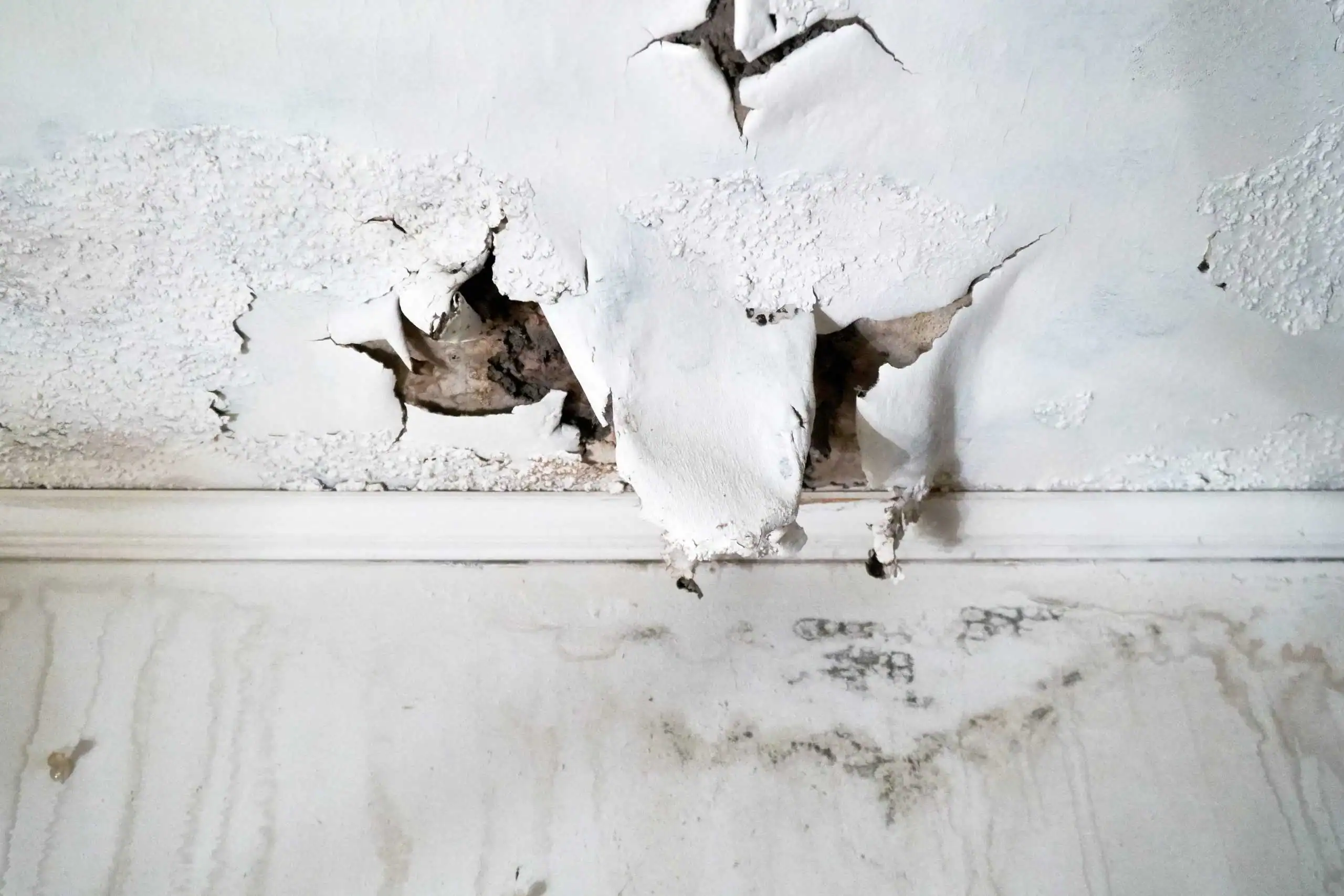
Water damage in Rye isn’t the same as water damage anywhere else. You’re dealing with a city where Ida exceeded the 100-year flood map, where Indian Village has flooded repeatedly since the 1970s, and where a significant portion of the housing stock was built before modern waterproofing standards existed. When moisture gets into a plaster wall or under original hardwood floors in a home built in the 1950s, it doesn’t dry out on its own. It migrates, it hides, and within 24 to 48 hours, it starts growing mold inside the structure — in places you can’t see until the damage is already done.
A complete restoration means your Rye home comes out the other side with verified dry readings inside the walls, not just a dry floor. It means the structural materials that absorbed moisture are either properly dried or replaced. It means antimicrobial treatment was applied where it needs to be. And for homes along the Long Island Sound shoreline — in neighborhoods like Milton Point or near the Oakland Beach area — it means we accounted for the groundwater table and coastal moisture conditions that don’t disappear just because the storm passed.
When this is done right, you get your home back. Not a surface-dry version of it — the actual thing, documented, verified, and protected.
12 Years Serving Rye and Westchester — We Still Pick Up at 2 A.M.
We’ve been doing environmental restoration work in the New York metro area for over 12 years, with deep roots in Rye and the surrounding Westchester communities. That’s not a number we throw out to sound established — it means we were here before Hurricane Ida, we were here after Ida, and we’ll be here the next time the Blind Brook watershed pushes water into homes along Park Avenue or Beaver Swamp Brook.
We hold NYS and NYC M/WBE Certified Contractor status and work directly with the NYS Office of General Services — which means we’ve been vetted to a standard that most residential contractors never have to meet. We carry full liability insurance and Workers’ Compensation, and we back every job with a 100% Satisfaction Guarantee. That last part matters in a city where the average home is worth close to $1.8 million.
We also handle asbestos abatement in-house. For a Rye homeowner with a pre-1970 home — and there are thousands of them — that means one call, one crew, and one company accountable for the entire job.
From Standing Water to Dry Walls — Here's Exactly How We Handle It
The first call starts the clock in the right direction. When you reach us, we get someone moving toward your Rye address immediately — 24 hours a day, every day of the year. The first thing we do on-site is assess the full scope: where the water came from, how far it’s traveled, and what materials it’s already compromised. In older Rye homes with plaster walls and original subfloors, that assessment goes deeper than a visual scan. We use moisture meters to find what you can’t see.
Once we know the full picture, extraction begins. Industrial pumps and water removal equipment pull out the standing water fast. Then the drying process starts — not just fans on the floor, but a calculated setup of commercial dehumidifiers and air movers positioned to pull moisture out of wall cavities, subfloor systems, and structural framing. For homes in Rye that may contain asbestos-containing materials — floor tiles, pipe insulation, plaster additives — we assess that risk before anything is disturbed and handle abatement in-house if needed.
We document everything as we go, which matters when you’re filing an insurance claim. We work directly with your insurance company, handling the billing and communication so that piece of the process doesn’t fall on you. By the time we’re done, you have verified moisture readings, completed documentation, and a home that’s actually dry — not just dry-looking.
What's Included When Your Rye Home Needs Real Restoration
Water damage restoration isn’t a single service — it’s a sequence of connected steps, and skipping any one of them is how you end up with a mold problem three weeks later. For Rye homeowners, that sequence typically covers emergency water extraction, structural drying, moisture verification, mold prevention treatment, and full documentation for insurance. If the source was a sewage backup or contaminated floodwater — which happens in lower-lying parts of Rye near the Blind Brook drainage corridor — that adds a biohazard decontamination step that requires specific licensing to perform legally in New York State.
For homes in Rye built before 1980, the restoration process also includes an asbestos risk assessment before any demolition or material removal begins. New York State takes this seriously, and so do we. Disturbing asbestos-containing materials without proper abatement isn’t just a health risk — it’s a legal exposure for the homeowner. Because we handle abatement in-house, that step doesn’t slow the project down or require you to coordinate a second contractor.
Financing is available up to $200,000 at 0% APR for qualifying projects. In a city where restoration costs on a high-value historic home can climb quickly, that option exists so a cash flow question never delays a decision that protects your property. Every job is covered by our 100% Satisfaction Guarantee, and we’re fully insured including liability and Workers’ Compensation.
Does homeowners insurance cover water damage from Blind Brook flooding in Rye?
It depends on the source of the water, and that distinction matters more in Rye than almost anywhere else in Westchester. Standard homeowners insurance typically covers sudden and accidental water damage — a burst pipe, a washing machine overflow, a roof leak. It does not cover flooding from an external water source, which is what Blind Brook flooding is. That type of damage requires a separate flood insurance policy, typically through the National Flood Insurance Program (NFIP) or a private flood carrier.
After Hurricane Ida exceeded Rye’s 100-year flood map in 2021 and produced surface flooding in parts of the city that had never flooded before, a number of homeowners discovered they had assumed they were outside the flood zone — and they were wrong. If you’re in Indian Village, near Beaver Swamp Brook, or in any low-lying area of Rye, it’s worth reviewing your current coverage before the next event, not after. When you call us, we’ll help you understand what your policy is likely to cover and handle the documentation and billing process directly with your insurer.
How quickly can mold develop after water damage in a Rye home?
Mold can begin developing within 24 to 48 hours of a water intrusion event — and in Rye’s older housing stock, that timeline is more dangerous than it sounds. Homes built between the 1940s and 1960s, which make up a significant portion of Rye’s residential inventory, were constructed with plaster walls, original wood framing, and older insulation materials that absorb and retain moisture far more readily than modern drywall. That means moisture that looks like it’s drying on the surface may still be sitting inside the wall cavity or beneath the subfloor — exactly where mold starts.
The other factor specific to Rye is the coastal environment. Properties near Milton Harbor or along the Long Island Sound shoreline deal with elevated ambient humidity year-round, which accelerates the conditions that allow mold to take hold. This is why response time matters so much here. The faster moisture is extracted and structural drying begins, the smaller the window for mold growth. We use moisture meters to verify what’s actually dry — not just what looks dry — before we consider a job complete.
Can water damage in older Rye homes disturb asbestos-containing materials?
Yes, and this is one of the most important questions a Rye homeowner with a pre-1980 home can ask. Asbestos was commonly used in floor tiles, pipe insulation, plaster additives, roofing felt, and joint compounds in homes built before the late 1970s. When a water damage event causes materials to swell, warp, crack, or require removal, there’s a real risk of disturbing asbestos-containing materials in the process. Doing that without proper abatement isn’t just dangerous — it’s a violation of New York State environmental regulations.
Rye has a substantial number of homes built between 1940 and 1969, including architecturally significant properties along the Boston Post Road Historic District and in neighborhoods like Church Row and Milton Point. If your home falls into that age range, an asbestos assessment should happen before any demolition or material removal begins during the restoration process. We handle asbestos abatement in-house, which means we can assess, contain, and remediate without you needing to hire and coordinate a separate contractor — and without the project stalling while you wait for one.
Does water damage restoration in Rye, NY require a building permit?
It can, depending on the scope of the work. In Rye, building permits are required for structural repairs — which can include replacing water-damaged framing, subfloor systems, or load-bearing wall materials. Cosmetic repairs like repainting or replacing non-structural drywall typically don’t require a permit, but once the work crosses into structural territory, the City of Rye’s building department gets involved.
There’s also an additional layer for homes in or near historic districts. Properties along the Boston Post Road Historic District or those subject to review by Rye’s Board of Architectural Review may face additional requirements if the restoration affects the exterior of the building. We’re familiar with how Westchester County municipalities handle permitting for restoration work, and we factor that into the project plan from the start — so you’re not discovering a permit requirement halfway through the job. Proper documentation also matters for insurance purposes, and permitted work creates a cleaner paper trail for your claim.
What should I do immediately after my basement floods in Rye?
The first thing is safety. Don’t enter a flooded basement until you’ve confirmed the electrical panel has been shut off — water and live electrical systems are a life-threatening combination, and many older Rye homes have electrical panels in or near the basement. If the flooding is tied to a storm event and you’re near the Blind Brook drainage corridor, the water may still be rising, so assess before you act.
Once it’s safe, call for professional water extraction immediately — not tomorrow, not after the weekend. Every hour that water sits in contact with your floors, walls, and structural framing is an hour closer to mold growth and deeper material damage. While you’re waiting, if you can safely remove valuables or electronics from the affected area, do it. Document the damage with photos and video before anything is moved or removed — your insurance company will want that record. We respond 24/7, so there’s no reason to wait until business hours. The faster extraction starts, the more of your Rye home we can save.
Does Green Island Group offer financing for water damage restoration in Rye?
Yes — we offer financing up to $200,000 at 0% APR for qualifying projects. In Rye, where home values average close to $1.8 million and restoration costs on an older, high-value property can climb well beyond what most people budget for an emergency, that option exists for a practical reason: a cash flow question shouldn’t delay a decision that protects a seven-figure asset.
This comes up more than you’d think, especially after major events like Hurricane Ida, when multiple systems in a home are affected simultaneously — basement flooding, structural water intrusion, potential mold, and in some cases asbestos abatement all happening at once. Insurance coverage helps, but it doesn’t always move fast enough to keep the restoration timeline on track. Financing bridges that gap. It’s not about whether you can afford it — it’s about making sure the work starts when it needs to start, not when the check clears. We’ll walk you through the options on the first call.