When Your Basement Floods in Somers, Speed Is Everything
Somers has a documented basement flooding problem — and when water gets in, you have 24 to 48 hours before mold takes hold. We respond 24/7 with the crew, equipment, and credentials to stop the damage before it compounds.
I needed a professional consultation explanation of procedure for safe removal of Asbestos in my apartment complex. Without having an account yet, I was very impressed with the caring, knowledgeable and generous advice offered by Jessica, and will look forward to doing business in the future. Thank you so much! I feel much more informed about a sometimes scary endeavor. Peace. Nancy Silva Mineola, NY.
Mia Munoz
Used this company to clean up some water flood in my house. They were fast and easy to work with.very professional, Would recommend to anyone!
Nini Valle
Great company, had a flood and they responded quickly and efficiently. Billed my insurance company directly. I highly recommend this company!
joe colapietro, jr
I had pipe freeze in my basement right before a snow storm and they made to within an hour to help start the clean up process. They we by our side throughout the entire process and even helped with the insurance company. They did such a great job with the cleanup, repair, remidiation, I contracted them to perform the repairs and finishes in the basement. They came with enough manpower and material to get the job done. Leo and Jessica were nothing but a pleasure to deal with!!
Cristian Arredondo c
I had some water damage in my home and Green Island was able to take care of my issue quickly and effectively. I am very pleased with the work they did. They responded quickly and were very professional.
Michael M
Outstanding service! From the office to the field crew everyone was friendly, helpful and responsive. I highly recommend Green Island Group.
What Proper Restoration Actually Looks Like in Somers
When water damage gets addressed the right way, the result isn’t just a dry floor — it’s a home that’s structurally sound, mold-free, and back to normal without a lingering insurance headache. That’s what you should expect, and that’s the standard we hold every job to.
Somers sits almost entirely within the Croton Watershed, and the town’s rolling terrain doesn’t give stormwater anywhere to go except toward your foundation. The lake communities in Lincolndale and Shenorock sit close to the water table, and a lot of those homes were built in the 1950s and 60s — before anyone was thinking about modern moisture management. When water intrudes in those Somers homes, it doesn’t just wet the floor. It wicks into subfloor assemblies, insulation, and wall cavities where a fan won’t reach it. We use professional moisture meters to verify that every affected material is actually dry before we close anything up.
For the IBM-era colonials throughout Baldwin Place and Granite Springs — homes that are now 30 to 40 years old — aging sump pumps and original supply lines are the usual culprits. When one of those fails during a spring thaw or a hard summer storm, the damage can spread fast. The difference between a $4,000 restoration and a $14,000 one is usually how quickly a qualified crew got there and how thoroughly they dried the structure. That’s the outcome that matters.
12 Years In, Every Somers Job Still Gets Done Right
We’ve been doing environmental restoration work in the New York metro area for over 12 years, including the Somers and greater Westchester County region. We’re not a franchise, and we’re not a storm-chasing crew that shows up after a weather event and disappears. We’re a fully licensed, fully insured restoration contractor — liability and Workers’ Compensation both — and we hold NYS and NYC M/WBE Certified Contractor status, which is a government-issued credential that no competitor currently serving Somers holds or promotes.
We work with the NYS Office of General Services, which means the same vetting standards that apply to state government contracts apply to our work. For Somers homeowners — whether you’re in a newer subdivision off I-684 or an older lake community home near the Amawalk Reservoir — that level of accountability is what you should be looking for in a contractor entering your home.
We also carry a New York State mold remediation license, which is a legal requirement in this state and not something every company advertising in Westchester County actually holds. When water damage leads to mold — and in Somers, it often does — you need a contractor who’s licensed to handle both. That’s us.
When you call, we dispatch immediately — 24 hours a day, seven days a week. The first thing we do on-site is assess the full scope of the damage with moisture meters, not just a visual walkthrough. Water travels, and in Somers homes — especially the older lake community construction in Shenorock and Lincolndale — it often shows up in places you wouldn’t think to look: behind baseboards, under subfloors, inside wall cavities adjacent to the source.
Once the scope is clear, we extract standing water, set industrial drying equipment, and begin the structural drying process. This isn’t a one-day job in most cases. Proper drying takes time, and we monitor moisture levels throughout to make sure the structure is actually reaching acceptable readings — not just surface-dry. If the water event disturbed any older materials in a pre-1980 Somers home, we can assess for asbestos on the same visit, which is something most restoration companies can’t offer.
Because Somers falls under the Town’s Flood Damage Prevention ordinance and any structural repairs require permits from the Building Department, we handle the documentation and compliance requirements as part of the job. You don’t need to figure out what permits apply — we know the local requirements and work within them. From the initial call to the final walkthrough, the process is straightforward, documented, and backed by our 100% Satisfaction Guarantee.
Water damage restoration with us covers the full scope — water extraction, structural drying, moisture verification, mold assessment, and where needed, full mold remediation under our New York State license. If the damage involves fire or smoke alongside water, we handle that too. And if your Somers home is older — particularly the pre-1980 lake community homes near Lake Shenorock or Lake Lincolndale — we can assess and abate asbestos-containing materials in the same engagement, rather than making you coordinate a separate contractor while moisture is still sitting in your walls.
One thing that sets us apart in the Somers market specifically: we bill your insurance company directly and offer financing up to $200,000 at 0% APR. No other water damage restoration company currently competing for customers in Somers offers either of those things. If your claim is being processed slowly, if your adjuster is disputing scope, or if your deductible is higher than you expected — you don’t have to wait. The restoration starts now, and the financial piece gets worked out without you carrying the burden of it alone.
Heritage Hills residents in the condominium and townhome sections of Somers should know that we’re experienced working within HOA-governed properties and understand the documentation requirements that come with shared-structure claims. Whatever your home type — new construction in Pines Bridge Manor, an older colonial off US Route 202, or a lake community property near the Amawalk Reservoir — the service is complete, the work is licensed, and the guarantee is real.
Does homeowners insurance actually cover basement flooding in Somers, NY?
It depends on the cause, and that distinction matters a lot in Somers. Standard homeowners insurance typically covers sudden and accidental water damage — a burst pipe, a failed appliance supply line, a sump pump overflow that’s tied to a covered peril. What it usually does not cover is flooding from an external source, like groundwater rising after a heavy storm or overflow from the Amawalk Reservoir drainage area. That type of event typically requires a separate flood insurance policy through FEMA’s National Flood Insurance Program.
The Westchester County Hazard Mitigation Plan specifically identifies basement flooding as the most substantial recurring flood problem in Somers, and a meaningful portion of that flooding comes from groundwater and stormwater sources that standard policies exclude. If you’re not sure what your policy covers, the safest move is to call us first — we document the damage thoroughly from the start, which protects your claim regardless of which type of coverage applies. We also bill your insurer directly, so you’re not managing that process alone while your basement is still wet.
How fast does mold actually grow after water damage in Somers?
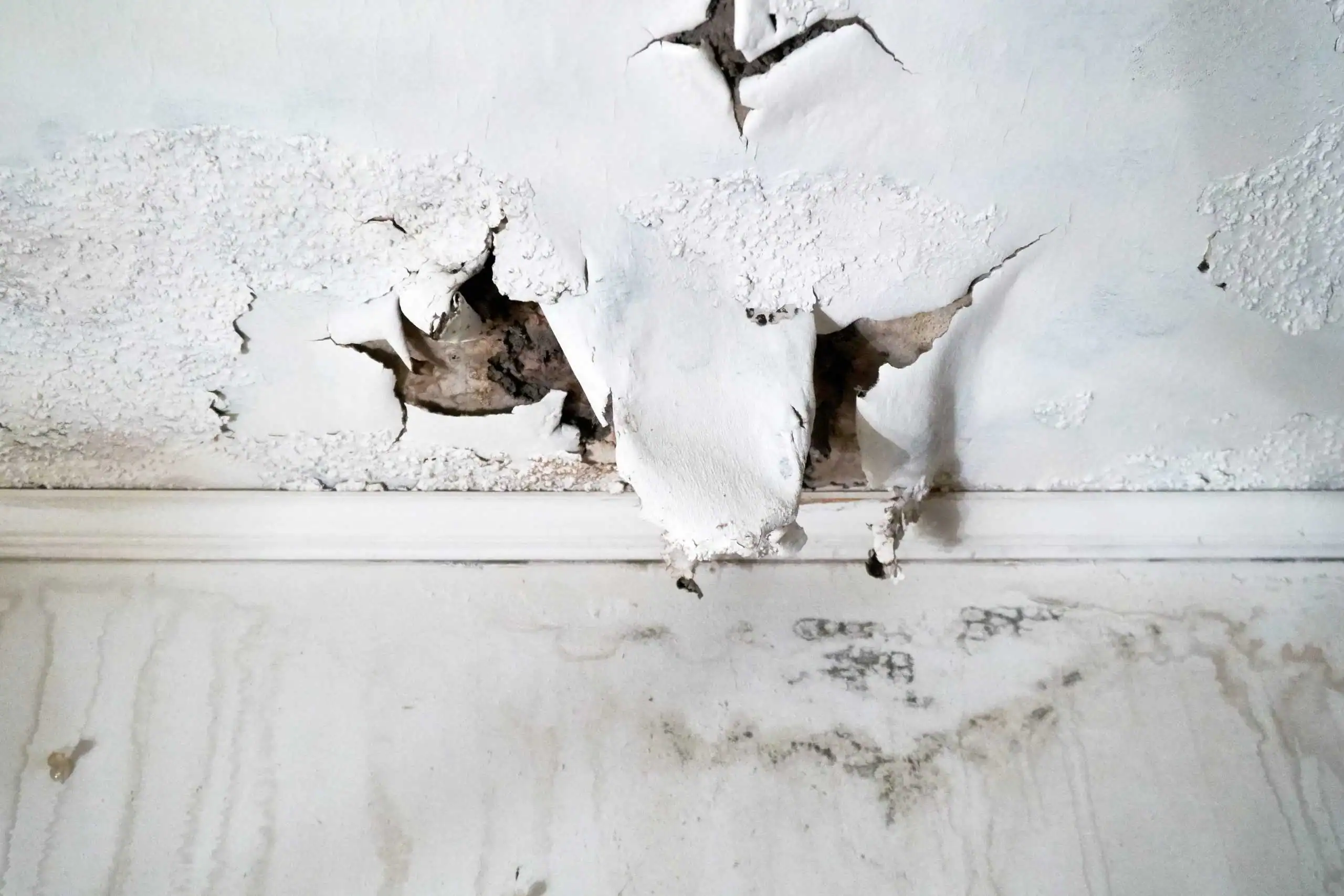
Mold can begin growing within 24 to 48 hours of a water event — and that clock starts the moment moisture reaches an organic material like drywall, wood framing, or insulation. In Somers, where the humidity during summer months is already elevated and many homes sit near lakes or reservoirs with naturally higher ambient moisture levels, conditions for mold growth are often more favorable than in drier climates.
After two to three weeks, mold colonies become well-established and can begin causing structural damage and health issues. The problem is that mold doesn’t always grow where you can see it. It grows in wall cavities, behind baseboards, and under subfloors — exactly where water tends to travel in the older lake community homes in Lincolndale and Shenorock. Surface drying does nothing for moisture that’s already wicked into the structure. That’s why professional moisture metering and industrial drying equipment aren’t optional — they’re the difference between a clean remediation and a mold problem six months later. New York State also requires a dedicated mold remediation license for any contractor performing this work, so make sure whoever you hire actually holds one.
What should I do immediately after my basement floods in Somers?
First, make sure it’s safe to enter — if there’s any chance water has reached electrical panels, outlets, or appliances, don’t go in until power is confirmed off. Once it’s safe, stop the source if you can: shut off the main water supply if it’s a burst pipe, or note whether the water appears to be coming from outside (which could indicate a stormwater or groundwater issue that your insurer needs to know about).
After that, call a restoration company immediately — not tomorrow, not after the weekend. The 24 to 48 hour mold window is real, and every hour of delay narrows your margin. While you’re waiting for the crew to arrive, move valuables and furniture off wet surfaces if it’s safe to do so, but don’t use a household vacuum or fans to try to dry the space yourself. Fans can spread mold spores if growth has already started, and a shop vac won’t touch moisture that’s already in your walls. Document everything with photos before anything is moved — your insurance claim will be stronger for it. We respond 24/7, so there’s no reason to wait until business hours.
My Somers home was built in the 1970s — should I be worried about asbestos during water damage repair?
Yes, and it’s worth taking seriously. Homes built before 1980 — which includes a significant portion of the lake community properties in Lincolndale, Shenorock, and the Amawalk area — commonly contain asbestos in pipe insulation, floor tiles, ceiling tiles, joint compound, and roofing materials. When water damage occurs, it can disturb these materials and create an exposure risk that most water damage contractors are not equipped to handle.
The standard approach from most restoration companies is to stop work, refer you to a separate asbestos abatement contractor, and have you coordinate two separate scopes of work while moisture continues to sit in your home. We handle both in a single engagement. We can assess for asbestos-containing materials during the same site visit as the water damage assessment, and if abatement is needed, we perform it before proceeding with restoration. This is faster, safer, and eliminates the gap in accountability that comes from two separate contractors working in sequence. If you’re in an older Somers home and you’ve had any kind of significant water event, don’t assume the materials are fine — have them assessed.
How much does water damage restoration typically cost in the Somers, NY area?
Nationally, the average cost of water damage restoration runs around $3,800 to $4,000, with straightforward cases coming in around $1,400 and more severe situations reaching $10,000 to $16,000 or higher. In Westchester County, costs tend to run at or above national averages given local labor rates and the complexity of older housing stock.
The biggest variable in Somers specifically is the age and construction type of the home. A newer colonial in Pines Bridge Manor or Merritt Park Estates with modern moisture barriers and accessible wall cavities is a different job than a 1960s lake community home in Shenorock where water has traveled into original framing and insulation. The scope — and the cost — depends on how far the water went and how long it sat. This is exactly why response time matters so much. The faster moisture is extracted and drying begins, the smaller the affected area tends to be, and the lower the final cost. We offer financing up to $200,000 at 0% APR if cost or a pending insurance claim is a concern — you don’t have to put restoration on hold while paperwork gets sorted.
Do I need a permit for water damage repairs in the Town of Somers?
For structural repairs — replacing drywall, subfloor, framing, or any component that’s part of the building envelope — yes, a building permit from the Town of Somers Building Department is typically required. The Town also has a Flood Damage Prevention ordinance (Chapter 102 of the Town Code) that governs restoration work in special flood hazard areas, which includes portions of Somers near the Amawalk Reservoir and other low-lying areas identified in the County’s hazard mitigation planning.
In practice, this means your contractor needs to be familiar with local permit requirements and build compliance into the job from the start — not treat it as an afterthought. We’ve been working in the New York metro area for over 12 years and understand the permit and documentation requirements that apply in Westchester County towns like Somers. We handle the compliance side as part of the restoration process, so you’re not left figuring out what filings are required while your home is mid-repair. If your property is near a wetland, watercourse, or flood zone — which is a real possibility in Somers given the town’s watershed geography — we’ll flag that during the initial assessment and make sure the work is done in a way that satisfies local regulatory requirements.