When Cedar Brook Floods, You Need More Than a Dry Vac
We respond 24/7 to water damage in Stony Point — handling extraction, drying, insurance billing, and everything in between so you’re not left managing a disaster alone.
I needed a professional consultation explanation of procedure for safe removal of Asbestos in my apartment complex. Without having an account yet, I was very impressed with the caring, knowledgeable and generous advice offered by Jessica, and will look forward to doing business in the future. Thank you so much! I feel much more informed about a sometimes scary endeavor. Peace. Nancy Silva Mineola, NY.
Mia Munoz
Used this company to clean up some water flood in my house. They were fast and easy to work with.very professional, Would recommend to anyone!
Nini Valle
Great company, had a flood and they responded quickly and efficiently. Billed my insurance company directly. I highly recommend this company!
joe colapietro, jr
I had pipe freeze in my basement right before a snow storm and they made to within an hour to help start the clean up process. They we by our side throughout the entire process and even helped with the insurance company. They did such a great job with the cleanup, repair, remidiation, I contracted them to perform the repairs and finishes in the basement. They came with enough manpower and material to get the job done. Leo and Jessica were nothing but a pleasure to deal with!!
Cristian Arredondo c
I had some water damage in my home and Green Island was able to take care of my issue quickly and effectively. I am very pleased with the work they did. They responded quickly and were very professional.
Michael M
Outstanding service! From the office to the field crew everyone was friendly, helpful and responsive. I highly recommend Green Island Group.
Your Stony Point Home Dry, Safe, and Back to Normal
When water gets into your home, the visible damage is only part of the problem. The moisture that soaks into your subfloor, your wall framing, your block foundation — that’s what causes mold, structural rot, and the kind of damage that shows up months later when you thought everything was fine. Mold can begin growing within 24 to 48 hours of a water event. Waiting to see how things dry out on their own is a gamble most Stony Point homeowners can’t afford to take.
Stony Point’s housing stock is older than most people realize. A large share of homes in Tomkins Cove and the town center were built between 1940 and 1969 — and those homes were constructed with wood subfloors, plaster walls, and block or stone foundations that hold moisture differently than modern materials. Industrial drying equipment and professional moisture meters aren’t optional here. They’re the only way to actually confirm the job is done.
The town also sits directly on the Hudson River, and the Route 210 corridor near Cedar Brook Stream has flooded more than once during heavy rain events. If your home took on water during a storm, a burst pipe, or a sump pump failure, the clock is already running. The sooner we begin extraction and drying, the less damage you’re dealing with — and the lower your restoration cost.
Water Damage Restoration Company Serving Stony Point
12 Years In, and We Still Pick Up the Phone at 2 AM
We’ve been handling water damage, mold, fire damage, and asbestos abatement in the New York metro area for over 12 years. We’re not a franchise. We’re not a call center that dispatches whoever’s available. When you call us, you’re reaching a team that actually shows up — fully equipped, fully insured, and ready to work.
We hold NYS and NYC M/WBE certification, which means we’ve been vetted to work with New York State government agencies. That’s not a marketing badge — it’s a standard of accountability that most contractors in Rockland County simply don’t meet. We carry full liability and workers’ compensation insurance, so if anything happens on your property during the job, you’re protected.
Stony Point is one of the more rural corners of Rockland County, and we know what that means in practice — longer driveways, older homes, properties that aren’t always easy to reach off Route 9W or the Palisades Parkway. We’ve worked in this area long enough to know the terrain, the housing stock, and what it actually takes to restore a home here the right way.
Emergency Water Damage Restoration Near Stony Point
No Guesswork — Here's Exactly What We Do and When
The first call triggers everything. We confirm your location, dispatch a crew, and get moving. For most of Stony Point — including Tomkins Cove and areas off Route 210 — we’re on site fast, day or night. When we arrive, the first thing we do is assess the full scope of the damage, not just what’s visible. Moisture meters go to work immediately on walls, floors, and ceilings to map where water has traveled inside your structure.
From there, we extract standing water and set up industrial drying equipment — dehumidifiers, air movers, and in some cases specialized drying systems for hardwood floors or block foundation walls. This isn’t a one-visit job. We monitor drying progress and adjust equipment until the readings confirm the structure is dry. That’s the standard. Not a visual check, not a best guess — actual data.
If your home was built before 1978, we also assess for asbestos-containing materials before any demolition or removal work begins. This matters in Stony Point, where a significant portion of the housing stock predates modern construction standards. Disturbing asbestos without the right credentials is a legal and health issue — and it’s one of the reasons we handle abatement in-house rather than calling in a separate contractor. Once the structure is dry and clear, we handle all necessary repair work and coordinate directly with your insurance company throughout the entire process.
Full-Service Water Damage Repair in Stony Point, NY
One Team Handles It All — Including What Others Won't Touch
Most water damage companies stop at extraction and drying. We don’t. We’re a full-service restoration contractor, which means we handle the complete scope — water extraction, structural drying, mold remediation, asbestos abatement if needed, and all repairs required to bring your home back to pre-damage condition. One team, one point of contact, no handoff gaps.
For Stony Point homeowners, the asbestos piece matters more than most people expect. Homes built before 1978 in areas like Tomkins Cove often contain asbestos in floor tiles, pipe insulation, and ceiling materials. When a burst pipe or a basement flood disturbs those materials, you need a contractor who is licensed to handle it — not one who stops work and tells you to call someone else. We’re licensed for asbestos abatement in New York State, and we handle it as part of the restoration process.
We also work directly with your insurance company. We document the damage, submit the claim, and advocate for the full scope of covered work on your behalf. If there’s a gap between what insurance covers and what the job actually costs, we offer financing up to $200,000 at 0% APR — which means a major restoration doesn’t have to mean a financial crisis. Every job comes with a 100% satisfaction guarantee. The work isn’t finished until the moisture readings are clear and you’re confident your home is safe.
How quickly can you respond to water damage in Stony Point, NY?
We offer 24/7 emergency response, and for Stony Point we aim to be on site as fast as possible — including nights, weekends, and during active storm events. The town’s location off the Palisades Parkway at Exits 14 and 15 gives us a clear route in, and we’re familiar with the roads throughout the area, including less accessible properties in Tomkins Cove and areas off Route 210.
Speed matters here because of the 24 to 48 hour mold growth window. Once water is inside your walls or under your floors, that clock is running. Every hour of delay increases the likelihood of secondary damage — mold colonization, structural softening, and contamination that turns a manageable restoration into a much larger project. When you call, we move.
Does homeowners insurance cover water damage repair, and how does the claims process work?
Most standard homeowners insurance policies cover sudden and accidental water damage — a burst pipe, an appliance failure, or an overflow event. What they typically don’t cover is flooding from an external source, like Cedar Brook Stream overflowing onto your property in Stony Point. That type of damage requires a separate flood insurance policy through FEMA’s National Flood Insurance Program.
We handle insurance billing directly, which means we document the damage, put together the claim, and communicate with your adjuster throughout the process. You don’t have to become an expert in insurance language or fight for coverage on your own. We’ve done this enough times to know what adjusters look for and how to make sure the full scope of covered work is included in your claim. If there’s a portion that insurance doesn’t cover, our 0% APR financing up to $200,000 is available to bridge that gap.
What are the signs that water damage in my home is worse than it looks?
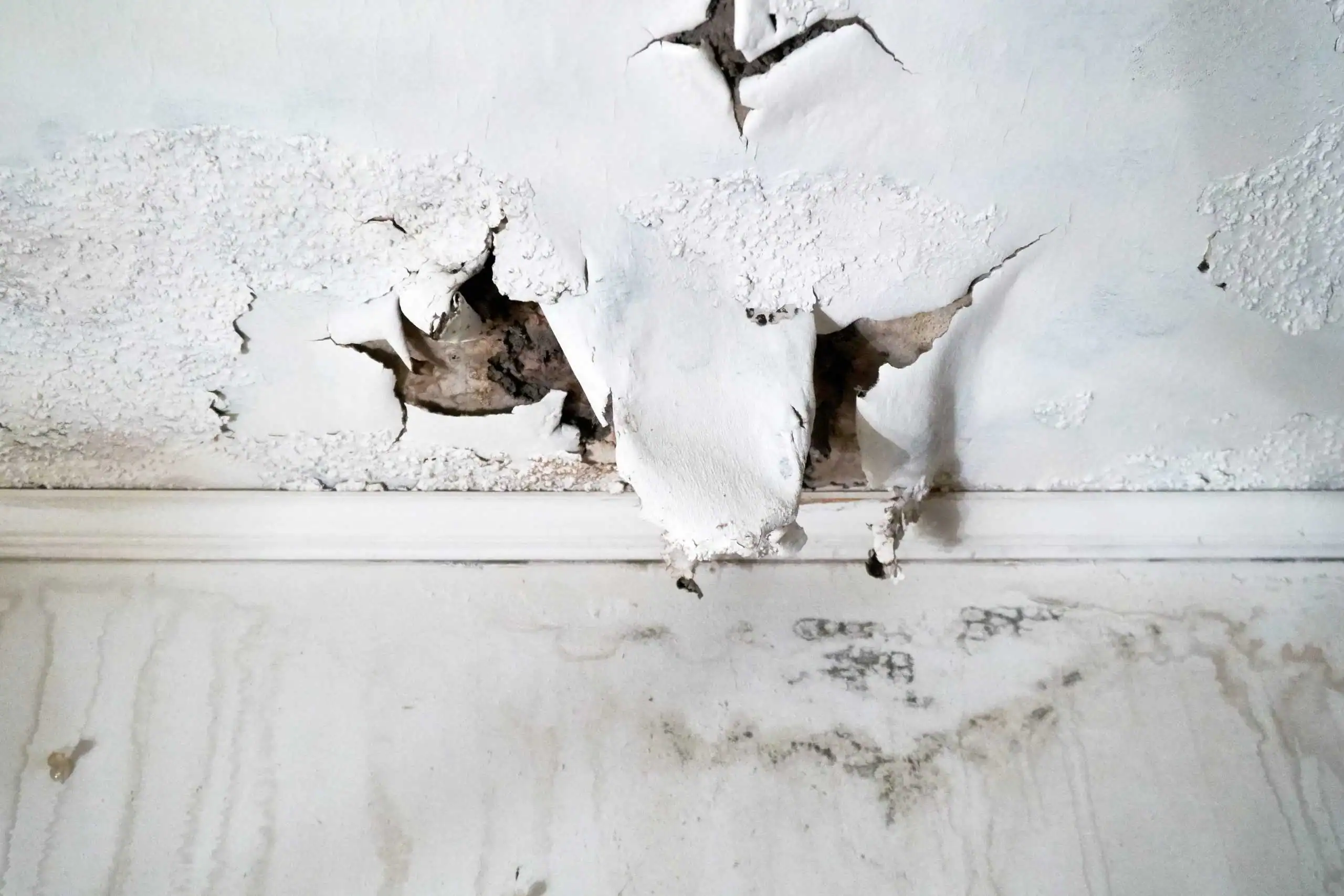
The most common warning signs are things you notice after the visible water is gone — a musty smell that doesn’t clear up, soft or spongy spots in the floor, paint or wallpaper that starts bubbling, or discoloration on walls and ceilings that wasn’t there before. These are indicators that moisture is still present inside your building materials, even if the surface looks dry.
In older Stony Point homes with plaster walls and wood subfloors, this is especially common. These materials absorb moisture deeply and release it slowly, which means a surface that feels dry to the touch can still register significant moisture on a professional meter. We use industrial moisture meters on every job — not to check a box, but because it’s the only reliable way to confirm that drying is actually complete. If readings are still elevated, the equipment stays until they’re not.
My Stony Point home was built in the 1960s — do I need to worry about asbestos during water damage repair?
Yes, and it’s worth taking seriously. Homes built before 1978 — which covers a large portion of the housing stock in Tomkins Cove and the Stony Point town center — commonly contain asbestos in floor tiles, pipe wrap insulation, joint compound, ceiling tiles, and roofing materials. When water damage requires removing or cutting into these materials, there’s a real risk of disturbing asbestos fibers.
In New York State, asbestos abatement is a regulated activity that requires specific licensing. A contractor who isn’t licensed to handle it legally cannot proceed with demolition or removal in affected areas — which means if your water damage contractor discovers a problem mid-job, they have to stop and bring in a separate firm. We handle asbestos abatement in-house as a licensed service, so the restoration process doesn’t get interrupted by a handoff to another company. For older homes in Stony Point, this is one of the more practical reasons to work with a full-service contractor from the start.
How does water damage repair work when a basement floods from heavy rain or a sump pump failure?
Basement flooding from heavy rain or sump pump failure is one of the most common calls we get in Stony Point, particularly in spring when snowmelt from the Harriman State Park highlands saturates the ground, and in summer during severe thunderstorms. The process starts with extracting standing water, but that’s only the beginning.
After extraction, we focus on what the water left behind inside the structure — moisture in the block foundation walls, under any flooring, and in the floor joists above. Block foundations are particularly porous and hold moisture long after the floor is dry. We set up drying equipment specifically positioned to address those areas and monitor readings until the structure tests clear. If there’s any sign of mold beginning to develop, we address it as part of the same job. Depending on the extent of damage, some structural repairs may require a permit from the Town of Stony Point — we handle that as part of the process so nothing gets missed.
Is there financing available for water damage restoration if insurance doesn't cover everything?
Yes. We offer financing up to $200,000 at 0% APR, which is something you won’t find with most restoration contractors in Rockland County. This exists because restoration costs can be significant — especially in older homes where water damage uncovers additional issues like deteriorated subfloors, compromised framing, or asbestos-containing materials that need to be addressed before repairs can proceed.
For Stony Point homeowners, this matters in a practical way. The cost of a major restoration isn’t something most households can absorb all at once, especially when insurance doesn’t cover the full scope. The financing option means you can move forward immediately — which protects your home from mold and secondary damage — without waiting to figure out how to cover the entire bill upfront. There’s no penalty, no interest, and no reason to delay getting the work done right.