When Water Gets Into a Century-Old Tarrytown Home, Minutes Matter
When water gets into a century-old Tarrytown home, the clock starts immediately. We respond 24/7 with the full crew and equipment to stop the damage before it compounds. Most water damage jobs look finished before they actually are — and in a village where the housing stock predates modern construction standards, that’s a real problem.
I needed a professional consultation explanation of procedure for safe removal of Asbestos in my apartment complex. Without having an account yet, I was very impressed with the caring, knowledgeable and generous advice offered by Jessica, and will look forward to doing business in the future. Thank you so much! I feel much more informed about a sometimes scary endeavor. Peace. Nancy Silva Mineola, NY.
Mia Munoz
Used this company to clean up some water flood in my house. They were fast and easy to work with.very professional, Would recommend to anyone!
Nini Valle
Great company, had a flood and they responded quickly and efficiently. Billed my insurance company directly. I highly recommend this company!
joe colapietro, jr
I had pipe freeze in my basement right before a snow storm and they made to within an hour to help start the clean up process. They we by our side throughout the entire process and even helped with the insurance company. They did such a great job with the cleanup, repair, remidiation, I contracted them to perform the repairs and finishes in the basement. They came with enough manpower and material to get the job done. Leo and Jessica were nothing but a pleasure to deal with!!
Cristian Arredondo c
I had some water damage in my home and Green Island was able to take care of my issue quickly and effectively. I am very pleased with the work they did. They responded quickly and were very professional.
Michael M
Outstanding service! From the office to the field crew everyone was friendly, helpful and responsive. I highly recommend Green Island Group.
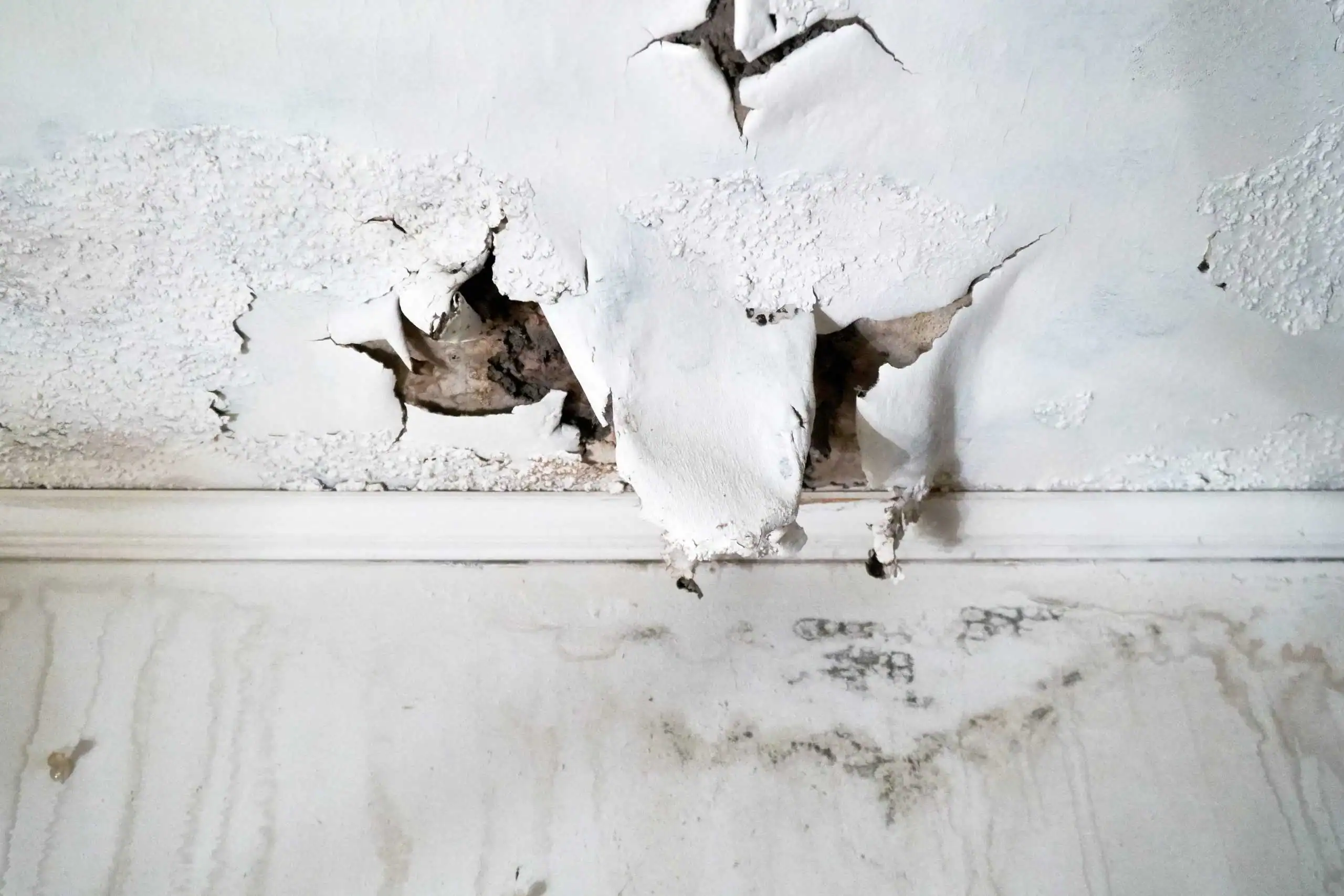
Most water damage jobs look finished before they are. The floor feels dry, the walls look fine, and then three weeks later you’re dealing with mold inside the framing of a 100-year-old Tarrytown home that was never built to handle standing moisture. That’s the real risk in this village — not the flood itself, but what gets left behind.
The housing stock here is older than most of Westchester. Victorian-era framing, original plaster walls, subfloors over fieldstone foundations — these materials hold moisture in ways that modern construction simply doesn’t. When a pipe bursts or a basement floods after a storm, the visible water is only part of the problem. What’s trapped inside the walls and under the floor is where the real damage starts. Professional drying equipment and moisture detection find it. A shop vac and a box fan don’t.
When the job is done right, you get your home back — not just dried out, but genuinely restored. No hidden moisture. No mold starting behind the drywall. No structural issues developing quietly over the next six months. For a Tarrytown homeowner with a significant property investment, that’s not a small thing.
12 Years In Tarrytown and the Rivertowns — We Know What's Behind These Walls
We’ve been doing environmental restoration work in the New York metro area for over 12 years. That includes a lot of Westchester County — the Rivertowns, the older neighborhoods off Route 9, the hillside properties above the Hudson. We know what these homes in Tarrytown are made of, and we know what happens to them when water gets in.
We’re NYS and NYC M/WBE Certified, fully insured with both liability and workers’ compensation coverage, and we work directly with your insurance company so you’re not stuck managing the paperwork on top of everything else. We also carry a New York State mold remediation license — a requirement that most other states don’t have, and one that matters a great deal when you’re dealing with a pre-1980 home in a community like Tarrytown.
We’re not a franchise. We’re not a call center routing you to whoever’s available. When you call, you get a real team that’s handled real jobs in this area — and we back every one of them with a 100% Satisfaction Guarantee.
The first call triggers the response. We’re available 24 hours a day, and for an emergency situation — active flooding, a burst pipe, sewage backup — we move fast. Tarrytown’s proximity to the Hudson and the drainage patterns around areas like the Pierson Park corridor and the Sunnyside Avenue neighborhood mean that when a major storm hits, multiple homes are affected at once. We plan for that.
When we arrive, the first step is assessment. We’re not just looking at what’s wet — we’re using moisture meters and thermal imaging to find where water has traveled inside walls, under floors, and into structural cavities. In a home with original plaster and old wood framing, water migrates in ways that aren’t always visible. Finding it is the job before drying it is the job.
From there, we extract standing water, set industrial drying equipment, and monitor moisture levels until the structure is genuinely dry — not just surface dry. If the assessment turns up asbestos-containing materials that have been disturbed (a real possibility in any Tarrytown home built before 1980), we handle the abatement in the same engagement. No second contractor, no scheduling gap, no waiting. Depending on the scope of structural repairs, we’ll also manage any permit requirements with the Tarrytown Building Department — so that’s not something you have to figure out on your own.
One Team Handles the Water, the Mold, and What's Underneath
Water damage restoration isn’t one thing — it’s a sequence. Extraction, drying, mold assessment, structural repair, and sometimes hazardous material abatement. Most contractors in the Tarrytown area handle one or two of those steps and hand you off for the rest. We cover the full scope under one roof.
For Tarrytown homes specifically, that matters. The village’s Chapter 169 Flood Damage Prevention code and Chapter 258 Stormwater Management ordinances exist because flooding here is a documented, recurring problem — not a freak occurrence. The homes near the waterfront, the neighborhoods around Tarrytown Lakes, and the lower-elevation blocks along West Main Street have all seen what a serious storm can do. When you add the age of the housing stock to that equation, you get a restoration job that often involves more than just drying out a basement.
We handle water extraction and structural drying, mold testing and full remediation, asbestos abatement for pre-1980 building materials, sewage backup cleanup, and structural repairs — all with direct insurance billing and financing available up to $200,000 at 0% APR. That financing option exists because we understand that even a well-insured homeowner can face a gap between what the policy covers and what the job actually costs. In a village where home values are high and the buildings are old, restoration costs can climb quickly. You shouldn’t have to choose between doing the job right and protecting your financial stability.
Does homeowners insurance cover water damage repair in Tarrytown, NY?
It depends on the cause. Most standard homeowners insurance policies in New York cover sudden, accidental water damage — a burst pipe, an appliance failure, a roof leak from a storm. What they typically don’t cover is gradual damage that built up over time, or flooding from an external source like a river or storm surge, which requires a separate flood insurance policy.
For Tarrytown homeowners, this distinction matters. Properties in lower-elevation areas near the Hudson waterfront or around the Tarrytown Lakes drainage channels may have experienced water intrusion that crosses the line from storm damage into flood damage — and those are handled by different policies. When you call us, we’ll help you understand what’s likely covered before the claim is filed, and we bill your insurance company directly so you’re not managing that process while also dealing with a damaged home.
How quickly does mold start growing after a water damage event?
Mold can begin developing within 24 to 48 hours of a water event — and in an older Tarrytown home with original wood framing, plaster walls, and organic subfloor materials, it spreads faster than it would in a newer build. Modern construction uses materials that are less hospitable to mold. A century-old home is essentially built from the materials mold grows on best.
This is why response time isn’t just a convenience — it’s the difference between a water extraction job and a full mold remediation. If water has been sitting for more than a day or two, or if the structure wasn’t dried completely after a previous event, there’s a real chance mold is already present even if you can’t see it yet. We assess for mold as part of every water damage job, not as a separate upsell, because finding it early is the only way to keep the scope and cost manageable.
What should I do immediately after my basement floods in Tarrytown?
First, don’t go into a flooded basement if there’s any chance the electrical panel or outlets are submerged — water and live electricity are a serious safety risk. If you can safely cut power to the affected area, do it. Then call a restoration company immediately, because the 24-48 hour mold window starts from the moment the flooding happens, not from when you get around to dealing with it.
While you’re waiting for the crew to arrive, document everything with photos and video for your insurance claim. Don’t throw anything away yet — your adjuster will want to see the damage. If the flooding happened during a storm event, keep notes on when it started and how quickly the water rose. In Tarrytown, where storm events like the remnants of Hurricane Ida in September 2021 caused rapid, severe flooding across the village, that timeline documentation can matter significantly when an insurance claim is being evaluated.
Does water damage restoration require a permit from the Tarrytown Building Department?
It can, depending on the scope of work. The Tarrytown Building Department requires permits for most construction activity, and restoration work that involves replacing structural elements — subfloor, wall framing, load-bearing components — typically falls into that category. Surface-level work like drying, cleaning, and replacing drywall in kind is generally lower risk from a permit standpoint, but the moment you’re opening walls or replacing structural members, you’re in permit territory.
We manage this as part of the job. We’re familiar with the Tarrytown Building Department’s requirements, and for jobs that require permitting, we handle that process rather than leaving it to you. The village’s Chapter 97 Building Construction code is specific about what triggers a permit requirement, and navigating that correctly matters — not just for compliance, but to make sure the work is documented properly if you ever sell the home.
Can water damage in my Tarrytown home expose asbestos-containing materials?
Yes — and this is one of the most important things to understand if you own a pre-1980 home in Tarrytown. The village’s housing stock is predominantly older construction, and homes built before 1980 commonly contain asbestos in pipe insulation, floor tiles, ceiling texture, and joint compound. Under normal conditions, these materials aren’t a hazard. But when a pipe bursts, a basement floods, or water infiltrates a wall cavity, those materials can become disturbed — and disturbed asbestos is a different situation entirely.
Most water damage contractors are not licensed to handle asbestos. We are. That means if our assessment turns up asbestos-containing materials that have been compromised by the water event, we handle the abatement in the same engagement — no second contractor, no gap in the timeline, no period where your home is partially remediated and partially hazardous. For Tarrytown homeowners in older properties, this is one of the most practical reasons to work with a full-service environmental restoration company rather than a single-trade operator.
How much does water damage restoration typically cost in Tarrytown, NY?
The range is wide because the scope varies significantly. A straightforward pipe burst with clean water, caught quickly, in a newer section of a home might run $3,000 to $6,000. A serious basement flooding event in an older Tarrytown property — one that involves contaminated water, saturated original framing, mold remediation, and possibly asbestos abatement — can reach $15,000 to $25,000 or more depending on how long the water was present and how far it traveled.
The biggest cost driver is usually time. The longer water sits, the deeper it penetrates, and the more material has to be removed and replaced rather than dried and saved. In Tarrytown’s older housing stock, where original wood framing and plaster absorb moisture readily, a 48-hour delay can double the scope of a job. Insurance covers a meaningful portion of most water damage claims for sudden, accidental events, and we bill your insurer directly. For costs that exceed your coverage, financing up to $200,000 at 0% APR is available — so the decision about how thoroughly to address the damage doesn’t have to come down to what you can write a check for today.