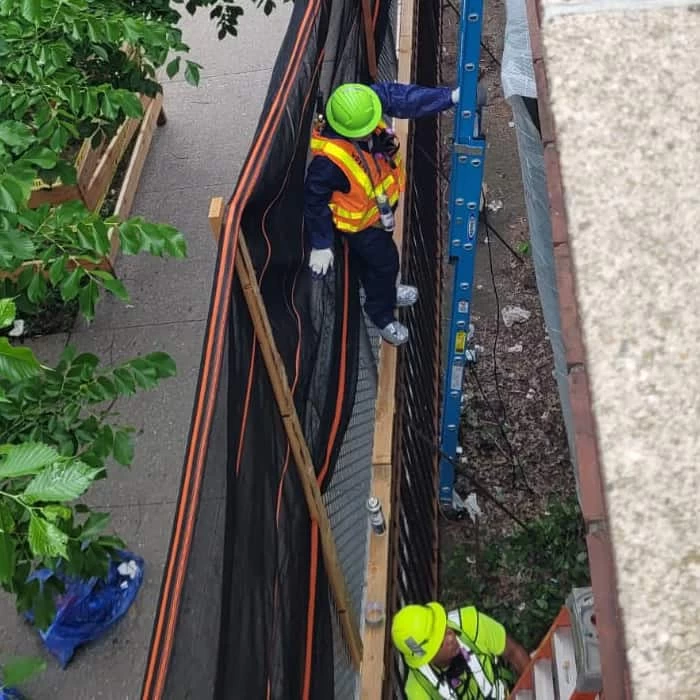
I needed a professional consultation explanation of procedure for safe removal of Asbestos in my apartment complex. Without having an account yet, I was very impressed with the caring, knowledgeable and generous advice offered by Jessica, and will look forward to doing business in the future. Thank you so much! I feel much more informed about a sometimes scary endeavor. Peace. Nancy Silva Mineola, NY.
Mia Munoz
Used this company to clean up some water flood in my house. They were fast and easy to work with.very professional, Would recommend to anyone!
Nini Valle
Great company, had a flood and they responded quickly and efficiently. Billed my insurance company directly. I highly recommend this company!
joe colapietro, jr
I had pipe freeze in my basement right before a snow storm and they made to within an hour to help start the clean up process. They we by our side throughout the entire process and even helped with the insurance company. They did such a great job with the cleanup, repair, remidiation, I contracted them to perform the repairs and finishes in the basement. They came with enough manpower and material to get the job done. Leo and Jessica were nothing but a pleasure to deal with!!
Cristian Arredondo c
I had some water damage in my home and Green Island was able to take care of my issue quickly and effectively. I am very pleased with the work they did. They responded quickly and were very professional.
Michael M
Outstanding service! From the office to the field crew everyone was friendly, helpful and responsive. I highly recommend Green Island Group.
Your Home Dried Out, Restored, and Protected From What's Next
When water gets into your Aquebogue home, the clock starts immediately. Mold can begin growing within 24 to 48 hours of exposure and in Aquebogue, where coastal humidity is already elevated year-round, that window closes even faster. The goal isn’t just to remove the water. It’s to get your home back to the way it was before any of this happened.
A lot of Aquebogue’s housing stock was built before 1980. That means older construction ranch homes, Cape Cods, cottages with materials that absorb moisture in ways you can’t always see from the surface. Water migrates into wall cavities, subfloors, and crawl spaces quietly. Without professional moisture detection, what looks resolved on the outside can be actively worsening behind the drywall.
For homeowners along the bayfront, near Beach Road, or in properties that sit vacant part of the year, the stakes are even higher. A slow leak in an unoccupied home can go undetected for an entire winter. By the time you’re back in the spring, a manageable repair has turned into a full remediation project. Getting the right team in early one that uses thermal imaging and professional moisture meters, not just a visual check is the difference between a contained problem and a costly one.
We’re a Long Island-based environmental and property restoration company not a franchise, not a call center, not a lead-generation platform routing your job to whoever picks up. When you call, a real person answers. When our crew arrives, they’re trained, accountable, and familiar with the kinds of homes that define Aquebogue and the North Fork.
That matters here. Aquebogue is a small, tight-knit community the kind of place where your neighbors know who you hired and what kind of job they did. Word travels. We’ve built our reputation across Suffolk County by showing up, doing the work correctly, and not leaving homeowners to figure out the rest on their own.
We handle water damage, mold remediation, asbestos abatement, lead paint removal, and air quality testing under one roof. For a community where a significant share of homes predate 1980 and where any wall opening could reveal asbestos or lead having one company that can manage the full scope without handoffs isn’t a luxury. It’s the practical choice.
From Emergency Call to Fully Restored Here's What Happens
It starts with a call. Whether it’s 2am during a February nor’easter or a Sunday afternoon when you’ve just returned to your Aquebogue property after a few months away, the process begins the moment you reach out. We dispatch a crew to assess the situation not to give you a sales pitch, but to understand exactly what you’re dealing with.
On arrival, our team uses moisture meters and thermal imaging to map where water has traveled. This step matters more than most people realize. Water doesn’t stay where it lands. It moves through walls, under floors, and into structural cavities. A visual inspection alone misses most of it. Once the full moisture picture is clear, extraction and structural drying begins using industrial-grade equipment the kind that actually pulls moisture out of building materials, not just the surface.
From there, the scope is documented for your insurance company. We handle the adjuster communication directly, including for homeowners carrying NFIP flood insurance policies which is common for properties near Peconic Bay. If the project uncovers asbestos or lead-containing materials in the process, that work is handled in-house under the required New York State and EPA certifications, without stopping the job to bring in a separate contractor. The project doesn’t close until the structure is dry, the damage is repaired, and the property is back to pre-loss condition.
One Company Handles Everything Water, Mold, and What's Behind the Walls
Water damage restoration in Aquebogue isn’t a one-size situation. A burst pipe in January is a different job than storm surge from a Peconic Bay weather event, which is a different job than a slow leak discovered in a seasonal property that sat unoccupied since October. Our restoration process is built around what’s actually happening in your home not a standard package applied the same way every time.
What we include: emergency water extraction, structural drying with commercial dehumidifiers and air movers, moisture mapping with thermal imaging, mold assessment and remediation where needed, documentation for insurance claims, and full structural repair drywall, flooring, framing to bring the property back to pre-damage condition. For older homes in Aquebogue and the Town of Riverhead, we’re also equipped to handle asbestos testing and abatement and lead paint protocols if disturbing building materials triggers those requirements under New York State DOL or EPA RRP rules.
Aquebogue homeowners with waterfront exposure who carry both standard homeowners insurance and NFIP flood coverage get direct support navigating both claims processes simultaneously. We know the documentation requirements for each and handle adjuster communication so you’re not left managing two separate insurance systems during an already stressful situation. The goal is a complete restoration not a dried-out house with a pile of paperwork left on your counter.
How quickly does water damage become a mold problem in Aquebogue homes?
Mold can start developing within 24 to 48 hours of water exposure and that timeline is not theoretical. It’s the documented standard from the IICRC, the governing body for the restoration industry. In Aquebogue specifically, the North Fork’s coastal humidity levels mean ambient moisture in the air is already higher than in inland communities. That creates conditions where mold colonizes faster, especially in older construction with less effective vapor barriers.
The homes most at risk are those with crawl spaces, unfinished basements, or older insulation which describes a significant portion of Aquebogue’s housing stock. If water has gotten into those areas and isn’t extracted and dried professionally within that first 48-hour window, you’re no longer dealing with a water damage job. You’re dealing with a mold remediation project on top of it. The cost difference is substantial. Calling early isn’t overcautious it’s the decision that keeps a manageable problem from becoming a much larger one.
Does homeowners insurance typically cover water damage repair costs in Aquebogue, NY?
It depends on the source of the water. Standard homeowners insurance policies generally cover sudden and accidental water damage a burst pipe, an appliance failure, a roof leak from a storm. What they typically don’t cover is flooding from an external source, which is where a separate flood insurance policy, often through FEMA’s National Flood Insurance Program, comes in.
For Aquebogue homeowners with bayfront or low-lying properties near Peconic Bay, this distinction is especially important. Many of these properties sit in or near FEMA-designated flood zones and carry NFIP policies in addition to standard homeowners coverage. Managing two separate claims processes simultaneously each with different adjusters, different documentation requirements, and different timelines is genuinely complicated. We handle both directly, documenting the damage in the format each insurer requires and communicating with adjusters on your behalf. You’re not left figuring out which policy covers which portion of the loss.
What happens if asbestos or lead is found during water damage restoration in my Aquebogue home?
This is a real concern in Aquebogue, where roughly 43% of homes were built before 1980 and a meaningful share before 1978. Any home in that age range may contain asbestos in pipe insulation, floor tiles, ceiling materials, or joint compound. Pre-1978 homes may also have lead-based paint on walls and trim. When water damage restoration requires opening walls or disturbing building materials, those substances can become a health and legal issue if not handled correctly.
Under New York State Department of Labor regulations, asbestos abatement requires specific licensing. Under the EPA’s Renovation, Repair and Painting Rule, work that disturbs lead paint in pre-1978 homes must be performed by certified contractors. We hold the required credentials for both meaning if the restoration work uncovers either material, the project doesn’t stop while you scramble to find a separate licensed contractor. It continues under the same team, with the proper protocols in place. That continuity matters both for your timeline and for keeping the scope of work from expanding unnecessarily.
How do seasonal or vacation homeowners in Aquebogue handle water damage discovered after months away?
This is one of the more common situations on the North Fork, and it tends to produce some of the more extensive damage. A home that sits unoccupied from October through April can accumulate months of undetected moisture from a slow pipe drip, a failed sump pump, a condensation issue, or a storm event that compromised a window or roof seal. By the time the owner returns in spring, what might have been caught early has had an entire winter to develop.
The first priority in these situations is a thorough moisture assessment not just a visual walkthrough. We use thermal imaging to identify moisture hidden behind walls and under floors that wouldn’t be visible to the eye. This gives seasonal property owners in Aquebogue a complete, accurate picture of what happened and what needs to be addressed, rather than a surface-level estimate that misses secondary damage. From there, we handle extraction, drying, mold remediation if needed, and full structural repair so you’re not managing multiple contractors from out of town while trying to get your property back in order.
How long does the water damage restoration process typically take for a North Fork home?
The honest answer is that it varies depending on how much water was involved, how long it sat before extraction began, and what materials were affected. A contained pipe burst caught within a few hours might be fully dried and repaired within five to seven days. A basement that flooded during a nor’easter and wasn’t addressed for 48 hours or more or a seasonal property with months of accumulated moisture can take two to three weeks or longer, especially if mold remediation or structural repair is involved.
The drying phase alone typically takes three to five days using commercial dehumidifiers and air movers, and the equipment stays in place until moisture readings confirm the structure has reached acceptable levels not just until it feels dry. Rushing that phase is one of the most common mistakes in water damage work, and it leads to hidden moisture and mold problems down the road. After drying is confirmed, structural repairs drywall, flooring, framing are completed to bring the home back to pre-loss condition. The timeline is driven by what the moisture meters say, not by a fixed schedule.
Why should I choose a local water restoration company over a national franchise in Aquebogue?
The practical difference comes down to accountability and scope. National franchise operators and aggregator platforms that rank for Aquebogue searches are often routing your call to a regional hub, dispatching subcontracted crews, or selling your contact information to the highest bidder. The person who answers the phone has no specific knowledge of the North Fork, the Town of Riverhead’s permit requirements, or the kinds of homes that exist in this community. That gap shows up in the work.
We’re a Long Island company with direct knowledge of Suffolk County’s housing stock, local building codes, and the specific water damage risks that come with living on the North Fork coastal exposure, older construction, seasonal occupancy patterns, and the asbestos and lead considerations that come with pre-1980 homes. We also handle the full scope in-house: water, mold, asbestos, lead, and structural repair. In a small community like Aquebogue, where a significant repair job on a home worth $600,000 or more deserves a team that’s genuinely accountable for the outcome, that difference is worth paying attention to.