When the Saw Mill Rises, Ardsley Homes Need More Than a Shop Vac
We respond 24/7 to water damage in Ardsley handling everything from emergency extraction to full reconstruction, with direct insurance billing and financing up to $200,000 at 0% APR.
I needed a professional consultation explanation of procedure for safe removal of Asbestos in my apartment complex. Without having an account yet, I was very impressed with the caring, knowledgeable and generous advice offered by Jessica, and will look forward to doing business in the future. Thank you so much! I feel much more informed about a sometimes scary endeavor. Peace. Nancy Silva Mineola, NY.
Mia Munoz
Used this company to clean up some water flood in my house. They were fast and easy to work with.very professional, Would recommend to anyone!
Nini Valle
Great company, had a flood and they responded quickly and efficiently. Billed my insurance company directly. I highly recommend this company!
joe colapietro, jr
I had pipe freeze in my basement right before a snow storm and they made to within an hour to help start the clean up process. They we by our side throughout the entire process and even helped with the insurance company. They did such a great job with the cleanup, repair, remidiation, I contracted them to perform the repairs and finishes in the basement. They came with enough manpower and material to get the job done. Leo and Jessica were nothing but a pleasure to deal with!!
Cristian Arredondo c
I had some water damage in my home and Green Island was able to take care of my issue quickly and effectively. I am very pleased with the work they did. They responded quickly and were very professional.
Michael M
Outstanding service! From the office to the field crew everyone was friendly, helpful and responsive. I highly recommend Green Island Group.
Your Ardsley Home Dried Out, Documented, and Back to Normal
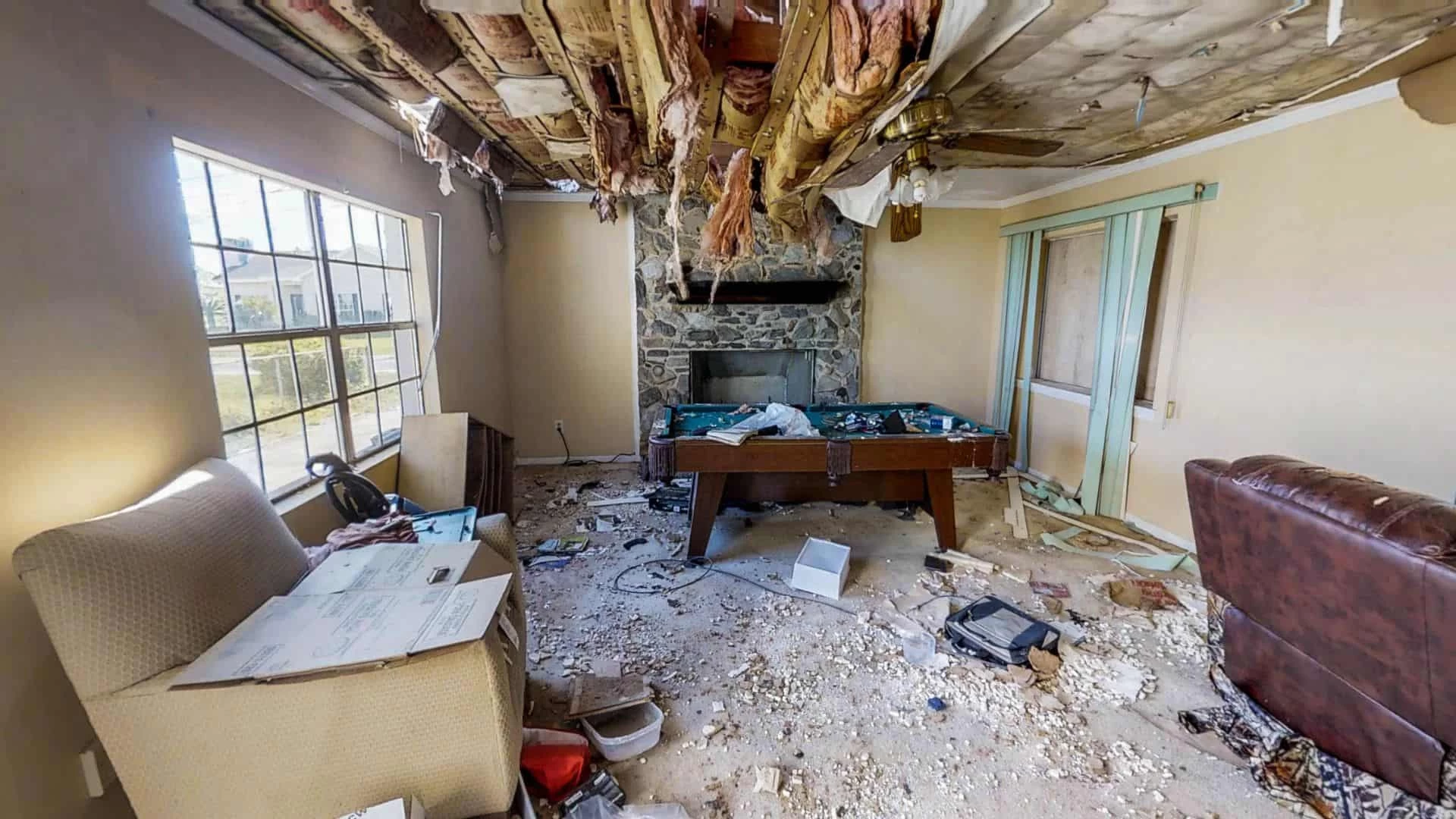
When water gets into your home, the clock starts immediately. Mold can begin forming within 24 to 48 hours of exposure and in a 1950s-era Ardsley home with plaster walls, hardwood subfloors, and older insulation, moisture doesn’t just sit on the surface. It moves. By the time you can see the damage, it’s already spread further than you think.
The Saw Mill River and Sprain Brook run directly through Ardsley. The U.S. Army Corps of Engineers built dedicated flood walls and channel infrastructure here specifically because this village’s flooding history warranted federal intervention. That’s not a minor footnote it means water intrusion events in Ardsley are real, recurring, and capable of escalating fast when the conditions are right. Knowing that, the response has to be fast and complete, not partial.
What you get at the end of this process is a home that’s been fully dried using industrial equipment, moisture-mapped with thermal imaging, and cleared for reconstruction. No guesswork, no lingering humidity hiding behind drywall, and no mold problem showing up three weeks later because someone rushed the drying phase. The job isn’t done when the fans are packed up it’s done when the readings confirm it.
We’ve been handling environmental restoration across Westchester County for over 12 years. We’re fully insured liability and workers’ compensation both NYS and NYC M/WBE Certified, and work directly with the NYS Office of General Services. That’s not a list of credentials for decoration. It means when you invite us into your home, you’re working with a vetted, accountable company that’s been doing this long enough to know what corners look like when someone cuts them.
Ardsley sits in a part of Westchester where the housing stock is older, the flood risk is documented, and the stakes are high. Homes in this village were largely built in the mid-20th century many before modern waterproofing standards existed. We know what that means in practice: aging pipes, vulnerable foundations, and materials that require a careful hand. From the Sprain Brook Manor neighborhood to the areas closest to the Saw Mill River corridor, we’ve seen what water does to these homes, and we know how to fix it right.
No Surprises Here's What Happens From First Call to Final Walkthrough
The first call triggers a same-day response. One of our technicians arrives, assesses the scope of the damage using moisture meters and thermal imaging cameras, and begins emergency water extraction immediately. In Ardsley’s older homes many built before 1960 that assessment phase matters more than most people realize. Moisture migrates into plaster, original hardwood, and wall cavities in ways that aren’t visible to the eye. We find it before it becomes a bigger problem.
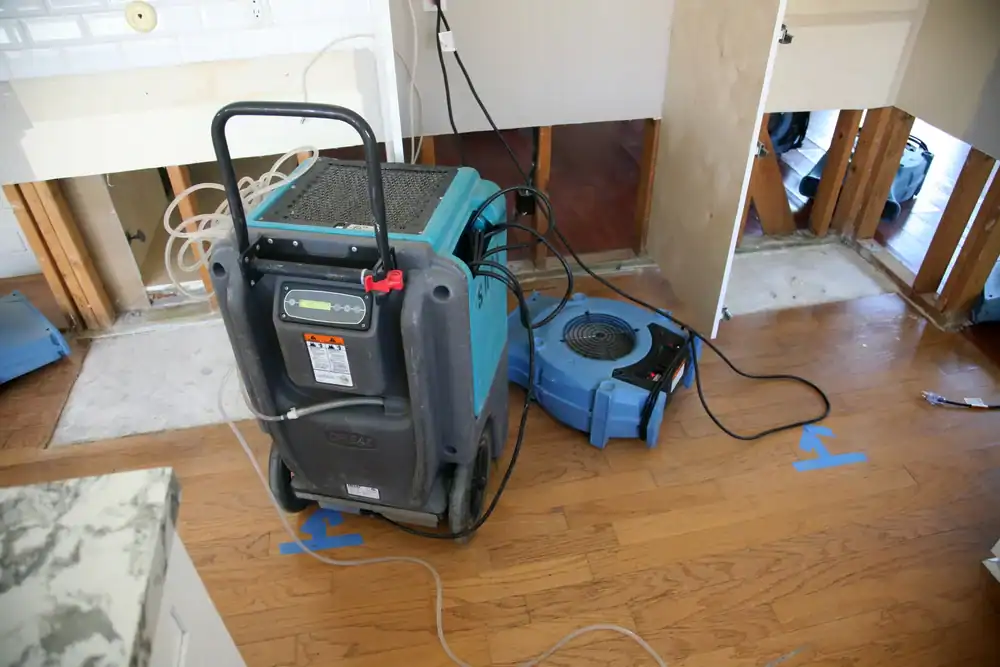
Once extraction is complete, we deploy industrial drying equipment. This isn’t a few fans pointed at a wet floor it’s a calculated drying system based on the specific volume of the space, the materials involved, and the moisture readings taken during assessment. Drying typically takes several days, and we monitor readings throughout. If the assessment reveals disturbed materials that may contain asbestos a real consideration in pre-1980 Ardsley homes we handle abatement in-house rather than stopping work and calling in a separate contractor.
From there, the reconstruction phase begins. We replace damaged drywall, flooring, insulation, and structural elements to pre-loss condition. Throughout the project, we handle all documentation for your insurance claim directly. If the work falls outside your coverage, our 0% APR financing up to $200,000 means the project doesn’t stall because of a gap in your policy. The final walkthrough confirms everything is dry, rebuilt, and ready.
Water Damage Restoration Services Near Ardsley, NY
Full Restoration Built for Westchester's Older, Flood-Prone Housing Stock
Water damage restoration isn’t a single service it’s a sequence. What we provide in Ardsley covers the full range: emergency water extraction, structural drying, mold remediation, asbestos abatement when needed, and complete reconstruction. The reason that full scope matters here specifically is that Ardsley’s housing stock is predominantly mid-century. A significant portion of homes in this village predate 1980, and many predate 1960. When water damage hits those structures, it rarely stays contained to one area or one material type.
The Westchester County Hazard Mitigation Plan specifically identifies Ardsley as a community where flood risk from both the Sprain Brook and Saw Mill River is formally evaluated during construction reviews. Ardsley also participates in the National Flood Insurance Program under its own Flood Damage Prevention ordinance meaning restoration work in designated flood zones here has to meet NFIP standards. We know those requirements and document accordingly, which matters when your claim is being reviewed.
Mold remediation work in New York State is regulated under Article 32 of the NYS Labor Law contractors working on projects above a certain threshold must be licensed by the NYS Department of Labor. We meet that requirement. You’re not hiring someone who’s going to create a compliance problem on top of a water damage problem. Every part of the job extraction, drying, abatement, reconstruction is handled by our single licensed, insured, certified team.
Does homeowner's insurance cover water damage restoration in Ardsley, NY?
It depends on the source of the water. Most standard homeowner’s insurance policies cover sudden and accidental water damage a burst pipe, a washing machine failure, an appliance leak but they typically exclude damage from flooding caused by an outside water source, like the Saw Mill River overflowing. For flood-related damage, you’d need a separate flood insurance policy through the National Flood Insurance Program, which Ardsley participates in.
The practical answer for most Ardsley homeowners is that coverage exists for the majority of common water damage scenarios, but the documentation has to be done correctly for the claim to go through cleanly. We handle the insurance documentation process directly, working with your insurer on the scope of loss, the line-item breakdown, and the billing. You don’t need to become a claims expert that’s our job. If there’s a gap between what insurance covers and what the restoration actually costs, our financing up to $200,000 at 0% APR covers the difference without putting the project on hold.
How quickly does mold start growing after water damage in my home?
Mold can begin colonizing within 24 to 48 hours of water exposure under the right conditions and in Ardsley, those conditions are frequently present. The village receives approximately 50 inches of rainfall annually, well above the national average, and the humidity levels that come with a Westchester summer create an environment where mold doesn’t need much of an invitation.
In older homes which describes most of the housing stock in Ardsley, where the median construction year is 1958 moisture tends to penetrate deeper into building materials before it’s detected. Plaster walls, original wood framing, and older insulation hold moisture longer than modern materials, which extends the window during which mold can establish itself before visible signs appear. This is why the drying phase of restoration isn’t something to rush or shortcut. Industrial drying equipment, thermal imaging, and ongoing moisture readings are what ensure the structure is actually dry not just dry on the surface.
What happens if water damage in my Ardsley home disturbs asbestos materials?
This is a genuinely important question for Ardsley homeowners, and one that most restoration companies aren’t equipped to answer with action. Homes built before 1980 which includes a large portion of the housing stock in this village commonly contain asbestos in pipe insulation, floor tiles, ceiling tiles, and joint compound. When water damage occurs and remediation begins, those materials can be disturbed, which triggers regulatory requirements under New York State law.
Most restoration contractors will stop work at that point and refer you to a separate licensed abatement contractor. That means delays, a second vendor relationship, and a project that stalls in the middle. We handle asbestos abatement in-house. If the assessment reveals materials that require abatement before restoration can continue, we manage that process without stopping the clock on your project. One team, one point of contact, no gap between the abatement phase and the restoration phase. For a pre-1980 home in Ardsley, this isn’t a fringe scenario it’s a realistic one, and it’s worth knowing your contractor can handle it before you hire them.
How long does water damage restoration typically take from start to finish?
The honest answer is that it varies, and anyone who gives you a flat timeline without seeing the damage first is guessing. That said, the general sequence looks like this: emergency extraction happens same-day, structural drying typically takes three to five days depending on the extent of moisture and the materials involved, and reconstruction can range from a few days to several weeks depending on what needs to be replaced.
In Ardsley specifically, a few factors can affect that timeline. Older homes with plaster walls and original hardwood floors take longer to dry than homes with modern drywall and engineered flooring the materials are denser and hold moisture longer. If asbestos abatement is required, that adds time before reconstruction can begin. And if the damage is significant enough to require a building permit from the Village of Ardsley’s building department which applies to structural repairs and certain reconstruction work that process needs to be factored in as well. We account for all of this upfront so there are no timeline surprises mid-project.
Can water damage restoration companies in Ardsley work directly with my insurance adjuster?
Yes and that’s exactly how it should work. When you’re dealing with water in your home, the last thing you need is to become the go-between for your contractor and your insurance company. We work directly with insurance adjusters, handling the documentation, scope of loss, and billing process from our side. Your job is to make the call and let us take it from there.
What this means practically is that the claim is documented the way insurers need to see it with moisture readings, photo documentation, material inventories, and a clear line-item breakdown of the work performed. Claims that are poorly documented or missing key information get delayed or reduced. We’ve been through this process enough times to know what adjusters look for and how to give them what they need. If your policy doesn’t cover everything which is common in older Ardsley homes where pre-existing conditions can affect coverage our 0% APR financing bridges the gap so the project doesn’t stop.
Is basement flooding in Ardsley covered under standard homeowner's insurance?
Basement flooding is one of the most misunderstood coverage areas in homeowner’s insurance, and it catches a lot of Ardsley homeowners off guard. If your basement flooded because a pipe burst or a sump pump failed due to a mechanical issue, that’s typically covered under a standard policy. If it flooded because the Saw Mill River or Sprain Brook overflowed and water entered from outside that’s flood damage, and it requires a separate flood insurance policy through the NFIP.
Ardsley participates in the National Flood Insurance Program, and given that the village has documented flood infrastructure built by the U.S. Army Corps of Engineers specifically because of its flooding history, flood insurance is worth having if you’re in or near a designated flood zone. If you’re not sure whether your basement flooding qualifies as a covered loss under your current policy, the best first step is to call us. We can assess the damage, document the source, and help you understand what the claim looks like before you file it which matters, because how a claim is filed affects how it’s paid.