Baldwin Harbor flooding doesn’t wait for business hours — and neither do we. Green Island Group provides 24/7 emergency water damage restoration for South Shore homeowners who can’t afford to wait.
I needed a professional consultation explanation of procedure for safe removal of Asbestos in my apartment complex. Without having an account yet, I was very impressed with the caring, knowledgeable and generous advice offered by Jessica, and will look forward to doing business in the future. Thank you so much! I feel much more informed about a sometimes scary endeavor. Peace. Nancy Silva Mineola, NY.
Mia Munoz
Used this company to clean up some water flood in my house. They were fast and easy to work with.very professional, Would recommend to anyone!
Nini Valle
Great company, had a flood and they responded quickly and efficiently. Billed my insurance company directly. I highly recommend this company!
joe colapietro, jr
I had pipe freeze in my basement right before a snow storm and they made to within an hour to help start the clean up process. They we by our side throughout the entire process and even helped with the insurance company. They did such a great job with the cleanup, repair, remidiation, I contracted them to perform the repairs and finishes in the basement. They came with enough manpower and material to get the job done. Leo and Jessica were nothing but a pleasure to deal with!!
Cristian Arredondo c
I had some water damage in my home and Green Island was able to take care of my issue quickly and effectively. I am very pleased with the work they did. They responded quickly and were very professional.
Michael M
Outstanding service! From the office to the field crew everyone was friendly, helpful and responsive. I highly recommend Green Island Group.
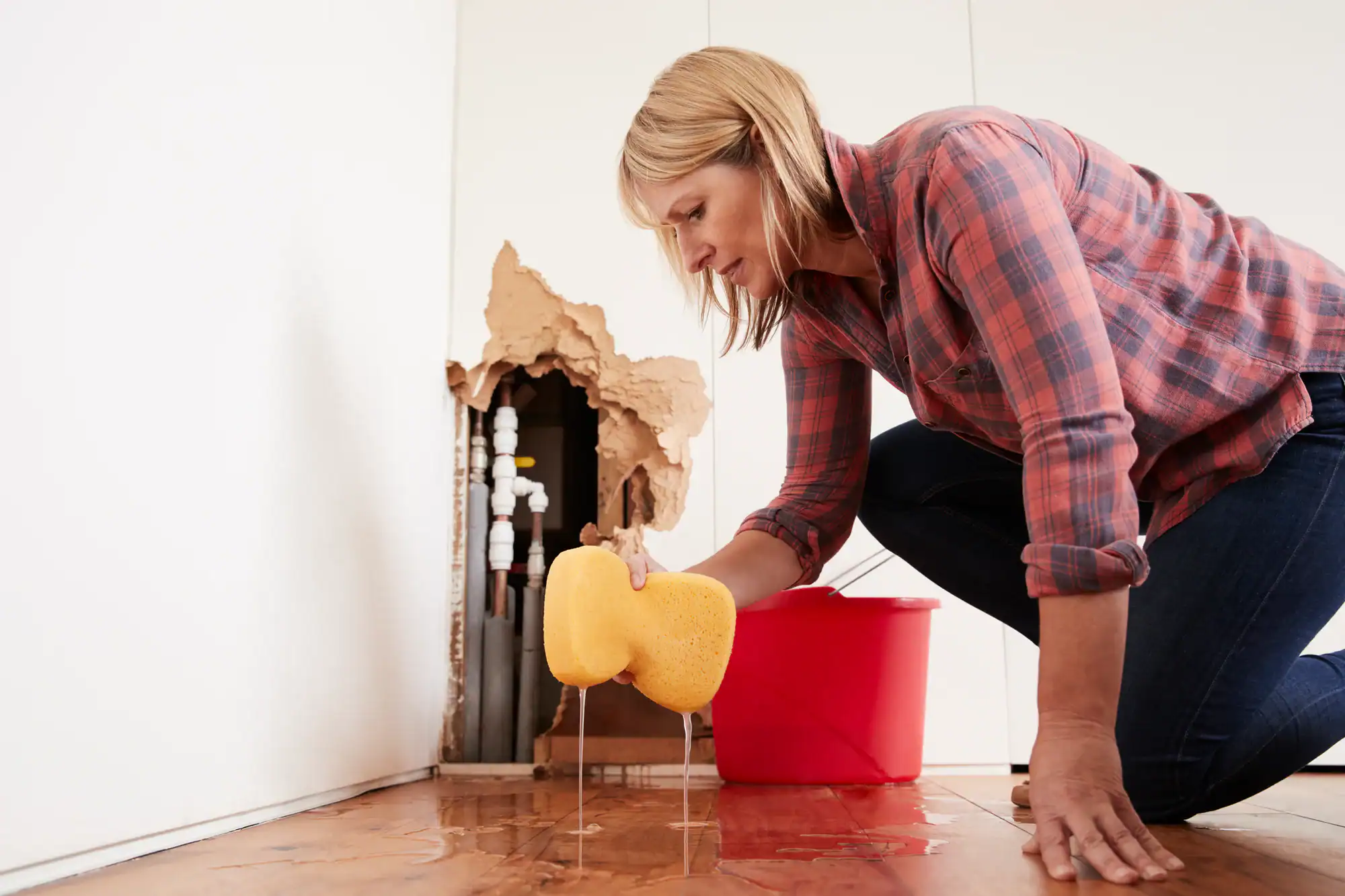
Most water damage in Baldwin Harbor doesn’t look catastrophic at first. It looks like a damp basement floor, a soft spot near the bulkhead wall, or a faint waterline on the drywall after a nor’easter pushes Middle Bay over its banks. That’s the part that fools people — because what you see on the surface is almost never the full picture.
Water moves. It wicks into wall cavities, travels along floor joists, and saturates insulation in spaces you’d never think to check. In a pre-war Cape Cod or a post-war split-level — the kinds of homes that define Baldwin Harbor’s housing stock — those hidden spaces are exactly where moisture sits and mold starts. In a coastal community where ambient humidity is already elevated year-round, the 24 to 48-hour mold growth window can be even tighter.
The bigger picture here is what a delayed response actually costs. A water damage job handled quickly and correctly is a manageable restoration. The same job ignored for 72 hours in a canal-adjacent home with older framing and high baseline moisture? That’s a mold remediation project on top of a structural drying job — and a very different insurance conversation. Getting it handled fast isn’t just about peace of mind. It’s about protecting a home that, in Baldwin Harbor, is likely worth close to $650,000.
Local Water Restoration Companies in Baldwin Harbor
We Know This Side of Sunrise Highway
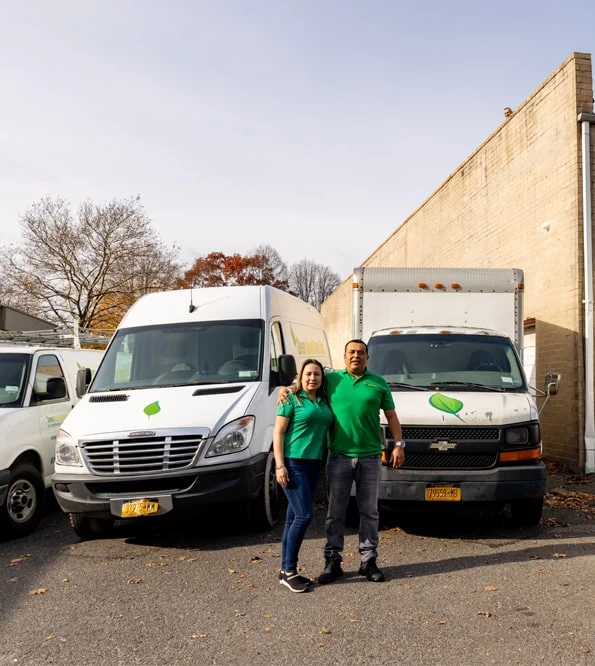
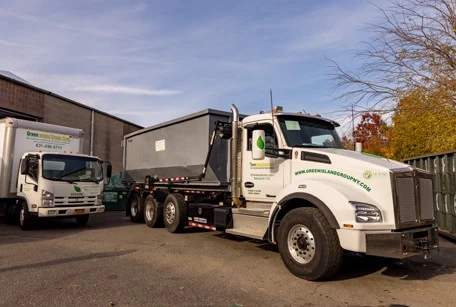
Green Island Group is a locally-owned restoration company based on Long Island, and the South Shore is home turf. We know that Baldwin Harbor isn’t just a ZIP code — it’s a community where nearly a third of the land area is water, where Bay Colony homeowners have private docks and real flood exposure, and where a storm that barely registers in Merrick can put canal-front streets underwater.
That matters when you’re deciding who to call at midnight during a nor’easter. National franchise brands have call centers and brand recognition. What they don’t have is someone who knows the difference between a tidal canal overflow and a groundwater intrusion event — and knows how to document both for your insurance claim. We do.
We’re IICRC certified, fully licensed under New York State’s Mold Law, and experienced with both standard homeowners insurance and NFIP flood insurance claims — because in Baldwin Harbor, many homeowners carry both, and navigating them simultaneously is part of the job.
From Standing Water to Structural Clearance — Here's the Process
When you call, we move. Response time matters more in Baldwin Harbor than almost anywhere else on Long Island, and we treat it that way. A crew heads to your address — not after a call center routes the request, not after a dispatcher confirms availability two counties over. We arrive ready to assess and start work immediately.
The first thing we do is figure out exactly what you’re dealing with. We use thermal imaging and moisture mapping — not just a visual walkthrough. In a coastal flooding event, especially one involving saltwater from storm surge or canal overflow, what you can see on the surface accounts for maybe half the actual damage. Saltwater behaves differently than freshwater inside a structure. It accelerates corrosion, leaves salt deposits in framing and concrete, and requires different treatment protocols. We account for that from the start, not after the fact.
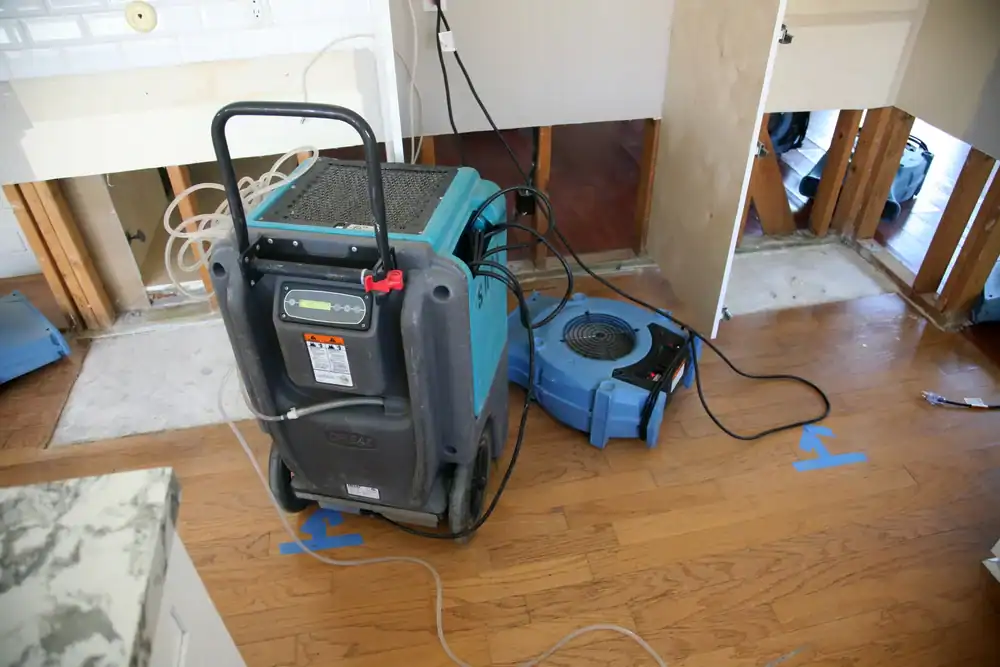
From there, we extract standing water, deploy industrial-grade drying equipment, and begin the structural drying process. For Town of Hempstead properties, any structural repairs following water damage require proper permitting — we know the local requirements and handle the documentation. We track moisture readings throughout the drying process and don’t consider the job done until instruments confirm the structure is dry, not just when it looks or feels that way. You get a written scope before we start and a clear record of the work when we finish — both for your own records and for your insurance adjuster.
Water Damage Restoration Services in Baldwin Harbor, NY
Built for Canal-Front Homes and Coastal Flooding — Not Just Generic Water Calls
Water damage restoration in Baldwin Harbor covers a wider range of scenarios than it does in most Nassau County communities. There’s storm surge from Reynolds Channel pushing saltwater through bulkheads into finished basements. There’s Milburn Creek rising during heavy rain events and flooding yards that connect directly to living spaces. There’s the high water table that causes hydrostatic pressure flooding in basements even when the surface looks fine. And there are the burst pipes and appliance failures that happen year-round in homes where the plumbing is 60 to 70 years old.
Every job we take in Baldwin Harbor includes water extraction, thermal imaging, moisture mapping, structural drying with industrial dehumidification, and clearance readings before we close out. For jobs involving mold — which is a common co-occurrence in this environment — we hold the required New York State Department of Labor mold remediation license. That’s not optional under NY State law, and it’s something a lot of operators in this market can’t say.
We also handle the insurance side. If you’re filing under a standard homeowners policy, we document accordingly. If you’re filing under an NFIP flood policy — which many Bay Colony and waterfront homeowners in this area carry separately — we know how that process works and can help you navigate both claims at the same time. You shouldn’t have to figure that out while your basement is still wet.
Does homeowners insurance cover water damage from storm surge in Baldwin Harbor?
This is one of the most important questions for Baldwin Harbor homeowners to understand before a flooding event — not after. Standard homeowners insurance policies generally do not cover flood damage, including storm surge. Flood damage is specifically excluded from most standard policies and requires a separate National Flood Insurance Program (NFIP) policy or a private flood insurance policy to be covered.
For Baldwin Harbor residents — particularly those in canal-adjacent neighborhoods like Bay Colony or in areas south of Sunrise Highway that fall within the coastal storm surge zone — this distinction is critical. If your home flooded during a nor’easter or a storm surge event and you don’t have a separate flood policy, you may be facing out-of-pocket costs even if you have full homeowners coverage. On the other hand, if the water damage resulted from a burst pipe, an appliance failure, or a roof leak (rather than rising floodwater), your homeowners policy likely does apply. When you call us, we help you identify which coverage applies to your situation and document the damage in the format each claim type requires.
How quickly does mold start growing after a basement floods?
Mold can begin growing within 24 to 48 hours of water intrusion under the right conditions — and in Baldwin Harbor, those conditions are frequently present. Coastal communities have naturally higher ambient humidity than inland areas, and homes that sit near canals, creeks, or bay frontage tend to have baseline moisture levels that are already closer to the threshold where mold takes hold. That means the effective window for preventing mold growth after a flooding event can be shorter here than in drier regions.
The other factor is hidden moisture. Mold doesn’t need standing water — it needs moisture inside wall cavities, behind baseboards, under subfloors, and in insulation. These are spaces that feel dry to the touch but register elevated moisture on a calibrated meter. In Baldwin Harbor’s older housing stock, where wall construction and insulation materials from the 1940s through 1960s are common, those hidden spaces are exactly where moisture accumulates and lingers. Getting a professional on-site quickly — with the right equipment to find hidden moisture, not just visible water — is the difference between a water damage job and a mold remediation job.
What is the difference between saltwater and freshwater flood damage restoration?
It’s a meaningful difference, and it’s one that comes up regularly in Baldwin Harbor because of the community’s direct exposure to tidal canals and storm surge from Middle Bay and Reynolds Channel. Freshwater flooding — from rain, burst pipes, or groundwater — is damaging, but it doesn’t introduce the additional complications that saltwater does. Saltwater accelerates corrosion of metal components including electrical systems, HVAC equipment, and structural fasteners. It leaves salt deposits in concrete, masonry, and wood framing that continue to cause deterioration long after the visible water is gone. And it requires different cleaning and treatment protocols to neutralize properly.
From a documentation standpoint, saltwater flooding events are also handled differently by insurance adjusters — particularly under NFIP flood policies, which are the policies most relevant to storm surge events. When we assess a Baldwin Harbor property after a coastal flooding event, we identify the water source, document the type of intrusion, and adjust our remediation approach accordingly. A company that treats a storm surge event the same way it treats a burst pipe isn’t accounting for the full scope of damage — and that gap tends to show up later, in the form of corrosion, odor, or structural issues that weren’t properly addressed the first time.
How long does the water damage restoration process take for a typical Baldwin Harbor home?
The honest answer is that it depends on the extent of the damage and the source of the water, but for a typical residential job in Baldwin Harbor — a flooded basement or a first-floor water intrusion event — the structural drying phase alone generally takes three to five days with industrial drying equipment running continuously. Larger events, or situations involving saltwater intrusion or significant structural saturation, can take longer.
What we don’t do is declare a job complete based on how things look or feel. We use moisture meters and thermal imaging to track drying progress and establish clearance readings before we close out. In Baldwin Harbor’s coastal environment, where ambient humidity stays elevated and older homes have more complex wall assemblies, that verification step matters more than it might in a drier, inland community. If mold remediation is also required — which New York State law requires to be performed by a separately licensed contractor — that adds additional time and a separate scope of work. We’ll give you a realistic timeline from the start, not an optimistic one that changes once we’re already on the job.
Can Green Island Group help me file a water damage insurance claim in Baldwin Harbor, NY?
Yes — and for Baldwin Harbor homeowners, this is often more complicated than it is for residents in inland Nassau County communities. Many waterfront and canal-adjacent homeowners here carry two separate policies: a standard homeowners insurance policy and a National Flood Insurance Program flood policy. These are two distinct claims processes with different documentation requirements, different adjusters, and different coverage scopes. Filing one correctly doesn’t automatically mean the other is handled.
We document every job in a format that supports both claim types. That means detailed moisture readings, thermal imaging records, written scope of damage, and photographic documentation from initial assessment through final clearance. We can communicate directly with your adjuster and provide the technical documentation they need to process your claim accurately. We can’t guarantee what your insurer will approve — no honest restoration company can — but we can make sure the documentation we provide gives your claim the strongest possible foundation. If you’re unsure which policy applies to your situation or what your coverage actually includes, that’s a conversation worth having before you sign anything with your insurer.
Is Green Island Group licensed for mold remediation in New York State?
Yes. New York State’s Mold Law, which took effect in 2016, requires separate licensing from the NYS Department of Labor for both mold assessment and mold remediation. This isn’t a voluntary certification — it’s a legal requirement, and work performed by unlicensed operators can create real complications for homeowners, including issues with insurance claims and potential liability if the work doesn’t meet state standards.
In Baldwin Harbor, this matters more than it does in most communities. The combination of recurring coastal flooding, high ambient humidity, aging housing stock, and canal-adjacent properties creates conditions where mold is a frequent co-occurrence with water damage — not an occasional one. When you hire a restoration company here, you should ask to see their NYS mold remediation license before any work begins. A lot of operators in this market are not licensed and either perform the work anyway or subcontract it without disclosing that to the homeowner. We hold the required state licensing and perform mold remediation as part of a fully documented, compliant scope of work — which matters both for the quality of the job and for the integrity of your insurance claim.