When Water Hits a 200-Year-Old Foundation, You Need Someone Who Knows
When water gets into a stone foundation or under wide-plank hardwood floors, you need someone who understands what they’re dealing with not just a crew with fans and a dehumidifier. Bedford’s housing stock is different. The homes here were built to last, which means they’re built differently than modern construction. That difference matters when water damage happens.
I needed a professional consultation explanation of procedure for safe removal of Asbestos in my apartment complex. Without having an account yet, I was very impressed with the caring, knowledgeable and generous advice offered by Jessica, and will look forward to doing business in the future. Thank you so much! I feel much more informed about a sometimes scary endeavor. Peace. Nancy Silva Mineola, NY.
Mia Munoz
Used this company to clean up some water flood in my house. They were fast and easy to work with.very professional, Would recommend to anyone!
Nini Valle
Great company, had a flood and they responded quickly and efficiently. Billed my insurance company directly. I highly recommend this company!
joe colapietro, jr
I had pipe freeze in my basement right before a snow storm and they made to within an hour to help start the clean up process. They we by our side throughout the entire process and even helped with the insurance company. They did such a great job with the cleanup, repair, remidiation, I contracted them to perform the repairs and finishes in the basement. They came with enough manpower and material to get the job done. Leo and Jessica were nothing but a pleasure to deal with!!
Cristian Arredondo c
I had some water damage in my home and Green Island was able to take care of my issue quickly and effectively. I am very pleased with the work they did. They responded quickly and were very professional.
Michael M
Outstanding service! From the office to the field crew everyone was friendly, helpful and responsive. I highly recommend Green Island Group.
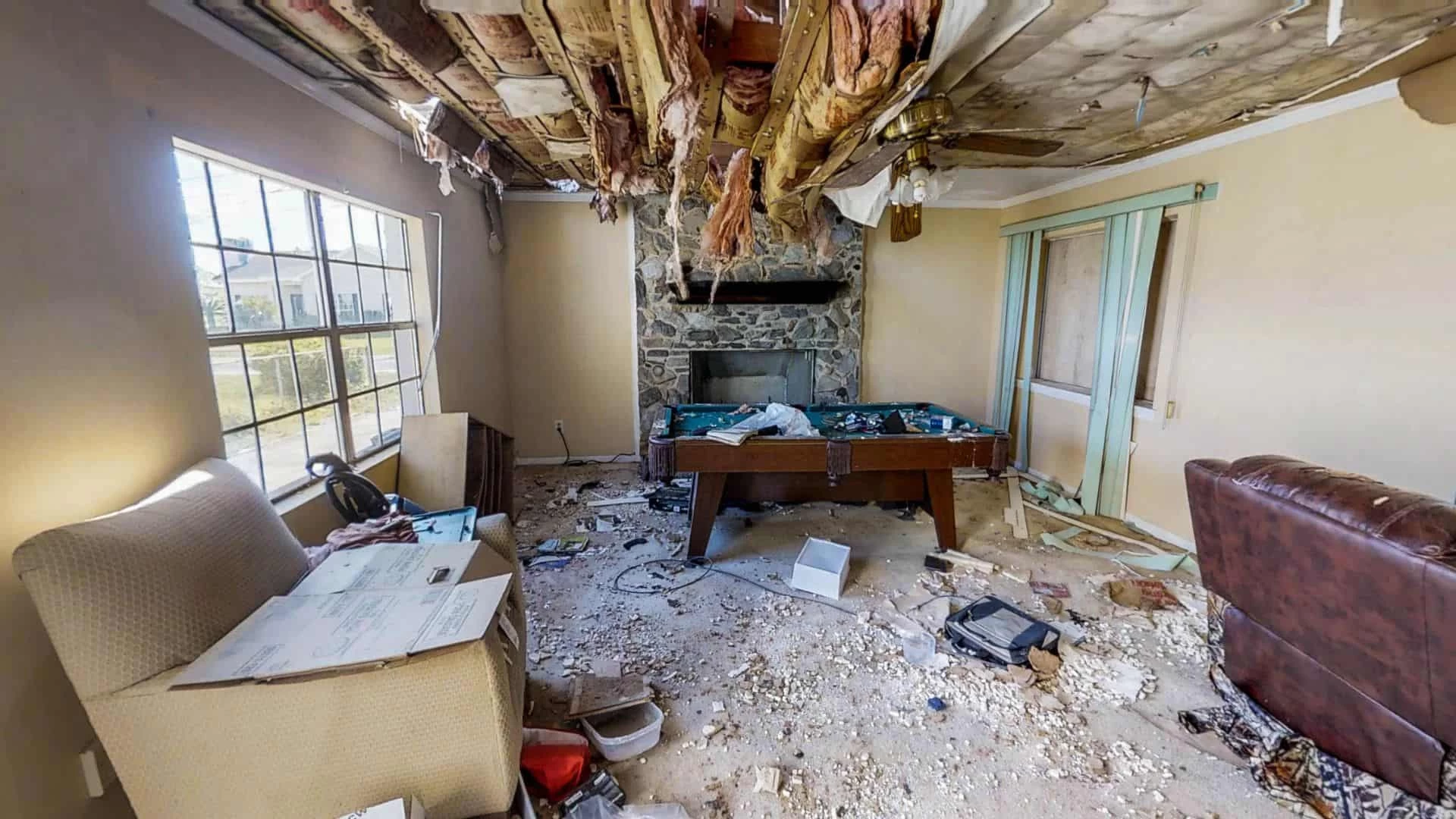
When water damage hits, the visible part the wet floor, the stained ceiling, the soaked drywall is only half the problem. The other half is what you can’t see: moisture trapped inside wall cavities, under subfloors, behind plaster, and in the structural materials that hold your home together. Left alone for 24 to 48 hours, that hidden moisture becomes a mold problem. And in Bedford, where a significant share of homes were built well before modern construction standards, that hidden moisture has more places to hide.
A lot of Bedford’s housing stock particularly in Bedford Village and along Guard Hill Road features stone foundations, plaster walls, and dense historic materials that hold moisture differently than modern construction. Standard extraction and fan-drying doesn’t cut it here. The process has to account for how these materials behave, how long they take to dry, and what’s at risk if the job gets rushed.
What you’re left with after a proper restoration is a home that’s genuinely dry, tested, and documented not just one that looks fine on the surface. No lingering odor. No mold establishing behind a wall you can’t see. No callback six weeks later because something was missed. That’s what a thorough job actually looks like.
We’ve been doing restoration work for over 12 years. We’re NYS and NYC M/WBE Certified, IICRC-certified, and fully insured liability and workers’ compensation both. That’s not a list of credentials for the sake of it. It means we’ve been formally reviewed by New York State, we meet the industry’s professional training standards, and if anything goes wrong on your property, you’re protected.
We work throughout northern Westchester, including Bedford Village, Bedford Hills, and Katonah. We know this area the older homes, the estate-scale properties, the equestrian lots with multiple structures, the historic districts with their own rules about what you can and can’t do. We’ve handled water damage in homes that have been standing since before the American Revolution, and we understand what that kind of property requires.
We also handle asbestos abatement in-house. For a pre-1978 home in Bedford, that’s not a minor detail it’s the difference between a contractor who can actually complete the job and one who has to stop and call someone else.
Emergency Water Restoration Process near Bedford, NY
What Actually Happens From First Call to Finished Job
It starts with your call. We’re available 24 hours a day, seven days a week because a burst pipe in January doesn’t wait for business hours, and a flooded basement during a spring snowmelt event doesn’t either. When you reach us, we ask the right questions to understand the scope before we arrive, so we show up prepared, not guessing.
On-site, the first step is assessment. We identify the source, map the extent of the moisture intrusion, and critically for Bedford’s older homes evaluate whether hazardous materials like asbestos are present before any extraction or demolition work begins. In a home built before 1978, skipping that step isn’t just risky, it may violate state regulations. We handle that assessment and any required abatement ourselves, so the job doesn’t get handed off to a second contractor and lose momentum.
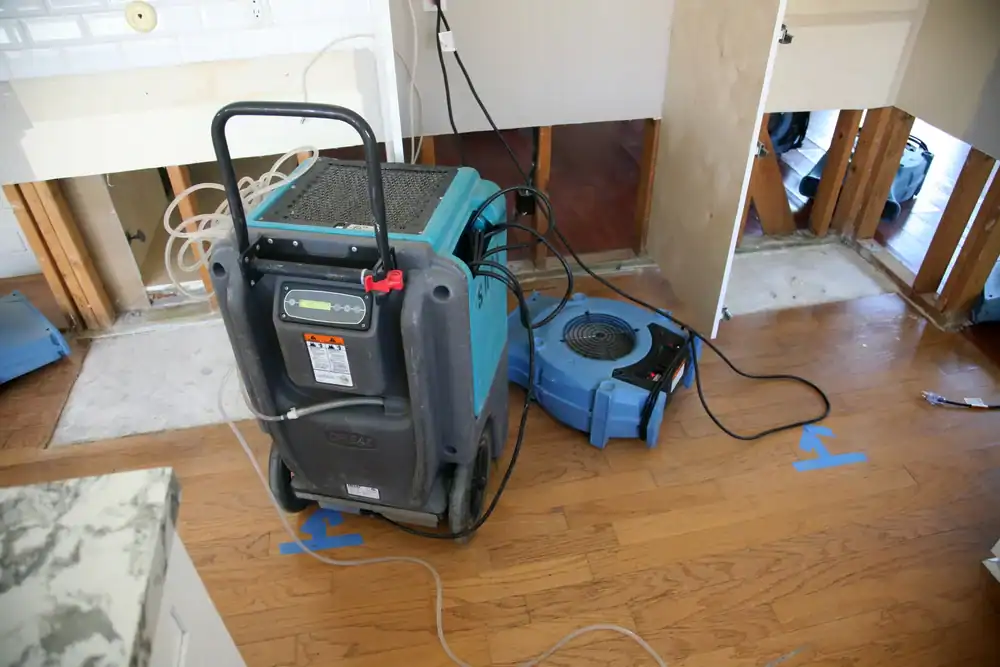
From there, we move into extraction, structural drying, and monitoring. Industrial equipment handles the heavy lifting, but the process is managed carefully especially in historic structures where aggressive drying can damage irreplaceable materials. Once the structure is dry and tested, we document everything for your insurance claim and move into any needed reconstruction. You get one point of contact from start to finish, and we work directly with your insurance carrier so you’re not buried in paperwork.
Water Damage Restoration Services near Bedford, NY
Full Restoration Built for What Bedford Properties Actually Face
Water damage restoration in Bedford isn’t a one-size job. A flooded finished basement in a Bedford Hills colonial is a different problem than a moisture intrusion in a stone-foundation home within the Bedford Village Historic District which has its own preservation regulations that affect what can be removed, altered, or replaced. We understand both, and we adjust accordingly.
Our scope covers emergency water extraction, structural drying, mold remediation, asbestos abatement, fire damage restoration, and full reconstruction. For properties in Katonah’s Victorian-era historic district or on multi-acre equestrian estates where the damage may span a main house, guest cottage, and barn, that full-service capability matters. You’re not coordinating between three different contractors we handle it.
We also work directly with insurance carriers and handle billing on your behalf. The average water damage claim runs $12,000 to $15,000, but on a high-value historic property in Bedford, the actual restoration cost can go well beyond that. For larger-scope projects, we offer financing up to $200,000 at 0% APR a straightforward way to cover the gap between what insurance pays and what the job actually costs, without paying a dollar in interest. Every job we do comes with a 100% satisfaction guarantee.
Does homeowners insurance cover water damage in Bedford, NY?
Generally, yes but the details matter. Most standard homeowners insurance policies in New York cover water damage that results from a sudden and accidental event: a burst pipe, a failed washing machine supply line, a storm that drives water through a compromised roof. What they typically don’t cover is gradual damage a slow leak behind a wall, seepage through a foundation over time, or flooding from an external water source like a rising stream or overflowing reservoir.
For Bedford homeowners, this distinction is especially important. The Cross River Reservoir and Muscoot Reservoir sit adjacent to Bedford’s boundaries, and certain low-lying areas of town experience groundwater and drainage dynamics that can blur the line between storm-related intrusion and chronic seepage. If you’re not sure how your claim will be categorized, document everything immediately photos, timestamps, and a clear account of when you first noticed the damage. We work directly with insurance carriers and can help ensure your claim is documented correctly from the start.
How fast does mold start growing after water damage occurs?
Mold can begin establishing within 24 to 48 hours of a water intrusion event under the right conditions and in Bedford’s humid continental climate, those conditions are common. Warm summers, wet springs, and the town’s heavily wooded setting all contribute to ambient moisture levels that accelerate mold growth after a water event.
What makes this especially relevant for Bedford’s older homes is where the mold grows. In a house with plaster walls, stone foundations, and dense historic framing, moisture doesn’t evaporate the way it does in modern drywall construction. It gets trapped. Mold can establish deep inside a wall cavity or beneath a wide-plank hardwood floor and spread for weeks before it becomes visible or detectable by smell. That’s why response time matters so much and why the drying process needs to be thorough, not just surface-level. Getting someone on-site within the first few hours gives you the best chance of stopping mold before it becomes a remediation project on top of a restoration project.
My Bedford home was built before 1978 does that affect the restoration process?
It does, and it’s something a lot of homeowners don’t find out until a contractor shows up and has to stop work. Homes built before 1978 commonly contain asbestos in floor tiles, pipe insulation, ceiling texture, and joint compound. When water damage occurs and materials need to be removed or disturbed, New York State regulations require that asbestos be assessed and if present, properly abated before standard restoration work can continue.
In Bedford, where a substantial portion of the housing stock predates 1978 and where the Bedford Village Historic District alone contains 80 contributing buildings, this isn’t an edge case. It’s a routine consideration. The problem is that most water damage contractors aren’t licensed for asbestos abatement. They’ll extract the water, start tearing out materials, and then either stop when they realize what they’re dealing with or worse keep going without proper precautions. We handle asbestos assessment and abatement in-house, so the job doesn’t stall and you’re not left coordinating between two separate companies on an emergency timeline.
What should I do immediately after discovering water damage in my home?
The first thing is to stop the source if you can shut off the water supply, or if it’s storm-related intrusion, get the affected area as sealed off as possible. Then call a restoration company before you call your insurance company. That order matters because the documentation we produce in the first hours on-site is often the most important evidence in your claim.
Don’t start pulling up flooring or tearing out drywall yourself, even if it seems like the obvious next step. In an older Bedford home, disturbing materials without knowing what’s behind them can create a hazardous materials situation or cause additional structural damage. Take photos and video of everything before anything is moved or removed. If the property is a part-time or weekend residence which is common in Bedford, where many homeowners split time between the city and the country try to have a neighbor or property manager do a walkthrough during the week so that a pipe failure or slow leak doesn’t go undetected for days before you arrive on a Friday night.
How does water damage restoration work for historic homes in Bedford Village?
Carefully and with a clear understanding of what the town’s historic preservation regulations actually require. Properties within the Bedford Village Historic District and the Katonah Historic District are subject to local preservation review, which means that even emergency restoration work may need to be coordinated with the town’s historic preservation process if it involves alterations to contributing structures. Substantial improvements generally defined as repairs costing 50% or more of the structure’s pre-damage market value can trigger full compliance with current floodplain management and preservation regulations.
On the practical side, working in a historic home means respecting materials that can’t simply be replaced. Wide-plank hardwood floors, original plaster walls, hand-laid stone foundations, and period millwork all require different drying approaches than modern construction. Aggressive dehumidification that would be standard in a 1990s colonial can crack plaster or warp irreplaceable flooring in an 18th-century home. The process has to be calibrated to the structure slower, more monitored, and more precise. That’s not a complication we work around. It’s something we plan for from the start.
Can you handle water damage across multiple structures on a larger Bedford property?
Yes, and it’s more common in Bedford than most people expect. The town’s equestrian estates, historic manor properties, and multi-acre lots often include a main house alongside guest cottages, barns, carriage houses, and other outbuildings all of which can be affected by a single water event. A severe spring storm or a frozen pipe failure in a barn doesn’t just damage one structure. When groundwater rises or a roof fails during a nor’easter, the damage can spread across a property quickly.
We assess and restore all affected structures as part of a single coordinated project. That matters for two reasons. First, it keeps the timeline clean you’re not waiting for one contractor to finish the main house before a second one starts on the carriage house. Second, it keeps the insurance documentation unified. One claim, one point of contact, one set of records. For Bedford properties where the total restoration scope can easily reach six figures across multiple structures, that coordination isn’t a convenience it’s a meaningful part of getting the job done right.