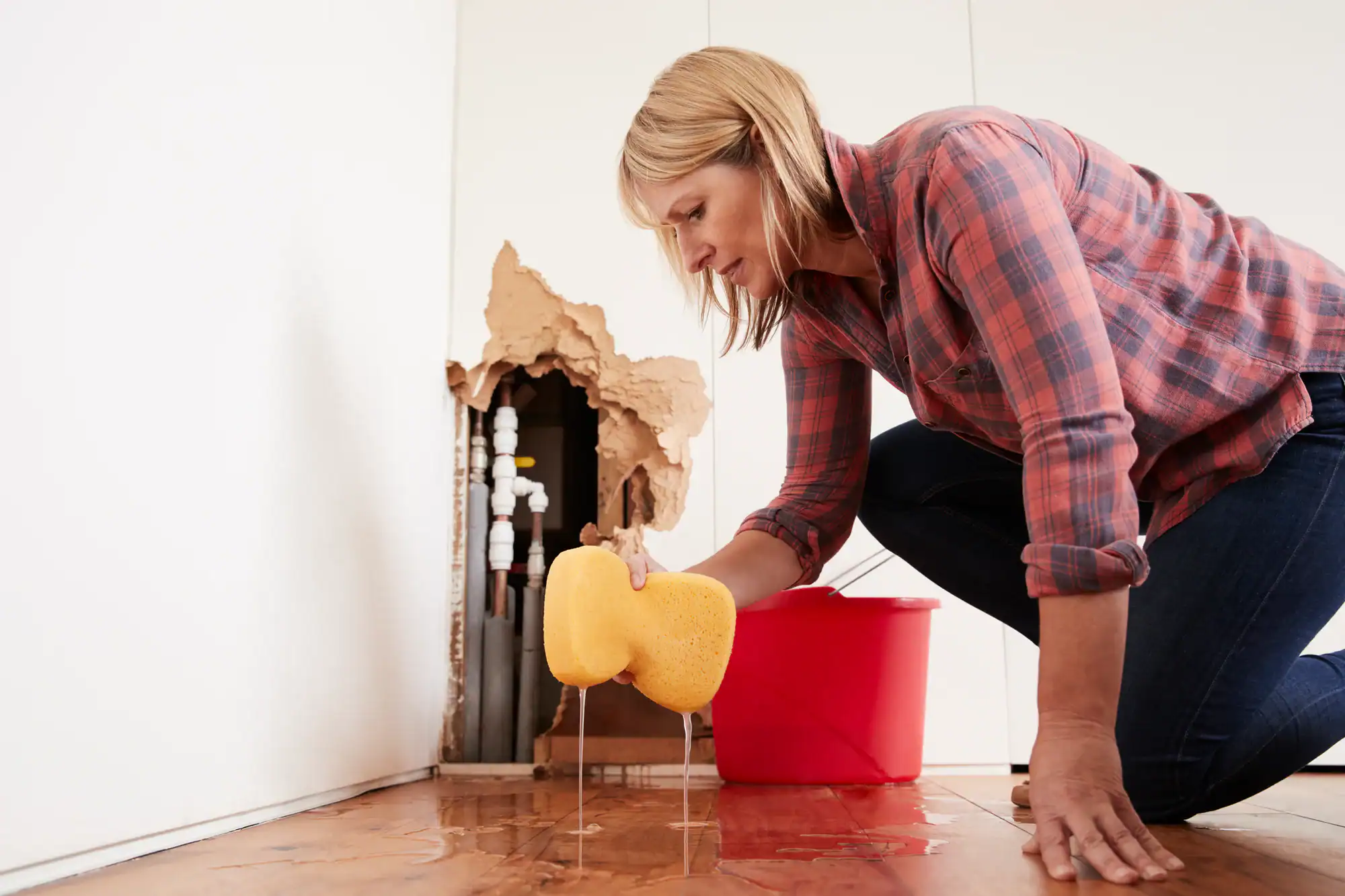
When water gets into a Bellmore home — whether it’s a canal backup off the bay, a burst pipe in a 1958 Cape Cod, or a nor’easter that dropped six inches overnight — every hour you wait makes the damage worse. We respond fast, dry it right, and handle your insurance claim so you’re not doing this alone.
I needed a professional consultation explanation of procedure for safe removal of Asbestos in my apartment complex. Without having an account yet, I was very impressed with the caring, knowledgeable and generous advice offered by Jessica, and will look forward to doing business in the future. Thank you so much! I feel much more informed about a sometimes scary endeavor. Peace. Nancy Silva Mineola, NY.
Mia Munoz
Used this company to clean up some water flood in my house. They were fast and easy to work with.very professional, Would recommend to anyone!
Nini Valle
Great company, had a flood and they responded quickly and efficiently. Billed my insurance company directly. I highly recommend this company!
joe colapietro, jr
I had pipe freeze in my basement right before a snow storm and they made to within an hour to help start the clean up process. They we by our side throughout the entire process and even helped with the insurance company. They did such a great job with the cleanup, repair, remidiation, I contracted them to perform the repairs and finishes in the basement. They came with enough manpower and material to get the job done. Leo and Jessica were nothing but a pleasure to deal with!!
Cristian Arredondo c
I had some water damage in my home and Green Island was able to take care of my issue quickly and effectively. I am very pleased with the work they did. They responded quickly and were very professional.
Michael M
Outstanding service! From the office to the field crew everyone was friendly, helpful and responsive. I highly recommend Green Island Group.
What Complete Restoration Actually Looks Like in Bellmore
A lot of homeowners think water damage restoration means getting the water out and running a fan. That’s not restoration — that’s the beginning. Real restoration means verifying that the moisture is gone from inside your walls, beneath your floors, and within the framing of your home. In Bellmore, where more than 84% of homes were built before 1970, that matters more than almost anywhere else on Long Island.
Plaster walls, original wood framing, and post-war basement construction hold moisture in ways that modern drywall simply doesn’t. What looks dry on the surface can be actively feeding mold growth inside a wall cavity. For homeowners in South Bellmore’s canal neighborhoods, where tidal surge from the Great South Bay brings bay water directly into basements and crawl spaces, the contamination concern adds another layer that a shop vac and a box fan will never address.
When the job is done correctly, you’re not just looking at a dry room. You have documented moisture readings that confirm structural dryness, a clear record for your insurance claim, and the confidence that mold isn’t quietly developing inside the walls your family walks past every day. That’s the difference between a cleanup and a restoration.
Long Island-Based, Not a Franchise Routing Your Call
We are a locally owned and operated restoration company serving Nassau County’s South Shore — including the waterfront neighborhoods of Bellmore that have been dealing with recurring flood damage since Hurricane Sandy hit this coastline with a ten-foot storm surge in 2012. When you call us, you reach a local team that dispatches from Long Island, knows these streets, and sends the same crew from start to finish.
That matters in a community like Bellmore, where the homes along Shore Road and the canal neighborhoods south of Merrick Road have a very specific kind of flood exposure. We’ve worked in these neighborhoods. We know what this area asks of a home, and we know what complete restoration looks like here.
When you call, you reach a real person — not a voicemail, not an answering service. We ask a few quick questions to understand what you’re dealing with, and we dispatch a crew. In Bellmore, that means someone is actually coming, not calling you back in the morning after a nor’easter has been running water into your basement all night.
When we arrive, the first thing we do is assess — not just what’s visible, but what the moisture meters and thermal imaging camera tell us. In older Bellmore homes with plaster walls and original wood framing, hidden moisture is the rule, not the exception. We map the full extent of the damage before any equipment goes down, because drying the wrong areas first wastes time and misses the problem.
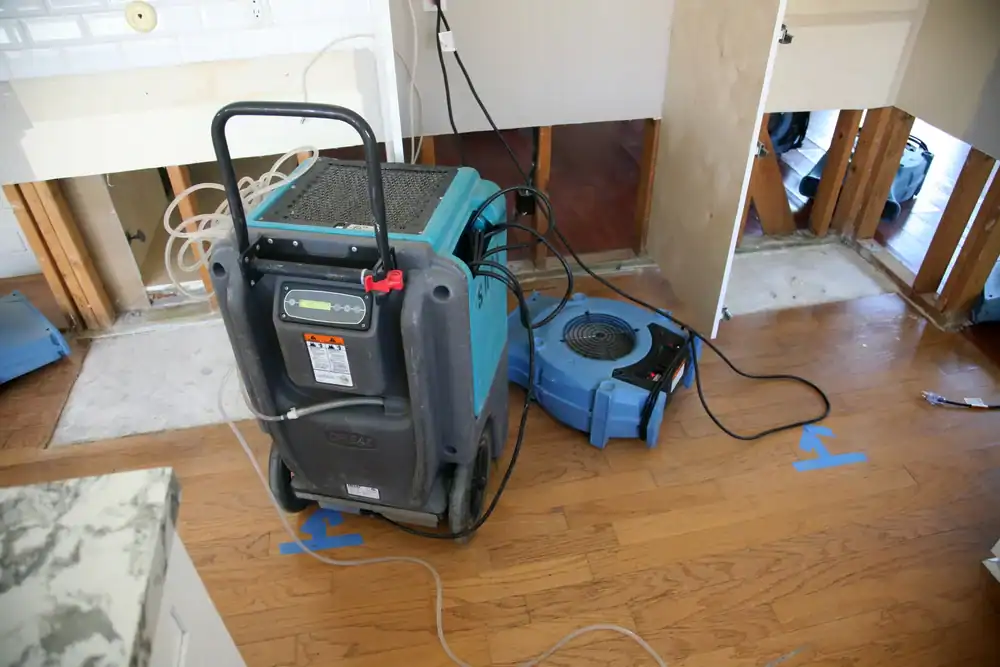
From there, we set industrial drying equipment — commercial-grade dehumidifiers and high-velocity air movers that create the airflow needed to pull moisture out of structural cavities, not just the air in the room. We monitor readings daily and adjust the setup as the structure dries. For jobs involving mold or contaminated water — which is common in South Bellmore after bay water events — we follow New York State’s Mold Law protocols, including proper containment and licensed remediation. When moisture readings confirm the home is structurally dry, we document everything and walk you through the insurance paperwork. You don’t have to figure that part out on your own.
Water Damage Restoration Service, Nassau County NY
Built for South Shore Homes, Not Generic Checklists
Water damage restoration in Bellmore isn’t one-size-fits-all, and we don’t treat it that way. The service starts with a thorough assessment using moisture meters and thermal imaging — tools that find what the naked eye misses in homes where plaster walls and original wood construction are the norm. From there, we deploy commercial extraction equipment, industrial drying systems, and where needed, antimicrobial treatments to address contamination from bay water or sewage backup events.
For homeowners in Nassau County, New York State’s Mold Law is directly relevant. If mold is found or suspected, assessment and remediation require separate state licensing under the New York State Department of Labor — and we carry those licenses. This isn’t a technicality. In a community where aging housing stock, coastal humidity, and recurring flood events create some of the highest mold-risk conditions on Long Island, working with a properly licensed company protects you legally and financially.
We also handle the insurance side directly. That means documentation, moisture logs, adjuster communication, and billing — all managed on your behalf. Nassau County homeowners insurance claims involving water damage can get complicated quickly, especially when the line between storm surge and internal water damage affects what your policy covers. Having a restoration company that understands that distinction, and can document your claim accordingly, is worth more than most homeowners realize until they’re in the middle of it.
How quickly can mold start growing after flooding in a Bellmore home?
Mold can begin growing within 24 to 48 hours of water intrusion — and in a Bellmore home built in the 1950s or 1960s, it has more places to hide than in newer construction. Plaster walls, original wood framing, and older insulation materials absorb and hold moisture differently than modern drywall. The surface can feel dry while the interior of a wall cavity is still wet enough to support active mold growth.
That’s why the timeline matters so much. The longer water sits — or the longer moisture remains trapped inside a wall after visible water is removed — the greater the risk. If your home flooded during a nor’easter or from a bay water backup in one of Bellmore’s canal neighborhoods, the clock started the moment the water came in. Professional drying equipment and moisture verification are what separate a complete restoration from a mold problem that shows up six weeks later.
Does homeowners insurance cover water damage restoration costs in Bellmore, NY?
It depends on the source of the water, and this is where a lot of Bellmore homeowners run into problems. Standard homeowners insurance typically covers sudden and accidental water damage — a burst pipe, a washing machine failure, a roof leak from a storm. It generally does not cover flooding from outside the home, which in Bellmore’s case means tidal surge, bay water backup, or storm surge events like what happened during Hurricane Sandy. That type of flooding typically requires a separate flood insurance policy, often through FEMA’s National Flood Insurance Program.
The distinction matters because South Bellmore’s canal neighborhoods experience both types of water intrusion — sometimes in the same storm event. A nor’easter can drive bay water into a basement through foundation seams while simultaneously causing a roof leak or pipe failure inside the home. Documenting which damage came from which source is critical to maximizing your claim, and it’s something most homeowners aren’t equipped to handle on their own. We document the damage, communicate directly with your adjuster, and help make sure your claim reflects the full scope of what happened.
What's the difference between water damage cleanup and actual restoration?
Cleanup is removing the visible water. Restoration is verifying that the structure is completely dry, that no mold has taken hold, and that the home is safe to occupy without ongoing risk. Those are two very different things — and the gap between them is where most problems start.
In a Bellmore home with plaster walls and original wood framing, cleanup without proper drying can leave moisture trapped inside wall cavities for weeks. It doesn’t show up immediately. What shows up is a musty smell a month later, or a mold test that comes back positive, or a buyer’s inspection during a future sale that flags undisclosed water damage. True restoration means using calibrated moisture meters and thermal imaging to confirm that every affected area — not just the visible ones — has reached acceptable dryness levels. It means keeping industrial drying equipment running until the readings say the job is done, not until the room looks dry. And it means documenting everything so you have a defensible record if questions come up later with your insurance carrier or a future buyer.
How does bay water flooding in South Bellmore affect the restoration process?
Bay water from the Great South Bay is not clean water. When tidal surge or storm-driven flooding pushes bay water into a South Bellmore home — through foundation seams, basement windows, or low-lying entry points — it brings with it sediment, bacteria, and biological material that classify it as Category 2 or Category 3 contaminated water under industry standards. That changes everything about how the restoration has to be handled.
Contaminated water intrusion requires more than drying. It requires proper extraction with equipment rated for contaminated material, antimicrobial treatment of affected surfaces, and in many cases, controlled demolition of materials that cannot be safely dried in place — like saturated insulation or subfloor sections that absorbed bay water directly. New York State’s Mold Law also becomes directly relevant when contaminated water is involved, because the conditions that produce mold growth are accelerated significantly. We are licensed under New York State law for both mold assessment and mold remediation, which means we can handle the full scope of a bay water event legally and correctly — not just the drying portion.
How long does water damage restoration typically take for a Bellmore home?
The honest answer is that it depends on the size of the affected area, the materials involved, and how long the water was present before mitigation started. For a straightforward basement flooding event in a Bellmore home — say, a sump pump failure during a heavy rain — the drying phase typically takes three to five days with commercial equipment running continuously. Larger events, or situations where water was present for an extended period before anyone called, can take longer.
In older Bellmore homes, the drying timeline is often longer than it would be in newer construction. Plaster walls and original wood framing hold moisture longer than modern drywall, and the drying equipment has to work harder and longer to pull moisture out of denser, older materials. We monitor moisture readings daily and adjust the equipment setup as the structure responds. We don’t pull equipment based on a calendar — we pull it when the readings confirm the home is structurally dry. That’s the only timeline that actually protects you.
Should I be worried about water damage in my Bellmore home even after it looks dry?
Yes — and this is one of the most important things to understand if you’ve been through flooding in Bellmore, especially in the canal neighborhoods or anywhere south of Merrick Road. What looks dry on the surface is often not dry inside the wall. Moisture migrates into building materials and gets trapped in cavities where airflow is limited. In a home built in the 1950s or 1960s — which describes the majority of Bellmore’s housing stock — that trapped moisture has more places to go and takes longer to dissipate than in modern construction.
The risk isn’t just mold, though that’s significant. Trapped moisture over time can weaken structural framing, cause hardwood floors to buckle, and create conditions that attract pests. It can also create disclosure obligations if you ever sell the home, and Nassau County buyers and their inspectors are increasingly sophisticated about asking the right questions. The only way to know whether your home is truly dry is to measure it — with calibrated moisture meters and thermal imaging, not by touching the wall and deciding it feels okay. If your home flooded and you’re not sure whether the restoration was complete, a professional assessment is worth the call.