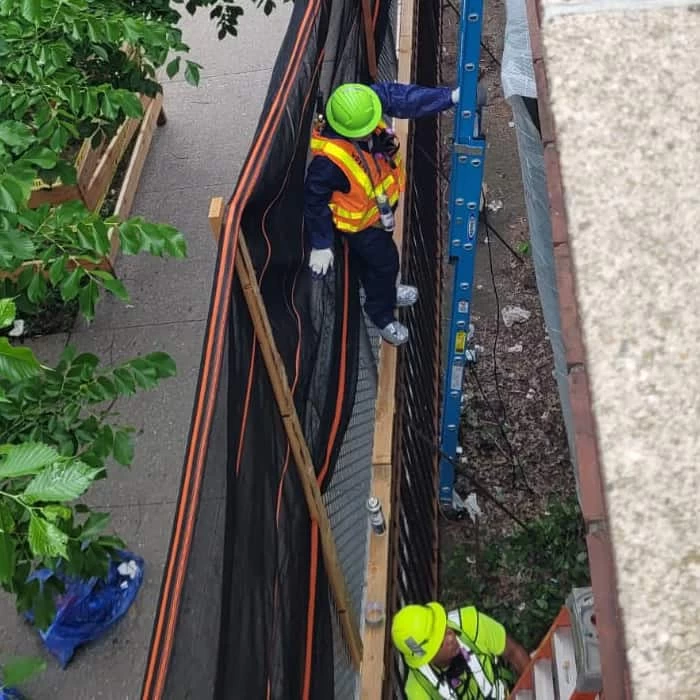
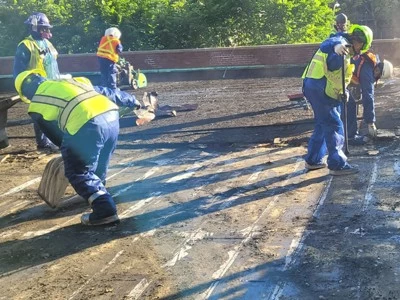
I needed a professional consultation explanation of procedure for safe removal of Asbestos in my apartment complex. Without having an account yet, I was very impressed with the caring, knowledgeable and generous advice offered by Jessica, and will look forward to doing business in the future. Thank you so much! I feel much more informed about a sometimes scary endeavor. Peace. Nancy Silva Mineola, NY.
Mia Munoz
Used this company to clean up some water flood in my house. They were fast and easy to work with.very professional, Would recommend to anyone!
Nini Valle
Great company, had a flood and they responded quickly and efficiently. Billed my insurance company directly. I highly recommend this company!
joe colapietro, jr
I had pipe freeze in my basement right before a snow storm and they made to within an hour to help start the clean up process. They we by our side throughout the entire process and even helped with the insurance company. They did such a great job with the cleanup, repair, remidiation, I contracted them to perform the repairs and finishes in the basement. They came with enough manpower and material to get the job done. Leo and Jessica were nothing but a pleasure to deal with!!
Cristian Arredondo c
I had some water damage in my home and Green Island was able to take care of my issue quickly and effectively. I am very pleased with the work they did. They responded quickly and were very professional.
Michael M
Outstanding service! From the office to the field crew everyone was friendly, helpful and responsive. I highly recommend Green Island Group.
Your Brookville Home Dry, Documented, and Back to Normal
Water damage in a Brookville home isn’t the same as water damage anywhere else. These are large properties often 5,000 square feet or more with finished basements, wine cellars, custom millwork, and plumbing systems that span multiple buildings. When something goes wrong, the scale of the problem can multiply fast if the response isn’t immediate and thorough.
The clay-heavy soils on Long Island’s North Shore don’t drain the way sandy South Shore soils do. That means groundwater builds up faster around foundations in Brookville, basements take on water more readily during heavy rain, and the freeze-thaw cycles that hit this area every winter put real stress on pipes in outbuildings and guest cottages that don’t stay heated. These aren’t hypothetical risks they’re the actual conditions driving water damage calls in Brookville season after season.
What you get on the other side of a proper restoration is a home that’s genuinely dry not surface-dry, but confirmed dry with moisture readings and documentation. No hidden moisture sitting inside walls or under custom flooring waiting to become a mold problem three months from now. The job isn’t done until the numbers say it’s done.
Water Restoration Companies Serving Brookville, NY
We Know What's at Stake in Brookville Estates
We serve Nassau County and Long Island’s North Shore, and Brookville is a community we know well. The homes along Cedar Swamp Road and the surrounding estate corridors aren’t cookie-cutter builds. They’re complex, high-value properties with historic materials, layered systems, and finishes that can’t just be ripped out and replaced with whatever’s in stock at a supply house.
That understanding shapes how we work. We come in with the right equipment, the right certifications, and a clear process and we treat every Brookville property with the level of care that a home of this value deserves. Our technicians are IICRC certified in water damage restoration and structural drying, we’re fully licensed and insured in New York State, and we carry the mold remediation licensing required under New York State Labor Law Article 32.
We also work directly with your insurance carrier. We handle the documentation, the adjuster communication, and the claim paperwork because the last thing you need during a water emergency is to become the project manager for a complicated insurance process.
From First Call to Final Walkthrough Here's What Happens
The first step is getting there. When you call, you reach a real person who can dispatch a crew not a voicemail that gets returned Monday morning. Once on-site, we start with a full assessment of the affected areas, including spaces that don’t show visible damage. In a large Brookville home, water travels. It moves through wall cavities, under flooring, along structural beams, and into finished basement areas far from where the problem started. We use thermal imaging cameras and professional moisture meters to map all of it before we touch anything.
From there, we extract standing water, set up industrial drying equipment, and begin the structural drying process. Depending on the scope, this can take several days and we monitor moisture levels throughout, not just at the start. In homes with historic plaster walls, antique hardwood floors, or imported stone, we adjust our approach to protect those materials rather than treating them like standard drywall and vinyl.
If your restoration requires structural repairs or reconstruction, we handle the permitting process with the Village of Brookville Building Department. Any mold remediation work over 10 square feet which New York State requires to be performed by a licensed contractor is managed in-house, with proper pre- and post-remediation assessment documentation. One team, one process, no handoffs to unfamiliar subcontractors.
Water Damage Restoration Service in Brookville, NY
Everything Covered From Extraction to Full Reconstruction
Water damage restoration isn’t one thing it’s a sequence of connected steps that all have to be done right for the outcome to hold. We handle every phase: emergency water extraction, structural drying, moisture mapping, mold remediation, content documentation, reconstruction, and final inspection. You’re not managing three different contractors and trying to coordinate timelines during one of the more stressful situations a homeowner can face.
For Brookville properties specifically, that full-service approach matters more than it does in a standard suburban context. A flooded wine cellar, a soaked home theater, or water intrusion into a guest cottage on a two-acre estate each require a different response and a team that’s handled estate-scale restoration before knows that. We also understand that Brookville’s North Shore location means nor’easters, heavy spring rains, and winter freeze events are recurring realities, not rare outliers. Seasonal readiness is part of how we operate.
Every job includes direct insurance billing support. We prepare the damage documentation to the standard that insurance adjusters require, which protects you from underpayment and speeds up the claims process. If stormwater drainage systems on your property are involved, we handle the associated regulatory documentation as well. The goal is always the same: get your home fully restored and get the process off your plate as fast as possible.
How quickly does mold start growing after water damage in Brookville homes?
Mold can begin developing within 24 to 48 hours of water intrusion under normal indoor conditions and in a large Brookville estate with finished basement spaces, complex HVAC systems, and areas that don’t get regular airflow, it can establish in hidden areas well before it’s visible. Behind custom millwork, under antique hardwood flooring, inside wall cavities these are the places where mold takes hold quietly and becomes a much bigger problem months down the road.
This is exactly why response time matters so much. The faster water is extracted and structural drying begins, the smaller the window for mold to develop. It’s also why we don’t call a job complete based on how things look we use moisture meters to confirm that the affected materials have reached safe drying levels before we leave. Visible dryness and actual dryness are not the same thing, and in a Brookville home of this value, that distinction matters.
Does homeowner's insurance typically cover water damage restoration in Brookville, NY?
In most cases, yes but the specifics depend on the cause of the damage. Sudden and accidental water damage, like a burst pipe or an appliance failure, is typically covered under a standard homeowner’s policy. Gradual damage from a slow leak that went unaddressed, or flooding from an outside water source, is usually handled differently and may require separate flood insurance coverage.
Brookville homeowners generally carry comprehensive policies given the value of the properties here, but even well-written policies can be underpaid if the damage documentation isn’t detailed and properly formatted. That’s where working with a restoration company that handles insurance billing directly makes a real difference. We prepare the documentation to the standard adjusters expect itemized damage reports, moisture readings, photographic evidence, and scope of work which gives your claim the best chance of being processed accurately and without unnecessary delays.
What's the difference between water damage restoration and water damage repair?
Water damage repair typically refers to fixing what’s physically broken replacing a section of drywall, repairing a damaged floor, patching a ceiling. Restoration is the full process that gets you from the moment water enters the home to the point where everything is structurally sound, dry, and safe including the steps that happen before any repair work begins.
Restoration starts with extraction and structural drying, moves through mold prevention and remediation if needed, and then transitions into the physical repair and reconstruction phase. Skipping straight to repairs without completing the drying process is one of the most common mistakes homeowners encounter when they hire the wrong company or try to manage it themselves. In a Brookville home with multiple levels, a finished basement, and high-end materials throughout, incomplete drying before reconstruction can lead to mold, structural damage, and failed finishes that cost far more to address later than they would have cost to prevent.
How long does the water damage restoration process take for a large home?
The honest answer is that it depends on how much water got in, where it went, and what materials were affected. For a straightforward burst pipe situation with water contained to one room, the structural drying phase alone typically takes three to five days. For a larger event a basement flood, a roof failure during a storm, or a plumbing failure that affected multiple floors the drying phase can run five to seven days or longer before reconstruction work can begin.
In Brookville, where homes regularly exceed 5,000 square feet and often include finished basements, guest cottages, and complex multi-zone systems, the scope of a water event can be larger than it initially appears. That’s why the moisture mapping step at the beginning of the process is so important it gives an accurate picture of what’s actually affected, not just what’s visibly wet. From there, a realistic timeline can be established. We communicate that timeline clearly and update you as the job progresses, so there are no surprises.
Can frozen or burst pipes in Brookville cause serious water damage, and how do I prevent it?
Yes and it’s one of the most common water damage scenarios on Long Island’s North Shore. Brookville’s winters bring freeze-thaw cycles that put real stress on plumbing, particularly in areas of the home that don’t stay consistently heated: unheated garages, guest cottages, outbuildings, basement utility areas, and crawl spaces. When a pipe freezes and then thaws, the expansion and contraction can cause it to crack or burst and depending on where that pipe is located in a large Brookville estate, the water can travel a significant distance before anyone notices.
Prevention starts with keeping those vulnerable areas above freezing during cold snaps, insulating exposed pipes, and knowing where your main water shutoff is so you can act immediately if something does fail. If you’re leaving a Brookville property unoccupied for an extended period during winter which is common for families with second homes a whole-house water leak detection system is worth the investment. If a pipe does burst, call immediately. The faster the water is stopped and extraction begins, the less structural damage and the smaller the restoration bill.
Do water damage restoration companies in Brookville handle the Village's permit requirements?
They should but not all of them do. The Village of Brookville maintains its own building department and site plan review process, which means any structural repairs or reconstruction work resulting from water damage requires permits filed with the village directly, not just Nassau County or the Town of Oyster Bay. These are separate requirements, and a contractor who isn’t familiar with Brookville’s specific process can create delays or compliance issues that slow your restoration down.
We handle the permitting process as part of the job. We’re familiar with the Village of Brookville’s requirements, and we manage the documentation from start to finish including any stormwater-related filings with the New York State DEC if drainage systems on the property are involved. New York State’s mold remediation law also requires that any mold remediation project over 10 square feet be performed by a licensed contractor, with licensed assessors conducting pre- and post-remediation evaluations. We carry that licensing and handle that documentation in-house. You shouldn’t have to navigate any of that on your own during an already stressful situation.