Water in Your Carle Place Home Doesn't Wait — Neither Do We
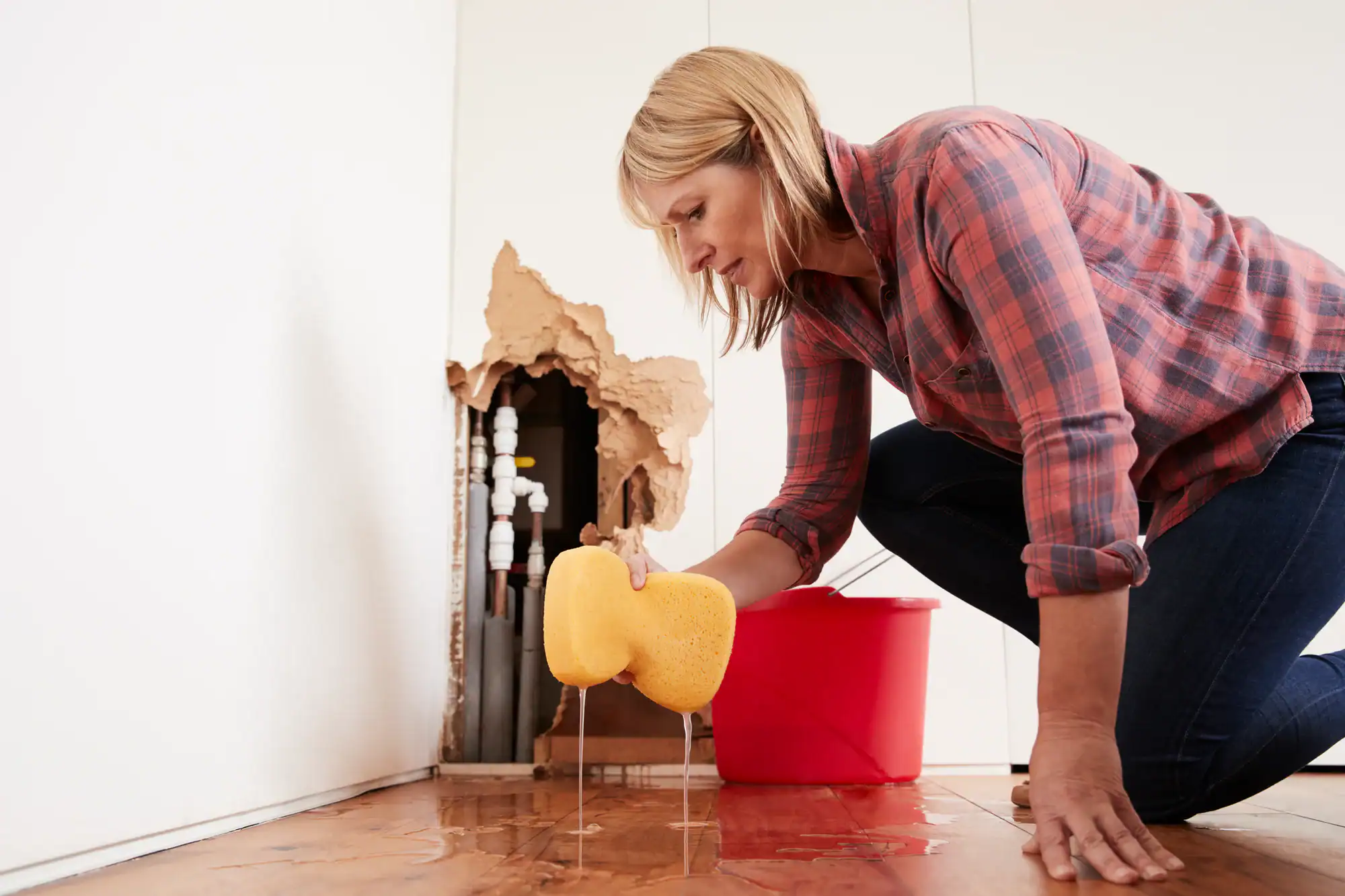
When water gets into a mid-century Carle Place home, every hour it sits is an hour closer to mold. We respond fast, dry it right, and handle the insurance so you don’t have to.
I needed a professional consultation explanation of procedure for safe removal of Asbestos in my apartment complex. Without having an account yet, I was very impressed with the caring, knowledgeable and generous advice offered by Jessica, and will look forward to doing business in the future. Thank you so much! I feel much more informed about a sometimes scary endeavor. Peace. Nancy Silva Mineola, NY.
Mia Munoz
Used this company to clean up some water flood in my house. They were fast and easy to work with.very professional, Would recommend to anyone!
Nini Valle
Great company, had a flood and they responded quickly and efficiently. Billed my insurance company directly. I highly recommend this company!
joe colapietro, jr
I had pipe freeze in my basement right before a snow storm and they made to within an hour to help start the clean up process. They we by our side throughout the entire process and even helped with the insurance company. They did such a great job with the cleanup, repair, remidiation, I contracted them to perform the repairs and finishes in the basement. They came with enough manpower and material to get the job done. Leo and Jessica were nothing but a pleasure to deal with!!
Cristian Arredondo c
I had some water damage in my home and Green Island was able to take care of my issue quickly and effectively. I am very pleased with the work they did. They responded quickly and were very professional.
Michael M
Outstanding service! From the office to the field crew everyone was friendly, helpful and responsive. I highly recommend Green Island Group.
There’s a difference between a floor that looks dry and a home that actually is. In Carle Place, where a large portion of the housing stock goes back to the 1940s and 1950s, moisture doesn’t just sit on the surface — it moves into wall cavities, original wood framing, and aging insulation that was never designed to handle a modern flood event. When restoration is done right, you’re not just cleaning up what you can see. You’re protecting what’s behind it.
For families living in Carle Place homes built on concrete slab foundations — a hallmark of the original Levitt-built neighborhood near the LIRR station — water intrusion through the slab itself is a real and recurring issue. The micro-cracks that develop over 75-plus years don’t announce themselves. They let water in quietly, and that moisture travels. A proper restoration job finds it all, dries it all, and confirms with moisture readings that the structure is clear before anyone closes up a wall.
The other thing that changes is your stress level. Knowing that the damage is documented to insurance standards, that mold isn’t growing behind your drywall, and that a licensed crew handled every step — that’s not a small thing when you’ve got a home worth close to $761,000 and kids in the house.
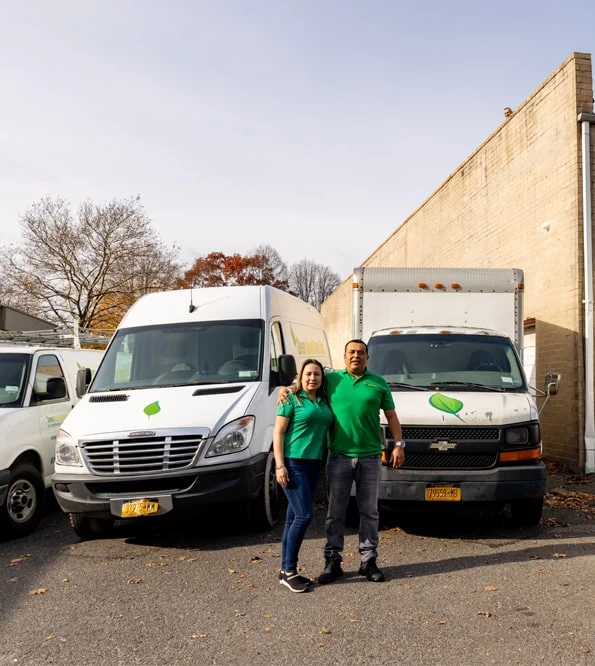
We are a Nassau County-based water damage restoration company. Not a franchise. Not a national call center with a local-looking website. When you call, you reach people who are already working in central Nassau — in Carle Place, Mineola, Westbury, Albertson — and who can be at your door without the two-to-four-hour window that out-of-area operators can’t avoid.
Our team holds IICRC certification in Water Damage Restoration, Applied Structural Drying, and Applied Microbial Remediation. We are also fully licensed under New York State’s Mold Law, which requires separate Department of Labor licensure for mold assessment and remediation work. That’s not a given among the companies advertising in this area — and it matters legally, not just for quality.
Carle Place is a one-square-mile community where accountability matters. That’s the kind of environment that keeps a local company honest in ways a franchise never has to be.
The first call triggers a same-day response. Our crew arrives, assesses the source and extent of the water intrusion, and begins extraction immediately. In Carle Place homes — especially those with slab foundations or finished basements sitting in Nassau County’s elevated water table environment — the assessment goes beyond what’s visible. We use thermal imaging to identify moisture inside walls and under flooring that won’t show up on a visual inspection.
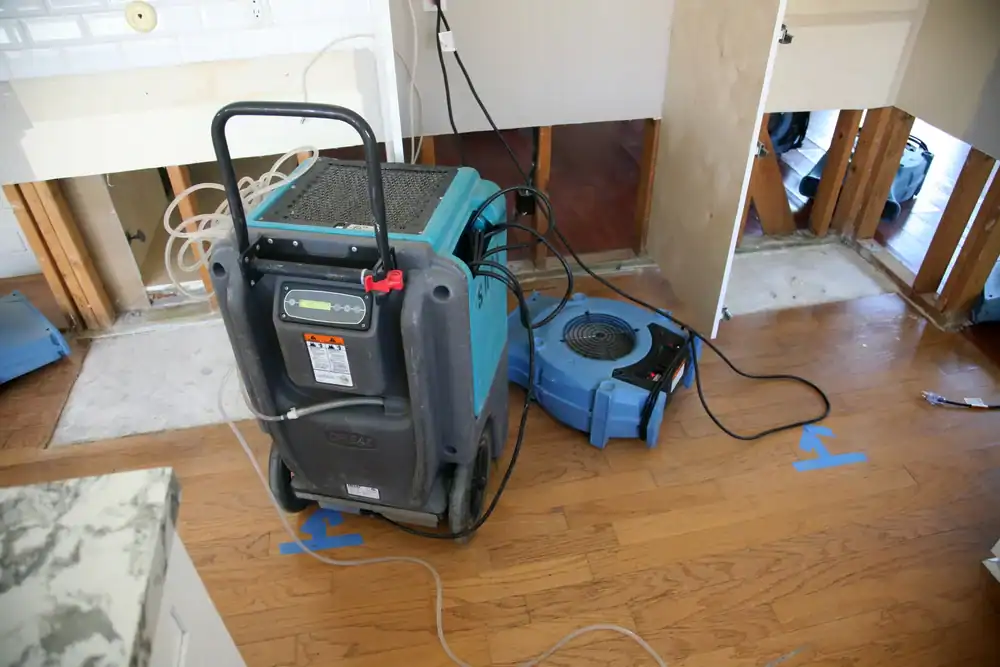
Once extraction is complete, we deploy industrial drying equipment. This isn’t a fan-and-wait situation. The drying phase is monitored with daily moisture readings, and equipment is adjusted based on what the numbers show, not a fixed schedule. For homes in the Town of North Hempstead, any structural repairs that follow — replacing framing, drywall, or electrical components in affected areas — may require building permits, and we’ll flag that early rather than leave you to figure it out after the fact.
When the structure reaches safe moisture levels, a final clearance check confirms it. Everything is documented throughout — moisture readings, photographic evidence, scope of work — in the format that insurance adjusters expect. You get a complete record of what was done and why, which protects your claim and protects your home if you ever sell.
Water damage restoration isn’t one thing — it’s a sequence of steps that each have to be done correctly for the next one to hold. We handle the full scope: emergency water extraction, structural drying, moisture mapping with thermal imaging, antimicrobial treatment, mold testing where indicated, and final clearance documentation. For Carle Place homeowners dealing with a flooded basement after a nor’easter or a burst pipe in the middle of January, that means one company handling the entire process rather than coordinating between multiple contractors.
The mold piece matters more in this area than people often realize. Nassau County’s humid summers and the characteristically elevated water table in central Nassau create conditions where mold can establish in 24 to 48 hours after water intrusion. Under New York State’s Mold Law, assessment and remediation require separate licenses — we operate in full compliance with that requirement, which protects you legally and ensures the work holds up if your insurance carrier reviews it.
Insurance documentation is built into every job from hour one. If your homeowners policy covers the event — which it typically does for sudden and accidental damage like burst pipes or appliance failures — you’ll have everything your adjuster needs without chasing it down yourself. If there are coverage questions specific to groundwater or water table intrusion, we can help you understand where you stand before you make decisions about the work.
How quickly can water damage lead to mold in a Carle Place home?
The EPA and IICRC both document that mold can begin growing on wet surfaces within 24 to 48 hours of water intrusion. In Carle Place, that window is compressed by the area’s climate — humid summers where indoor humidity regularly runs high, and spring seasons where nor’easters and snowmelt can saturate a basement in a matter of hours. Once mold establishes inside a wall cavity or under flooring, you’re no longer dealing with a water damage job. You’re dealing with a mold remediation job on top of one.
The practical takeaway is that response time matters more than most people expect. Getting water extracted and drying equipment running within the first few hours dramatically reduces the likelihood of mold growth. Waiting until morning, or attempting to dry things out with household fans, is usually enough delay to let the problem get worse. If water has entered your Carle Place home, the right move is to call immediately.
Does homeowners insurance cover water damage from a burst pipe in New York?
In most cases, yes. Standard homeowners insurance policies in New York cover sudden and accidental water damage — burst pipes, appliance failures, and roof leaks that allow water to enter the home are typically covered events. What’s not covered under a standard homeowners policy is flooding from an external source, like a rising water table pushing through a basement slab or storm surge from a coastal event. For that type of coverage, you’d need a separate flood insurance policy through the National Flood Insurance Program or a private carrier.
For Carle Place homeowners specifically, this distinction matters. The area’s elevated water table means that some basement flooding events are groundwater-driven rather than caused by a plumbing failure — and that affects how a claim is categorized. One thing that helps in either scenario is thorough documentation from the start. Insurance adjusters for older Nassau County homes sometimes look for evidence of gradual damage to reduce a payout. We document every job to IICRC standards from the first hour on-site, which gives you a clear record of what happened, when, and how it was addressed.
What makes water damage in older Carle Place homes different from newer construction?
The housing stock in Carle Place is largely mid-20th century construction — many homes go back to the 1940s and 1950s, including the original Levitt-built homes near the LIRR station that were constructed on concrete slab foundations. Slab foundations develop micro-cracks over decades, and as the concrete-to-wall seal degrades, groundwater can seep upward through the slab itself. That’s a different entry point and a different moisture migration path than you’d see in a newer home with a poured concrete basement and modern waterproofing.
Beyond foundations, the plumbing in Carle Place homes from this era is often original or minimally updated — galvanized steel pipes that are now 70 or 80 years old are past their functional lifespan and prone to pinhole leaks and sudden failures. Wall insulation and framing materials from that period also absorb and hold moisture differently than modern materials, which means hidden moisture can linger much longer than a surface inspection would suggest. Thermal imaging is especially important in these homes because what you can’t see is usually where the real damage is.
How long does water damage restoration typically take from start to finish?
The timeline depends on how much water entered the home, how long it sat before extraction began, and what materials were affected. For a straightforward basement flooding event — water extracted within a few hours of the incident, no significant structural saturation — the drying phase typically runs three to five days with professional equipment. More extensive events involving saturated wall cavities, subfloor assemblies, or insulation can run seven to ten days or longer before moisture readings confirm the structure is clear.
What drives the timeline more than anything is how quickly the process starts. In Carle Place, where spring nor’easters and summer thunderstorms can flood a basement in under an hour, the homes that see the shortest restoration timelines are the ones where the call went out immediately. Delayed extraction means deeper saturation, which means longer drying times and a higher likelihood of secondary damage. The drying phase can’t be rushed by adding more equipment beyond a certain point — it follows the physics of moisture movement through building materials, and that process takes the time it takes. What you can control is how quickly it starts.
Is mold testing required after water damage restoration in New York?
It’s not legally required in every case, but it’s often the right call — and in New York, any mold assessment or remediation work must be performed by parties holding separate licenses from the New York State Department of Labor under the 2016 Mold Law. That means the person assessing for mold and the person remediating it cannot be the same unlicensed individual. This is a legal requirement that a number of restoration operators advertising in Nassau County do not meet.
Whether mold testing is warranted after a specific water damage event depends on a few factors: how long the water sat before extraction, whether the affected materials are porous (drywall, wood framing, insulation), and whether there are any visible signs of growth or musty odors during the drying process. For Carle Place homeowners with children in the house — and about 44 percent of households in the hamlet have kids under 18 — the indoor air quality question is worth taking seriously. A post-restoration mold clearance test gives you documented confirmation that the home is safe, which matters both for your family and for your records if you ever sell the property.
How do I know if a water damage company serving Carle Place is actually local?
It’s a fair question, and the answer is easier to verify than most people think. Start with the phone number — a Nassau County company will have a 516 area code. A Suffolk County company will have 631. If you see an 800 number or, as has appeared in search results for Carle Place specifically, a 716 area code (that’s Buffalo), you’re looking at a company that built a geo-targeted website to rank locally but has no actual presence on Long Island.
Beyond the phone number, look for specificity. A genuinely local company will reference the Town of North Hempstead, Nassau County licensing requirements, the LIRR station, or the specific housing characteristics of the area — not just the words “Carle Place” dropped into a generic template. Google reviews that mention specific Nassau County towns, real scenarios like basement flooding after a nor’easter, and named crew members are a stronger signal than a star rating alone. We’ve been working throughout central Nassau County long enough that the local knowledge shows in how the work gets done — not just in what the website says.