When the Harbor Reaches Your Home, Every Hour Counts
Centre Island’s waterfront exposure is part of what makes it special — and exactly what makes water damage here so unforgiving. We respond fast, know this peninsula inside and out, and handle the restoration so you don’t have to manage it alone.
I needed a professional consultation explanation of procedure for safe removal of Asbestos in my apartment complex. Without having an account yet, I was very impressed with the caring, knowledgeable and generous advice offered by Jessica, and will look forward to doing business in the future. Thank you so much! I feel much more informed about a sometimes scary endeavor. Peace. Nancy Silva Mineola, NY.
Mia Munoz
Used this company to clean up some water flood in my house. They were fast and easy to work with.very professional, Would recommend to anyone!
Nini Valle
Great company, had a flood and they responded quickly and efficiently. Billed my insurance company directly. I highly recommend this company!
joe colapietro, jr
I had pipe freeze in my basement right before a snow storm and they made to within an hour to help start the clean up process. They we by our side throughout the entire process and even helped with the insurance company. They did such a great job with the cleanup, repair, remidiation, I contracted them to perform the repairs and finishes in the basement. They came with enough manpower and material to get the job done. Leo and Jessica were nothing but a pleasure to deal with!!
Cristian Arredondo c
I had some water damage in my home and Green Island was able to take care of my issue quickly and effectively. I am very pleased with the work they did. They responded quickly and were very professional.
Michael M
Outstanding service! From the office to the field crew everyone was friendly, helpful and responsive. I highly recommend Green Island Group.
Most homeowners don’t realize the damage isn’t over when the visible water is. Moisture hides inside walls, beneath original hardwood, and within plaster that’s been absorbing humidity off the Sound for decades. If it’s not found and dried completely, mold follows — and on Centre Island, where coastal air keeps humidity elevated year-round, that window closes fast. Mold can begin growing within 24 to 48 hours of water intrusion.
What you get on the other side of a proper restoration is a home that’s genuinely dry — not surface-dry, not visually dry, but confirmed dry with moisture readings, thermal imaging, and documentation you can hand to your insurance adjuster. For a waterfront estate on a peninsula surrounded by Cold Spring Harbor, Oyster Bay Harbor, and the Long Island Sound, that level of thoroughness isn’t optional. It’s the difference between a resolved problem and one that quietly grows behind your walls for months.
The other thing that changes is the stress. Dealing with a major water event — especially one involving a coastal flood claim, an NFIP policy, or structural damage to a historic Gold Coast-era home — is genuinely complicated. Having a restoration company that handles the documentation, communicates with your carrier, and keeps you informed throughout means you’re not managing a second full-time job while your home is being restored.
Local Knowledge That No Franchise Can Route Around
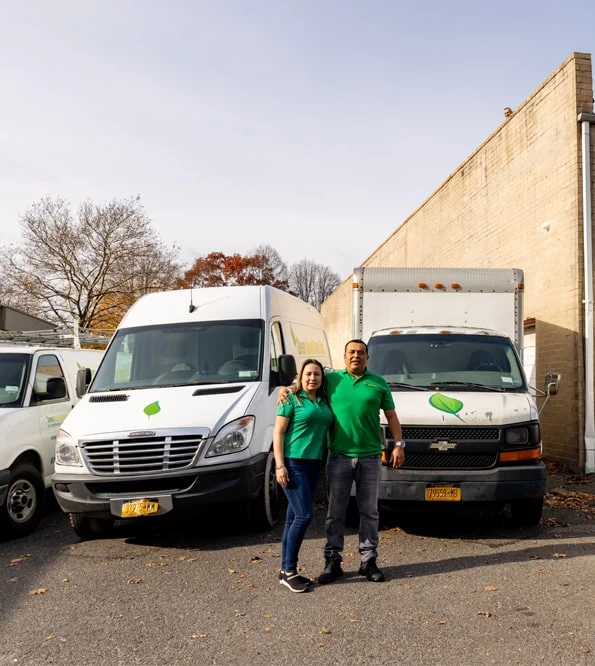
We’re a locally owned water damage restoration company serving Long Island’s North Shore, including Centre Island and the private villages along Nassau County’s waterfront. We’re not a national brand with a local phone number — we’re an actual Long Island operation, with crews already on the island and real familiarity with the communities we serve.
Centre Island is one road in, one road out. The village has its own police department controlling access at the entry from Bayville. A company that’s never worked here doesn’t know that — and in an emergency, that unfamiliarity costs time. We know how to get to you, and we know why that matters when every hour of standing moisture increases your exposure.
We’re IICRC-certified and fully licensed under New York State’s 2016 Mold Law, which requires a separate state-issued mold remediation contractor license. Many companies operating in Nassau County don’t carry it. We do. That’s not a talking point — it’s a legal and practical distinction that protects you.
Emergency Water Restoration Process, Centre Island
No Guesswork — Here's Exactly What We Do
When you call, you reach us directly — not a dispatch center, not an answering service. We confirm access details for Centre Island’s entry point and get a crew moving. Our first priority on arrival is stopping any ongoing water source and doing a complete assessment of the affected areas, including spaces that don’t look damaged but often are — wall cavities, subfloor assemblies, crawl spaces, and the areas around plumbing runs in older homes.
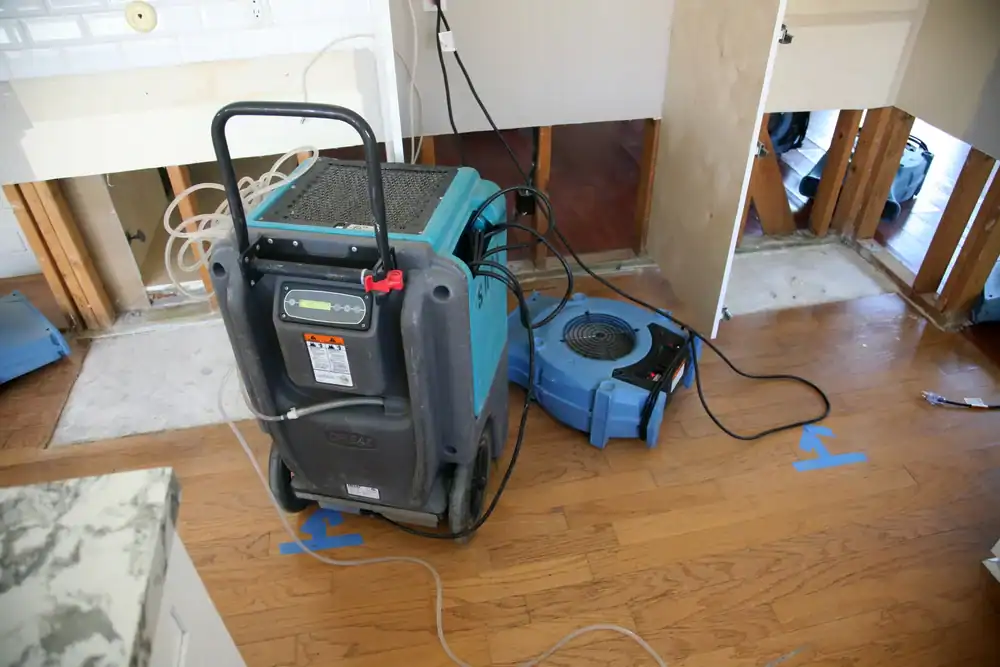
We use thermal imaging cameras and calibrated moisture meters to map every affected zone. In Centre Island’s estate homes — many built in the 1920s through 1940s with original plaster walls and old-growth timber framing — moisture doesn’t behave the way it does in modern drywall construction. It migrates differently, hides longer, and causes more damage when missed. Our equipment is scaled for large properties, not a standard suburban job. That means commercial-capacity air movers, high-output desiccant dehumidifiers, and a drying plan built around the actual square footage and materials of your home.
If storm surge is involved, we assess for saltwater intrusion specifically — because saltwater damage requires a different remediation approach than freshwater. It accelerates corrosion, degrades structural wood faster, and leaves salt deposits in porous materials that continue drawing moisture after the water is gone. We document everything throughout, both for your records and for your insurance claim. If your property carries an NFIP flood policy alongside your standard homeowners coverage, we’re familiar with those documentation requirements and work with you through that process from start to finish.
Water Damage Restoration Service, Nassau County North Shore
Built for Waterfront Estates, Not Just Wet Basements
Water damage restoration on Centre Island isn’t the same job it is in a standard Nassau County suburb. The properties here are large, often historic, and surrounded by open water on three sides. The restoration scope reflects that reality. We handle the full range of water intrusion events — storm surge from Oyster Bay Harbor or Cold Spring Harbor, burst pipes in aging plumbing systems, appliance failures, roof leaks, and flooding from nor’easters that track directly up the Long Island Sound.
For coastal flooding events, saltwater remediation is a distinct part of what we do. Salt-affected materials — framing, insulation, mechanical components, concrete block — can’t simply be dried and left in place. They need to be properly assessed, documented, and in many cases removed and replaced. We understand the difference, and we treat it accordingly. We also understand that many Centre Island properties sit within FEMA-designated flood zones and may be subject to New York State Coastal Erosion Hazard Area regulations, which can affect how reconstruction work is permitted and performed. Navigating that process is part of what we bring to the job.
Every engagement includes complete moisture mapping, structural drying, mold prevention protocols, and detailed documentation for your insurance carrier. We work directly with all major homeowners insurance carriers and have specific experience with NFIP flood claims — which are common in waterfront communities like Centre Island and handled very differently from standard property claims. You get a single point of contact from first call to final clearance.
Does homeowners insurance cover storm surge water damage in Centre Island, NY?
Standard homeowners insurance policies typically do not cover flooding caused by storm surge. That type of damage — water entering your home from an outside body of water, like Oyster Bay Harbor or Cold Spring Harbor during a nor’easter or hurricane — is generally covered under a separate National Flood Insurance Program (NFIP) policy or a private flood insurance policy. Many Centre Island homeowners carry both, given the village’s direct coastal exposure on three sides.
The important distinction is between water that enters from outside (flood) versus water damage that originates inside the home — a burst pipe, an appliance failure, a roof leak. The latter is typically covered under standard homeowners insurance. The line between the two can get complicated during a major storm event, and how the damage is documented and categorized matters significantly for your claim outcome. We document all damage in detail before any work begins, which protects you during the claims process regardless of which policy applies.
How is saltwater flood damage different from regular water damage restoration?
Saltwater intrusion from storm surge is categorically more destructive than freshwater damage, and it requires a different restoration approach. Salt accelerates corrosion in metal components — pipes, HVAC equipment, electrical conduit, structural fasteners — at a rate that freshwater doesn’t. It also degrades wood framing faster and leaves salt crystal deposits inside porous materials like concrete block, brick, and older plaster that continue drawing moisture from the air long after the visible water is gone.
For Centre Island properties, this is a real and specific risk. When surge from the Sound or the harbor reaches your ground floor, even a few inches of saltwater intrusion can cause damage that compounds for months if the affected materials aren’t properly identified and addressed. Simply drying the surface isn’t enough. Salt-contaminated materials often need to be removed rather than dried in place, and the remediation scope needs to account for corrosion that may not be visible on day one. A restoration company without specific saltwater experience may miss this — and leave you with hidden structural deterioration that shows up much later.
How quickly does mold start growing after water damage in a coastal home?
Mold can begin growing within 24 to 48 hours of water intrusion. In a coastal environment like Centre Island, where humidity off the Long Island Sound and Oyster Bay Harbor is already elevated, conditions for mold growth are more favorable than they would be in a drier inland climate. The moisture that’s already present in the air gives mold spores less work to do.
In older estate homes — particularly those with original plaster walls, antique hardwood flooring, and timber framing — moisture also migrates and hides differently than in modern construction. Plaster absorbs water and holds it. Old-growth wood can retain moisture deep within the material even when the surface feels dry. That’s why a proper restoration requires more than visual inspection. Thermal imaging and calibrated moisture meters are the only reliable way to confirm that all affected areas are actually dry — and that mold hasn’t already started in a cavity you can’t see.
Do I need permits for water damage repairs on a Centre Island waterfront property?
In most cases, yes — structural repairs resulting from water damage require building permits from the relevant jurisdiction. For Centre Island, that means coordinating with both the village and Nassau County depending on the scope of work. If the damage involves exterior elements like a seawall, bulkhead, or any structure within the coastal zone, you may also need a permit from the New York State Department of Environmental Conservation under the Coastal Erosion Hazard Area regulations. The DEC has mapped Long Island’s entire coastline as a CEHA, and virtually all Centre Island properties fall within it.
This is an area where working with a restoration company that knows Long Island’s coastal permitting environment makes a real difference. An out-of-area contractor may not be aware of CEHA requirements and could perform work that creates compliance issues down the road. We’re familiar with Nassau County permitting processes and the DEC’s coastal regulations, and we factor those requirements into the scope and timeline of every job.
What should I do immediately after water damage before the restoration crew arrives?
The most important thing is to stop the water source if you can do so safely — shut off the main water supply if it’s a plumbing failure, or move to higher ground and away from affected areas if it’s storm surge. Do not enter a space with standing water if there’s any possibility of electrical exposure. If your Centre Island home has a basement or crawl space that’s taken on water, don’t run down there with the lights on until you’ve confirmed the electrical panel serving that area is off.
After that, document everything you can before touching or moving anything. Photos and video of the damage in its original state are valuable for your insurance claim, and they’re much harder to recreate after the fact. If you have an NFIP flood policy, contact your insurance agent as soon as possible — NFIP claims have specific procedures and timelines. Then call us. The faster professional drying equipment is deployed, the smaller the mold window and the lower the overall restoration cost. Time genuinely matters here.
How long does water damage restoration take for a large estate home in Centre Island?
The honest answer is that it depends on the scope, the materials involved, and how long the moisture was present before drying began. For a standard water intrusion event — a burst pipe, an appliance failure, a contained roof leak — structural drying in a residential property typically takes three to five days with proper equipment in place. For a large estate home on Centre Island, that timeline can extend depending on the square footage affected, the building materials involved, and whether saltwater is part of the picture.
Original plaster walls, antique hardwood floors, and timber-framed assemblies dry more slowly than modern drywall and engineered lumber. They also require more careful monitoring to confirm they’ve reached acceptable moisture levels without causing additional damage from over-drying. In cases involving storm surge or significant flooding, the drying phase is followed by mold prevention treatment, structural assessment, and then reconstruction — which adds time and requires coordination with Nassau County permitting. We give you a realistic timeline at the start of the job, and we update you as conditions change. You won’t be left guessing where things stand.