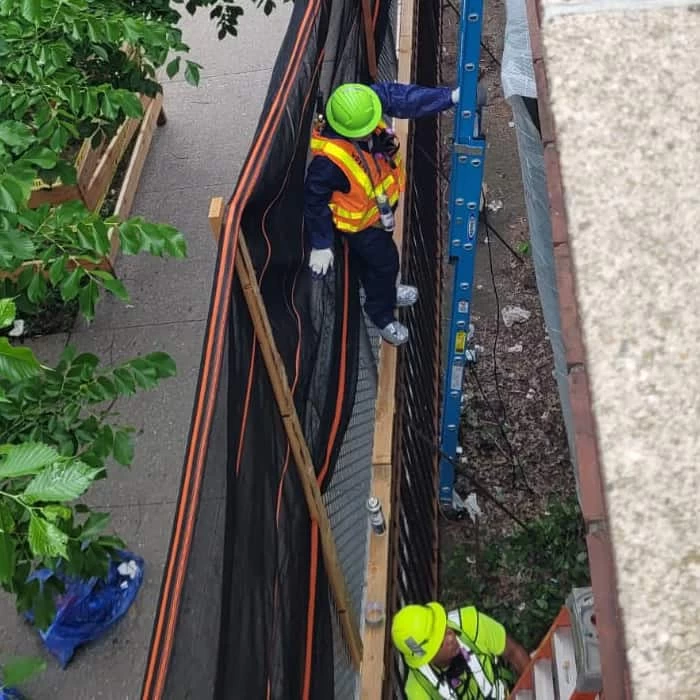
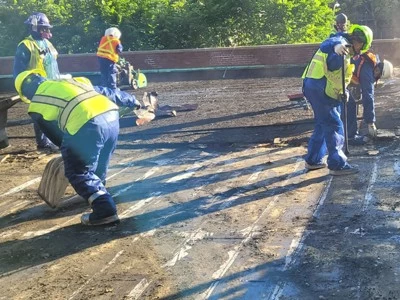
I needed a professional consultation explanation of procedure for safe removal of Asbestos in my apartment complex. Without having an account yet, I was very impressed with the caring, knowledgeable and generous advice offered by Jessica, and will look forward to doing business in the future. Thank you so much! I feel much more informed about a sometimes scary endeavor. Peace. Nancy Silva Mineola, NY.
Mia Munoz
Used this company to clean up some water flood in my house. They were fast and easy to work with.very professional, Would recommend to anyone!
Nini Valle
Great company, had a flood and they responded quickly and efficiently. Billed my insurance company directly. I highly recommend this company!
joe colapietro, jr
I had pipe freeze in my basement right before a snow storm and they made to within an hour to help start the clean up process. They we by our side throughout the entire process and even helped with the insurance company. They did such a great job with the cleanup, repair, remidiation, I contracted them to perform the repairs and finishes in the basement. They came with enough manpower and material to get the job done. Leo and Jessica were nothing but a pleasure to deal with!!
Cristian Arredondo c
I had some water damage in my home and Green Island was able to take care of my issue quickly and effectively. I am very pleased with the work they did. They responded quickly and were very professional.
Michael M
Outstanding service! From the office to the field crew everyone was friendly, helpful and responsive. I highly recommend Green Island Group.
What Dry, Safe, and Documented Actually Feels Like
When water gets into your home, the damage doesn’t stop when the water does. Moisture moves into wall cavities, under subfloors, and into the framing and in a mid-century College Point home with plaster walls and older insulation, it hides better than you’d expect. Getting the water out is step one. Getting the structure genuinely dry is the job.
For homeowners on this peninsula, the risk doesn’t come from just one direction. Flushing Bay to the west, the East River to the north, Powell’s Cove to the northeast and an older combined sewer system underneath it all. Heavy rain events don’t just bring surface water. They can push sewage-contaminated water up through floor drains, which is a different category of damage entirely and requires a different level of remediation.
Once the work is done right, you get your home back not just dry, but documented. Insurance adjusters need detailed records, and a claim without proper documentation is a claim that gets underpaid. You leave this process with a home that’s structurally sound, a mold risk that’s been addressed at the source, and paperwork your insurance carrier can actually use.
Most of the “local” water damage companies that show up in a College Point Google search aren’t local at all. They’re lead-generation sites with 773 or 833 area codes, routing your call to whoever picks up. We’re a Queens-based water restoration company with real technicians who know this area the road network, the housing stock, the flooding patterns specific to this neighborhood.
College Point isn’t like Flushing or Bayside. It’s a peninsula with limited road access, homes built mostly between 1940 and 1969, and a community that’s been here long enough to know the difference between a company that shows up and one that doesn’t. The Better College Point Civic Association has been fighting for this neighborhood’s infrastructure for decades. The families here have been here just as long. That’s the kind of community where reputation matters.
We’ve built our reputation by doing the work correctly the first time.
The first thing that happens when you call is an assessment. One of our technicians comes out, evaluates the source and extent of the damage, identifies what category of water you’re dealing with clean supply line, grey water, or sewage-contaminated and maps out what needs to happen next. In older College Point homes, that assessment also includes checking for asbestos-containing materials and lead paint, which are common in pre-1978 construction and require specific handling protocols before any demolition or removal work begins under NYC DEP and EPA RRP rules.
From there, extraction and structural drying begin. We use industrial-grade equipment not consumer fans to pull moisture out of walls, subfloors, and framing until moisture readings reach safe levels. This part of the process takes time, and rushing it is the single most common reason homeowners end up with a mold problem six months later. Every job includes moisture monitoring throughout the drying phase, not just at the end.
Once the structure is dry and stable, the restoration work begins drywall, flooring, structural repairs, whatever the damage requires. Simultaneously, we build the documentation package for your insurance carrier: photos, moisture logs, scope of work, and direct billing coordination. You don’t have to chase your adjuster. That’s already handled.
Full-Service Water Restoration in College Point, NY
Everything Covered, From Extraction to Insurance Filing
Water damage restoration in College Point means dealing with conditions that aren’t generic. The housing stock here is older, the sewer system is a combined system that backs up during heavy rain, and the peninsula’s tidal exposure along Flushing Bay and the East River creates flooding scenarios that don’t apply to most of Queens. Our service has to match the reality of what’s actually happening in these homes.
We cover the full scope: emergency water extraction, structural drying with industrial dehumidifiers and air movers, mold prevention treatment, Category 3 sewage contamination remediation when needed, and full structural repair. For homes in the College Point Corporate Park area or along the waterfront near Powell’s Cove Park, we have commercial-scale equipment available when the job requires it.
Every job also includes direct insurance billing and claims documentation. Queens homeowners with median home values around $700,000 can’t afford an underpaid claim or a restoration that leaves hidden moisture behind. The documentation package we build for every job moisture logs, photos, scope of work is prepared in the format insurance adjusters require, which reduces disputes and gets claims resolved faster. NYC DOB permit requirements are handled where applicable, and all work follows current NYC mold remediation regulations under New York State Labor Law.
How quickly can someone respond to water damage in College Point, NY?
College Point’s peninsula layout means response time isn’t just about distance it’s about knowing how to get there. College Point Boulevard is the primary artery in and out of the neighborhood, and the Whitestone Expressway interchange can back up significantly during peak hours or bad weather. We know this area’s road network, which makes a real difference when every hour of standing water means more structural damage and a higher risk of mold taking hold.
For active water damage a burst pipe, a backed-up drain, a flooded basement the priority is getting extraction equipment on-site as fast as possible. The longer water sits in contact with wood framing, drywall, and insulation, the deeper it penetrates and the more expensive the remediation becomes. Call immediately, shut off the water source if you can locate it safely, and don’t wait to see if it dries on its own. It won’t.
Does homeowner's insurance cover water damage restoration in my home?
It depends on the source of the damage, and the distinction matters more than most homeowners realize. Standard homeowner’s insurance typically covers sudden, accidental water damage a burst pipe, an appliance failure, a roof leak from a storm. It generally does not cover flooding from an external water source, which requires a separate flood insurance policy through the National Flood Insurance Program or a private carrier.
For College Point homeowners specifically, this is worth understanding clearly. The neighborhood’s interior is classified as FEMA Zone X, meaning most properties aren’t required to carry flood insurance but that doesn’t mean flooding can’t happen. Tidal surge events along the Flushing Bay and East River shorelines, combined sewer backups during heavy rain, and stormwater sheet flooding on older streets are all real scenarios that can cause significant damage. Some of these are covered under standard policies; sewage backup specifically often requires a separate rider. We handle direct insurance billing and build the documentation your adjuster needs, but reviewing your current policy before an event happens is always worth the call to your carrier.
What happens if water damage in my College Point home isn't dried completely?
Incomplete drying is the most common reason water damage jobs turn into mold remediation jobs. When moisture stays trapped in wall cavities, under subfloors, or inside structural framing, mold can begin developing within 24 to 48 hours and in an older College Point home with plaster walls, original wood framing, and limited airflow in basement spaces, it spreads in places you can’t see until the smell or the health effects make it obvious.
The cost difference is significant. A properly executed water damage restoration job with industrial drying equipment and moisture monitoring throughout is far less expensive than a mold remediation project that involves tearing out walls, treating structural members, and rebuilding. New York State Labor Law Section 945 and NYC mold remediation rules also impose licensing requirements for mold work above 10 square feet in rental properties, which adds regulatory complexity on top of the remediation cost. Doing the drying correctly the first time isn’t just better for the home it’s substantially cheaper in the long run.
My College Point basement flooded with sewage-contaminated water is that different?
Yes, and the difference is significant. Water damage is classified in three categories based on contamination level. Category 1 is clean water from a supply line or appliance. Category 2 is grey water with some contamination. Category 3 which includes sewage backup is considered a biohazard and requires a completely different remediation protocol.
College Point sits on an older combined sewer system, meaning stormwater and sanitary sewage share the same pipes. During heavy rain events, that system can become overwhelmed, and sewage-contaminated water can back up through floor drains and basement fixtures. This isn’t just a cleanup job it requires proper containment, removal of contaminated materials, disinfection, and documentation that the space has been restored to a safe condition. Standard water extraction equipment and a wet-dry vacuum don’t address the biohazard component. If your basement flooded during or after a significant rain event and the water has any discoloration or odor, treat it as Category 3 until it’s been properly assessed. We’re equipped and certified for this category of work.
How do I know if my older College Point home has asbestos or lead paint concerns during restoration?
If your home was built before 1978 which covers the majority of College Point’s housing stock, given that most of the neighborhood was developed between 1940 and 1969 you should assume asbestos-containing materials and lead paint are present until a proper assessment says otherwise. Common locations for asbestos in homes of this era include pipe insulation, floor tiles, ceiling tiles, and joint compound. Lead paint was standard in residential construction before it was banned.
Under NYC DEP regulations, any renovation or demolition work that disturbs these materials requires an asbestos survey before work begins. Under EPA RRP rules and NYC Local Law 1, work in pre-1978 homes requires certified contractors and specific handling protocols. Water damage restoration that involves removing drywall, flooring, or insulation in a College Point home built in the 1950s or 1960s isn’t just a moisture problem it’s a regulatory compliance issue. Our technicians are trained to identify these material risks before work begins, and the restoration scope is planned accordingly. This protects you from liability and ensures the work is done legally.
Why should I choose a local water damage company over a national franchise in College Point?
The honest answer is accountability. National franchise brands and lead-generation sites that rank for “water damage College Point NY” often have no physical presence in Queens at all. Some of the phone numbers in those search results trace back to call centers in Chicago or Texas. When you call, your job gets dispatched to whoever is available not necessarily someone who knows College Point, knows the housing stock, or will be reachable if something comes up after the job.
College Point is a community where that kind of thing gets noticed. It’s a peninsula neighborhood with a tight civic identity the Better College Point Civic Association has been active here for years, and longtime residents talk to each other. A company that does the work right builds a reputation here. One that doesn’t hear about it. We serve Queens because this is the market we know the older homes, the combined sewer dynamics, the specific flooding patterns along Flushing Bay and Powell’s Cove. That local knowledge shapes how every job gets assessed, scoped, and completed. It’s not a marketing point. It’s what makes the difference between a restoration that holds and one that leaves problems behind.