Old Buildings, Fast Water, One Call That Covers It All
Cooper’s pre-war tenements don’t forgive slow responses. We bring licensed water damage restoration to Cooper, NY with the credentials to handle whatever your building’s walls are hiding.
I needed a professional consultation explanation of procedure for safe removal of Asbestos in my apartment complex. Without having an account yet, I was very impressed with the caring, knowledgeable and generous advice offered by Jessica, and will look forward to doing business in the future. Thank you so much! I feel much more informed about a sometimes scary endeavor. Peace. Nancy Silva Mineola, NY.
Mia Munoz
Used this company to clean up some water flood in my house. They were fast and easy to work with.very professional, Would recommend to anyone!
Nini Valle
Great company, had a flood and they responded quickly and efficiently. Billed my insurance company directly. I highly recommend this company!
joe colapietro, jr
I had pipe freeze in my basement right before a snow storm and they made to within an hour to help start the clean up process. They we by our side throughout the entire process and even helped with the insurance company. They did such a great job with the cleanup, repair, remidiation, I contracted them to perform the repairs and finishes in the basement. They came with enough manpower and material to get the job done. Leo and Jessica were nothing but a pleasure to deal with!!
Cristian Arredondo c
I had some water damage in my home and Green Island was able to take care of my issue quickly and effectively. I am very pleased with the work they did. They responded quickly and were very professional.
Michael M
Outstanding service! From the office to the field crew everyone was friendly, helpful and responsive. I highly recommend Green Island Group.
When water gets into a building around Cooper Square, it rarely stays in one place. It travels through shared plumbing stacks, seeps into subfloors, and hides behind walls that were built before most people’s grandparents were born. By the time you can see the damage, the real problem is usually already behind the surface.
That’s the part most people don’t think about until it’s too late. A wet wall in a pre-war building isn’t just a cosmetic issue it’s a mold clock that starts ticking the moment the water hits. In Cooper and the surrounding East Village and Lower East Side, where buildings routinely date back to the late 1800s, that wall almost certainly has layers of old pipe insulation, original plaster, and paint that hasn’t been touched since the building changed hands three landlords ago.
What you get on the other side of a properly handled restoration is dry, documented, and cleared. Your insurance adjuster has what they need. Your building management has a clear record. And you’re not sitting on a hidden mold problem that quietly doubles the cost of the job every week you wait.
Licensed for the Whole Job, Not Just the Easy Part
We are a New York-based restoration and remediation contractor serving residential, commercial, and institutional properties across the city. The Cooper Square area with its mix of century-old tenements, converted lofts, university buildings, and newer condos is exactly the kind of environment we work in every day.
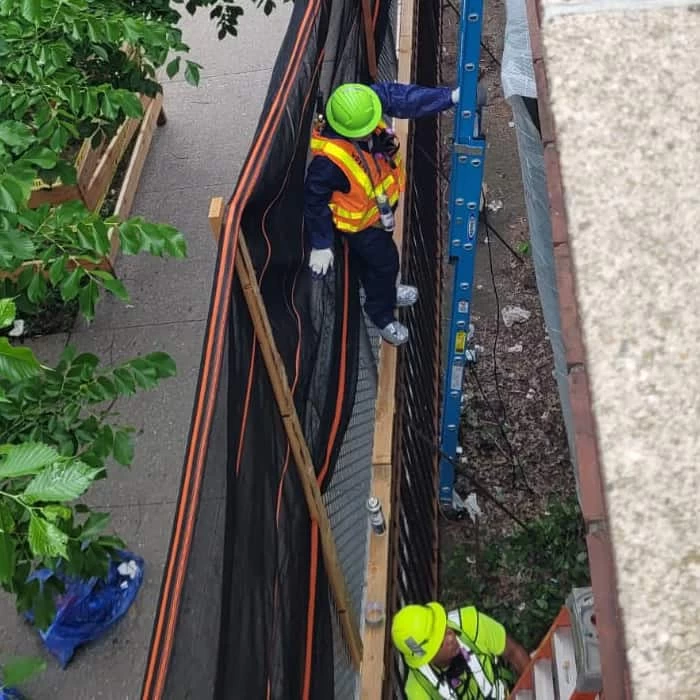
What separates us from most restoration companies isn’t a slogan. It’s a license stack that covers the full scope of what older Manhattan buildings actually require: NYC General Contractor, NYS DOL Mold, NYS DOL Asbestos, USEPA Lead, USEPA RRP, and NYC BIC Trade Waste certification. When water damage work uncovers asbestos pipe insulation or disturbs lead paint in a building near the Bowery, we don’t stop the job and hand you a referral. We handle it under the same contract, the same timeline, and the same point of contact.
That’s not a small thing in a neighborhood where almost every building predates 1940.
When you call, someone picks up any hour, any day. We ask a few quick questions to understand what you’re dealing with, and then we move. In the Cooper Square area, our response times run as fast as two hours from the initial call. In a shared-stack building, two hours matters more than most people realize.
Once we’re on-site, the first step is assessment not guesswork. We use moisture meters and thermal imaging to map exactly where the water has traveled, including inside walls and under flooring where it isn’t visible. In pre-war buildings around Cooper and the East Village and Lower East Side, that assessment also accounts for what the building is made of. If the scope of work is going to touch materials that require asbestos or lead protocols under New York State DOL and USEPA regulations, we identify that early and build it into the plan not halfway through the job.
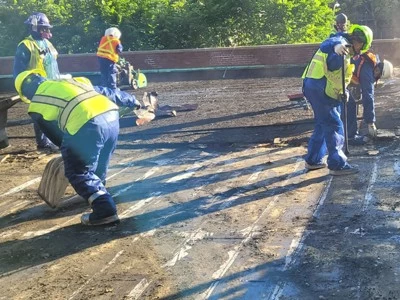
From there, extraction and drying happen with industrial-grade equipment. We document everything as we go: moisture readings, photographs, scope of work. That documentation isn’t just for our records it’s built to satisfy insurance adjusters, building management, and co-op boards. When the job is done, you have a complete record of what was found, what was done, and what the space looks like now.
Every License the East Village Building Stock Demands
Water damage restoration in a Cooper Square building isn’t the same job it is in a suburban split-level. The buildings here are older, denser, and more likely to have hazardous materials woven into the structure. A restoration company that only holds a general contractor license is not legally equipped to handle what a pre-war tenement on the Bowery might reveal when you open a wall.
We cover water extraction and drying, structural moisture mapping, mold assessment and remediation under NYS DOL licensing, asbestos identification and abatement, lead paint compliance under USEPA RRP certification, and full documentation for insurance claims. We also hold NYC BIC Trade Waste certification for proper debris removal something many smaller operators skip, and something NYC actively enforces.
For multi-unit buildings in Cooper Square and the East Village, we manage the full-building response when water has traveled across multiple floors or units. That means coordinating with building management, documenting damage across individual units for multi-policy insurance claims, and keeping the process moving without turning the building into a construction zone for weeks. Whether you’re a property owner, a co-op board member, or a tenant dealing with damage from an upstairs neighbor, the process is the same: fast, documented, and handled by people who actually know what they’re doing in New York City buildings.
How quickly can water damage turn into a mold problem in a Cooper Square apartment?
Mold can begin growing within 24 to 48 hours of water exposure and in the pre-war buildings that make up most of the housing stock around Cooper Square and the East Village, that timeline is especially unforgiving. Older buildings have more organic materials in their construction: original wood framing, horsehair plaster, decades of layered wallpaper. Those materials hold moisture longer than modern drywall, which gives mold more to work with and less time before it takes hold.
The practical implication is this: a pipe that bursts on a Friday evening and goes unaddressed until Monday morning is very likely a mold job by the time anyone gets to it. That’s not a worst-case scenario it’s a common one in buildings where units aren’t checked daily. Acting within the first few hours keeps the job in the water extraction category. Waiting through a weekend can push it into a full mold remediation project, which is a meaningfully different cost and timeline.
Does my insurance cover water damage restoration in a New York City apartment?
Most standard homeowner and renter insurance policies cover sudden and accidental water damage things like a burst pipe, a failed washing machine hose, or an overflowing appliance. What they typically don’t cover is damage from long-term neglect or gradual leaks that were left unaddressed. The distinction matters, and how the damage is documented at the start of the job directly affects how the claim gets settled.
In a Manhattan co-op or condo, the insurance picture is more layered than in a single-family home. You have your individual unit policy, the building’s master policy, and potentially a neighbor’s policy if their unit was the source of the water. Each carrier may have a different adjuster, different documentation requirements, and a different scope of coverage. We document damage in a way that accounts for all of that moisture readings, photographs, and a detailed scope of work that gives every relevant carrier what they need to process the claim accurately.
What happens if water damage in my Cooper building reveals asbestos or lead paint?
In buildings constructed before the 1970s which describes the majority of the housing stock in Cooper and around the East Village and Lower East Side asbestos is commonly found as pipe insulation, floor tile backing, and ceiling texture. Lead paint is present in most buildings built before 1960, which again covers a large portion of the Cooper area. When water damage work disturbs these materials, New York State law requires that the work be handled by a contractor holding specific NYS DOL Asbestos and USEPA Lead certifications. A general contractor without those credentials cannot legally continue the job.
This is where a lot of restoration projects in older Manhattan buildings hit a wall sometimes literally. The restoration company gets partway through the job, discovers a regulated material, and has to stop while the property owner scrambles to find a separate abatement contractor. We hold both the NYS DOL Asbestos license and the USEPA Lead and RRP certifications, so when those materials show up and in pre-war buildings, they often do the job keeps moving under the same contractor, the same timeline, and the same accountability.
My upstairs neighbor's pipe caused flooding in my Cooper apartment who's responsible?
This is one of the most common and most frustrating scenarios in Manhattan multi-unit buildings, and the answer depends on a few factors: where the pipe is located, whether it’s part of the building’s shared plumbing system or within the neighbor’s unit, and what both your individual policy and the building’s master policy cover. In many co-op and condo buildings, the building’s master policy covers damage to common elements and structural components, while individual unit policies cover personal property and interior finishes.
What makes this complicated in practice is that most people don’t know the boundaries of their coverage until they’re already dealing with the damage. The building management or co-op board typically gets involved quickly, and the situation can turn into a multi-party insurance negotiation that takes weeks to sort out. Having a restoration company that documents the damage thoroughly from the start with clear moisture mapping, photographs, and a written scope gives every party involved a clean record to work from. That documentation is what keeps the claim process from stalling while your walls stay wet.
How does flooding risk in the East Village affect water damage in Cooper Square buildings?
The East Village and Lower East Side, including the Cooper Square area, sit in a low-lying section of Lower Manhattan that has documented flood history. Hurricane Sandy in 2012 and Hurricane Ida in 2021 both caused significant flooding in this part of the city, and the blocks between the Bowery and the East River several of which fall within FEMA-designated flood risk zones are particularly vulnerable to storm surge and heavy rainfall events. The city’s combined sewer system, which carries both stormwater and sewage, regularly backs up during intense rain, which means basement apartments and ground-floor units in Cooper and surrounding neighborhoods face flooding risk that goes beyond a burst pipe.
For property owners and tenants in buildings near Cooper Square, this isn’t a hypothetical. It’s a seasonal reality, especially during summer storm events and the spring snowmelt period when drainage systems are already taxed. Basement units common in the tenement buildings throughout the East Village are the most exposed. If your building has a basement apartment or below-grade storage, having a plan and knowing who to call before an event happens is worth more than scrambling for a contractor while the water is rising.
Why does water damage restoration in a pre-war Manhattan building cost more than I expected?
The short answer is that older buildings have more variables, and those variables take more time and more specialized equipment to handle correctly. A pre-war tenement in the Cooper Square area might have original cast-iron plumbing, galvanized steel pipes that haven’t been replaced in decades, horsehair plaster walls, and subfloor materials that absorb and hold moisture differently than modern construction. Drying those materials to a safe moisture level takes longer and requires more equipment than a standard drywall-and-stud job.
On top of that, New York City imposes regulatory requirements that add legitimate cost to any restoration project in older buildings. Asbestos testing, lead paint compliance, NYC DOB permit requirements for structural work, and NYC BIC-licensed waste removal are not optional they’re legally required, and cutting corners on any of them creates liability for the property owner. When you get a quote that seems surprisingly low, it’s worth asking which of those requirements are actually included. The cost of doing the job right in a pre-war Manhattan building is higher than a suburban job but the cost of doing it wrong, and then having to redo it, is higher still.