When the Hudson Valley Hits Hard, Your Cortlandt Home Needs More Than a Shop Vac
Water damage in Cortlandt moves fast and so does the mold that follows. We respond 24/7 with certified technicians who handle everything from extraction to full reconstruction, including direct insurance billing so you’re not stuck managing the paperwork alone.
I needed a professional consultation explanation of procedure for safe removal of Asbestos in my apartment complex. Without having an account yet, I was very impressed with the caring, knowledgeable and generous advice offered by Jessica, and will look forward to doing business in the future. Thank you so much! I feel much more informed about a sometimes scary endeavor. Peace. Nancy Silva Mineola, NY.
Mia Munoz
Used this company to clean up some water flood in my house. They were fast and easy to work with.very professional, Would recommend to anyone!
Nini Valle
Great company, had a flood and they responded quickly and efficiently. Billed my insurance company directly. I highly recommend this company!
joe colapietro, jr
I had pipe freeze in my basement right before a snow storm and they made to within an hour to help start the clean up process. They we by our side throughout the entire process and even helped with the insurance company. They did such a great job with the cleanup, repair, remidiation, I contracted them to perform the repairs and finishes in the basement. They came with enough manpower and material to get the job done. Leo and Jessica were nothing but a pleasure to deal with!!
Cristian Arredondo c
I had some water damage in my home and Green Island was able to take care of my issue quickly and effectively. I am very pleased with the work they did. They responded quickly and were very professional.
Michael M
Outstanding service! From the office to the field crew everyone was friendly, helpful and responsive. I highly recommend Green Island Group.
Your Cortlandt Home Back to Normal Without the Lingering Damage
The water you can see gets cleaned up fast. It’s what you can’t see moisture trapped inside walls, under flooring, and in the framing that turns a manageable situation into a mold problem six weeks later. In Cortlandt’s older housing stock, especially in the riverside hamlets like Montrose and Verplanck where a lot of homes were originally built as seasonal bungalows, that hidden moisture has nowhere to go without proper industrial drying equipment and a team that actually knows how to use it.
This town sits along nearly 15 miles of Hudson River shoreline, and the flooding patterns here are different from the more inland Westchester suburbs. Hillside properties in Crugers and Cortlandt Manor deal with foundation seepage during heavy rain. Low-lying areas near Annsville Creek and the river itself face backwater flooding during storm events. The July 2023 storms that closed Sprout Brook Road and Gallows Hill Road weren’t an anomaly they’re a reminder that water damage in Cortlandt is a recurring reality, not a once-in-a-lifetime event.
When restoration is done right, you get more than dry walls. You get a documented, professionally dried and remediated home that your insurance company can verify, your family can safely return to, and that won’t develop a mold issue three months from now because someone missed moisture behind the drywall.
Certified, Insured, and Built for Cortlandt's Toughest Jobs
We’ve been doing environmental restoration work in the greater New York area for over 12 years. That’s not a marketing number it means we’ve worked through real Hudson Valley winters, real storm seasons, and real insurance claims in Cortlandt and surrounding communities. We hold NYS and NYC M/WBE certification, carry full liability and workers’ compensation insurance, and are IICRC certified the restoration industry’s primary professional standard. These aren’t just credentials on a wall. They’re the reason we’ve been trusted with state agency contracts through the NYS Office of General Services.
For Cortlandt homeowners whether you’re in a century-old colonial in Croton-on-Hudson, a converted bungalow in Montrose, or a newer build off Route 202 in Cortlandt Manor you’re dealing with a company that has the licensing, equipment, and experience to handle whatever is behind your walls. This includes asbestos, which is a real consideration in homes built before 1980, and a capability almost no local competitor offers alongside water restoration.
What Actually Happens From Your First Call to the Final Walkthrough
When you call, someone picks up day or night. We dispatch a certified technician to your Cortlandt property immediately. The first priority is stopping any ongoing water source and doing a full moisture assessment using professional-grade equipment, not just a visual scan. In Cortlandt’s older homes, especially those with plaster walls or original hardwood floors, moisture hides in places that look dry on the surface. That assessment drives everything that comes next.
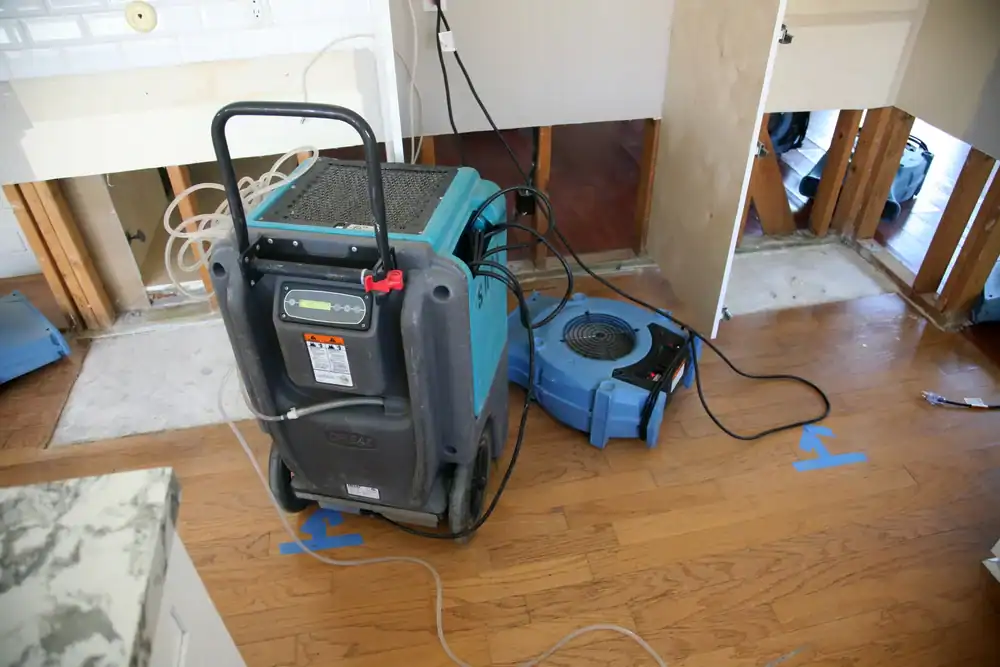
From there, extraction and industrial drying equipment goes in. This isn’t a fan-and-dehumidifier setup it’s a calibrated drying system that gets monitored over multiple days to confirm the structure is actually dry before anything gets closed up. If mold is found which is common when water has been sitting for more than 24 to 48 hours remediation happens before reconstruction begins. For pre-1980 homes in Cortlandt, we’ll also identify any asbestos-containing materials that may have been disturbed, and handle abatement in-house rather than stopping the job to bring in a separate contractor.
Once everything is dry, remediated, and cleared, reconstruction begins. We handle the full scope, which means you’re not coordinating between three different companies. We also work directly with your insurance carrier throughout the entire process documenting damage, communicating with adjusters, and billing the insurer directly so you’re not fronting the cost and waiting for reimbursement.
Water Damage Restoration Services Near Cortlandt, NY
Full-Scope Restoration Built for Cortlandt's Real Conditions
Water damage restoration in Cortlandt isn’t a one-size situation. A finished basement in a Cortlandt Manor colonial is a different job than a flooded crawl space in a Montrose bungalow or a burst pipe in a Buchanan home built in the 1960s. Our scope covers the full range: emergency water extraction, structural drying, mold testing and remediation, asbestos abatement when required, and complete reconstruction. Everything under one roof, with one point of accountability.
New York State requires that any mold remediation project over 10 square feet be handled by a licensed contractor under Article 32 of the NYS Labor Law. That’s not optional, and it’s something out-of-state operators and unlicensed contractors often don’t meet. We’re fully licensed and compliant which matters when your insurance company reviews the claim and wants documentation that the work was done by a qualified contractor.
For homeowners dealing with the financial side of a major restoration, we offer financing up to $200,000 at 0% APR. In a town where property taxes have been under pressure since Indian Point’s closure removed tens of millions in annual tax revenue from the local ecosystem, having a restoration option that doesn’t require a lump-sum payment upfront is a real difference-maker. The work gets done right, and the cost gets managed in a way that doesn’t put your household budget in crisis.
How quickly does mold start growing after water damage in my Cortlandt home?
Mold can begin establishing in wall cavities, under flooring, and inside HVAC systems within 24 to 48 hours of water intrusion. That window is not an exaggeration it’s the documented threshold used by restoration professionals and insurance adjusters. Once mold colonies form, the remediation scope and cost increase significantly compared to a job where drying begins immediately.
In Cortlandt, this timeline is especially relevant because many homes particularly in Montrose, Verplanck, and Croton-on-Hudson have older construction with limited ventilation and original plaster or wood framing that retains moisture longer than modern materials. A basement that flooded during a spring rainstorm and wasn’t fully dried within that first 48-hour window is a mold risk even if it looks dry to the eye. Professional moisture measurement is the only way to confirm it’s actually dry, and that’s where the process has to start.
Does homeowner insurance cover water damage restoration in Cortlandt, NY?
Most standard homeowner insurance policies in New York cover sudden and accidental water damage a burst pipe, a failed water heater, an appliance leak. What they typically don’t cover is gradual damage from a slow leak that went unaddressed, or flooding from an external water source like the Hudson River or a backed-up storm drain, which usually requires a separate flood insurance policy through the National Flood Insurance Program.
For Cortlandt homeowners in flood-prone areas particularly those near Annsville Creek, the riverside hamlets of Verplanck and Montrose, or low-lying sections of Cortlandt Manor understanding the distinction between your homeowner policy and flood coverage matters before a loss happens, not after. We work directly with insurance carriers and handle the documentation and adjuster communication from the start, which helps ensure the claim is properly filed and that covered work gets covered. If there’s a gap between what insurance pays and what the job costs, our 0% APR financing option can bridge it.
What's the difference between water damage cleanup and full restoration?
Cleanup is extracting the visible water and running some drying equipment. Restoration is confirming the structure is genuinely dry, testing for mold, remediating any biological growth, and repairing or rebuilding whatever was damaged flooring, drywall, framing, insulation. They’re not the same job, and skipping from cleanup straight to reconstruction without proper drying and mold assessment is one of the most common reasons water damage becomes a recurring problem.
In Cortlandt’s older housing stock, full restoration often involves additional steps that newer construction doesn’t require. Homes built before 1980 may have asbestos in pipe insulation, floor tiles, or joint compound materials that get disturbed during water damage and can’t be handled the same way as modern materials. Our asbestos abatement capability means the job doesn’t stop when something unexpected is found behind the wall. The full scope gets handled by one team, which keeps the timeline shorter and the accountability clear.
How do I know if my Cortlandt basement has hidden moisture after a flood?
The short answer is that you can’t tell by looking. A basement floor that feels dry to the touch can still have moisture trapped in the concrete slab, the framing above it, or the lower sections of drywall. The only way to know for certain is with professional moisture meters and thermal imaging equipment that measures what’s inside the structure, not just the surface.
This matters a lot in Cortlandt specifically because of the town’s geography. Hillside properties in Crugers and northern Cortlandt Manor deal with hydrostatic pressure groundwater pushing against the foundation from the outside which means moisture can continue wicking into the structure even after the initial flooding event is over. If your sump pump failed or your basement flooded during a heavy rain event, the drying process needs to account for ongoing ground saturation, not just the water that came in. Our assessment process covers all of this, and the drying equipment stays until the readings confirm the structure is genuinely dry.
Can water damage restoration be financed if insurance doesn't cover the full cost?
Yes and it’s worth understanding this option before you’re in the middle of a claim. We offer financing up to $200,000 at 0% APR, which means the full cost of restoration, including mold remediation, structural repairs, and reconstruction, can be spread over time without interest charges. This isn’t a workaround for small jobs it’s a real financing option designed for the kind of comprehensive restoration that a major water event requires.
For Cortlandt homeowners, this is particularly relevant given the economic pressure the town has been under since Indian Point’s permanent closure in 2021 removed roughly $32 million in annual tax revenue from the local ecosystem. Property taxes have increased across Cortlandt, Buchanan, and the Hendrick Hudson School District to compensate. A $20,000 to $40,000 restoration bill landing on top of an insurance deductible is a genuine financial shock for a lot of households here. The financing option means you don’t have to choose between doing the job right and managing your budget you can do both.
Are water damage restoration companies in Cortlandt required to be licensed for mold work?
In New York State, yes. Under Article 32 of the NYS Labor Law, any mold remediation project involving more than 10 square feet requires a licensed mold remediation contractor. This isn’t a local ordinance it’s a statewide requirement that applies to every job in Cortlandt, Westchester County, and across New York. Hiring an unlicensed contractor for mold work, even if their water extraction work is fine, creates a documentation gap that can complicate your insurance claim and leave you without legal recourse if the remediation is incomplete.
This is worth asking about directly when you’re vetting any restoration company. Some operators particularly the lead-generation sites and out-of-state contractors that show up in local search results after a storm may not hold the required New York State licensing. We’re fully licensed for mold remediation under New York State requirements, hold NYS and NYC M/WBE certification, and carry full liability and workers’ compensation insurance. When the insurance adjuster asks for documentation, everything is in order.