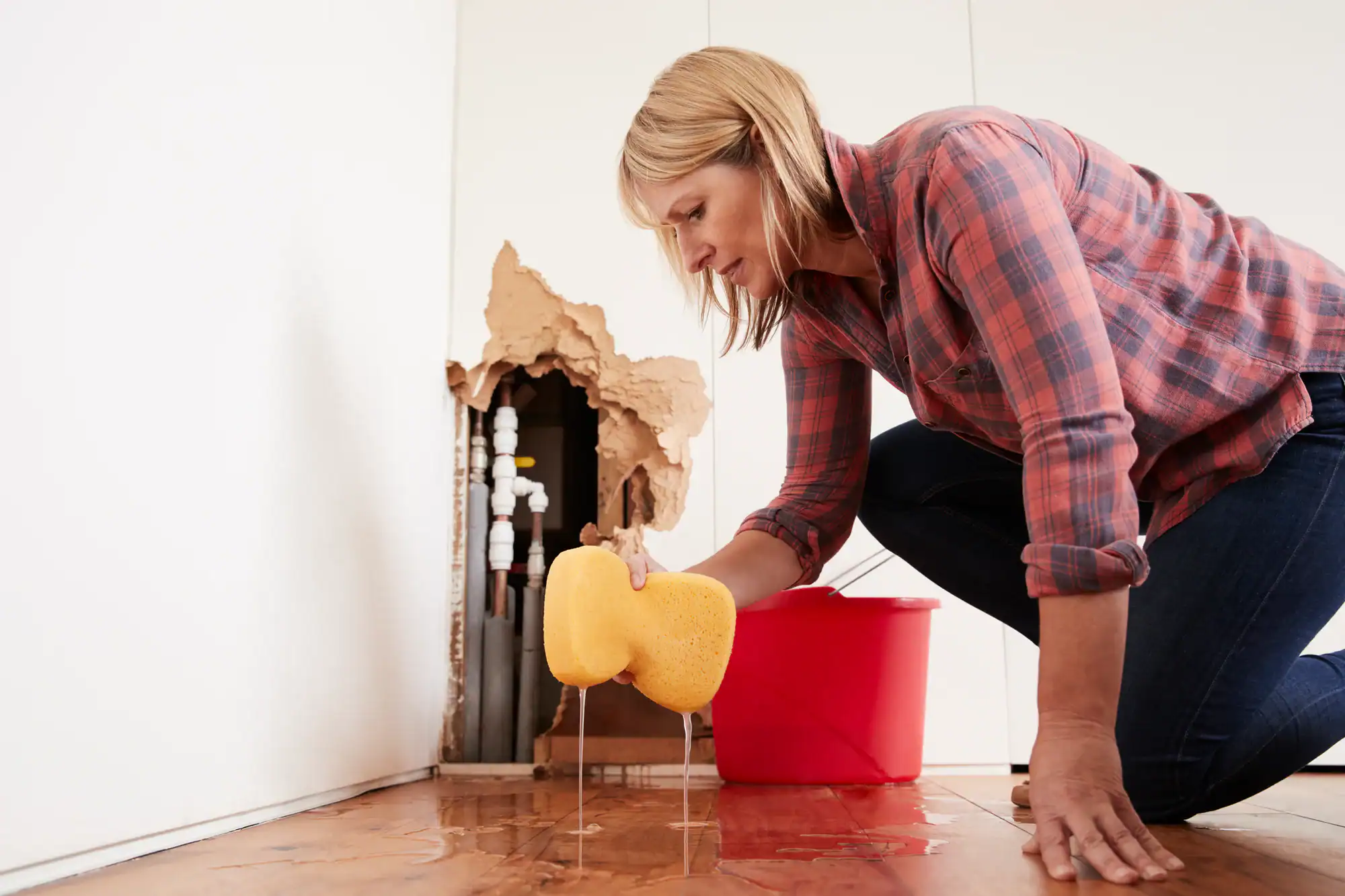
East Hills homes carry serious value — and serious risk when water gets in. We deliver water damage restoration fast, with the local knowledge and certified process your home actually needs.
I needed a professional consultation explanation of procedure for safe removal of Asbestos in my apartment complex. Without having an account yet, I was very impressed with the caring, knowledgeable and generous advice offered by Jessica, and will look forward to doing business in the future. Thank you so much! I feel much more informed about a sometimes scary endeavor. Peace. Nancy Silva Mineola, NY.
Mia Munoz
Used this company to clean up some water flood in my house. They were fast and easy to work with.very professional, Would recommend to anyone!
Nini Valle
Great company, had a flood and they responded quickly and efficiently. Billed my insurance company directly. I highly recommend this company!
joe colapietro, jr
I had pipe freeze in my basement right before a snow storm and they made to within an hour to help start the clean up process. They we by our side throughout the entire process and even helped with the insurance company. They did such a great job with the cleanup, repair, remidiation, I contracted them to perform the repairs and finishes in the basement. They came with enough manpower and material to get the job done. Leo and Jessica were nothing but a pleasure to deal with!!
Cristian Arredondo c
I had some water damage in my home and Green Island was able to take care of my issue quickly and effectively. I am very pleased with the work they did. They responded quickly and were very professional.
Michael M
Outstanding service! From the office to the field crew everyone was friendly, helpful and responsive. I highly recommend Green Island Group.
What Proper Restoration Looks Like for East Hills Homeowners
When water gets into a home that was built in the 1950s, the damage doesn’t always show up right away. Moisture moves into original plaster walls, settles under wood subfloors, and hides inside framing that was never designed with modern waterproofing in mind. By the time you see a stain or smell something off, you’re often weeks past the point where a simple dry-out would have handled it.
That’s the specific reality of owning a home in East Hills. Whether you’re in Strathmore, Country Estates, or Lakeville Estates, a large portion of the housing stock here is 65 to 75 years old. The plumbing is aging. Basement waterproofing from the original construction has long since degraded. When a nor’easter knocks the power out and your sump pump goes with it, the water doesn’t wait for business hours.
What you get after a proper restoration isn’t just a dry house — it’s documented proof that your home is actually dry, down to the structural readings inside the walls. That matters for your health, for your home’s long-term condition, and for the insurance claim you’ll need to file. When the job is done right, you’re not left wondering whether something was missed.
A Long Island Company That Knows East Hills and the North Shore
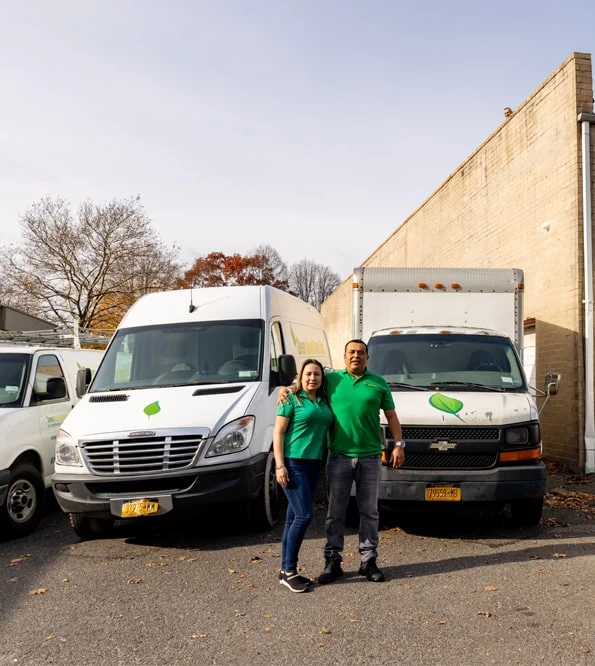
We are a locally owned and operated restoration company based on Long Island. We’re not a franchise. There’s no national call center routing your emergency to whoever happens to be available. When you call us, you reach a team that works in East Hills and Nassau County every day — and can actually be at your door in hours, not the following morning.
We know the North Shore. We know what a Levitt-built Strathmore Cape Cod looks like from the inside, how moisture behaves in post-war construction, and what it takes to restore a finished basement in an East Hills home worth well over a million dollars without cutting corners on the process. That’s not something you can learn from a template.
We hold IICRC certification, carry the required New York State mold licensing under Article 32, and maintain the Nassau County Environmental Hazard Remediation Contractors License required by the Nassau County Fire Prevention Ordinance. These aren’t optional credentials — they’re the legal baseline for doing this work in East Hills, and we have them.
The first call sets everything in motion. When you reach us, we ask a few quick questions to understand what you’re dealing with — where the water came from, how long it’s been sitting, and what areas of your home are affected. From there, we dispatch a crew. In East Hills and the surrounding North Shore communities, that means someone is typically on-site within hours, not the next day.
When we arrive, we don’t just look at what’s wet on the surface. We use thermal imaging cameras to map temperature differentials inside walls, under floors, and in structural cavities — because in a home built in the 1950s, what’s hidden is almost always more important than what’s visible. That inspection drives everything that follows: where we place drying equipment, how long the process runs, and what documentation we produce for your insurance claim.
From there, the drying process runs to IICRC S500 standards, which means we monitor moisture readings throughout and don’t close the job until every affected area hits confirmed safe levels. If the work requires permits through Nassau County or coordination with East Hills village requirements, we handle that too. When we’re done, you have a complete record of what was found, what was done, and what the final readings showed — the kind of documentation that keeps your claim from getting disputed.
What's Actually Included When We Restore Your Home
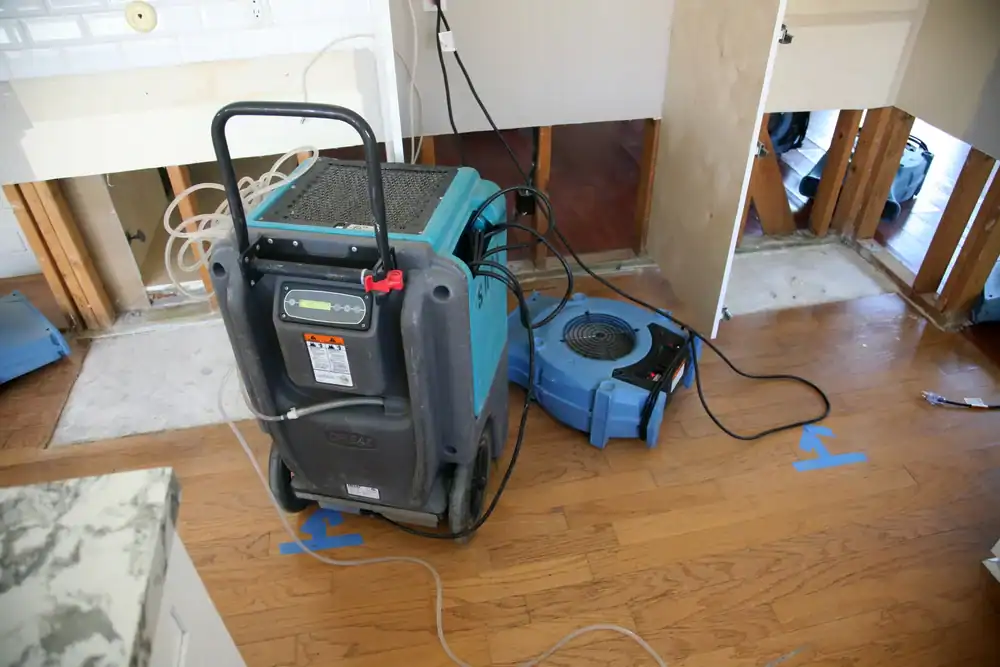
Water damage restoration isn’t one thing — it’s a sequence of steps that have to happen in the right order for the result to hold. It starts with extraction: removing standing water quickly to stop the spread. Then comes the drying phase, where industrial air movers and dehumidifiers run continuously until moisture readings inside the structure reach safe levels. In East Hills homes with original hardwood floors, custom millwork, or finished basements — all common in Country Estates and Nob Hill — this phase requires real attention to the materials involved, not just a standard equipment drop.
Throughout the process, we document everything. Moisture maps, thermal imaging records, drying logs, and itemized damage inventories are all part of what we produce — because your insurance adjuster is going to ask for them, and a claim without that documentation is a claim that gets underpaid. We work directly with major carriers and communicate with your adjuster on your behalf, so you’re not navigating that process on top of everything else.
If mold is present or at risk of developing — which becomes a real concern within 24 to 48 hours of a water event in an older home — we are licensed under New York State Mold Law Article 32 to handle assessment and remediation in full compliance with state requirements. That’s not something every company working in Nassau County can say. Hiring an unlicensed operator for mold work in East Hills can void your insurance claim and create liability you don’t want.
How quickly can water damage restoration begin at my East Hills home?
Speed matters more than most people realize. Mold can begin developing within 24 to 48 hours of water intrusion, and in a home with post-war construction — original plaster walls, wood subfloors, older insulation — moisture moves fast and hides well. The longer it sits, the more expensive and complicated the restoration becomes.
We are based on Long Island and serve East Hills and the surrounding Nassau County area with crews already in the region. In most cases, we can have someone on-site within a few hours of your call. That’s a meaningful difference from national franchise brands, where your call routes through a central system before anyone local is even notified. When you’re dealing with a flooded basement in Strathmore or a burst pipe in Country Estates, a few hours is the difference between a contained restoration and a mold remediation project.
Does homeowners insurance cover water damage restoration in Nassau County?
In most cases, yes — but the details matter. Standard homeowners insurance policies typically cover sudden and accidental water damage, like a burst pipe or an appliance failure. What they generally don’t cover is damage resulting from long-term neglect or gradual leaks that went unaddressed. The distinction sounds simple, but adjusters look closely at the documentation, and the line between “sudden” and “gradual” can get contested quickly.
This is where having the right restoration company makes a real financial difference. We produce IICRC-standard moisture documentation, thermal imaging records, and detailed drying logs from the moment we arrive — the exact evidence your adjuster needs to process a full and fair claim. East Hills homeowners typically carry high-value policies with significant coverage limits, and we work directly with the major carriers serving this market. You shouldn’t have to learn the claims process in the middle of a water emergency, and with us, you don’t have to.
What causes basement flooding in East Hills, and how do I prevent it from happening again?
The most common culprit in East Hills is sump pump failure during a power outage — and it happens more than you’d expect. Nor’easters hitting Nassau County’s North Shore regularly knock out power for hours at a time, and that’s precisely when groundwater is at its highest and your sump pump needs to be running. When the power goes, the pump stops, and the water has nowhere to go but in.
Beyond sump failure, the aging housing stock in East Hills creates a range of structural vulnerabilities. Foundation cracks develop over decades of freeze-thaw cycles. Original basement waterproofing membranes from the 1950s have long since degraded. Drain tiles that were functional 40 years ago may no longer be moving water away from the foundation effectively. After we restore your basement, we’ll walk you through what we found and what’s worth addressing — whether that’s a battery backup for your sump system, foundation crack sealing, or a conversation with a waterproofing contractor about a longer-term fix.
How do I know if there's mold after a water damage event in my home?
You often don’t — and that’s the problem. Mold doesn’t always announce itself with visible growth or a strong smell, especially in the early stages. In a home with original plaster walls or wood framing from the 1950s, mold can develop inside structural cavities where it’s completely hidden from view. By the time you notice discoloration or a musty odor, it’s typically been growing for weeks.
This is why we use thermal imaging as part of every water damage assessment. Thermal cameras detect temperature differentials that indicate moisture trapped inside walls, under floors, and in other concealed areas — giving us a picture of what’s actually happening inside the structure, not just on the surface. If mold is confirmed or strongly suspected, we are licensed under New York State Mold Law Article 32 to handle both assessment and remediation in compliance with state requirements. That law exists specifically to protect Nassau County homeowners from operators who cut corners on mold work, and it carries real consequences for unlicensed contractors — and for the homeowners who unknowingly hire them.
What's the difference between a local water restoration company and a national franchise in East Hills?
The most practical difference is response time and accountability. When you call a national franchise brand, your call goes to a central system. That system then routes your job to whoever is available locally — which may or may not be someone who has ever worked in East Hills, knows the housing stock, or is familiar with Nassau County’s specific licensing requirements. The crew that shows up may be a subcontractor with no direct relationship to the brand you called.
With us, you’re calling a Long Island company. Our crews are based here, they work Nassau County regularly, and there’s a direct line of accountability from the call to the job to the result. We also hold the Nassau County Environmental Hazard Remediation Contractors License required by the Nassau County Fire Prevention Ordinance — a county-specific credential that not every company operating in this area can produce. For a home in East Hills worth over a million dollars, that difference in local accountability isn’t a small thing.
How much does water damage restoration typically cost in East Hills, NY?
The honest answer is that it depends on the scope, and the scope depends on how quickly the response happens and what the water has reached. A contained burst pipe caught within a few hours is a very different job than a basement that’s been holding water for two days. In East Hills, where homes commonly have finished basements with hardwood floors, built-ins, and high-end finishes, the materials involved also affect the cost — restoring engineered hardwood is not the same as drying out a concrete utility room.
That said, most water damage restoration in Nassau County falls somewhere between $3,500 and $12,000 for a residential job, with larger or more complex losses running higher. The good news is that the majority of sudden and accidental water damage events are covered by homeowners insurance, and East Hills homeowners typically carry comprehensive policies with high coverage limits. We document everything to IICRC standards, work directly with your carrier, and advocate for a settlement that reflects the actual scope of the damage — so the out-of-pocket cost for a covered event is often far less than the total restoration figure.