When the Bay Pushes Back, You Need Someone Who Know It
East Massapequa homes face real flood exposure — from aging pipes to South Oyster Bay storm surge. We respond fast, dry it right, and handle the insurance so you don’t have to.
I needed a professional consultation explanation of procedure for safe removal of Asbestos in my apartment complex. Without having an account yet, I was very impressed with the caring, knowledgeable and generous advice offered by Jessica, and will look forward to doing business in the future. Thank you so much! I feel much more informed about a sometimes scary endeavor. Peace. Nancy Silva Mineola, NY.
Mia Munoz
Used this company to clean up some water flood in my house. They were fast and easy to work with.very professional, Would recommend to anyone!
Nini Valle
Great company, had a flood and they responded quickly and efficiently. Billed my insurance company directly. I highly recommend this company!
joe colapietro, jr
I had pipe freeze in my basement right before a snow storm and they made to within an hour to help start the clean up process. They we by our side throughout the entire process and even helped with the insurance company. They did such a great job with the cleanup, repair, remidiation, I contracted them to perform the repairs and finishes in the basement. They came with enough manpower and material to get the job done. Leo and Jessica were nothing but a pleasure to deal with!!
Cristian Arredondo c
I had some water damage in my home and Green Island was able to take care of my issue quickly and effectively. I am very pleased with the work they did. They responded quickly and were very professional.
Michael M
Outstanding service! From the office to the field crew everyone was friendly, helpful and responsive. I highly recommend Green Island Group.
Standing water is the part you can see. What you can’t see — moisture wicking into the drywall, pooling under your subfloor, sitting inside the wall cavity behind your finished basement — is the part that becomes a mold problem inside 48 hours. In East Massapequa’s coastal humidity, that window moves fast. Getting the visible water out isn’t the job. Getting the structure genuinely dry is.
Most of the homes in East Massapequa were built between 1940 and 1969. That means original framing, older waterproofing that’s long past its effective life, and finished basements that were never designed with moisture management in mind. When water gets into a 1958 split-level off Carmans Road, it doesn’t behave the way it does in a new build. It travels. It hides. And a company that doesn’t use thermal imaging and calibrated moisture meters to find it will miss it every time.
When the job is done correctly, you’re not just dry — you’re protected. No mold disclosure hanging over a resale. No remediation bill six months from now that dwarfs what proper restoration would have cost. No lingering air quality issue in the house where your kids sleep. That’s what this is actually about.
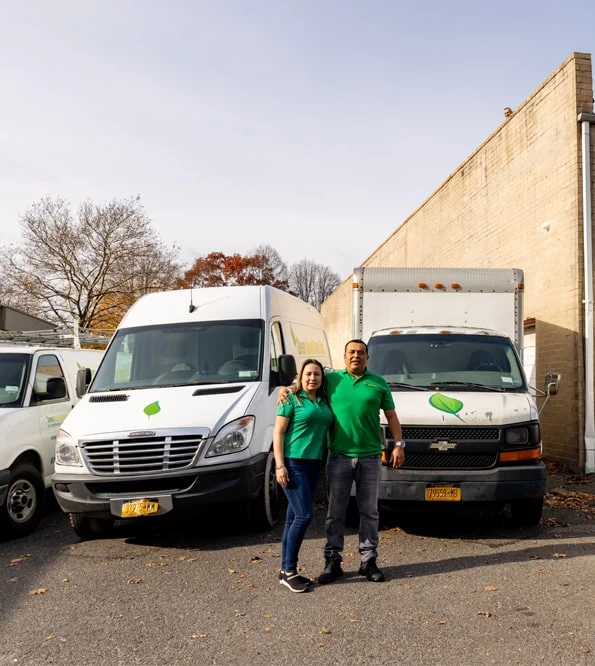
We’re a locally owned and operated restoration company serving Nassau County and Long Island. There’s no national franchise behind us, no call center routing your emergency through a corporate system at 2am. When you call, you reach a Long Island-based team — and the crew that shows up is the same crew accountable for the outcome.
We’ve worked in homes throughout East Massapequa and the surrounding Massapequas, including the waterfront neighborhoods south of Merrick Road where flood insurance isn’t optional and where a sump pump failure during a nor’easter has real consequences. We know the housing stock here. We know what mid-century construction looks like from the inside, and we know what water does to it.
We hold IICRC certification in water damage restoration and applied structural drying, and we carry the New York State Department of Labor licenses required for mold assessment and remediation under the 2016 NY Mold Law. That’s not a detail — it’s a legal requirement that a number of operators advertising in this area don’t meet.
The first thing that happens when we arrive is a full moisture assessment — not just a visual walkthrough. We use thermal imaging cameras and calibrated moisture meters to map every affected surface, including the ones you can’t see. In an older East Massapequa home, water doesn’t stay where it lands. It moves through original framing, under flooring, and into wall cavities. We find it before it becomes your next problem.
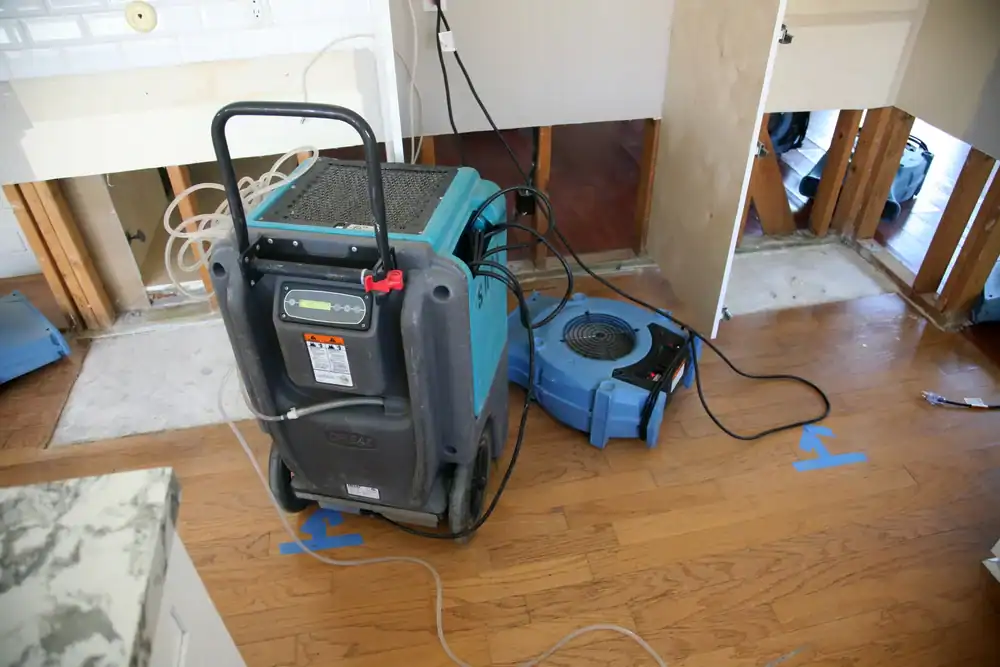
Once we know the full scope, we extract standing water and deploy industrial-grade drying equipment — air movers, dehumidifiers, and where needed, structural drying systems that work from inside wall cavities. The drying process runs until the moisture readings confirm the structure is dry, not until the floors look dry. Those are two different things, and the difference matters.
From there, we document everything for your insurance claim. If you’re a homeowner in Nassau Shores or Biltmore Shores carrying both a standard homeowners policy and a separate NFIP flood policy, we handle the documentation for both. We communicate directly with adjusters, prepare the scope of work, and make sure the claim reflects the actual damage — so you’re not leaving money on the table or fighting a dispute on your own. Any work that requires permits under Town of Oyster Bay building requirements gets handled correctly from the start.
Water damage restoration isn’t a single task — it’s a sequence of connected steps that have to happen in the right order. Emergency water extraction comes first. Then moisture mapping. Then structural drying. Then documentation and, where needed, controlled demolition of materials that can’t be saved — drywall, insulation, flooring — followed by reconstruction. We handle the full scope, start to finish.
For East Massapequa homeowners, the most common calls we receive involve sump pump failures during storms, burst pipes in under-insulated exterior walls during nor’easters, sewage backups through basement floor drains, and storm-related flooding in the waterfront neighborhoods south of Merrick Road. Each of these creates a different water category — clean water, gray water, or black water — and each requires a different response protocol. We assess the category on arrival and work accordingly, because treating a sewage backup the same way you treat a burst pipe is how people end up with a serious contamination problem.
If moisture mapping reveals mold growth — which is common in homes that had an undetected slow leak or a previous water event that wasn’t fully dried — we handle mold remediation under our separate New York State mold remediation license. That license is required by law. If a company can’t show it to you, they shouldn’t be doing the work.
Does homeowners insurance cover water damage from a sump pump failure in East Massapequa?
It depends on your specific policy, and this is one of the most common points of confusion for homeowners in East Massapequa. Standard homeowners insurance typically covers sudden and accidental water damage — a burst pipe, for example — but sump pump failure is often excluded unless you’ve added a water backup and sump pump rider to your policy. That’s a separate endorsement, and a lot of homeowners don’t realize they don’t have it until they’re standing in a flooded basement.
If you’re in one of the waterfront neighborhoods south of Merrick Road — Nassau Shores, Biltmore Shores — you likely carry a separate NFIP flood insurance policy in addition to your homeowners policy. Flood insurance covers rising water from an external source, like storm surge from South Oyster Bay. But sump pump failure during a storm is typically not a flood claim — it’s a water backup claim. Getting the documentation right from the start is critical, because misclassifying the damage source can get a claim denied. We help sort that out before anything is submitted.
How quickly does mold start growing after a basement floods on Long Island?
The standard answer is 24 to 48 hours, and that’s accurate — but it assumes average indoor conditions. On Long Island’s South Shore, where ambient humidity is elevated by proximity to South Oyster Bay and where summer dew points regularly climb into the uncomfortable range, the conditions for mold growth are already favorable before the water event happens. In practice, mold can begin colonizing inside wall cavities and under flooring faster than that window suggests, particularly in older East Massapequa homes where building materials have absorbed moisture over decades and where there’s no modern vapor barrier slowing the spread.
The other thing to understand is that mold doesn’t announce itself. It grows behind drywall, under subfloor, and inside insulation — places you can’t see and won’t smell until the colony is already established. That’s why the moisture mapping step matters so much. Removing standing water and running a fan is not restoration. It’s the beginning of a mold problem.
What should I do immediately after my basement floods in East Massapequa?
The first thing is safety — don’t enter a flooded basement if there’s any chance the electrical panel was affected by the water. Standing water and live electrical circuits are a serious hazard, and it’s not worth the risk. If you’re not sure, stay out until the power is confirmed off.
After that, call a restoration company before you start moving things around or attempting to dry it yourself. The reason is documentation. Your insurance claim depends on the condition of the damage as it was found — not after you’ve moved furniture, pulled up carpet, or run a shop vac for two hours. We can document the full scope on arrival, which protects your claim. Once documentation is done, we start extraction immediately. In East Massapequa’s older homes, where finished basements are common and materials like drywall and carpet absorb water quickly, every hour between the flood and the start of professional drying matters.
How do you dry out walls and floors without tearing everything apart?
In a lot of cases, we can dry in place — meaning we don’t have to open every wall to get the moisture out. We use injectidry systems and structural cavity drying equipment that works through small access holes, pulling moisture out from inside wall assemblies without requiring full demolition. Whether that approach is viable depends on how long the water has been present, what materials are involved, and what the moisture readings look like behind the surface.
In East Massapequa’s older homes, the calculus changes a little. Mid-century construction often used materials — original drywall, wood lath, older insulation — that absorb and retain moisture more aggressively than modern materials and are harder to dry in place once saturated. If the moisture readings tell us the material can’t be dried without demolition, we’ll tell you that directly and explain why. We’re not going to tear out a wall that doesn’t need to come out, and we’re not going to leave moisture in a wall that does.
Does water damage restoration in Nassau County require permits or inspections?
For the extraction and drying phase — getting the water out and drying the structure — permits are generally not required. That work is considered emergency mitigation. Where permits come into play is during the reconstruction phase: replacing drywall, reframing damaged structural elements, or making changes to plumbing or electrical systems that were affected by the water damage.
East Massapequa is an unincorporated hamlet governed by the Town of Oyster Bay, so permit requirements fall under Town of Oyster Bay building department jurisdiction rather than a village government. For any structural repairs that require opening walls or replacing load-bearing elements, the correct permits need to be pulled before work begins. Skipping that step can create problems when you go to sell the home — unpermitted work is a disclosure issue in New York, and in a market where East Massapequa homes are worth $500,000 to well over $1 million, that’s not a risk worth taking. We handle the permit process correctly from the start.
How do nor'easters cause water damage in East Massapequa homes specifically?
Nor’easters create water damage through several different mechanisms, and East Massapequa’s housing stock is vulnerable to most of them. The most common is sump pump failure — extended power outages during a storm drain the battery backup, and basements fill fast, especially in neighborhoods where the water table sits higher due to proximity to South Oyster Bay. The second is ice dams: on older roofs, snow accumulates, the bottom layer melts from heat loss through the attic, and the water backs up under shingles and into ceiling and attic spaces. In a home built in the 1950s or 1960s with original roof construction and limited attic insulation, this is a recurring problem.
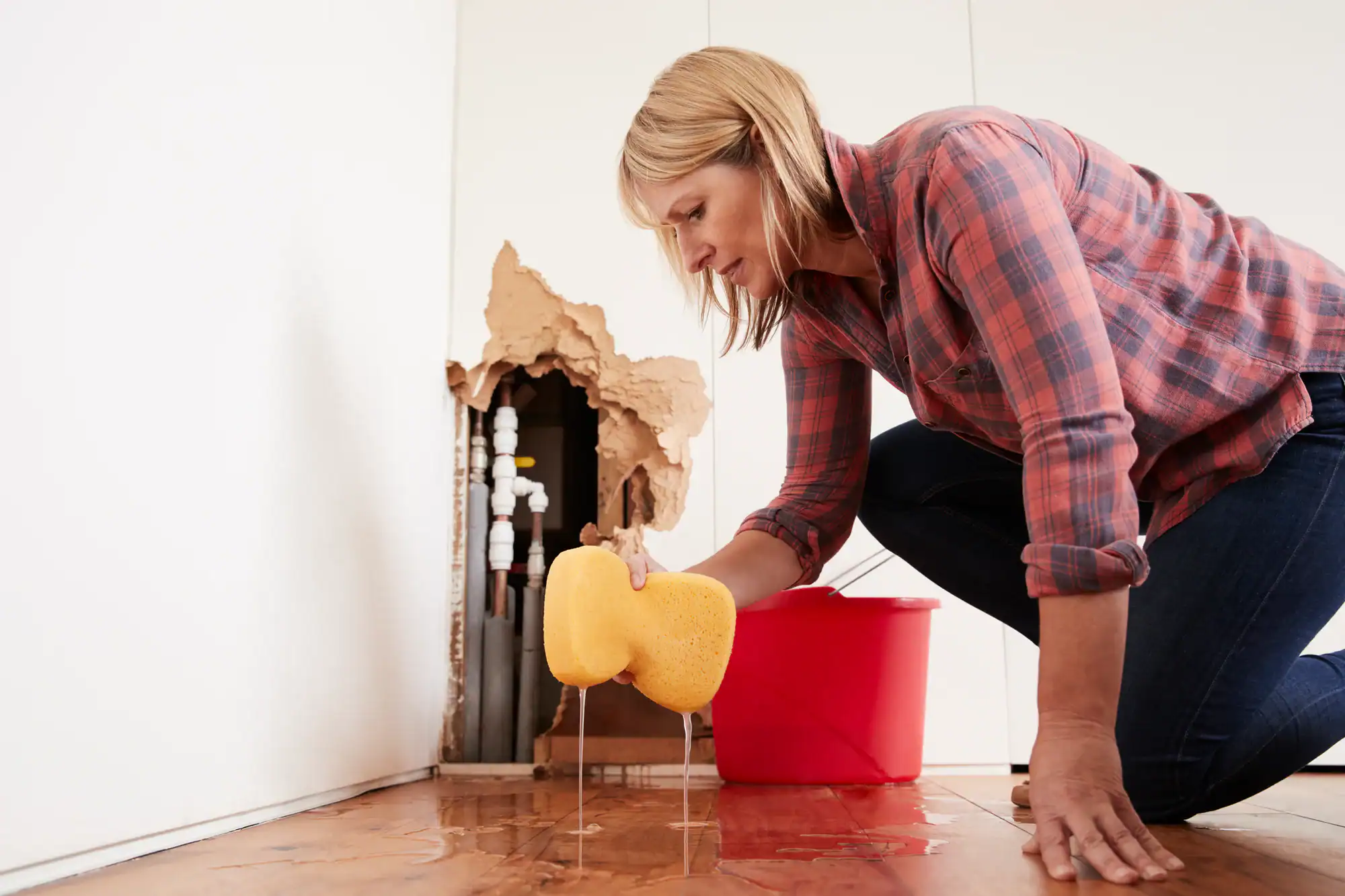
Frozen and burst pipes are the third mechanism — exterior walls in mid-century East Massapequa homes weren’t always insulated to the standard that modern construction requires, and pipes running through those walls are vulnerable during sustained cold snaps that accompany major nor’easters. All three of these damage types look different, require different responses, and affect different parts of the home. Knowing which one you’re dealing with — and what it means for the structure — is the first thing we figure out when we arrive.