When the Saw Mill River Wins, We Help You Take Your Home Back
Elmsford flood damage moves fast our water damage restoration team moves faster, 24/7, with full insurance coordination and financing up to $200,000 at 0% APR.
I needed a professional consultation explanation of procedure for safe removal of Asbestos in my apartment complex. Without having an account yet, I was very impressed with the caring, knowledgeable and generous advice offered by Jessica, and will look forward to doing business in the future. Thank you so much! I feel much more informed about a sometimes scary endeavor. Peace. Nancy Silva Mineola, NY.
Mia Munoz
Used this company to clean up some water flood in my house. They were fast and easy to work with.very professional, Would recommend to anyone!
Nini Valle
Great company, had a flood and they responded quickly and efficiently. Billed my insurance company directly. I highly recommend this company!
joe colapietro, jr
I had pipe freeze in my basement right before a snow storm and they made to within an hour to help start the clean up process. They we by our side throughout the entire process and even helped with the insurance company. They did such a great job with the cleanup, repair, remidiation, I contracted them to perform the repairs and finishes in the basement. They came with enough manpower and material to get the job done. Leo and Jessica were nothing but a pleasure to deal with!!
Cristian Arredondo c
I had some water damage in my home and Green Island was able to take care of my issue quickly and effectively. I am very pleased with the work they did. They responded quickly and were very professional.
Michael M
Outstanding service! From the office to the field crew everyone was friendly, helpful and responsive. I highly recommend Green Island Group.
When water gets into your Elmsford home, the clock starts immediately. Mold can begin developing within 24 to 48 hours and in Elmsford’s older pre-World War II housing stock, where plaster walls and aged insulation hold moisture longer than modern materials, that window is even tighter. The faster extraction and drying begins, the less damage spreads into your subfloor, framing, and walls.
What most homeowners don’t realize until it’s too late is that a flooded basement in Elmsford isn’t always just a flooded basement. Homes built before 1945 and there are a lot of them throughout this village often have galvanized pipes that have been corroding from the inside for decades, foundations without modern waterproof membranes, and in many cases, asbestos-containing materials in floor tiles or pipe insulation that get disturbed the moment water intrudes. You need a team that can handle all of it, not one that stops at drying and hands you a list of other contractors to call.
We cover the full scope: water extraction, structural drying, mold remediation, asbestos abatement, and complete reconstruction. One call, one company, one finished home. That’s what getting your life back actually looks like.
Twelve Years Serving Elmsford and Westchester County
We’ve been doing environmental restoration work in Westchester County for over 12 years, which means we’ve worked through the nor’easters that freeze pipes in pre-war walls throughout Elmsford, the summer storms that overwhelm the Saw Mill River watershed, and the winter power outages that knock out sump pumps across the region. Elmsford’s specific conditions and flood risks aren’t new to us.
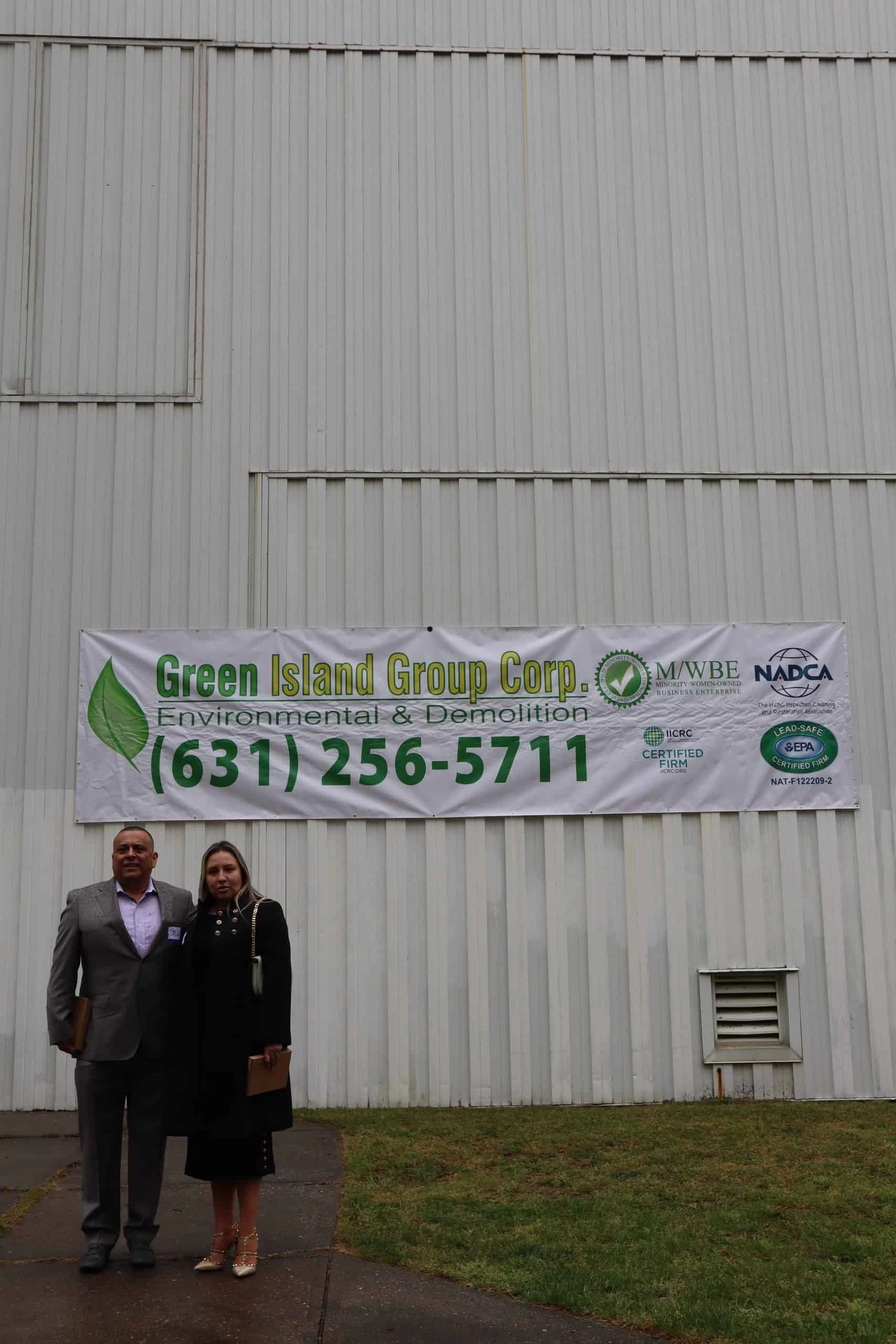
We’re a NYS and NYC M/WBE Certified contractor that’s a government-verified credential, not a self-reported claim. We carry full liability insurance and Workers’ Compensation coverage, we work directly with insurance carriers so you’re not stuck managing the claim yourself, and we’ve built working relationships with the NYS Office of General Services and other state agencies that require a level of vetting most contractors never clear.
For Elmsford residents whether you’re in the East Irvington/Glenville area near the river corridor or further north toward Elmsford North you’re dealing with a housing stock and a flood risk pattern that demands a contractor who actually knows what they’re walking into. We do.
What Happens From Your First Call to a Finished Home
You call, and someone answers any time, any day. From there, a response team is dispatched to your Elmsford property. Given the village’s compact footprint of just over one square mile, that means a crew is typically on-site quickly, not driving in from a regional dispatch hub an hour away. The first thing we do is assess the full scope of what’s happening: where the water came from, how far it’s traveled, what materials it’s touched, and whether there are any hazardous material concerns which in Elmsford’s pre-war homes, is a real and common consideration that needs to be identified before any demolition begins.
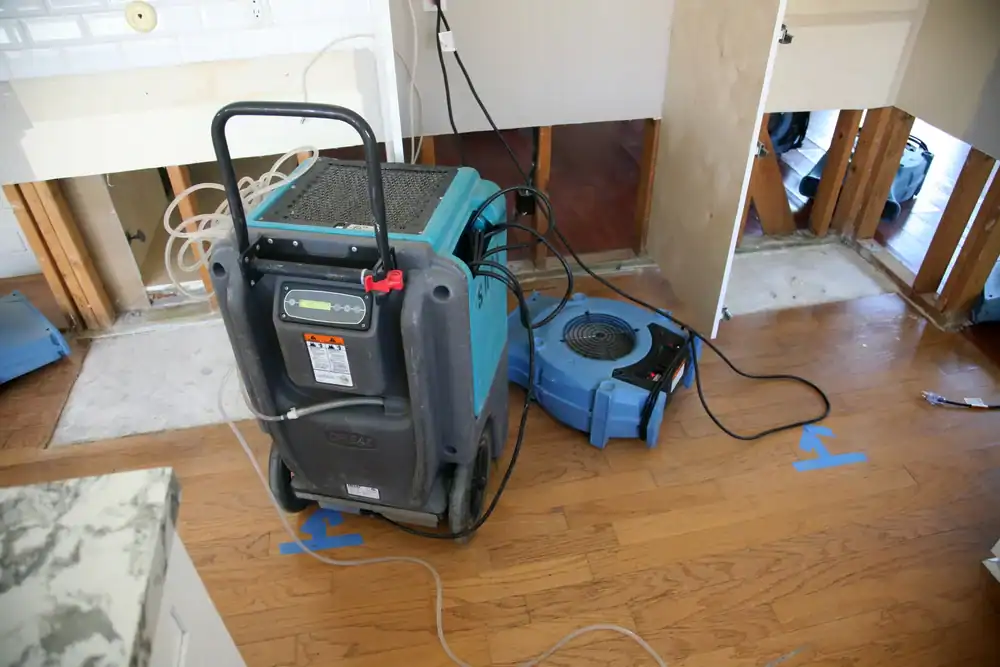
Once the assessment is complete, extraction and drying equipment goes in. Industrial dehumidifiers, air movers, and moisture meters track the drying process in real time so nothing gets closed up while it’s still wet. If mold is present or structural materials need to come out, that work happens under the same project no handoffs, no gaps in accountability.
For work that requires a building permit through the Village of Elmsford’s Building Department structural repairs, framing, drywall replacement we handle that process as part of the job. If mold remediation exceeds 10 square feet, NYS Labor Law Article 32 requires a licensed contractor, and we’re compliant. When the work is done, you have a restored, permitted, finished home not a half-repaired property waiting on someone else to finish it.
Water Damage Restoration Services Near Elmsford, NY
Full Restoration Built for Elmsford's Older Homes
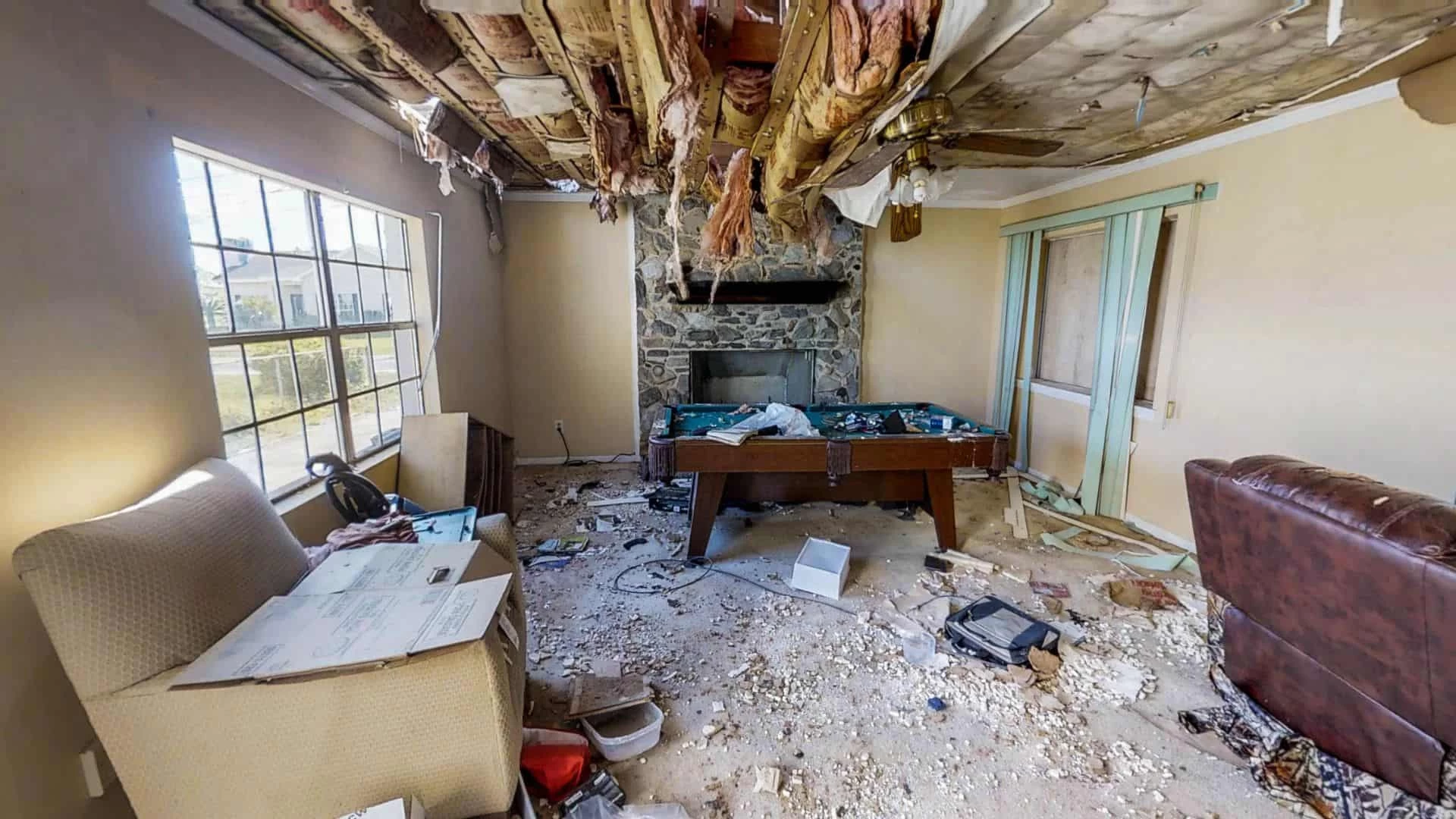
Water damage restoration in a village like Elmsford isn’t a simple extraction job. The housing stock here is old genuinely old, with a pre-World War II character that NeighborhoodScout specifically flags as unusual even by Westchester County standards. That means the restoration work has to account for things that don’t come up in newer construction: original hardwood floors that cup and buckle differently than engineered wood, plaster walls that hold moisture in ways drywall doesn’t, and the very real possibility of asbestos-containing materials in floor tiles, pipe insulation, or ceiling texture that must be properly abated before reconstruction can begin. We handle all of that under one roof.
The flooding risk in Elmsford is also specific. When the Saw Mill River overflows near the Route 119 corridor which it does with enough regularity that the Army Corps of Engineers produced a formal flood study specifically for this area, and that Westchester County legislators toured flood sites here as recently as 2024 the water that enters your property carries a different profile than a simple pipe burst. It can be contaminated, it carries sediment, and it saturates materials quickly. That changes how extraction, drying, and mold prevention are approached, and it’s exactly the kind of flood event our team has handled before.
Beyond the technical scope, there’s the financial piece. We offer financing up to $200,000 at 0% APR something no other restoration company currently serving Elmsford advertises. If your insurance deductible is significant, if the insurer is disputing part of the claim, or if the reconstruction scope exceeds your policy limits, that financing option means the work gets done properly rather than partially.
How quickly does mold develop after flooding in an Elmsford home?
Mold can begin growing within 24 to 48 hours of water intrusion but that timeline can compress in Elmsford’s older housing stock. Pre-World War II homes common throughout the village often have plaster walls, original insulation, and older wood framing that absorb and retain moisture more aggressively than modern materials. Once moisture is locked into those materials, mold has everything it needs.
The practical implication is that speed matters more here than it might in a newer home. Calling a restoration company the same day you discover the damage not the next morning, not after the weekend is the difference between a drying job and a full mold remediation project. If you’ve experienced flooding from the Saw Mill River or a burst pipe and there’s any question about whether materials are still wet, the answer is to get someone in with moisture meters before you assume it dried on its own.
Does homeowner's insurance cover Saw Mill River flood damage in Elmsford?
This is one of the most important questions Elmsford homeowners need to understand before a flood event, not after. Standard homeowner’s insurance policies do not cover flooding caused by an overflowing river or surface water that type of damage requires a separate flood insurance policy, typically through the National Flood Insurance Program (NFIP). If the Saw Mill River overflows and water enters your basement or ground floor, your standard policy likely won’t respond to that claim.
What standard homeowner’s insurance does typically cover is sudden and accidental water damage from internal sources a burst pipe, a failed appliance, an HVAC condensate line backup. If you’re unsure what your policy covers, the time to find out is now, not while you’re standing in water. We work directly with insurance carriers and can help document damage to adjuster standards regardless of which policy applies but knowing your coverage gap before a flood event gives you the ability to close it.
What's the difference between water mitigation and full water damage restoration?
Mitigation is the emergency phase stopping the damage from spreading, extracting standing water, and beginning the drying process. It’s critical and it has to happen fast. But mitigation alone doesn’t restore your home. It stabilizes it.
Full restoration is everything that comes after: removing damaged materials, treating for mold, repairing or replacing structural elements, and rebuilding finished surfaces drywall, flooring, trim, paint back to livable condition. In Elmsford’s older homes, that reconstruction phase is often more involved than in newer construction because the materials are different and, in some cases, hazardous material abatement has to be completed before any rebuilding can begin. A company that only does mitigation will hand you off to someone else for the rest. We handle both phases under one project, which means no gaps in the process, no finger-pointing between contractors, and a single point of accountability from start to finish.
Do I need a permit for water damage repairs in Elmsford, NY?
It depends on the scope of the work. Cosmetic repairs repainting, replacing a section of drywall typically don’t require a permit. But structural repairs following water damage often do. In Elmsford, work that affects load-bearing elements, framing, electrical systems, or plumbing requires a building permit issued through the Village of Elmsford’s Building Department. Since Elmsford sits entirely within the Town of Greenburgh, certain projects may also involve Greenburgh’s building and zoning oversight.
Mold remediation adds another layer. Under NYS Labor Law Article 32, any mold remediation work on an area larger than 10 square feet must be performed by a contractor licensed by the NYS Department of Labor. And if asbestos-containing materials are disturbed which is a realistic scenario in Elmsford’s pre-war housing stock abatement must be performed by a certified contractor with NYS DOL notification for projects above threshold quantities. We are fully compliant with all of these requirements, which means the permits and regulatory steps are handled as part of your project, not left for you to figure out.
How does Green Island Group handle the insurance claim process?
We work directly with your insurance carrier documenting the damage, communicating with the adjuster, and billing the insurer rather than leaving you to manage that relationship on your own. For homeowners who haven’t been through a water damage claim before, that coordination matters more than most people realize. Insurance adjusters work from specific documentation standards, and a claim that’s poorly documented from the start can result in a lower settlement or a disputed payout.
Our team photographs and documents damage in a format that adjusters recognize and accept. We track the drying process with moisture readings that create a verifiable record of conditions throughout the job. And if there’s a dispute about the scope of damage or what’s covered, we can speak to that directly with the carrier. You shouldn’t have to become an expert in insurance claims on the worst week of your home ownership that’s our job, and we handle it.
Does Green Island Group offer financing for water damage restoration in Elmsford?
Yes and it’s worth understanding what that actually means in practical terms. We offer financing up to $200,000 at 0% APR. No other restoration company currently serving Elmsford advertises any financing option at all.
Here’s why that matters for Elmsford specifically. Median home values in the village are close to $670,000, and the housing stock is old enough that restoration projects can get complicated quickly especially when asbestos abatement, mold remediation, and full reconstruction are all part of the same job. Insurance deductibles are real, coverage limits aren’t always enough, and insurers sometimes dispute portions of a claim. The financing option exists so that none of those gaps force you into leaving damage unaddressed or cutting corners on the rebuild. A middle-income community like Elmsford shouldn’t have to choose between doing the job right and staying financially stable. The 0% APR structure means you’re not paying a premium to access that flexibility you’re just getting the work done properly.