When Midtown's Old Pipes Fail, the Clock Starts Immediately
Water damage in a pre-war Manhattan building doesn’t wait for business hours. We respond within two hours with every license New York City actually requires to finish the job.
I needed a professional consultation explanation of procedure for safe removal of Asbestos in my apartment complex. Without having an account yet, I was very impressed with the caring, knowledgeable and generous advice offered by Jessica, and will look forward to doing business in the future. Thank you so much! I feel much more informed about a sometimes scary endeavor. Peace. Nancy Silva Mineola, NY.
Mia Munoz
Used this company to clean up some water flood in my house. They were fast and easy to work with.very professional, Would recommend to anyone!
Nini Valle
Great company, had a flood and they responded quickly and efficiently. Billed my insurance company directly. I highly recommend this company!
joe colapietro, jr
I had pipe freeze in my basement right before a snow storm and they made to within an hour to help start the clean up process. They we by our side throughout the entire process and even helped with the insurance company. They did such a great job with the cleanup, repair, remidiation, I contracted them to perform the repairs and finishes in the basement. They came with enough manpower and material to get the job done. Leo and Jessica were nothing but a pleasure to deal with!!
Cristian Arredondo c
I had some water damage in my home and Green Island was able to take care of my issue quickly and effectively. I am very pleased with the work they did. They responded quickly and were very professional.
Michael M
Outstanding service! From the office to the field crew everyone was friendly, helpful and responsive. I highly recommend Green Island Group.
The buildings surrounding the Empire State Building many of them constructed in the 1920s and 1930s weren’t built with modern plumbing tolerances. When a steam pipe gives out or a shared plumbing stack backs up, water doesn’t just soak a floor. It moves through plaster walls, drops through ceilings, and reaches units two or three floors below before anyone notices. By the time you’re calling for help, the damage is already layered.
What you actually need is a restoration team that can stop the spread, dry the structure properly, and identify what’s hiding inside the walls not just what’s visible on the surface. In Empire State’s pre-war building stock, that almost always means checking for mold behind plaster, testing for asbestos in pipe insulation, and confirming lead paint isn’t being disturbed during the repair. These aren’t edge cases here. They’re the norm.
When the work is done right, you get your space back without a secondary problem waiting to surface six months later. No mold growing behind a freshly painted wall. No stop-work order from the Department of Buildings because a contractor disturbed asbestos without the right license. Just a dry, safe, fully documented restoration the kind that holds up to an insurance claim and a building inspection.
We’re a New York-based restoration company not a national franchise that landed here. Our team works across Manhattan, Queens, Nassau County, and Suffolk County, and we’ve built our license stack specifically around what New York City’s regulatory environment demands. That means an NYC General Contractor license, NYC BIC Trade Waste license, NYS DOL Asbestos license, NYS DOL Mold license, and USEPA Lead and RRP certifications all active, all verifiable.
In the Empire State area and the broader Midtown South corridor, from Murray Hill to the Garment District, that full credential set matters more than it does almost anywhere else. A restoration company that isn’t licensed for asbestos work in a pre-1987 building can’t legally finish the job and in this neighborhood, most buildings qualify. We can, and do, handle the full scope without handing off to a subcontractor or leaving you to manage multiple vendors during an already stressful situation.
Our reviews reflect it. Customers consistently note two-hour response times, clear communication throughout the process, and a crew that shows up and follows through. That’s not accidental it’s how we’re built.
From the First Call to a Fully Documented Restoration
When you call, you’re not reaching a call center. You’re reaching someone who can dispatch a technician and in the Empire State Building area, that technician is on-site within two hours. The first thing that happens is an honest assessment: where the water came from, how far it’s traveled, what materials it’s touched, and whether any regulated hazards asbestos, lead, mold are likely to be involved. In a building constructed before 1987, that assessment isn’t optional. NYC’s Department of Buildings requires it before restoration work can legally proceed.
From there, we move into extraction and structural drying. Industrial air movers and dehumidifiers pull moisture out of walls, subfloors, and ceiling cavities not just the surface. Moisture meters track what’s happening inside the structure, because in a multi-unit Manhattan building, what looks dry on the outside is often still saturated underneath. Drying isn’t finished when the floor feels dry. It’s finished when the readings confirm it.
Once the structure is dry and any hazardous materials have been properly addressed, the repair and documentation phase begins. That means a full scope of work for your insurance carrier, Xactimate-compatible reporting, and any required NYC DOB permits for structural repairs. You get a complete paper trail which matters whether you’re a property manager filing a commercial claim or a tenant trying to hold your landlord accountable.
Water Damage Restoration Service Near Empire State
Built for Empire State's Buildings, Not the Average Job
Water damage restoration in the Empire State Building area isn’t a single-trade job. The buildings here pre-war lofts on West 36th Street, converted commercial towers in the Garment District, Murray Hill apartment buildings with original steam heat systems present a combination of hazards that most restoration companies aren’t licensed to handle all at once. Asbestos pipe insulation, lead paint on original trim, and mold behind plaster walls can all be present in the same water-damaged unit. We’re licensed to address all three without stopping the job to bring in outside help.
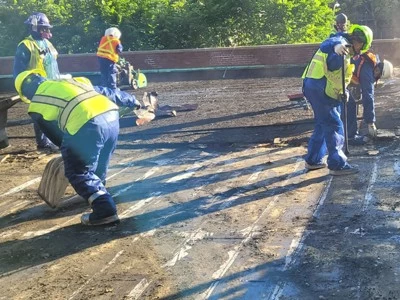
Our service covers the full scope: emergency water extraction, structural drying with industrial equipment, moisture mapping inside walls and subfloors, mold prevention and remediation, asbestos abatement where required, lead paint compliance under USEPA RRP protocols, and full reconstruction once the structure is confirmed dry and safe. Debris removal is handled under our NYC BIC Trade Waste license something most contractors working in the five boroughs don’t carry, and something the city requires.
For commercial property managers in Empire State whether you’re overseeing office space near Herald Square or a mixed-use building a few blocks from Penn Station we also provide insurance documentation support. Damage is scoped, photographed, and reported in a format your carrier can work with directly, which shortens the claim cycle and removes a significant administrative burden from your plate.
Does water damage restoration in pre-war Empire State buildings require special licensing?
Yes and this is one of the most important things to confirm before you hire anyone for this work in the Empire State Building area. New York City’s Department of Buildings requires an asbestos assessment before any restoration or renovation work begins in buildings constructed before 1987. The vast majority of buildings in Empire State and the broader Midtown South corridor including those in Murray Hill, the Garment District, and Koreatown fall into that category. If your contractor disturbs asbestos-containing materials without the proper NYS DOL Asbestos license, you’re looking at a stop-work order, potential environmental violations, and the cost of re-remediation on top of whatever the original damage cost.
Beyond asbestos, mold remediation in NYC residential buildings is governed by Local Laws 55 and 61, which require that assessment and remediation be performed by separately licensed professionals. Lead paint disturbance in pre-1978 buildings requires USEPA Lead and RRP certification. We hold all of these credentials. When you hire a contractor who doesn’t, you’re not just taking a quality risk you’re taking a legal and financial one.
How quickly can a water damage restoration company reach the Empire State Building area?
We’re documented to respond within two hours of the initial call and that’s not a marketing estimate. It’s what customers have reported in verified reviews. In the Empire State Building area specifically, that speed matters more than it might in a suburban setting. You’re often dealing with a multi-unit building where a single leak on an upper floor is actively traveling downward through shared plumbing stacks and ceiling cavities, affecting units below with every passing hour.
The 34th Street corridor is also one of the most transit-accessible locations in New York City served by the B, D, F, M, N, Q, R, W trains at Herald Square, the 6 train at 33rd Street, and the 1, 2, 3, A, C, E trains at Penn Station which means getting a crew to your building quickly is genuinely feasible, not just a promise. When you call, you’re reaching someone who can dispatch immediately, not a scheduling system that puts you in a queue.
What's the difference between water mitigation and water damage restoration?
Mitigation is the emergency phase stopping the spread, extracting standing water, and setting up drying equipment to prevent further damage. Restoration is everything that comes after: repairing or replacing the materials that were damaged, addressing any secondary issues like mold, and returning the space to its pre-loss condition. Both phases are necessary, and the quality of the mitigation work directly affects how much restoration ends up being required.
In a Midtown Manhattan building, this distinction has real cost implications. A mitigation team that dries the surface but misses moisture trapped inside a plaster wall or beneath original hardwood flooring is setting up a mold problem that won’t show itself for weeks. By then, you’re looking at a second remediation job on top of the first. We handle both phases under one contract, with moisture monitoring that tracks the structure not just the surface throughout the drying process.
Will my insurance cover water damage from a burst pipe in an Empire State apartment?
Generally, yes sudden and accidental water damage from a burst pipe is covered under most standard homeowners and renters insurance policies. The key word is “sudden.” Damage that results from a slow leak you were aware of, or deferred maintenance, is typically excluded. In a pre-war Empire State building where plumbing systems are aging and may not have been updated in decades, the line between sudden and gradual damage can sometimes be disputed by carriers which is why thorough documentation from the moment damage is discovered matters significantly.
We document damage in a format that insurance carriers and adjusters can work with directly, including Xactimate-compatible reporting and a complete photographic record of the affected area. For commercial property managers near the Empire State Building overseeing buildings with multiple tenants and complex insurance arrangements, that documentation support can be the difference between a clean claim and a prolonged dispute. If you’re a renter, it’s also worth confirming whether the damage originated in your unit or a neighboring one that determines which policy responds first.
How do I know if there's mold after a water damage event in my Empire State building?
Mold can begin growing within 24 to 48 hours of water exposure, and in an Empire State pre-war building, it almost never grows where you can easily see it. It grows inside plaster walls, behind baseboards, under subfloors, and in ceiling cavities places that look fine from the outside but are still saturated underneath. The first signs are often a musty smell that doesn’t go away, or discoloration appearing along baseboards or ceiling edges days after the visible water is gone.
The only reliable way to know is moisture mapping using professional-grade meters to measure moisture levels inside walls and subfloors, not just on surfaces. If readings are elevated in areas that appear dry, mold conditions are likely already developing. In New York City, mold assessment and remediation in residential buildings must be performed by NYS-licensed professionals under Local Laws 55 and 61. We hold the NYS DOL Mold license and perform assessment and remediation in compliance with those requirements which protects both the building owner and the tenants.
Can water damage restoration be done in an occupied multi-unit building near 34th Street?
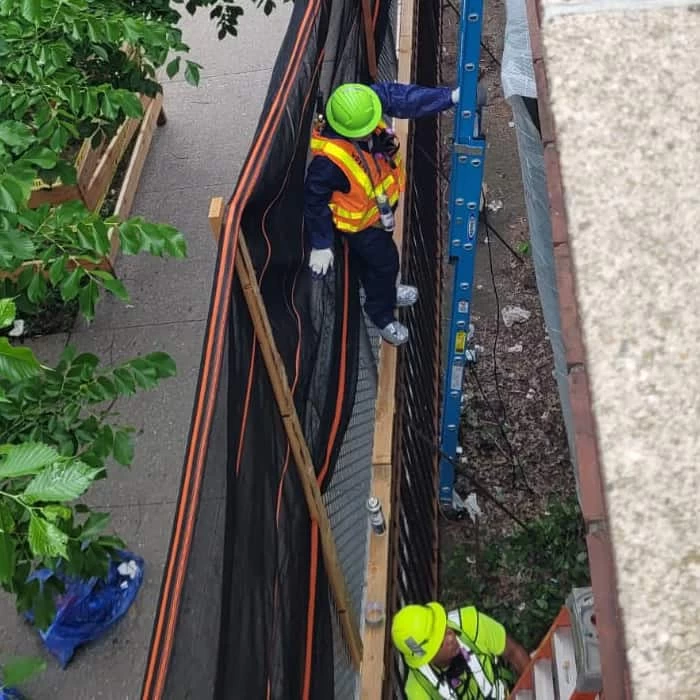
Yes, and in Empire State, it’s the standard situation rather than the exception. Most of the buildings in the Empire State Building area whether they’re residential apartment buildings in Murray Hill or mixed-use loft conversions in the Garment District are occupied during restoration work. The process is designed around containment: plastic sheeting isolates the work area, negative air pressure prevents dust and debris from migrating into occupied spaces, and the work schedule is coordinated with building management to minimize disruption to tenants and commercial occupants.
For buildings with commercial tenants paying Midtown rents, minimizing downtime is a real financial priority not just a courtesy. We coordinate directly with property managers to establish a realistic timeline, communicate clearly with affected tenants, and sequence the work in a way that keeps as much of the building functional as possible throughout the process. Any required NYC DOB permits for structural repairs are filed as part of the job, so there are no loose ends that could create compliance issues after the work is complete.