Farmingdale's Aging Homes Don't Wait — Neither Do We
When water gets into a 1940s Long Island home, it doesn’t stay where you can see it. We respond fast, find what’s hiding in your walls, and handle your insurance claim start to finish.
I needed a professional consultation explanation of procedure for safe removal of Asbestos in my apartment complex. Without having an account yet, I was very impressed with the caring, knowledgeable and generous advice offered by Jessica, and will look forward to doing business in the future. Thank you so much! I feel much more informed about a sometimes scary endeavor. Peace. Nancy Silva Mineola, NY.
Mia Munoz
Used this company to clean up some water flood in my house. They were fast and easy to work with.very professional, Would recommend to anyone!
Nini Valle
Great company, had a flood and they responded quickly and efficiently. Billed my insurance company directly. I highly recommend this company!
joe colapietro, jr
I had pipe freeze in my basement right before a snow storm and they made to within an hour to help start the clean up process. They we by our side throughout the entire process and even helped with the insurance company. They did such a great job with the cleanup, repair, remidiation, I contracted them to perform the repairs and finishes in the basement. They came with enough manpower and material to get the job done. Leo and Jessica were nothing but a pleasure to deal with!!
Cristian Arredondo c
I had some water damage in my home and Green Island was able to take care of my issue quickly and effectively. I am very pleased with the work they did. They responded quickly and were very professional.
Michael M
Outstanding service! From the office to the field crew everyone was friendly, helpful and responsive. I highly recommend Green Island Group.
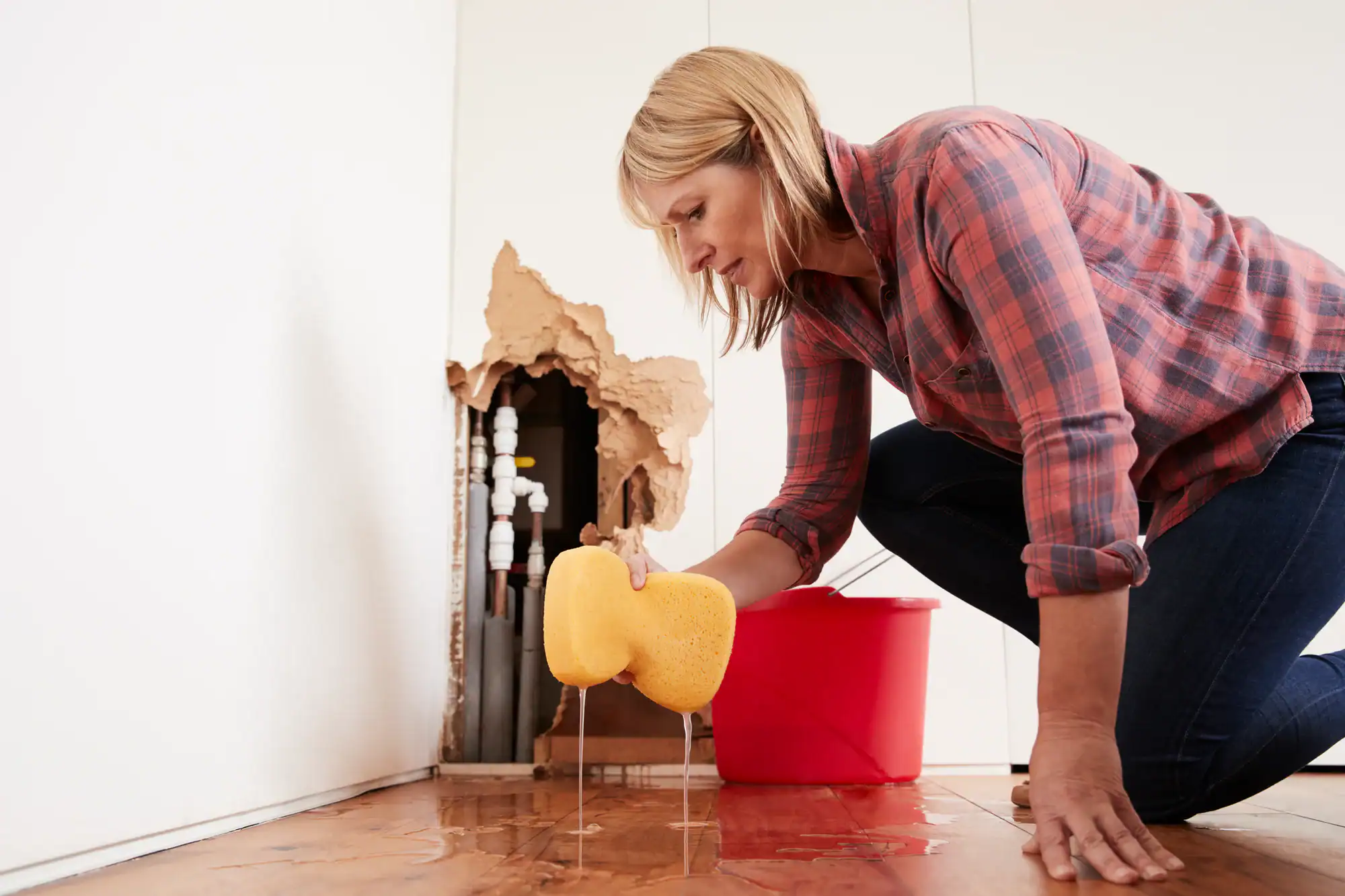
Most Farmingdale homeowners who call us are dealing with more than a wet floor. They’ve got moisture sitting inside plaster walls, soaked into original wood subfloors, or pooling in a basement that’s been quietly seeping for longer than they realized. The visible stuff is the easy part. What you can’t see is what turns into a mold problem six weeks from now — and in a home built in the 1940s with limited vapor barriers and original framing, that timeline moves fast.
When the job is done right, you’re not just dry — you’re documented. You have moisture readings that prove every affected area was brought back to safe levels, a claim file your insurance company can’t argue with, and the confidence that nothing was left behind inside your walls. That’s the difference between a cleanup and an actual restoration.
For the roughly one in five Farmingdale residents who are 65 or older, there’s something else that matters just as much: knowing who’s in your home, what they’re doing, and when it’s going to be over. We keep you informed at every step — no rotating crew of strangers, no unanswered calls, no surprises on the final bill.
We’re a locally-owned restoration company based on Long Island — not a franchise, not a national brand with a local phone number stapled on. When you call us, you’re reaching a team that dispatches from this area, knows Nassau County’s insurance adjusters, and has worked in the same kinds of homes you’re living in right now.
We serve the full Greater Farmingdale area — the village itself, South Farmingdale, East Farmingdale, and the surrounding Nassau and Suffolk County communities along the Route 110 corridor. We know these neighborhoods. We know the housing stock. And we know what it takes to do this job correctly in a Farmingdale home that was built before modern waterproofing existed.
Every job we complete is IICRC-certified and fully compliant with New York State’s Mold Law, which requires separate licensing for mold assessment and remediation. That’s not a marketing line — it’s a legal standard that a lot of operators in this area quietly skip. We don’t.
The first thing we do when we arrive is assess — not just the surface, but what’s behind it. Using thermal imaging cameras and calibrated moisture meters, we map every area where water has traveled, including inside walls, under floors, and along joists. In a Farmingdale home built in the 1940s, water rarely stays where it entered. It wicks through plaster, moves along original wood framing, and settles in places that look completely fine to the naked eye. We find those places before they become a mold issue.
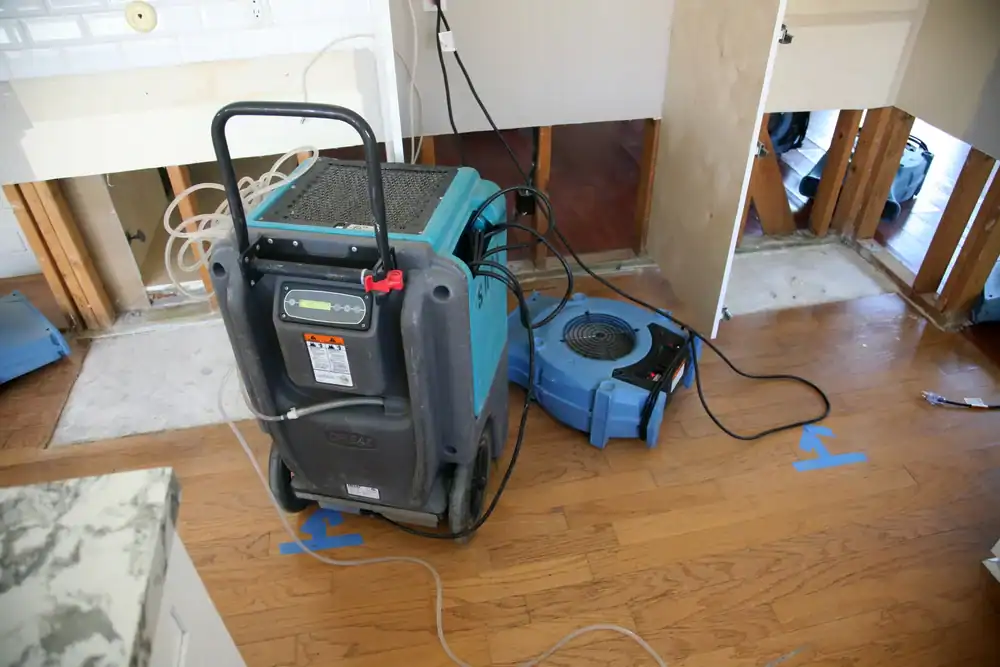
Once we know the full scope, we extract standing water and begin structural drying using industrial-grade equipment — desiccant dehumidifiers and high-velocity air movers that work at a level consumer fans and hardware store rentals simply can’t reach. We place and monitor equipment based on the moisture data, not guesswork, and we adjust daily as conditions change.
Throughout the process, we’re building your insurance claim file in parallel. We document everything to IICRC S500 standards — the same standards Nassau County adjusters use to evaluate claims — and we communicate directly with your carrier so you don’t have to. The job isn’t closed until final moisture readings confirm every affected area is dry. You get that documentation in writing.
Built for Old Homes, Nassau County Winters, and Real Insurance Claims
Water damage in Farmingdale comes from a pretty consistent set of causes: sump pump failures during nor’easters, storm drain backups after heavy rain, burst pipes in under-insulated spaces, ice dam seepage through aging roofs, and slow leaks behind appliances that go unnoticed until the subfloor is already compromised. We handle all of it — emergency water extraction, structural drying, mold prevention treatment, sewage backup cleanup, and full documentation for insurance.
What you won’t find here is a one-size-fits-all approach. A 1940s Cape Cod on a street near Conklin Street has different wall construction, different foundation characteristics, and different moisture migration patterns than a newer build. We account for that from the first assessment. We also account for Farmingdale’s permit requirements — if structural repairs from the water damage require a permit through the Village of Farmingdale Building Department, we’ll tell you upfront, not after the work is done.
Every restoration we complete includes thermal imaging assessment, moisture mapping, industrial extraction and drying, mold prevention, and a full written clearance report. Your insurance claim is handled directly — we prepare the documentation, communicate with your adjuster, and advocate for a fair settlement. If you’re a homeowner with a property worth over half a million dollars and decades of equity on the line, that level of thoroughness isn’t optional. It’s the whole point.
How fast does mold actually start growing in a flooded Farmingdale home?
Mold can begin to colonize within 24 to 48 hours of a water event — and in a home built in the 1940s, that timeline is not theoretical. Older construction materials like wood lath, plaster, and original subfloor boards are highly organic and absorb moisture quickly. When you add limited vapor barriers and the naturally humid Long Island climate, you have conditions where mold doesn’t just start — it spreads fast and deep before you see or smell anything on the surface.
This is exactly why response time matters so much. Every hour of standing water or trapped moisture inside your walls is another hour of mold risk building. The homeowners who call us quickly almost always have a straightforward restoration. The ones who wait — even by a day or two — frequently end up with a mold remediation scope on top of the water damage work. Getting someone out immediately isn’t an overreaction. In a Farmingdale home of this age, it’s the right call.
Does homeowners insurance cover water damage from a sump pump failure in Nassau County?
It depends on your policy, and the answer matters a lot given how common sump pump failures are during Long Island nor’easters. Standard homeowners insurance typically does not cover sump pump failure or water backup — those events are usually excluded unless you’ve added a water backup endorsement to your policy. If you’re not sure whether you have that rider, now is a good time to check, before you need it.
What standard policies do typically cover is sudden and accidental water damage from internal sources — a burst pipe, a failed appliance supply line, or an overflow from a plumbing fixture. The documentation your restoration company provides is critical in either case. Nassau County insurance adjusters work with IICRC S500 documentation standards, and claims that come in with proper moisture mapping, drying logs, and written clearance reports move significantly faster and with fewer disputes than those without. We prepare that documentation as a standard part of every job.
What should I do first when my basement floods in Farmingdale, NY?
The first thing is safety — don’t enter a flooded basement if there’s any chance the electrical panel, outlets, or appliances are submerged or near the water line. If you’re unsure, cut power to the affected area at the breaker before going in. Once it’s safe, stop the water source if you can identify it — shut off the main water supply if it’s a pipe failure, or check whether your sump pump is running if it’s groundwater intrusion.
After that, call a restoration company immediately. Don’t wait to see if it dries out on its own — in a Farmingdale home with a basement built in the 1940s, water that looks like it’s receding is still sitting inside your walls, under your floor, and along your foundation. Consumer fans and dehumidifiers don’t reach those areas. The faster professional drying equipment is in place, the smaller your mold window and the lower your total restoration cost. Document everything with photos before anything is moved or cleaned up — your insurance company will want that record.
How long does water damage restoration typically take for a home in Farmingdale?
The drying phase alone typically takes three to five days, depending on how much structural material was affected and how deeply moisture has penetrated. In a Farmingdale home built in the 1940s — with plaster walls, original wood framing, and potentially a fieldstone or poured concrete foundation — moisture can migrate further and deeper than in newer construction with modern materials. That can extend the drying timeline compared to what you might read in a generic estimate online.
After drying is confirmed by final moisture readings, any necessary repairs — replacing damaged drywall, flooring, or structural elements — are scheduled separately. If those repairs require a permit through the Village of Farmingdale Building Department, that adds time to the overall project. From first call to completed restoration, most residential jobs in this area run one to two weeks for the full scope, though simpler events like a contained appliance leak can be resolved faster. We’ll give you a realistic timeline after the initial assessment, not a number designed to get you to sign.
Can water damage inside my walls cause problems if it isn't visible on the surface?
Yes — and this is one of the most common situations we see in Farmingdale homes. Water enters through a foundation crack, a failed pipe fitting, or ice dam seepage at the roofline, and the surface looks fine. Maybe slightly discolored. Maybe nothing at all. Meanwhile, moisture is sitting inside the wall cavity, soaking into the wood lath or original framing, and creating exactly the environment mold needs to grow.
This is why thermal imaging is not optional on a proper water damage inspection — it’s the only reliable way to see temperature differentials that indicate trapped moisture behind finished surfaces. A visual inspection alone will miss it. We’ve walked into Farmingdale homes where the homeowner had no idea the damage extended three or four feet beyond what they could see, because the water had traveled along a joist or wicked through plaster in a way that left no visible trace. Finding it early is always less expensive than finding it after the mold has started.
How does Green Island Group handle the insurance claim process for Farmingdale homeowners?
We handle it directly — from the initial damage documentation through adjuster communication to final settlement. That means we prepare moisture mapping reports and drying logs that meet IICRC S500 standards, which is the documentation framework Nassau County adjusters use to evaluate and approve restoration claims. When your claim file arrives complete and properly formatted, it moves faster and gets disputed less.
We also communicate with your adjuster on your behalf throughout the process, which matters more than most homeowners realize. Adjusters have specific documentation requirements, and a restoration company that knows those requirements — and knows how Nassau County carriers typically handle water damage claims — can advocate for a fair settlement in ways that a homeowner doing it alone simply can’t. You’re not a claims professional. You shouldn’t have to become one because your basement flooded. With a median home value in Farmingdale above $540,000, getting the claim handled correctly isn’t a convenience — it’s protecting a significant financial asset.