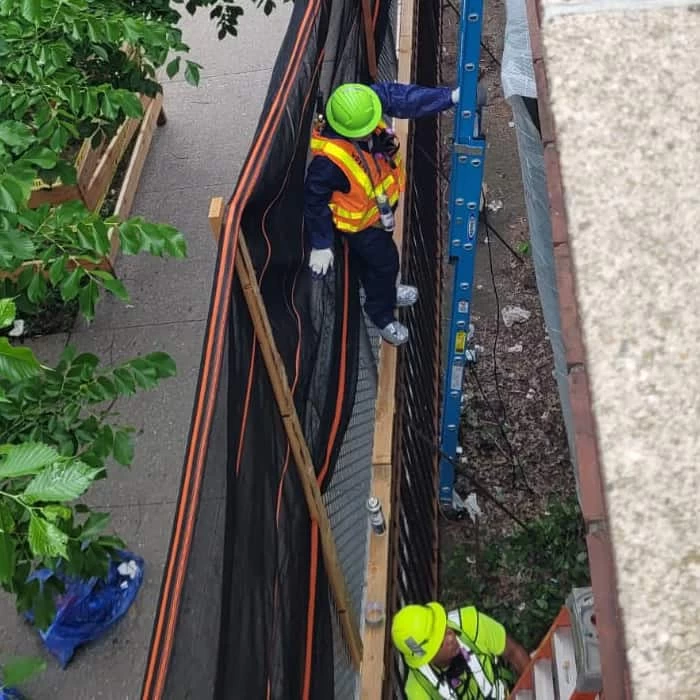
I needed a professional consultation explanation of procedure for safe removal of Asbestos in my apartment complex. Without having an account yet, I was very impressed with the caring, knowledgeable and generous advice offered by Jessica, and will look forward to doing business in the future. Thank you so much! I feel much more informed about a sometimes scary endeavor. Peace. Nancy Silva Mineola, NY.
Mia Munoz
Used this company to clean up some water flood in my house. They were fast and easy to work with.very professional, Would recommend to anyone!
Nini Valle
Great company, had a flood and they responded quickly and efficiently. Billed my insurance company directly. I highly recommend this company!
joe colapietro, jr
I had pipe freeze in my basement right before a snow storm and they made to within an hour to help start the clean up process. They we by our side throughout the entire process and even helped with the insurance company. They did such a great job with the cleanup, repair, remidiation, I contracted them to perform the repairs and finishes in the basement. They came with enough manpower and material to get the job done. Leo and Jessica were nothing but a pleasure to deal with!!
Cristian Arredondo c
I had some water damage in my home and Green Island was able to take care of my issue quickly and effectively. I am very pleased with the work they did. They responded quickly and were very professional.
Michael M
Outstanding service! From the office to the field crew everyone was friendly, helpful and responsive. I highly recommend Green Island Group.
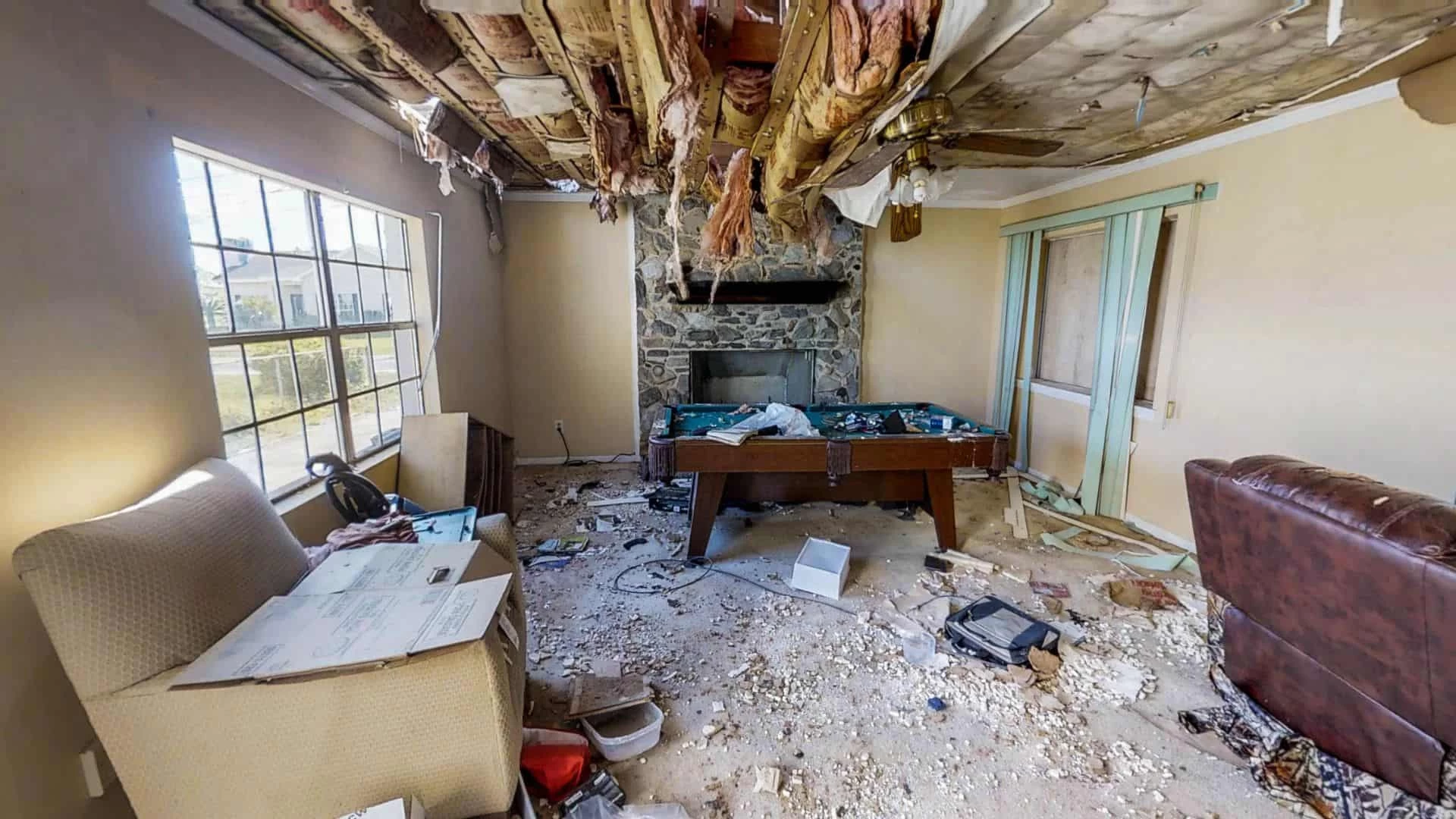
Most water damage on Fire Island isn’t discovered the day it happens. You’re on the mainland. The house is sitting. A neighbor texts you, or you show up in May to open the place and immediately know something’s wrong. By that point, the water has had days sometimes weeks to work its way into the subfloor, the wall cavities, the framing. What looks like a stain on the ceiling is often the last visible sign of a much bigger problem underneath.
That gap between when damage starts and when it’s found is what makes Fire Island properties so vulnerable. The island’s naturally humid coastal air, the salt-driven deterioration of older wood-frame homes, and the months-long vacancy window every winter create conditions where moisture doesn’t just sit it spreads. Getting proper water damage restoration done quickly and completely means the difference between a manageable repair and a full mold remediation job that shuts down your rental season.
There’s also the financial side. With homes in communities like Fire Island Pines renting for $10,000 a week in peak season, a water damage event that drags on or gets handled halfway isn’t just a property problem. It’s a revenue problem. When the work is done right the first time, you’re not dealing with callbacks, secondary mold issues, or an insurance dispute over incomplete documentation. You’re back to normal.
Local Enough to Know What "Getting There" Actually Means
We’re a Long Island-based environmental and restoration company not a national franchise, not a call center that dispatches whoever’s available. When you call, you’re reaching a team that operates out of Suffolk County and understands Fire Island in a way that matters specifically: the ferry terminals in Bay Shore, Sayville, and Patchogue, the off-season access permit process, the logistical reality of moving equipment across the Great South Bay.
That local knowledge isn’t incidental it’s the whole ballgame on an island where most contractors simply won’t make the trip. We handle water damage restoration, mold remediation, asbestos abatement, and air quality testing under one roof. For Fire Island’s older housing stock, where a water intrusion event often uncovers decades-old materials that need careful handling, having all of that in one company means fewer delays, fewer coordination headaches, and a faster path back to a clean, safe property.
From the First Call to the Final Walkthrough No Guesswork
It starts with your call any hour, any day. Because Fire Island properties are often vacant when damage occurs, the first conversation matters. You tell us what you know, we ask the right questions, and we start planning the logistics immediately. That means coordinating ferry access, confirming community-specific entry requirements, and staging equipment at the appropriate mainland terminal Bay Shore, Sayville, or Patchogue, depending on where your property is located.
Once we’re on the island, the first step is a full moisture assessment. Not just what’s visible we use thermal imaging and calibrated moisture meters to find water that’s already migrated into wall assemblies, subfloors, and structural framing. That hidden saturation is what causes mold, and it’s what consumer fans and box-store dehumidifiers miss entirely. Commercial-grade drying equipment goes in after we know exactly what we’re dealing with, and we monitor progress until the structure meets IICRC drying standards not just until it looks dry.
Throughout the process, you’ll know what’s happening. If you’re on the mainland and can’t be there in person, we document everything photos, moisture readings, scope of work so you’re never left wondering. That documentation also matters for your insurance claim, whether you’re filing under your homeowners policy, your NFIP flood policy, or both.
One Call Covers Water, Mold, and What's Behind the Walls
Fire Island properties carry a specific set of risks that most mainland Long Island homes don’t. The combination of storm surge exposure, seasonal vacancy, aging wood-frame construction, and a coastal environment that accelerates material deterioration means water damage here rarely stays simple. Our water damage restoration service is built around that reality not a stripped-down extraction-and-dry that leaves secondary problems for someone else to find later.
Water extraction and structural drying are the foundation. But on Fire Island, where many homes were built in the mid-20th century, restoration work frequently uncovers asbestos-containing insulation or pipe wrap, lead paint on original surfaces, or mold that’s been growing inside a wall cavity since the last nor’easter. We’re licensed to handle all of it NYSDOL-licensed asbestos abatement, EPA RRP-compliant lead paint work, and full mold remediation so the project doesn’t stall waiting for a second contractor to make the ferry trip.
Insurance coordination is built into the process as well. Fire Island homeowners often carry both a standard homeowners policy and a separate NFIP flood insurance policy through FEMA. Sorting out which policy covers which portion of the loss and making sure the documentation supports both claims is something we handle directly. If your property falls under FEMA’s substantial improvement rule, which applies to most Fire Island homes in Special Flood Hazard Areas, we’ll flag that early so there are no surprises mid-project.
How does a restoration company actually get equipment to Fire Island?
This is the first real question, and it’s the right one to ask. Most restoration companies that serve Long Island broadly have no established process for Fire Island access and that gap shows up the moment you need them. We operate out of Suffolk County and coordinate restoration logistics through the ferry terminals that serve Fire Island communities. For properties in Ocean Beach, Fair Harbor, Saltaire, or other communities served by Fire Island Ferries, that means Bay Shore. For Cherry Grove or Fire Island Pines, it’s Sayville Ferry Service. For Davis Park or Watch Hill, it’s Patchogue.
During the off-season, when ferry schedules are reduced and most communities require driving permits for contractor vehicles, we handle the permit coordination in advance. Equipment staging, crew scheduling, and ferry timing are all factored in before we arrive not figured out on the fly. That pre-planning is what makes the difference between a restoration crew that shows up ready to work and one that loses half a day sorting out access.
How quickly can mold develop after water damage in a vacation home?
According to IICRC S500 standards the industry benchmark for water damage restoration mold can begin colonizing within 24 to 48 hours of water exposure. That window is tight under any circumstances. On Fire Island, where most properties are absentee-owned and water damage is frequently discovered days or even weeks after it starts, that window has often already closed by the time you make the first call.
The practical implication is that mold remediation is a realistic part of the conversation for most Fire Island water damage jobs not a worst-case scenario. The island’s naturally humid coastal environment, combined with the way moisture migrates into wall cavities and subfloor assemblies in older wood-frame homes, creates conditions where mold establishes quickly and spreads without visible signs on the surface. We handle both water damage restoration and mold remediation in-house, which means you’re not waiting for a second contractor to make the trip over. The assessment, the drying, and any necessary mold remediation happen as a single coordinated process.
Will my flood insurance cover storm surge damage to my Fire Island property?
It depends on how the damage is categorized, and that distinction matters a lot when you’re dealing with two separate policies. Most Fire Island properties carry both a standard homeowners insurance policy and a National Flood Insurance Program policy through FEMA. Standard homeowners policies typically cover wind-driven rain and certain types of water intrusion, while NFIP policies are designed to cover flood-related damage including storm surge, which is one of the most common and most destructive water damage sources on Fire Island.
The complication arises when a single storm event causes both types of damage. Adjusters from each carrier may assess the same damage differently, and without thorough documentation that clearly separates the scope and cause of each loss, you can end up in a dispute that delays your claim significantly. We document restoration projects in a way that supports both claims simultaneously moisture readings, photos, timeline of damage, and scope of work organized for both adjusters. One additional factor specific to Fire Island: if your restoration costs exceed 50% of your home’s pre-damage market value, FEMA’s substantial improvement rule requires bringing the entire structure into current flood-resistant construction standards. We flag this early if it applies, so you’re not caught off guard mid-project.
What happens if water damage is found in an older Fire Island home with asbestos or lead paint?
It’s more common than most people expect. A significant portion of Fire Island’s housing stock was built in the mid-20th century, and homes from that era frequently contain asbestos in pipe insulation, floor tile adhesive, and ceiling materials as well as lead paint on original surfaces. When water damage restoration requires removing drywall, flooring, or disturbing pipe areas, those materials can become an issue that stops an unlicensed contractor cold.
We’re licensed to handle both. As a NYSDOL-licensed asbestos abatement contractor and an EPA RRP-compliant firm for lead paint work, we can identify, contain, and properly remove hazardous materials as part of the restoration process without bringing the job to a halt while you wait for a separate specialist to schedule a ferry trip. For Fire Island property owners, this integrated capability is genuinely important. Getting one qualified contractor to the island is already a logistical achievement. Having that contractor equipped to handle whatever they find inside the walls means the project moves forward instead of stalling at the worst possible moment.
How do I handle water damage in a Fire Island rental property during peak season?
Speed is everything, and the financial stakes make that obvious fast. A four-bedroom vacation home in a community like Fire Island Pines can rent for $10,000 a week during peak summer season. A water damage event that sidelines the property for two or three weeks or that gets handled incompletely and triggers a mold issue a month later isn’t just a repair cost. It’s lost rental income, potential renter compensation, and reputational damage in a market where reviews and referrals drive bookings.
The priority for rental properties is getting a thorough assessment done immediately, understanding the full scope before committing to a timeline, and then executing the drying and restoration as efficiently as possible without cutting corners that create secondary problems. Our in-house capability water extraction, structural drying, mold testing, and remediation if needed means you’re not coordinating multiple contractors across multiple ferry trips to get the property back to rental-ready condition. We also document the full scope of work in a format that supports your insurance claim, which matters when you’re trying to recover both repair costs and lost income under your policy.
Is water damage restoration on Fire Island more expensive than on the mainland?
Honestly, yes and the reasons are straightforward. Accessing Fire Island requires ferry coordination, equipment transport across the Great South Bay, and in the off-season, advance permit arrangements for contractor vehicles in communities like Ocean Beach and Saltaire. Those logistics add real time and cost to every job, and any restoration company being straight with you will factor that in upfront rather than surprise you later.
That said, the more important cost comparison isn’t Fire Island versus the mainland it’s complete restoration versus incomplete restoration. A cheaper job that dries the surface but misses the saturation inside the wall assembly will produce a mold problem within weeks. On an island where getting a second contractor back out is its own logistical event, paying to fix the problem twice costs far more than doing it right the first time. We provide a full scope of work and clear pricing before the job starts, so you know what you’re committing to. For most Fire Island properties, the investment in thorough, documented, properly executed restoration is also what protects your insurance claim which often covers the bulk of the cost anyway.