When Water Gets Into a Glen Head Home, Speed Matters
Older North Shore homes don’t announce water damage. We find it, remove it, and dry it completely — before the real damage sets in. In Glen Head, where most homes were built between the 1920s and 1960s, that speed makes the difference between a contained restoration and a months-long remediation project.
I needed a professional consultation explanation of procedure for safe removal of Asbestos in my apartment complex. Without having an account yet, I was very impressed with the caring, knowledgeable and generous advice offered by Jessica, and will look forward to doing business in the future. Thank you so much! I feel much more informed about a sometimes scary endeavor. Peace. Nancy Silva Mineola, NY.
Mia Munoz
Used this company to clean up some water flood in my house. They were fast and easy to work with.very professional, Would recommend to anyone!
Nini Valle
Great company, had a flood and they responded quickly and efficiently. Billed my insurance company directly. I highly recommend this company!
joe colapietro, jr
I had pipe freeze in my basement right before a snow storm and they made to within an hour to help start the clean up process. They we by our side throughout the entire process and even helped with the insurance company. They did such a great job with the cleanup, repair, remidiation, I contracted them to perform the repairs and finishes in the basement. They came with enough manpower and material to get the job done. Leo and Jessica were nothing but a pleasure to deal with!!
Cristian Arredondo c
I had some water damage in my home and Green Island was able to take care of my issue quickly and effectively. I am very pleased with the work they did. They responded quickly and were very professional.
Michael M
Outstanding service! From the office to the field crew everyone was friendly, helpful and responsive. I highly recommend Green Island Group.
Most Glen Head homes were built between the 1920s and 1960s. That means plaster walls, wood subfloors, and basement foundations that have been holding moisture for decades — sometimes without the homeowner ever knowing. When water intrudes and isn’t fully extracted, it doesn’t just sit there. It moves through the materials your home is made of, and it creates conditions that lead to mold, structural softening, and air quality problems that show up weeks later.
The 24 to 48 hour window before mold begins colonizing is documented in IICRC standards. In a home with older construction materials like the ones common throughout Glen Head, that window closes fast. Getting the moisture out completely — not just off the surface — is the only outcome that actually protects your home long term.
What that looks like in practice: no musty smell coming back three weeks later, no soft spots developing under your floors, no insurance adjuster questioning whether the job was done right. Your Glen Head home goes back to being what it was — a stable, dry, high-value property in one of Nassau County’s most established communities. That’s the only result worth accepting.
Local Expertise in Glen Head Water Damage, Not a National Call Center
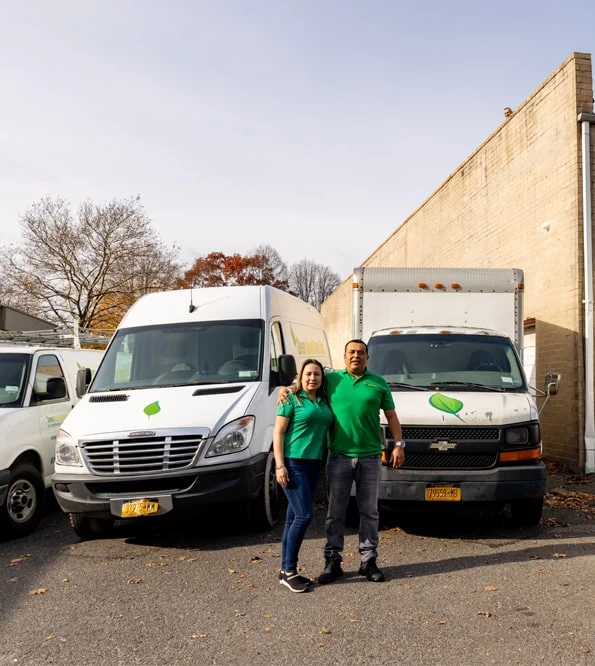
We’re a locally owned and operated restoration company serving Glen Head and the surrounding North Shore communities — including Sea Cliff, Glenwood Landing, Old Brookville, and the broader Town of Oyster Bay area. When you call, you reach a real Long Island team, not a national call center routing your emergency through a queue before dispatching whoever is available.
The difference matters more than it sounds. Glen Head homes have specific characteristics — aging plumbing, older foundation work, wood-framed construction — that a company experienced in this area knows how to work with. A crew that has never worked in Glen Head before may miss what a team familiar with these homes would catch immediately.
We hold IICRC certification and all required New York State licenses, including the separate NY Department of Labor licensing required under the 2016 Mold Law for both assessment and remediation. Every job is documented to insurance standards from the first hour on site. You get consistent crews, real accountability, and a company that answers for its work.
When you call, the first thing that happens is a real conversation — not a form submission or a callback window. You describe what you’re seeing, and a crew gets dispatched. For Glen Head residents who commute into the city on the LIRR Oyster Bay Branch and often discover damage late in the evening, our 24/7 availability is not a marketing line. It’s the reason the call gets made to us instead of someone else.
On arrival, we do a full moisture assessment before anything else. That means thermal imaging cameras and professional moisture meters used across every affected area — inside walls, under flooring, in structural cavities. In an older Glen Head home, what’s visible is rarely the full picture. The assessment maps exactly where the water went, which drives every decision that follows.
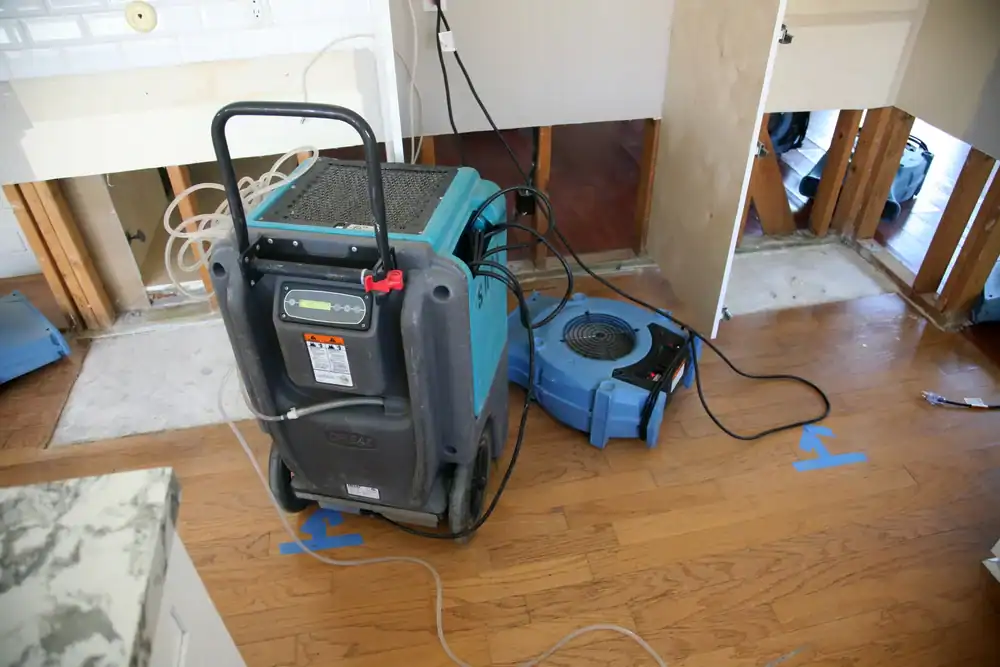
Extraction comes next, then industrial drying equipment — high-velocity air movers and desiccant dehumidifiers that pull moisture out of building materials, not just the air. If mold is present or at risk of developing, we handle that work under separate NY DOL licensure as required by New York State law. Throughout the job, we build documentation for your insurance carrier — moisture readings, photos, scope of work — so the claim process moves cleanly. The job isn’t closed until the final moisture readings confirm the structure is dry. Not when it looks dry. When it actually is.
Water Damage Restoration Service near Glen Head, NY
What We Handle When Your Home Needs It Most
Water damage restoration covers more than pulling water off the floor. The full scope of what we handle includes emergency water extraction, structural drying with industrial equipment, moisture mapping and thermal imaging, mold assessment and remediation under NY DOL licensure, content protection and pack-out when needed, and complete insurance documentation from start to finish.
For Glen Head homeowners, a few things come up consistently. Older homes throughout this area — many of them built in the decades following the post-WWI development of neighborhoods like The Promenade — often have water damage that has been slow and hidden rather than sudden and obvious. A pinhole leak in aging galvanized pipe, a cove joint failure in a 1950s basement, deteriorated flashing on a roof that’s been through decades of nor’easters — these are the scenarios that show up in Glen Head, and they require thorough assessment, not just a surface-level dry-out.
Any restoration work that involves structural repairs or modifications to plumbing falls under the Town of Oyster Bay’s building permit requirements. We navigate that process as part of the job — you don’t have to manage the building department separately. We handle insurance billing directly with your carrier, and the documentation we produce is built to meet adjuster standards so your claim doesn’t get reduced or questioned after the fact. In a market where the median home value is close to $900,000, getting the restoration done correctly is not optional.
How quickly does mold actually start growing after water damage in my Glen Head home?
The EPA and IICRC both document that mold can begin colonizing in wet organic materials within 24 to 48 hours. That’s the threshold that restoration standards are built around, and it’s the reason response time matters as much as it does.
In a Glen Head home with plaster walls, wood subfloors, and older insulation — materials common in the housing stock built between the 1920s and 1960s across this part of Nassau County — that window is especially critical. These are exactly the materials where mold establishes fastest, because they hold moisture and provide the organic substrate mold needs to grow. Surfaces can feel dry to the touch while the interior of a wall cavity is still saturated. By the time you smell something, the colonization is already underway. The only way to know for certain is professional moisture mapping — not a visual check.
Will my homeowners insurance actually cover water damage restoration costs?
In most cases, yes — but the specifics depend on the source of the water and how the damage is documented. Sudden and accidental water damage, like a burst pipe or a washing machine supply line failure, is typically covered under a standard homeowners policy. Gradual damage from a slow leak that went unaddressed is a different story — carriers often deny those claims on the basis of maintenance neglect.
For Glen Head homeowners with high-value properties, the documentation piece is critical. Insurance adjusters evaluate whether restoration work was performed to IICRC S500 standards, and claims can be reduced or denied when the documentation doesn’t hold up. We build insurance-grade documentation from the first hour on site — moisture readings, thermal images, scope of work, material inventories — and communicate directly with your adjuster throughout the process. The average water damage claim runs between $11,000 and $13,000. That’s not a number you want reduced because the paperwork wasn’t done correctly.
What's the difference between water damage restoration and just drying things out myself?
Consumer fans and shop vacs move surface air and pull standing water. They don’t extract moisture from inside wall cavities, from beneath wood subfloors, or from within structural framing. Industrial desiccant dehumidifiers and high-velocity air movers are engineered specifically to create the drying conditions that force moisture out of building materials — not just the visible surfaces.
The practical difference in an older Glen Head home is significant. Plaster walls absorb moisture differently than drywall. Wood subfloors hold water in ways that take days to fully release even with professional equipment. If you dry the surface but leave moisture trapped inside the structure, you’re not preventing mold — you’re just delaying it. Six weeks later, you’re dealing with a remediation job that costs significantly more than the original restoration would have. The equipment matters, but so does knowing where to point it, and that requires professional moisture mapping before the drying even starts.
Does Glen Head have specific permit requirements for water damage restoration work?
Glen Head is an unincorporated hamlet governed by the Town of Oyster Bay, which means building permits for restoration work fall under the Town of Oyster Bay Building Department. Any work that involves structural repairs, reconstruction, or modifications to plumbing or electrical systems requires a permit. This is not unique to Glen Head — it applies across the Town of Oyster Bay — but it’s something homeowners don’t always think about in the middle of an emergency.
A licensed restoration company handles the permit process as part of the job. An unlicensed operator often can’t or doesn’t, which can create problems down the line when you go to sell the home or file a claim for future damage and the prior work has no record with the town. We manage the permit and documentation process from the start, so the restoration is on record with the Town of Oyster Bay and there are no gaps in your home’s history.
How do nor'easters and heavy rain events affect water damage risk for Glen Head homeowners?
Glen Head’s position on the North Shore puts it directly in the path of nor’easters — the dominant storm system affecting Long Island. These storms produce sustained heavy rainfall, high winds, and storm-driven precipitation that can overwhelm older drainage systems and push groundwater up through basement floors and walls. The hilly, wooded terrain throughout this part of Nassau County means water moves quickly during these events, and homes that have never had a water issue before can flood when a significant storm hits.
The risk is compounded by the age of the housing stock. Older basement waterproofing systems — the kind installed in homes built in the 1940s, 1950s, and 1960s — have typically degraded well past their effective lifespan. Cove joint failures, cracked block foundations, and deteriorated parging are common findings in Glen Head homes after a major nor’easter. If your basement took on water during a recent storm and wasn’t fully assessed afterward, it’s worth having the moisture levels checked even if it appears dry now.
What does New York State's Mold Law mean for homeowners hiring a restoration company in Glen Head?
New York State passed the Mold Law in 2016, and it requires separate licensing from the NY Department of Labor for both mold assessment and mold remediation. These are two distinct licenses, and a company needs both to legally perform the full scope of mold-related work in New York — including in Glen Head. This isn’t a technicality. Hiring an unlicensed operator for mold work can result in voided insurance coverage, legal liability, and remediation that doesn’t actually resolve the problem.
The practical implication for Glen Head homeowners is straightforward: before any restoration company touches mold in your home, ask to see their NY DOL license numbers for both assessment and remediation. A legitimate company will have them and will show them without hesitation. We hold the required licenses under New York State law. Given the age of the housing stock in this area and the frequency of water intrusion events on the North Shore, mold assessment is often a necessary part of a complete restoration — not an add-on. It should be done by a company that’s licensed to do it correctly.