Great Neck Plaza’s aging apartment buildings and coastal exposure don’t leave much room for slow response. We deliver water damage restoration that stops the damage, dries it completely, and gets your property back to normal — fast.
I needed a professional consultation explanation of procedure for safe removal of Asbestos in my apartment complex. Without having an account yet, I was very impressed with the caring, knowledgeable and generous advice offered by Jessica, and will look forward to doing business in the future. Thank you so much! I feel much more informed about a sometimes scary endeavor. Peace. Nancy Silva Mineola, NY.
Mia Munoz
Used this company to clean up some water flood in my house. They were fast and easy to work with.very professional, Would recommend to anyone!
Nini Valle
Great company, had a flood and they responded quickly and efficiently. Billed my insurance company directly. I highly recommend this company!
joe colapietro, jr
I had pipe freeze in my basement right before a snow storm and they made to within an hour to help start the clean up process. They we by our side throughout the entire process and even helped with the insurance company. They did such a great job with the cleanup, repair, remidiation, I contracted them to perform the repairs and finishes in the basement. They came with enough manpower and material to get the job done. Leo and Jessica were nothing but a pleasure to deal with!!
Cristian Arredondo c
I had some water damage in my home and Green Island was able to take care of my issue quickly and effectively. I am very pleased with the work they did. They responded quickly and were very professional.
Michael M
Outstanding service! From the office to the field crew everyone was friendly, helpful and responsive. I highly recommend Green Island Group.
There’s a difference between a property that looks dry and one that actually is. In Great Neck Plaza’s pre-war and early postwar apartment buildings — most built before 1960, many with plaster walls and original plumbing — moisture hides in places a fan and a mop will never reach. When it’s left behind, mold follows within 24 to 48 hours, and by then the problem has usually spread to a neighboring unit, a shared wall, or a floor below.
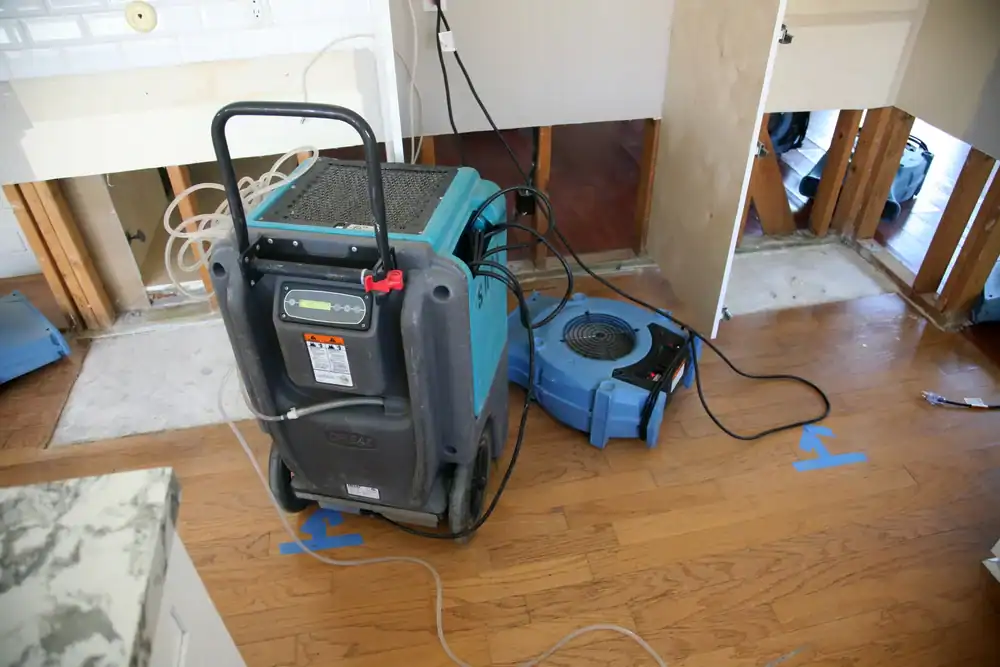
When water damage restoration is done right, you’re not just getting dry floors. You’re getting thermal imaging that finds moisture behind walls before it becomes a mold claim. You’re getting industrial extraction and drying equipment calibrated for the kind of dense, older construction that defines Great Neck Plaza — not the quick-dry approach that works fine in a 1990s ranch house but fails in a six-story co-op on Middle Neck Road.
The Great Neck Peninsula sits between Little Neck Bay and Manhasset Bay. That coastal geography raises groundwater tables, intensifies storm drainage pressure, and puts this community in a different risk category than inland Nassau County towns. Nor’easters hit this area hard. Basements flood. Pipes in exterior walls freeze. When the water comes, how fast you respond and how thoroughly you dry determines everything that happens next.
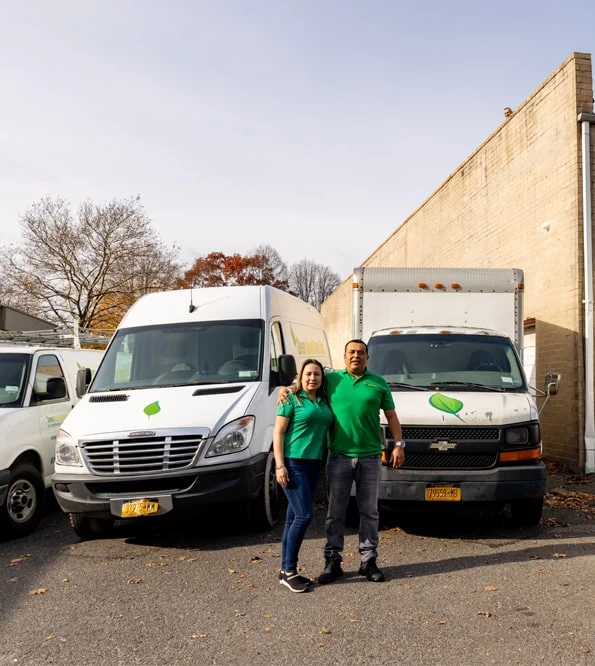
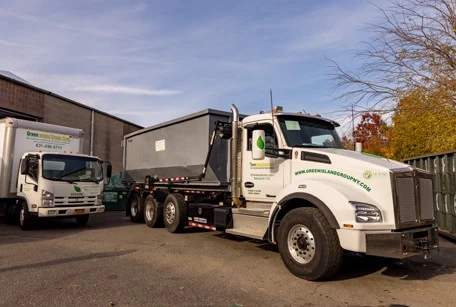
We’re a Long Island restoration company — not a national franchise routing your call through a corporate dispatch system three states away. When you call, you reach a real local team that knows Nassau County, knows the North Shore, and can be at your door without the coordination delays that come with franchise territory management.
That matters more in Great Neck Plaza than almost anywhere else on Long Island. This village has 90 apartment buildings, a formally designated historic district, and a building stock that requires a different level of care than a standard suburban job. We’ve worked in buildings like yours — older construction, shared plumbing systems, co-op boards, multi-unit damage scenarios — and we understand what that kind of restoration actually takes.
We’re fully licensed under New York State’s 2016 Mold Law, IICRC certified, and experienced with the insurance documentation that complex multi-party claims in apartment buildings require. No shortcuts, no guesswork.
From the First Call to the Final Clearance Reading
It starts the moment you call. A real local technician picks up — not a national answering service — and we get moving. For Great Neck Plaza, that means a team already positioned on Long Island, not one being dispatched from a distant territory. Response time matters here because many residents commute into Manhattan via the LIRR and may not discover damage until they return home in the evening. Every hour that water sits unchecked in an older building is another hour it’s migrating somewhere you can’t see.
When we arrive, the first thing we do is assess — not just what’s visible, but what’s hidden. Thermal imaging cameras map moisture inside walls, under flooring, and above ceilings. This step is non-negotiable, especially in the pre-war and postwar construction common throughout the village, where plaster walls and original hardwood floors retain water differently than modern materials. We document everything with moisture readings and photos from the start, because in a co-op or apartment building, that documentation isn’t just for your peace of mind — it’s what your insurance adjuster, your building’s co-op board, and potentially your neighbor’s claim will rely on.
From there, we extract standing water, set industrial drying equipment, and monitor drying progress daily until clearance readings confirm the structure is genuinely dry. If mold is present or at risk, our NY-licensed mold remediation team handles it under the same roof — no handoff to a third party, no gap in accountability. We also work directly with your insurance carrier throughout the process, which takes a significant burden off you during an already stressful situation. Before we close out the job, we walk you through the final readings so you know exactly what was found and what was done.
Built for This Village's Specific Water Damage Reality
Great Neck Plaza isn’t a typical Nassau County suburb, and water damage restoration here isn’t a one-size job. The village’s 90 apartment buildings, aging infrastructure, and coastal proximity create scenarios that require specific capabilities — multi-unit coordination, historic building sensitivity, and documentation thorough enough to hold up in complex insurance claims.
Every job includes full moisture mapping with thermal imaging, water extraction, structural drying with industrial-grade equipment, and daily monitoring until the building is verified dry. For jobs where mold is a concern — which in Great Neck Plaza’s older building stock is more often than not — we carry New York State’s required mold remediation license and handle assessment and remediation in-house. That’s a legal requirement under the 2016 NY Mold Law that not every company advertising in this area actually meets. Hiring an unlicensed operator for mold work in New York can void your insurance claim entirely.
For properties in or near the village’s historic district, we work with awareness of the Historic Preservation Commission’s requirements — understanding that restoring a pre-war co-op is not the same as gutting and rebuilding a newer structure. We also handle insurance coordination from first contact through final settlement, including the multi-party claims that arise when damage crosses unit lines or involves both an individual policy and a building’s master policy. That’s a level of claim complexity that’s common here and that generic restoration companies are often not equipped to navigate.
How quickly can you respond to water damage in a Great Neck Plaza apartment?
Speed is everything with water damage, and in a multi-story apartment building it matters even more — because water doesn’t stop at your unit’s walls. It moves through ceilings, shared walls, and floor assemblies, and every hour it does, the scope of damage (and the number of parties involved) grows.
We’re based on Long Island, which means we’re not dispatching from a distant franchise territory. For Great Neck Plaza, we’re already in the region. Our goal is to have a technician on-site as quickly as possible after your call — 24 hours a day, seven days a week, including weekends and holidays. When you call, you reach a real person on our local team, not a national call center that logs your information and queues a callback. In a building with shared plumbing and multiple units at risk, that distinction is the difference between a contained job and a building-wide event.
What's the difference between water damage repair and full water damage restoration?
Water damage repair typically refers to fixing the physical damage after the fact — replacing drywall, patching floors, repainting. Water damage restoration is the full process: stopping the source, extracting the water, drying the structure completely, verifying with moisture readings, and then repairing or rebuilding what was damaged. Skipping the restoration phase and going straight to repair is one of the most common mistakes property owners make, and it almost always leads to mold growth inside walls that wasn’t visible during the repair.
In Great Neck Plaza’s older building stock — where plaster walls, original hardwood floors, and cast iron plumbing are common — this distinction is especially important. These materials hold moisture longer than modern construction, and a surface that appears dry can still have elevated moisture levels inside the wall assembly. We don’t hand you off to a contractor until our moisture readings confirm the structure is genuinely dry. That’s not a formality — it’s what separates a job done right from one that comes back as a mold claim six months later.
Does my insurance cover water damage restoration in a co-op or condo building?
In most cases, yes — but the coverage picture in a co-op or condo is more complicated than in a single-family home, and it’s worth understanding before you file. Most co-op and condo buildings carry a master insurance policy that covers the building’s structure and common areas. Your individual unit policy (or HO-6 policy) covers your personal property and, depending on how it’s written, may cover improvements and betterments within your unit.
The complication arises when water originates in one unit and damages another. Depending on the cause — a burst pipe, an overflowing appliance, a roof leak — liability may fall on the building, on your neighbor, or on both. We’ve worked through exactly these scenarios in multi-unit buildings across Nassau County, and we document everything from the start specifically to support these kinds of claims. We work directly with adjusters, provide the moisture readings and photo documentation they need, and can help you understand what your policy covers before you’re surprised by a gap. If you’re a renter, your renters insurance may also be relevant — and we can help you understand how that fits into the picture.
How does Great Neck Plaza's coastal location affect flood and water damage risk?
More than most people realize. Great Neck Plaza sits at the center of a peninsula flanked by Little Neck Bay to the west and Manhasset Bay to the east, which creates a flood risk profile that’s genuinely different from inland Nassau County communities. Groundwater tables are higher here. Storm drainage systems in the village’s older infrastructure get overwhelmed faster during sustained rain. And when nor’easters push water into Long Island Sound and the surrounding bays, the peninsula takes it from multiple directions simultaneously.
The legacy of Superstorm Sandy is still real for North Shore homeowners — Nassau County’s coastal gauges all recorded above major flood elevation during that storm, and the Great Neck Peninsula was directly in its path. Beyond major storm events, the seasonal cycle here is a consistent source of water damage: frozen pipes in winter (especially in older buildings with inadequate insulation), snowmelt flooding in spring, and storm surge risk from August through October. Understanding this pattern is part of how we assess risk on every job — not just what happened, but what the building’s ongoing exposure looks like.
How do I know if there's hidden water damage inside my walls after a leak?
You often can’t tell by looking. That’s the honest answer. A wall can feel dry to the touch and still have moisture levels inside the assembly that will support mold growth within days. This is especially true in Great Neck Plaza’s pre-war and postwar buildings, where plaster walls and older insulation materials absorb and retain water differently than modern drywall construction.
The tool that changes this is thermal imaging. A thermal camera detects temperature differentials in walls, ceilings, and floors caused by moisture — showing you exactly where water traveled even after the surface has dried. We use thermal imaging on every job as a standard part of the assessment, not an add-on. We also take calibrated moisture readings at multiple points throughout the affected area and document them throughout the drying process. By the time we close out a job, you have a complete record of where moisture was found, what levels were recorded, and what final readings confirmed the structure was dry. In an apartment building where a future dispute or insurance claim might hinge on that documentation, that record has real value.
What should I do in the first hour after discovering water damage in my Great Neck Plaza home?
The first thing is to stop the source if you safely can. If it’s a burst pipe, that means shutting off the water supply to your unit or, if necessary, contacting your building super to shut off the main. If it’s coming from a unit above you, notify building management immediately — they need to know, and the clock on their liability starts when they’re informed.
Once the source is controlled, call a restoration company before you call your insurance company. This might feel counterintuitive, but having a professional assessment in hand before you file gives your adjuster something concrete to work from and reduces the back-and-forth that slows claims down. While you’re waiting for our team to arrive, move valuables and electronics out of the affected area if it’s safe to do so, but don’t run fans or open windows on your own — improper airflow can push moisture into unaffected areas of the building. Document everything with your phone: photos, video, timestamps. In a Great Neck Plaza co-op or apartment building where multiple parties may eventually be involved, that early documentation is often the most important evidence in the entire claim.