When Stirling Harbor Comes Indoors, You Need More Than a Fan
Greenport’s waterfront location and century-old homes make water damage a different problem here than anywhere else on Long Island and we handle water damage restoration built for exactly that reality.
I needed a professional consultation explanation of procedure for safe removal of Asbestos in my apartment complex. Without having an account yet, I was very impressed with the caring, knowledgeable and generous advice offered by Jessica, and will look forward to doing business in the future. Thank you so much! I feel much more informed about a sometimes scary endeavor. Peace. Nancy Silva Mineola, NY.
Mia Munoz
Used this company to clean up some water flood in my house. They were fast and easy to work with.very professional, Would recommend to anyone!
Nini Valle
Great company, had a flood and they responded quickly and efficiently. Billed my insurance company directly. I highly recommend this company!
joe colapietro, jr
I had pipe freeze in my basement right before a snow storm and they made to within an hour to help start the clean up process. They we by our side throughout the entire process and even helped with the insurance company. They did such a great job with the cleanup, repair, remidiation, I contracted them to perform the repairs and finishes in the basement. They came with enough manpower and material to get the job done. Leo and Jessica were nothing but a pleasure to deal with!!
Cristian Arredondo c
I had some water damage in my home and Green Island was able to take care of my issue quickly and effectively. I am very pleased with the work they did. They responded quickly and were very professional.
Michael M
Outstanding service! From the office to the field crew everyone was friendly, helpful and responsive. I highly recommend Green Island Group.
What Complete Restoration Actually Looks Like in a Pre-War Victorian
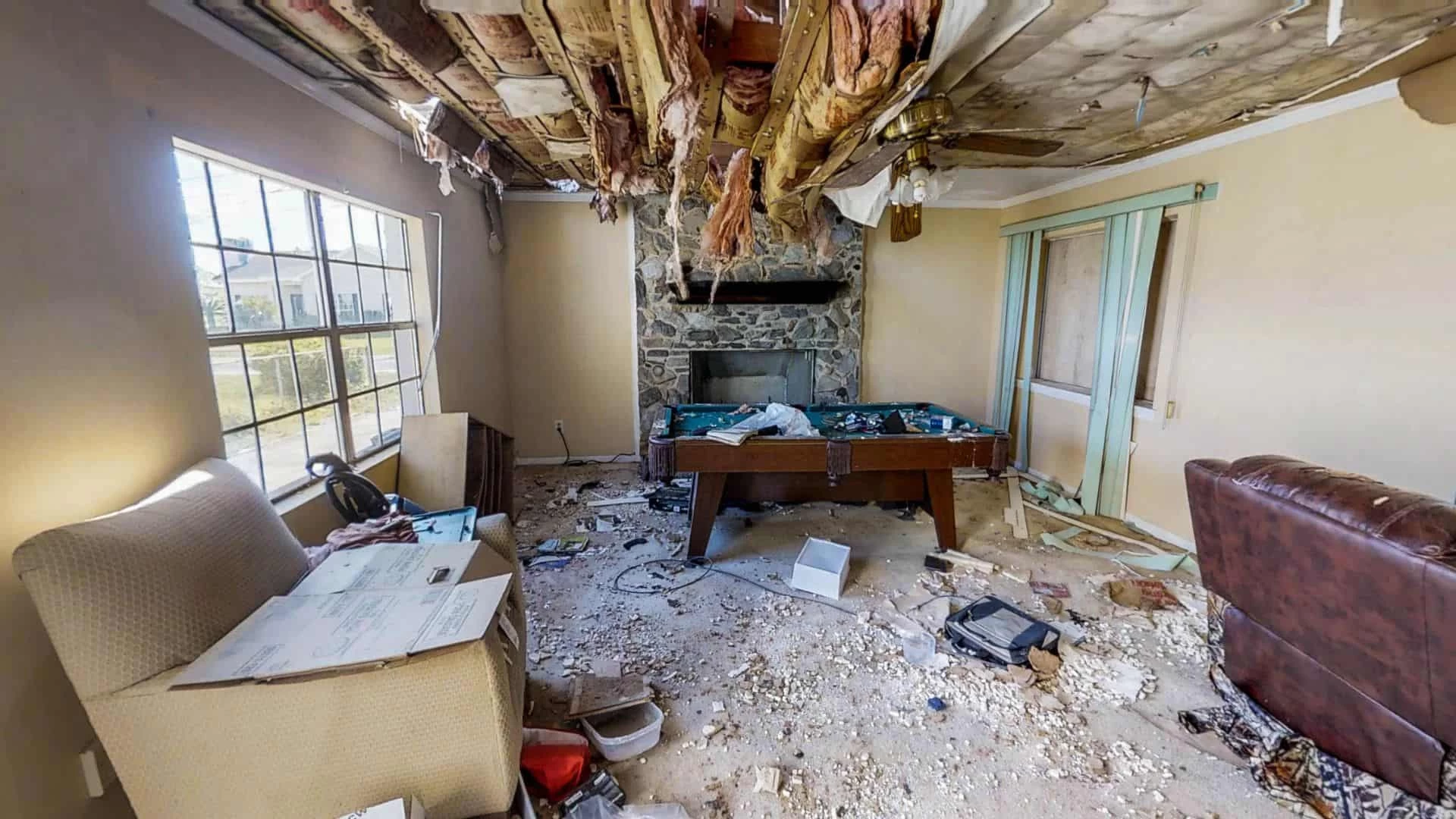
When water gets into a Greenport home, the clock starts immediately. Mold can begin growing inside walls within 24 to 48 hours and in a pre-1939 Victorian with plaster walls, wood lath, and original framing, it has everything it needs to spread fast and stay hidden. Surface drying doesn’t stop that. Professional moisture mapping does.
More than 60% of homes in Greenport were built before 1939, which means most of the housing stock here has no modern vapor barriers, no drainage tile systems, and aged plumbing that was never designed to last this long. When a pipe fails or a storm surge pushes water under your door, it doesn’t just sit on the floor it migrates through plaster, along original framing, and into the subfloor below. What looks dry to the eye can be actively feeding a mold problem inside your walls for weeks before you ever see a sign.
A complete restoration means finding all of it not just the visible water and drying the structure down to safe levels before anything is closed back up. For Greenport homeowners, that also means working carefully around irreplaceable original materials: hardwood floors, plaster ceilings, wood-framed windows, historic millwork. The goal isn’t just removing moisture. It’s bringing the property back to what it was, without destroying the character that made it worth owning in the first place.
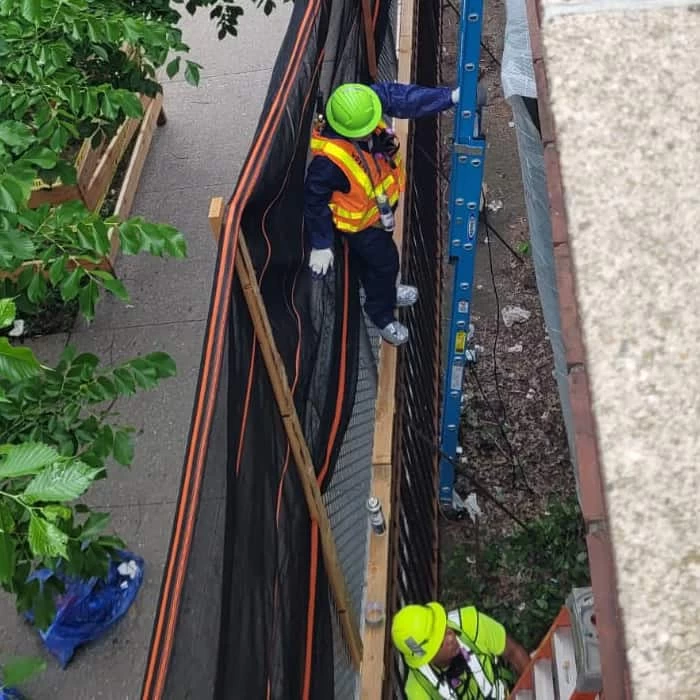
We’re a full-service environmental and property restoration company serving Long Island and New York City. That means water extraction and structural drying, but also mold remediation, asbestos testing and abatement, lead paint testing, and post-remediation air quality verification all under one roof. For a village like Greenport, where disturbing a pre-war wall during restoration can expose materials that require specialized handling under New York State law, that matters more than most homeowners realize until they’re already in the middle of it.
Greenport’s Historic Preservation Commission has authority over the village’s 250-plus historic structures, and the Town of Southold Building Department governs permits and drainage compliance for restoration work in this area. We operate with that regulatory layer in mind licensed, insured, and familiar with what it takes to do this work correctly on the North Fork, not just on Long Island in general.
When you call, you reach real people who can actually dispatch a crew not a national call center routing your emergency to whoever’s available three towns over.
The first step is assessment, and it goes well beyond what you can see. Thermal imaging cameras and professional moisture meters map where the water actually traveled inside walls, under floors, behind original millwork so nothing gets missed and nothing gets closed up wet. In Greenport’s older homes, water rarely stays where it entered. It follows the path of least resistance through aged framing and original floor systems, and the only way to know the full picture is to measure it.
Once the scope is confirmed, extraction and structural drying begins. Industrial-grade equipment not household fans pulls moisture out of the structure itself, not just the air. Drying timelines vary based on the extent of saturation and the materials involved. Plaster walls dry differently than drywall. Original hardwood floors require a more careful approach than engineered flooring. Every decision in the drying phase is made with the property’s specific materials in mind.
From there, any secondary damage is addressed. If disturbed building materials test positive for asbestos or lead which is a real possibility in a pre-1939 Greenport home that’s handled in-house, under proper New York State licensing, without handing you off to a second contractor. Insurance documentation is handled throughout the process, including the flood-versus-water-damage distinction that affects many Greenport waterfront properties carrying both homeowner’s and separate flood policies.
Built for Old Homes, Coastal Conditions, and High Stakes
Water damage restoration in Greenport isn’t a one-size service. The combination of extraordinarily old housing stock, active coastal flood exposure, and some of the highest residential property values in New York State median home values here exceed $1.2 million means the work has to be done completely and correctly, every time. Cutting corners on a $1.2 million historic property isn’t a savings. It’s a liability.
We provide the full scope of restoration services: emergency water extraction, structural drying with industrial equipment, moisture verification, mold prevention treatment, and complete documentation for insurance claims. For properties near the waterfront along Stirling Harbor, the Widow’s Hole corridor on Fourth Street, or anywhere along the Route 48 approach to the village near Hashamomuck Cove storm surge and coastal flooding add a layer of complexity that requires experience with both the physical restoration and the insurance claim process. Many Greenport waterfront properties carry both a standard homeowner’s policy and a separate NFIP flood policy, and navigating two simultaneous claims after a storm event is something we handle directly.
For commercial properties the inns, restaurants, and shops that drive Greenport’s tourism economy the urgency is compounded by lost revenue. A flooded inn room during the fall harvest season has a direct dollar cost every day it’s out of service. Fast, thorough restoration isn’t just about the building. It’s about getting back to business.
How fast does mold actually grow after water damage in a Greenport home?
Mold can begin colonizing saturated materials within 24 to 48 hours of water exposure and that timeline is not theoretical in Greenport. The village’s housing stock is among the oldest in the country, with more than 60% of homes built before 1939. That means plaster walls, wood lath, original framing, and organic insulation materials that give mold exactly what it needs to establish and spread quickly. There are no modern vapor barriers slowing it down.
The real danger is that mold growth in these older structures is almost entirely invisible in the early stages. It’s happening inside the wall cavity, under the floor, behind the baseboard not on the surface where you’d notice it. By the time visible mold appears, the remediation scope has typically grown well beyond what it would have been with immediate professional intervention. The single most important thing you can do after any water event in a Greenport home is get a professional moisture assessment done the same day, not after the weekend.
Does homeowner's insurance cover water damage restoration, or do I need flood insurance?
This is one of the most common points of confusion for Greenport homeowners, and it matters a lot depending on how the water entered your property. Standard homeowner’s insurance typically covers sudden and accidental water damage a burst pipe, an appliance failure, a roof leak from a storm. It does not cover flooding caused by rising water from outside the home, which is what happens during a coastal storm surge event or when Stirling Harbor or Hashamomuck Cove backs up during a nor’easter.
Flood damage is covered under a separate National Flood Insurance Program policy, which many Greenport waterfront and near-waterfront properties carry specifically because of the village’s documented coastal flood exposure. If your home was affected by a storm event, the source of the water determines which policy applies and in some cases, both policies are involved simultaneously. We document damage in the format both types of insurers require and work directly with adjusters throughout the claims process, so you’re not left trying to sort out the coverage question in the middle of a restoration.
What happens if asbestos or lead is found during water damage restoration in my Greenport home?
In a pre-1939 Greenport home, this is a real possibility, not an edge case. Homes built before 1980 may contain asbestos in pipe insulation, floor tiles, plaster, and other building materials. Lead paint is common in homes built before 1978. When water damage restoration involves disturbing these materials removing damaged drywall, cutting into walls, pulling up flooring proper identification and handling is required under New York State law.
Asbestos abatement requires a separate NYSDOL license, and contractors who aren’t equipped to handle it legally cannot legally disturb those materials. What this means practically is that if you hire a water-only restoration company and they discover asbestos mid-job, the work stops until a licensed abatement contractor arrives adding time, cost, and coordination complexity to an already stressful situation. We handle asbestos testing, abatement, lead paint testing, and post-remediation air quality verification in-house, under proper New York State licensing. One call, one company, no handoffs.
Can I stay in my Greenport home during water damage restoration?
It depends on the extent of the damage and what’s involved in the restoration. For minor water events a localized pipe leak, a contained appliance overflow staying in the home during the drying process is typically manageable. Industrial drying equipment is loud and the affected area needs to remain undisturbed, but the rest of the home can usually function normally.
For more significant events storm surge flooding, extensive structural saturation, or any situation where mold remediation or asbestos abatement is involved temporary relocation is often the safer and more practical choice. Mold remediation requires containment barriers and negative air pressure to prevent spore spread to unaffected areas of the home. Asbestos abatement requires full containment and air monitoring. In those situations, the home is not a safe or practical living environment during active work. Your insurance policy may cover temporary housing costs during restoration we can help you document that as part of the overall claim.
How does water damage restoration work differently for Greenport's historic homes?
It requires a fundamentally different approach than restoring a post-war ranch house or a modern subdivision home. The materials are different, the construction methods are different, and the stakes are higher. Plaster walls don’t respond to the same drying protocols as drywall. Original hardwood floors need careful moisture monitoring to avoid cupping or buckling during the drying process. Wood-framed windows and original millwork can be permanently damaged by aggressive or poorly calibrated drying equipment.
There’s also the regulatory dimension. Greenport’s Historic Preservation Commission has authority over exterior alterations to structures within the village’s historic district which covers more than 250 buildings. While most interior restoration work falls outside HPC jurisdiction, any exterior repairs triggered by water damage, such as replacing damaged siding, roofing, or windows on a historic home, may require HPC review before work begins. A restoration contractor unfamiliar with that layer of local oversight can inadvertently create permit and compliance problems for the homeowner. Knowing the regulatory environment here is part of doing the job right.
How much does water damage restoration typically cost in Greenport, NY?
The honest answer is that cost varies significantly based on the extent of the damage, the size of the affected area, and what secondary issues are involved. A straightforward pipe leak caught quickly in a single room is a very different job than a storm surge event that saturates a basement and two floors of a 150-year-old Victorian. Nationally, the average water damage insurance claim runs between $11,000 and $13,000 but Greenport’s older homes, higher property values, and coastal flood exposure can push restoration scope beyond that range when damage is extensive or when secondary issues like mold or asbestos are involved.
What affects cost most is how quickly professional mitigation begins. Every hour of delay between a water event and professional drying increases the saturation depth, the potential for mold growth, and the overall scope of work required. In Greenport specifically where a nor’easter can push water into multiple properties simultaneously and demand for restoration services spikes quickly calling immediately rather than waiting to see how bad it gets is almost always the less expensive decision in the long run. We provide a thorough assessment upfront and document everything needed to support your insurance claim from the start.