Hampton Bays is surrounded by water on every side and when a storm hits or a pipe lets go, you don’t have time to wait on a call center. We respond 24/7 with real water damage restoration that stops the damage before it compounds.
I needed a professional consultation explanation of procedure for safe removal of Asbestos in my apartment complex. Without having an account yet, I was very impressed with the caring, knowledgeable and generous advice offered by Jessica, and will look forward to doing business in the future. Thank you so much! I feel much more informed about a sometimes scary endeavor. Peace. Nancy Silva Mineola, NY.
Mia Munoz
Used this company to clean up some water flood in my house. They were fast and easy to work with.very professional, Would recommend to anyone!
Nini Valle
Great company, had a flood and they responded quickly and efficiently. Billed my insurance company directly. I highly recommend this company!
joe colapietro, jr
I had pipe freeze in my basement right before a snow storm and they made to within an hour to help start the clean up process. They we by our side throughout the entire process and even helped with the insurance company. They did such a great job with the cleanup, repair, remidiation, I contracted them to perform the repairs and finishes in the basement. They came with enough manpower and material to get the job done. Leo and Jessica were nothing but a pleasure to deal with!!
Cristian Arredondo c
I had some water damage in my home and Green Island was able to take care of my issue quickly and effectively. I am very pleased with the work they did. They responded quickly and were very professional.
Michael M
Outstanding service! From the office to the field crew everyone was friendly, helpful and responsive. I highly recommend Green Island Group.
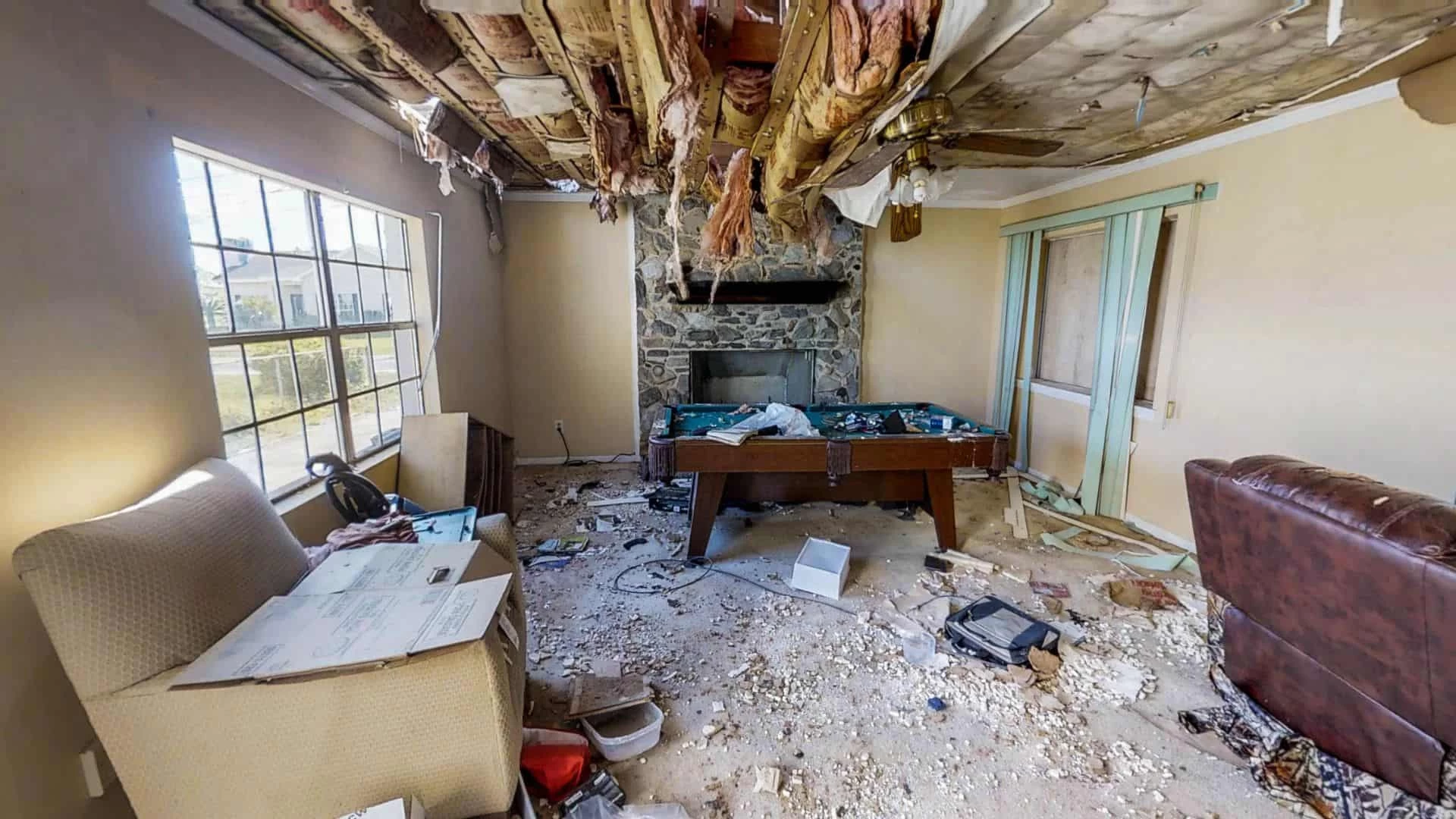
The moment water enters your home, a clock starts. Within 24 to 48 hours, mold can begin forming inside your walls, under your floors, and in places you’ll never see until it’s already a bigger problem. In Hampton Bays, where the coastal air is humid year-round and older cottages and bay-adjacent homes absorb moisture faster than newer construction inland, that window closes even quicker.
What you want after water damage isn’t just “dry enough.” You want walls that are actually dry, floors that aren’t quietly rotting underneath, and air you can breathe without worrying. That’s what proper water damage restoration delivers not a surface fix, but a complete return to the condition your home was in before any of this happened.
For second-home owners and seasonal residents in Hampton Bays, this matters even more. A pipe that burst in January while your property sat empty on Ponquogue Avenue or near Tiana Bay doesn’t wait for you to come back in April. The damage compounds every week it goes unaddressed. Getting a trusted local company on-site immediately one that can document everything, work with your insurance, and handle whatever we find behind the walls is the difference between a manageable repair and a full-scale reconstruction.
We’re a Long Island-based environmental and property restoration company not a national franchise with a call center routing your emergency to whoever’s available. When you call, you reach a real team that knows the difference between a Dune Road bayfront property and an inland home off Argonne Road, and understands how differently water behaves in each.
We handle water damage, mold remediation, asbestos abatement, lead paint removal, and air quality testing under one roof. That matters in Hampton Bays, where a significant portion of the housing stock was built before 1978, and where opening a water-damaged wall sometimes means finding more than just moisture. No subcontractors, no handoffs, no delays while you wait for a second company to come out and assess what we uncovered.
Our customers consistently point to the same thing in their reviews: we actually explain what’s happening, treat the situation with urgency, and follow through. That’s not a tagline it’s what accountability looks like when a local company’s reputation is on the line in this community.
It starts the moment you call. Whether it’s 2am during a nor’easter or a Monday afternoon after you’ve just discovered standing water in your basement, the first step is getting someone to your property fast. Our emergency response runs around the clock because water damage doesn’t keep business hours and in Hampton Bays, where storm surge and tidal flooding can escalate quickly, the response time matters.
Once on-site, we do a full assessment not just the visible damage, but the hidden moisture. Thermal imaging and professional moisture meters find water that has wicked into walls, settled under subfloor sheathing, and pooled inside insulation in crawl spaces. This step is where a lot of restoration companies cut corners. Skipping it means leaving moisture behind that becomes mold in a matter of days.
From there, water extraction and structural drying begin using commercial-grade equipment. The drying process is monitored and documented which matters if you’re filing a claim with your homeowner’s insurance, your NFIP flood policy, or both. Many Hampton Bays properties in FEMA-designated flood zones carry dual coverage, and the documentation we provide is built to support a thorough claim. Once the structure is verified dry and safe, we complete any necessary repairs drywall, flooring, structural material to bring the home back to its original condition. Work requiring permits is handled in accordance with Town of Southampton Building Department requirements, including flood zone compliance rules that apply to properties in AE and VE zones throughout the hamlet.
Every Step Covered, From Extraction to Full Restoration
Water damage restoration isn’t one thing it’s a sequence of connected steps that have to be done in the right order and verified at each stage. We handle the full continuum: emergency water extraction, structural drying, moisture mapping, mold prevention treatment, material removal and replacement, and final air quality verification. You’re not handed off between companies or left managing multiple contractors while your home sits open.
In Hampton Bays specifically, our service accounts for conditions that don’t exist in most inland Long Island communities. Coastal humidity accelerates moisture migration into building materials. Older homes near the bay particularly those built in the mid-20th century in areas like Canoe Place, West Tiana, and Rampasture often have crawl spaces, pier foundations, and original framing that require careful assessment before drying equipment is placed. Pre-1978 construction also raises the possibility of asbestos-containing floor tile, pipe insulation, or drywall compound, and lead paint in walls that need to be opened. Because we’re licensed for both asbestos abatement and lead paint removal under New York State and EPA requirements, that discovery doesn’t stop the job it just becomes part of it.
For seasonal and second-home owners, we also provide remote coordination: photo and video documentation, direct communication with property managers, and insurance adjuster support so the process moves forward even when you’re not on-site. If your Hampton Bays property sits vacant between October and April, that service capability isn’t a convenience it’s essential.
How quickly can water damage cause mold in a Hampton Bays home?
Mold can begin forming within 24 to 48 hours of water exposure and in Hampton Bays, that timeline can compress further. The hamlet’s coastal air carries higher ambient humidity than inland communities, and older homes near Tiana Bay or the Shinnecock Canal often have materials like original wood framing, plaster walls, and crawl space insulation that absorb and hold moisture longer. That combination creates near-ideal conditions for mold growth even after the standing water is gone.
This is why the response time matters as much as the restoration work itself. Extracting the water is only the first step. If the structural drying isn’t thorough if moisture is left inside wall cavities or under subfloor sheathing mold will follow regardless of how clean the surface looks. We use thermal imaging and calibrated moisture meters to verify that every affected area is genuinely dry before the job is considered complete, not just visually dry.
Does homeowner's insurance cover water damage restoration in Hampton Bays, NY?
It depends on the source of the water. Standard homeowner’s insurance typically covers sudden and accidental water damage a burst pipe, an appliance failure, a roof leak from a storm. It generally does not cover flooding from an external source, like storm surge from Shinnecock Bay or tidal overflow from the canal. That type of damage falls under a separate flood insurance policy, usually issued through the National Flood Insurance Program.
This is a real complexity for Hampton Bays homeowners, particularly those in FEMA Special Flood Hazard Areas along Dune Road, Ponquogue, and the bay-adjacent neighborhoods. Many properties here carry both types of coverage, which means filing two separate claims with two different adjusters after a major storm event. We handle the documentation and direct billing for both policy types, and can help you navigate what’s covered under each so you’re not leaving money on the table or getting caught in a coverage gap.
What happens if water damage restoration uncovers asbestos or lead paint in my home?
It’s more common than most homeowners expect, especially in Hampton Bays. A significant portion of the hamlet’s housing stock was built before 1978, and older cottages near the bay particularly in areas like Canoe Place, Red Creek, and East Tiana frequently contain asbestos floor tile, pipe insulation, or textured ceiling materials, as well as lead paint in walls and trim. When water damage requires opening those materials, you’re not just dealing with moisture anymore.
Most water damage companies aren’t licensed to handle what they find. They stop work, bring in a separate abatement contractor, and the homeowner is left coordinating multiple companies and timelines while the restoration sits on hold. We hold the New York State Department of Labor licensing required for asbestos abatement and the EPA RRP certification required for lead paint work. When something turns up during restoration, the job continues it just incorporates the additional scope without requiring you to start over with a different contractor.
My Hampton Bays home sat empty all winter and I just found water damage is it too late?
It’s not too late, but the scope of the work is likely larger than it would have been if the damage had been caught immediately. A pipe that burst in January and went unnoticed until April has had months to saturate framing, subfloor material, and insulation and in that time, mold has almost certainly established itself somewhere in the structure. What might have been a few thousand dollars in mitigation is now a remediation and reconstruction project.
That said, this is a situation we handle regularly in Hampton Bays. The seasonal and second-home market here means unoccupied winter properties are a recurring reality, and we’re experienced in assessing long-standing water damage, identifying the full extent of mold growth with air quality testing, and building a complete restoration scope that addresses everything not just the visible damage. If you’re calling from out of the area and can’t be on-site, we can coordinate with a property manager, document the damage thoroughly for your insurance claim, and begin work immediately on your behalf.
Do I need a permit for water damage repairs in Hampton Bays?
For basic drying and mitigation work, no permit is typically required. But once restoration involves structural repairs replacing drywall, repairing framing, reconstructing flooring you’re generally in permit territory under the Town of Southampton Building Department’s jurisdiction. And for properties in FEMA-designated flood zones, which includes a significant portion of Hampton Bays’s waterfront and bay-adjacent neighborhoods, there are additional layers of compliance to consider.
Southampton Town has specific rules around what’s called “substantial improvement” if the cost of repairs exceeds 50% of the structure’s pre-damage market value, the building may be required to be brought into full flood zone compliance, which can mean elevation requirements and other structural upgrades. This is not a minor detail for Dune Road or Tiana Bay properties, where the rule can significantly affect the scope and cost of restoration. We’re familiar with Southampton Town’s permitting process and flood zone requirements, and factor that knowledge into the restoration plan from the start.
How do I choose a water damage restoration company in Hampton Bays versus a national franchise?
The core difference comes down to accountability and local knowledge. A national franchise operates on brand recognition the crew that shows up may be a subcontractor you’ve never heard of, working under a name you trust but with no direct stake in the outcome. If something goes wrong or the job isn’t done right, the path to resolution runs through a corporate structure that isn’t particularly motivated to make it easy.
A local company like ours has its reputation on the line with every job in this community. We know Hampton Bays the flood zone designations along the waterfront, the age and construction characteristics of the housing stock in areas like Rampasture and Canoe Place, the dual-insurance complexity that comes with FEMA-mapped properties, and the specific dynamics of seasonal homes that sit vacant through the winter. That’s not the kind of knowledge that comes from a franchise training manual. It comes from actually working in this area, and being accountable to the people who live here.