Herricks Homes Built in the 1950s Hide Water for Weeks
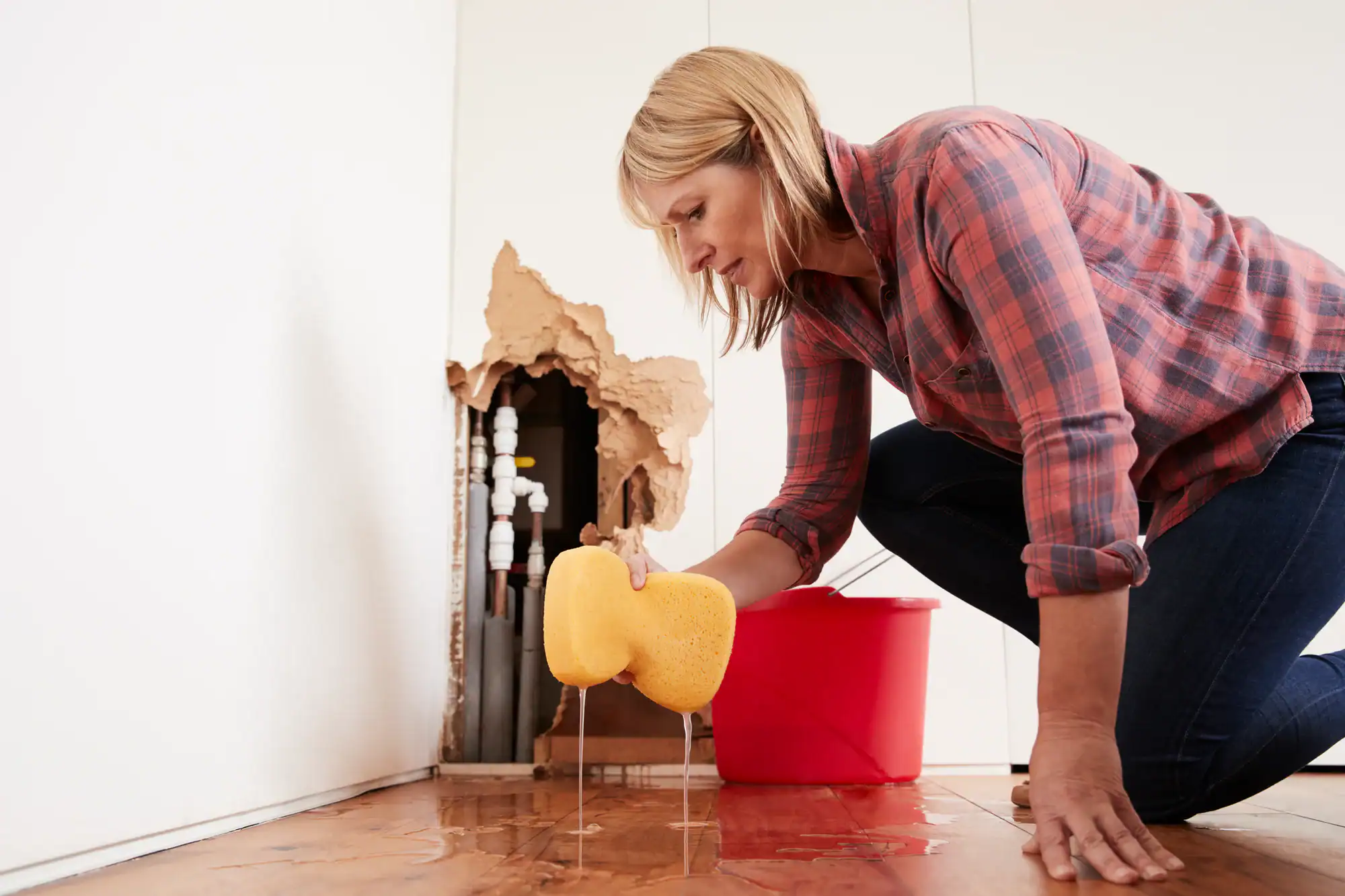
When water gets into a 1950s split-level or Cape Cod in Herricks, it doesn’t just sit there — it moves. We find it, pull it out, and dry every layer before mold gets a foothold.
I needed a professional consultation explanation of procedure for safe removal of Asbestos in my apartment complex. Without having an account yet, I was very impressed with the caring, knowledgeable and generous advice offered by Jessica, and will look forward to doing business in the future. Thank you so much! I feel much more informed about a sometimes scary endeavor. Peace. Nancy Silva Mineola, NY.
Mia Munoz
Used this company to clean up some water flood in my house. They were fast and easy to work with.very professional, Would recommend to anyone!
Nini Valle
Great company, had a flood and they responded quickly and efficiently. Billed my insurance company directly. I highly recommend this company!
joe colapietro, jr
I had pipe freeze in my basement right before a snow storm and they made to within an hour to help start the clean up process. They we by our side throughout the entire process and even helped with the insurance company. They did such a great job with the cleanup, repair, remidiation, I contracted them to perform the repairs and finishes in the basement. They came with enough manpower and material to get the job done. Leo and Jessica were nothing but a pleasure to deal with!!
Cristian Arredondo c
I had some water damage in my home and Green Island was able to take care of my issue quickly and effectively. I am very pleased with the work they did. They responded quickly and were very professional.
Michael M
Outstanding service! From the office to the field crew everyone was friendly, helpful and responsive. I highly recommend Green Island Group.
There’s a difference between a floor that looks dry and a home that actually is. In Herricks, where most of the housing stock was built in the 1950s, water doesn’t stop at the surface. It moves into original plank subfloors, behind plaster walls, through gaps in the old masonry — places a shop vac and a few fans will never reach. When restoration is done right, you’re not just cleaning up what you can see. You’re cutting off the conditions that lead to mold, structural softening, and a claim denial six months from now because the documentation wasn’t there.
Nassau County’s water table runs high, especially during wet seasons. For a home in Herricks sitting on a mid-century foundation without modern waterproofing, that means hydrostatic pressure is always working against the basement walls — and one heavy nor’easter or a burst pipe in January can push that pressure past the point of no return. What you get after a proper restoration isn’t just a dry home. It’s the peace of mind that comes from knowing someone actually checked the wall cavities, logged the moisture readings, and didn’t leave until the numbers confirmed it was done.
That matters more when your home is worth $700,000 and your property taxes are $10,000 a year. You’re not just cleaning up a mess — you’re protecting the most significant asset your family owns.
We Know Herricks Homes Better Than Any National Chain
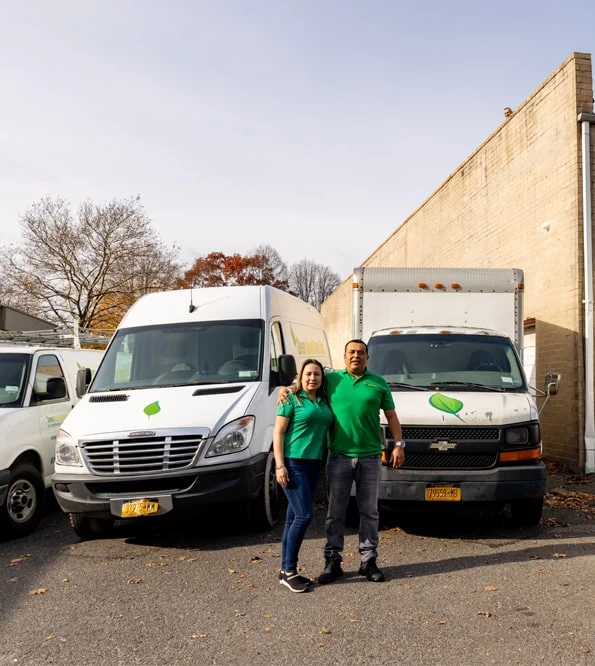
We’re a locally owned and operated restoration company serving Nassau County, and Herricks is where we work — not just where we rank. When you call us, you’re not reaching a national call center that routes your job to whoever’s available. You’re talking to a crew that already knows the housing stock in North Hempstead — the aging galvanized drain lines, the uncoated basement slabs, the sump pits that were retrofitted decades after the house was built.
We carry both the New York State Department of Labor mold remediation license and the Nassau County Environmental Hazard Remediation Provider (EHRP) license — a county-specific requirement that many restoration companies operating in Nassau County simply don’t hold. That’s not a minor detail. It’s the difference between work that holds up to an insurance adjuster and work that doesn’t.
Herricks homeowners moved here for a reason. The schools, the neighborhood, the long-term investment. We treat your home accordingly.
No Guesswork — Here's Exactly How We Work Through It
The first thing we do when we arrive is assess — not assume. We use thermal imaging cameras and moisture meters to map where the water has actually traveled, not just where it’s visible. In a 1958 Cape Cod or split-level, that can mean water has migrated behind original drywall, under hardwood floors, or into wall framing that hasn’t been touched since the house was built. You need to know the full picture before anything gets pulled or dried.
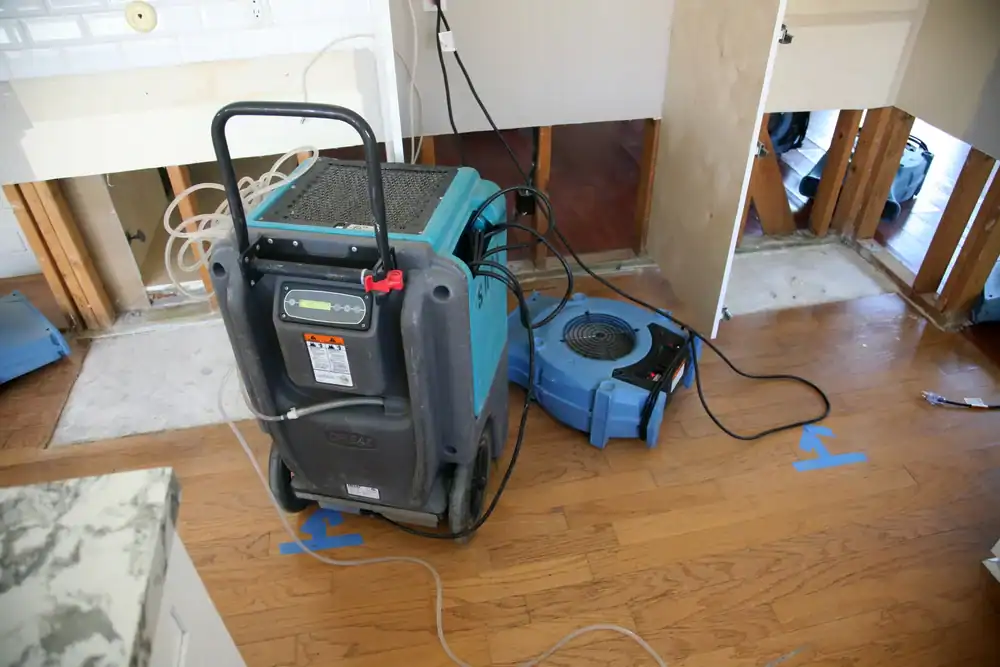
Once we know the scope, we set up commercial-grade extraction and drying equipment calibrated to the specific moisture levels in your home. We don’t pull the equipment after 24 hours and call it done — we monitor daily, log the readings, and adjust until the structure hits the target levels. That documentation isn’t just for our records. It’s what your insurance adjuster needs to process your claim without pushback.
If the damage involves mold or the potential for it — which in Nassau County’s climate is a real concern any time water sits longer than 48 hours — we handle that under our state and county licenses. And because work in Herricks falls under the Town of North Hempstead Building Department, we know the permitting requirements for any structural repairs that come out of the restoration. Nothing gets missed, and nothing gets handed off to you to figure out on your own.
Built for the Homes and Conditions That Actually Exist in Herricks
Water damage restoration in Herricks isn’t a one-size situation. The homes here were built in an era before modern waterproofing standards, and the water damage we find in this community reflects that — burst supply lines inside uninsulated walls, basement slab seepage during high water table periods, ice dam damage in the Cape Cod attics along the Shelter Rock Road corridor, and appliance failures that have been quietly soaking original subfloors for longer than the homeowner realized.
Every job starts with full thermal imaging and moisture mapping so we’re working from facts, not guesses. Extraction comes next, followed by structural drying with equipment positioned based on the actual layout of your home — not a generic setup. We produce IICRC S500-compliant drying logs and moisture documentation throughout, which is what Nassau County insurance adjusters require to process a claim fully and without delay.
If mold is present or suspected, that work is handled separately under our NYS DOL mold license and our Nassau County EHRP license — both of which are required for legal mold remediation work in this county. We also manage the insurance communication directly, so you’re not spending your evenings on hold with an adjuster trying to explain what a moisture log is. From the first call to the final clearance reading, the process is handled — completely.
How quickly does mold actually start growing after water damage in Herricks?
Mold can begin growing within 24 to 48 hours of water intrusion — and that timeline doesn’t change based on how visible the water is. In Herricks, where homes were largely built in the 1950s, the concern is what’s happening inside the walls and under the floors, not just on the surface. Original plaster walls and plank subfloors absorb and hold moisture in ways that newer materials don’t, which means conditions for mold growth can exist inside a wall cavity even after the visible water is gone.
Nassau County’s climate compounds this. Wet nor’easters, high groundwater periods in spring, and summer humidity all create an environment where moisture lingers. If water has been sitting for more than a day — or if you’re not sure how long it’s been there — the safest assumption is that mold assessment is warranted. That’s why response speed matters as much as it does.
Will my homeowners insurance cover water damage restoration in New York?
It depends on the source of the water, and that distinction matters more than most people realize before they file a claim. In New York, standard homeowners policies typically cover sudden and accidental water damage — a burst pipe, an appliance failure, an ice dam that drives water through the roof. What they generally don’t cover is gradual damage, meaning a slow leak that’s been happening for months, or flooding that originates from outside the home, which requires separate flood insurance.
For Herricks homeowners, the most common covered scenarios are burst pipes during winter cold snaps — a real risk in 1950s homes with original plumbing routed through uninsulated spaces — and storm-driven water intrusion from nor’easters or heavy summer storms. The key to getting your claim paid fully is documentation. Nassau County adjusters require IICRC-compliant moisture logs, thermal imaging reports, and drying records. If that documentation isn’t produced during the restoration, you may face a reduced settlement or a denial. We handle that documentation as a standard part of every job.
What does water damage restoration actually cost in Nassau County?
The range is wide because the scope varies significantly. A contained appliance leak caught early might run $1,500 to $3,500 for extraction and drying. A basement flooding event in a home with original 1950s construction — where water has moved into wall cavities, under original flooring, and potentially into the framing — can run $5,000 to $15,000 or more depending on how much structural material needs to come out and whether mold remediation is required.
In Herricks specifically, the age of the housing stock tends to push restoration costs toward the higher end of that range, not because the work is priced differently, but because older homes hold water in more places and require more thorough drying to reach safe moisture levels. The good news is that when the damage is a covered loss, your insurance is paying the bulk of it — and proper documentation from a licensed contractor is what ensures the settlement reflects the actual scope of the damage. We go over cost and coverage with you before any work begins, so there are no surprises.
Do I need a licensed contractor for water damage work in Herricks, NY?
For the water extraction and structural drying portion, you need a qualified restoration contractor — but for any mold remediation work in New York State, licensing is required by law. Under New York’s Article 32 Mold Law, which took effect in 2016, mold assessment and mold remediation must be performed by separately licensed professionals, and the same company cannot legally perform both on the same property. Violations carry significant penalties, including fines up to $10,000.
In Nassau County specifically, there’s an additional layer: contractors performing mold remediation work must hold the county’s Environmental Hazard Remediation Provider (EHRP) license issued by the Nassau County Department of Health. That’s a county-level requirement on top of the state license, and many restoration companies working in Nassau County — including some that show up in local search results — don’t carry it. If you’re vetting contractors, ask for both license numbers. Any legitimate operator serving Herricks should be able to produce them without hesitation. We hold both.
How long does the full water damage restoration process take in a Herricks home?
For a straightforward extraction and structural drying job — say, a washing machine supply line failure caught within a few hours — the drying process typically takes three to five days with commercial equipment running continuously. The extraction itself is usually done in a single visit, but the drying phase requires daily monitoring and moisture checks to confirm the structure is actually reaching safe levels, not just surface-dry.
In Herricks, the timeline often runs longer than that baseline because of the housing stock. Original plank subfloors, plaster walls, and older wall framing hold moisture more stubbornly than modern materials, and rushing the drying phase to save time is exactly how a restoration job turns into a mold remediation job two months later. If structural materials need to come out — sections of drywall, flooring, or insulation — that adds time, and any work requiring a permit through the Town of North Hempstead Building Department needs to be factored into the overall schedule. We give you a realistic timeline at the assessment stage so you’re not guessing.
Why should Herricks homeowners choose a local restoration company over a national franchise?
The honest answer is accountability. When you call a national franchise brand, you’re calling a brand — not necessarily the local operator behind it. Franchise models vary significantly in quality from one territory to the next, and the name on the truck doesn’t guarantee the training, licensing, or local knowledge of the crew that shows up at your door.
For a home in Herricks — a 1950s split-level or Cape Cod in North Hempstead with original construction, aging plumbing, and a basement that wasn’t built to modern waterproofing standards — generic restoration knowledge isn’t enough. You need someone who understands how water moves through that specific type of home, who knows the Nassau County EHRP licensing requirements, who’s familiar with what the Town of North Hempstead Building Department requires for permitted repairs, and whose reputation lives in the same county as your house. We’re a Nassau County company, and the work we do here is work we stand behind directly.