When Macy Channel Backs Up, Your Home Needs More Than a Fan
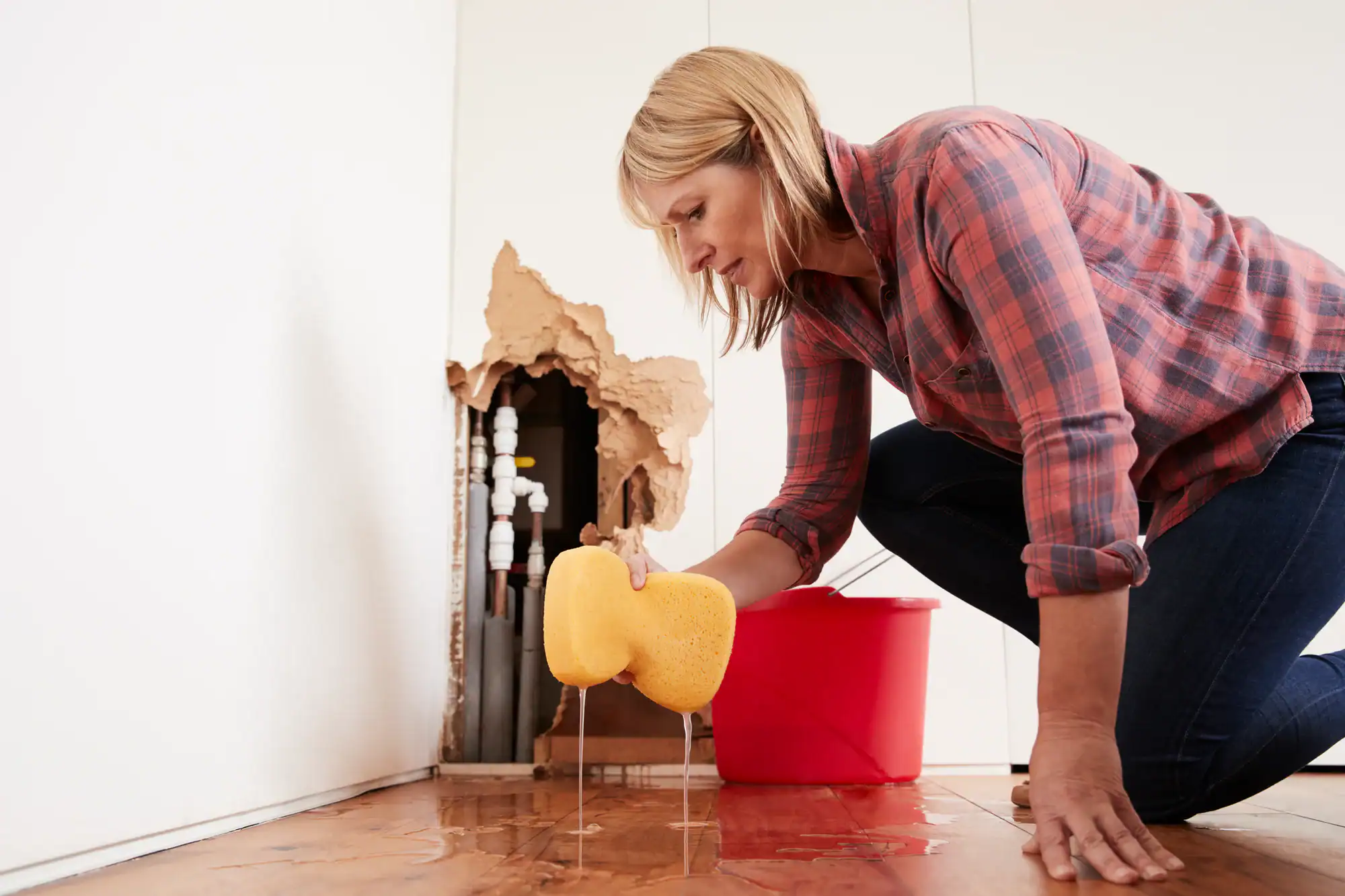
Water damage in Hewlett Bay Park moves fast — and in a wetland-situated village where the ground is already saturated, it moves faster than most. We respond in an hour, handle your insurance, and get your home actually dry.
I needed a professional consultation explanation of procedure for safe removal of Asbestos in my apartment complex. Without having an account yet, I was very impressed with the caring, knowledgeable and generous advice offered by Jessica, and will look forward to doing business in the future. Thank you so much! I feel much more informed about a sometimes scary endeavor. Peace. Nancy Silva Mineola, NY.
Mia Munoz
Used this company to clean up some water flood in my house. They were fast and easy to work with.very professional, Would recommend to anyone!
Nini Valle
Great company, had a flood and they responded quickly and efficiently. Billed my insurance company directly. I highly recommend this company!
joe colapietro, jr
I had pipe freeze in my basement right before a snow storm and they made to within an hour to help start the clean up process. They we by our side throughout the entire process and even helped with the insurance company. They did such a great job with the cleanup, repair, remidiation, I contracted them to perform the repairs and finishes in the basement. They came with enough manpower and material to get the job done. Leo and Jessica were nothing but a pleasure to deal with!!
Cristian Arredondo c
I had some water damage in my home and Green Island was able to take care of my issue quickly and effectively. I am very pleased with the work they did. They responded quickly and were very professional.
Michael M
Outstanding service! From the office to the field crew everyone was friendly, helpful and responsive. I highly recommend Green Island Group.
What Stays Dry After We Leave — And Why It Matters in Hewlett Bay Park
Hewlett Bay Park sits on land that was never meant to stay dry on its own. Willow Pond connects to Macy Channel, which feeds into Jamaica Bay — and when a storm rolls through the Five Towns, that entire system rises. Homes along the channel and pond don’t just deal with burst pipes and appliance failures. They deal with groundwater that wicks through foundation walls for days after the visible water is gone. If the company you call doesn’t understand that, they’ll call the job done while moisture is still moving through your framing.
The homes here are large, often mid-century, and built with materials that absorb water quietly — hardwood floors, plaster walls, finished basements that took years to get right. When water gets in, the clock starts immediately. Mold can begin growing inside wall cavities within 24 to 48 hours, and in a home with an elevated water table and coastal humidity, that window is tight. What you need isn’t just extraction. You need a team that maps every moisture pocket, dries what you can’t see, and doesn’t leave until the readings confirm it.
That’s what a completed job looks like — not “it looks dry,” but documented, meter-confirmed dry. Your floors intact where they can be. Your finishes preserved where preservation was possible. Your insurance claim handled, including your NFIP flood policy if you carry one. And a home you can trust again.
Water Restoration Companies Serving Hewlett Bay Park
Local to Hewlett Bay Park, Not a Franchise Routing Your Call Elsewhere
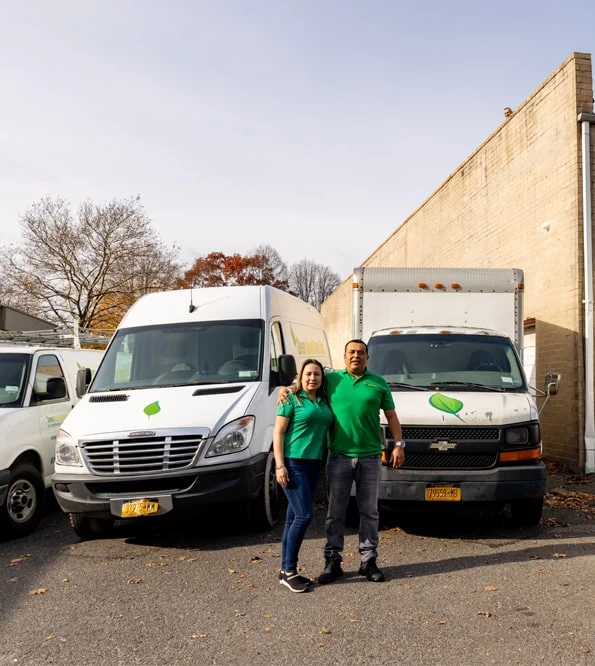
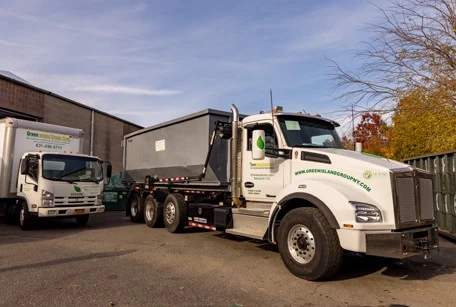
We already serve the Hewlett Bay Park community — same ZIP code, same school district, same waterfront housing stock. When you call, you’re not reaching a national call center dispatching from Suffolk County. You’re reaching a Long Island-based team that’s familiar with the canal-fronting estates along Macy Channel, the older plumbing systems in Hewlett Bay Park’s mid-century homes, and the specific groundwater behavior that comes with building on the South Shore’s wetland edge.
Our team is IICRC-certified, licensed under New York State’s Mold Law, and equipped with thermal imaging cameras and industrial drying systems — not the kind of setup a general contractor borrows for a one-off job. Every project gets a dedicated project manager from the first call to the final walkthrough. You’ll know who’s in your home and why, every day of the job.
In a village of 147 homes where reputation travels fast, that accountability isn’t optional. It’s how we work.
Water Damage Restoration Process, Hewlett Bay Park NY
From the First Call to a Dry, Documented Home — Here's Our Process
It starts the moment you call. Day or night, a live person answers — not a voicemail, not a callback queue. We ask a few quick questions, confirm your address in Hewlett Bay Park, and get a crew moving. The goal is to be at your door within an hour. In a wetland-situated village where groundwater can keep entering a structure long after the initial event, that response time isn’t a selling point — it’s damage control.
When we arrive, the first thing we do is assess the full scope of moisture — not just what’s visible. Thermal imaging cameras read temperature differentials inside your walls and under your floors, identifying moisture that’s already migrated beyond the obvious wet zone. This matters especially in older homes with plaster walls and original hardwood, where water travels silently through materials before it ever shows on the surface.
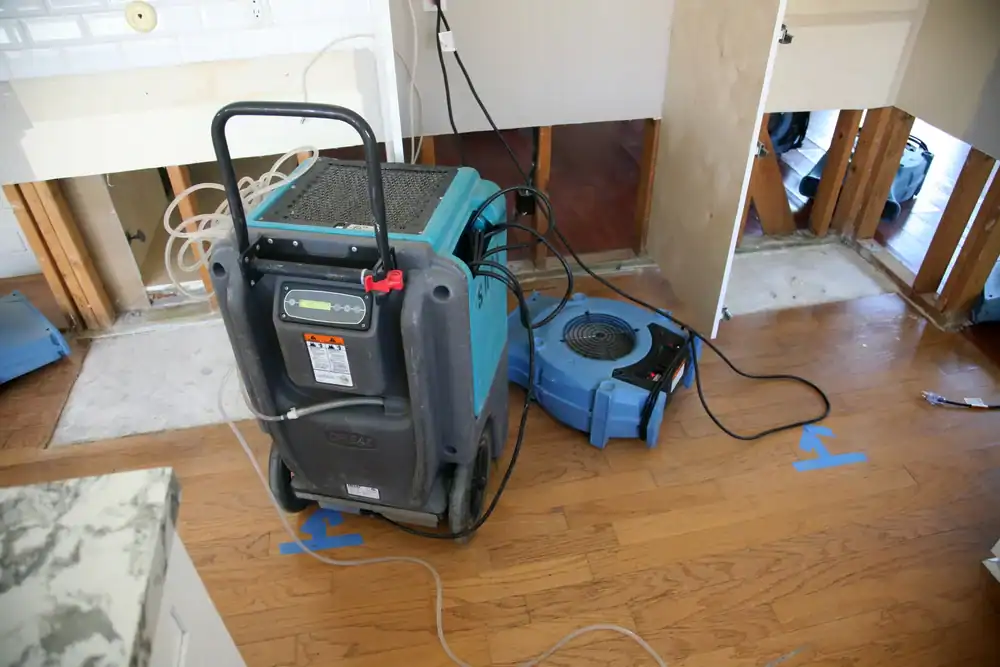
Once we have a complete moisture map, we build a drying plan around it. Industrial air movers and dehumidifiers go where the readings tell us to put them — not where it looks wet. We pull permits for any structural work through the village as required, document everything for your insurance carrier, and stay on the job until calibrated moisture meter readings confirm the structure has reached acceptable levels. You get a copy of that documentation. It’s your proof the job was done to standard — and your protection if questions come up with your adjuster later.
Water Restoration Service, Five Towns Nassau County
Everything Covered — Including the Part Most Companies Miss
Water damage restoration in Hewlett Bay Park isn’t a single task — it’s a sequence. Extraction comes first, then drying, then assessment for mold, then any necessary demolition and reconstruction. Each phase requires different equipment, different expertise, and in New York State, different licensing. The 2016 Mold Law requires that mold remediation be performed by a separately licensed contractor. We hold that license. Before you let anyone start tearing out drywall in your home, ask for their NY State mold remediation license number. If they don’t have one, that’s a legal problem — and potentially an insurance problem.
For Hewlett Bay Park properties, the service scope often includes more than it would for an inland Nassau County home. Groundwater intrusion through foundation walls, sump pump failure recovery, and canal-adjacent seepage all require extended drying protocols that go beyond a standard pipe-burst job. Finished basements — common in the estate homes here — add another layer of complexity, since the materials involved (carpet, drywall, insulation, custom cabinetry) each dry at different rates and require individual monitoring.
Many properties in this flood zone carry both standard homeowners insurance and an NFIP flood policy through FEMA. We handle documentation and direct billing for both, simultaneously. You don’t need to manage two separate claims while your basement is still wet. That’s our job.
Does water damage restoration in Hewlett Bay Park take longer than other areas?
It can, and there’s a specific reason for that. Hewlett Bay Park sits within the wetlands of southwestern Nassau County, which means the water table is naturally elevated compared to inland communities. When water enters a home here — whether from a burst pipe, a sump pump failure, or storm surge backing up through Macy Channel — the surrounding soil is often already saturated. That means the structure can’t dry outward the way it would in a drier environment. Moisture has fewer places to go, and drying times extend as a result.
The practical impact is that a job that might take three to four days of active drying in a Plainview or Bethpage home could take five to seven days in a Hewlett Bay Park home under similar conditions, particularly after a significant rain event or during the spring groundwater season. A restoration company that quotes you a flat timeline without accounting for the local water table isn’t giving you an honest answer. We monitor moisture readings daily and adjust equipment placement as the structure dries — the job ends when the readings say it’s done, not when a calendar says it should be.
How do I know if my water damage is covered by homeowners insurance or flood insurance?
This is one of the most common points of confusion for homeowners in flood-zone communities, and it’s especially relevant in Hewlett Bay Park, where many properties carry both a standard homeowners policy and an NFIP flood policy through FEMA. The general rule is that homeowners insurance covers sudden and accidental water damage from inside the home — a burst pipe, a failed water heater, an overflowing appliance. Flood insurance covers water that enters from outside — storm surge, rising groundwater, and surface flooding driven by weather events.
The tricky part is that a single water damage event can trigger both policies at once. If a nor’easter pushes water through Macy Channel and into your basement at the same time your sump pump fails from the overload, you may have a homeowners claim and an NFIP claim running simultaneously. Documenting the damage correctly — separating what came from where — is critical to maximizing your recovery under both policies. We handle this documentation from the start, so your adjuster gets what they need and you’re not leaving coverage on the table.
What should I do immediately after discovering water damage in your Hewlett Bay Park home?
The most important thing you can do is call a restoration company before you call your insurance carrier. That might feel backwards, but here’s why it matters: the first 24 to 48 hours determine how much damage actually occurs. Mold can begin colonizing porous materials — drywall, wood framing, insulation — within that window. Getting extraction and drying equipment in place immediately limits the spread. Once you’ve made that call, then contact your insurance company to open the claim.
While you’re waiting for the crew to arrive, if it’s safe to do so, shut off the water source if the damage is from a pipe or appliance. Don’t run fans from a hardware store — they move surface air but don’t pull moisture from inside wall cavities, which is where the real damage happens in an older Hewlett Bay Park home. Don’t throw away damaged materials either. Your adjuster and restoration team need to document everything in place. Take photos if you can, but don’t start removing flooring or drywall on your own. Selective demolition done incorrectly can actually complicate your insurance claim and spread contaminated water further into the structure.
Can mold really start growing that quickly after water damage in a Five Towns home?
Yes — and the conditions in Hewlett Bay Park make that timeline even tighter than it would be elsewhere. The EPA and IICRC both document that mold can begin growing on wet porous materials within 24 to 48 hours. In a home situated adjacent to wetlands and Macy Channel, where ambient humidity is consistently elevated and the building materials in many mid-century homes are highly porous — plaster, original hardwood, older fiberglass insulation — mold can begin colonizing at the lower end of that range.
The areas most at risk are the ones you can’t see: inside wall cavities, under subfloor assemblies, behind tile in bathrooms and laundry rooms, and within the insulation bays of exterior walls. These spaces stay wet long after the visible surface appears dry, and they’re exactly where mold takes hold before you ever notice a smell or discoloration. This is why thermal imaging and daily moisture monitoring aren’t optional extras — they’re the only way to confirm that the drying process is actually reaching the areas that matter. New York State’s Mold Law exists for a reason, and it applies directly to any remediation work done in Hewlett Bay Park.
How much does water damage restoration typically cost for a home in Hewlett Bay Park?
The honest answer is that it depends on scope, and scope in Hewlett Bay Park can vary significantly. A straightforward pipe burst caught within a few hours — affecting one room, no mold, no structural involvement — might run in the range of $3,000 to $7,000 for extraction, drying, and basic repairs. A basement flood from groundwater intrusion after a major storm, affecting a finished space with custom flooring, cabinetry, and drywall, can reach $15,000 to $30,000 or more depending on the extent of the damage and the materials involved.
For homes in Hewlett Bay Park specifically, the finished basement factor is significant. These are estate-scale homes, and the basement spaces often represent substantial investments in custom finishes. Restoration in those spaces requires more careful, materials-specific work than a standard unfinished basement job. The good news is that between your homeowners policy and your NFIP flood coverage — if you carry both, as many properties in this flood zone do — a significant portion of those costs may be covered. We document the damage in detail from the start and work directly with both carriers to make sure your claim reflects the full scope of what was affected.
Does Green Island Group handle water damage from storm surge and canal flooding near Hewlett Bay Park?
Yes, and it’s one of the more common scenarios we respond to in this part of Nassau County. The Jamaica Bay watershed that Hewlett Bay Park borders is a tidal system — when a significant storm moves through, water backs up through Macy Channel and Willow Pond, and properties on or near the waterfront can take on water from the ground up, not just from rain coming through the roof. That’s a fundamentally different type of water intrusion than a pipe burst, and it requires a different response.
Storm surge and canal flooding events often involve water that carries sediment, organic material, and contaminants from the bay system — which means the remediation protocol has to account for Category 2 or Category 3 water contamination, not just clean water extraction. That affects how materials are handled, what can be dried in place versus what needs to be removed, and how the space is treated before reconstruction begins. It also affects how the insurance claim is documented, since contaminated water events are classified differently than clean water losses. If your home has taken on water from the channel or from surface flooding during a storm, the process is more involved than a standard drying job — and the company you call needs to know the difference.