Hicksville's Older Homes Don't Hide Water Damage — They Hold It
When a pipe bursts or your basement fills up, you don’t need a call center. You need a local crew that knows Nassau County’s water table, knows what’s behind the walls of a 1960s Cape Cod, and can actually be at your door fast.
I needed a professional consultation explanation of procedure for safe removal of Asbestos in my apartment complex. Without having an account yet, I was very impressed with the caring, knowledgeable and generous advice offered by Jessica, and will look forward to doing business in the future. Thank you so much! I feel much more informed about a sometimes scary endeavor. Peace. Nancy Silva Mineola, NY.
Mia Munoz
Used this company to clean up some water flood in my house. They were fast and easy to work with.very professional, Would recommend to anyone!
Nini Valle
Great company, had a flood and they responded quickly and efficiently. Billed my insurance company directly. I highly recommend this company!
joe colapietro, jr
I had pipe freeze in my basement right before a snow storm and they made to within an hour to help start the clean up process. They we by our side throughout the entire process and even helped with the insurance company. They did such a great job with the cleanup, repair, remidiation, I contracted them to perform the repairs and finishes in the basement. They came with enough manpower and material to get the job done. Leo and Jessica were nothing but a pleasure to deal with!!
Cristian Arredondo c
I had some water damage in my home and Green Island was able to take care of my issue quickly and effectively. I am very pleased with the work they did. They responded quickly and were very professional.
Michael M
Outstanding service! From the office to the field crew everyone was friendly, helpful and responsive. I highly recommend Green Island Group.
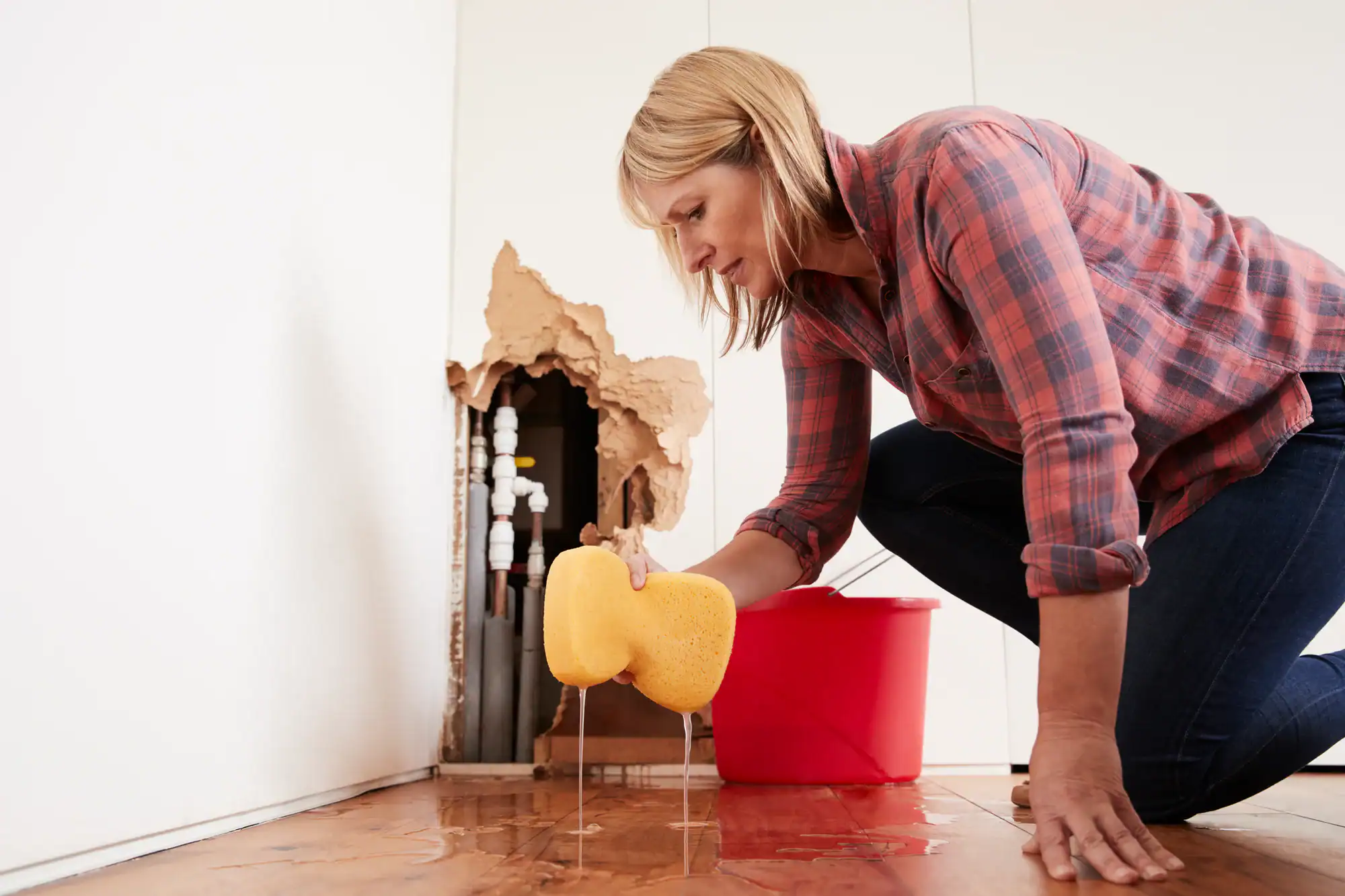
The visible damage is never the whole story. Water moves through plaster, settles under original hardwood floors, and sits inside wall cavities long after the surface looks dry. In Hicksville’s post-war housing stock — most of it built in the 1950s and 60s — that hidden moisture turns into mold, rot, and structural deterioration faster than you’d expect. What looks like a cleanup job can quietly become a $25,000 problem if the drying process stops at what’s visible.
Nassau County’s water table makes this worse. Groundwater rises during heavy rain and pushes through foundation walls and floor cracks in ways that older homes simply aren’t built to resist. That’s not a flaw in your house — it’s a known local condition. But it does mean that a thorough drying and restoration job here requires more than pulling up wet carpet and running a fan.
When the work is done right, you get documented dryness — not just the appearance of it. Moisture meter readings, thermal imaging results, and a clear record of what was found and what was fixed. That documentation matters when you’re talking to your insurance adjuster, and it matters even more when you’re eventually selling a home that’s worth close to $700,000 in today’s market.
We Work in Hicksville — Not Just From a Call Center Somewhere Else
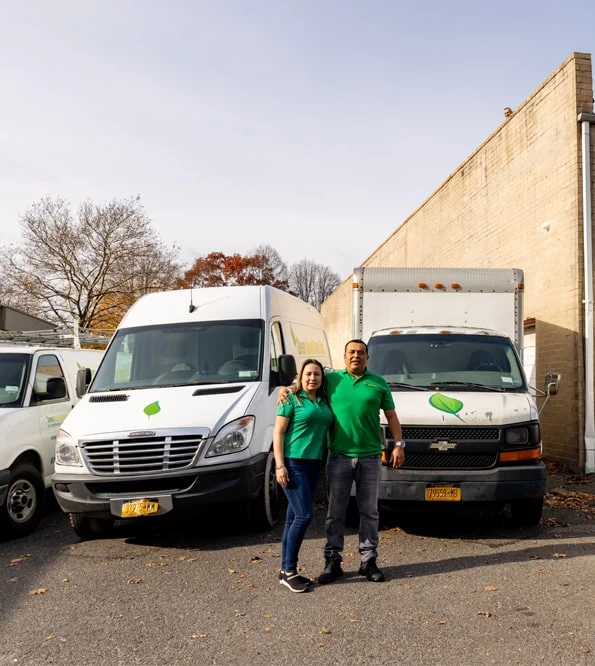
Green Island Group is locally owned and operated. There’s no franchise layer, no corporate dispatch system, and no subcontracted crew showing up without context. When you call, you reach people who are already on Long Island — and the same team that answers is the team that shows up.
We’ve worked in Hicksville homes throughout the community — off Newbridge Road, near the Broadway corridor, in the dense residential blocks surrounding the LIRR station. We know what the Town of Oyster Bay’s building department requires for permitted restoration work, and we know the specific ways that aging infrastructure in this area fails. That’s not something you pick up from a training manual.
Hicksville has one of the highest homeownership rates in Nassau County. Most of the people calling us have real equity on the line. We take that seriously, and we work accordingly.
When you call, we’re not routing you through a scheduling queue. We assess the situation over the phone, give you a clear picture of what’s likely happening, and get a crew moving. Response time matters — mold can begin growing within 24 to 48 hours of water intrusion, and in Hicksville’s humid summers, that window is tight.
When we arrive, the first thing we do is find all of the water — not just what’s visible. We use thermal imaging cameras and professional moisture meters to map the full extent of the damage, including inside walls, under flooring, and in structural framing. In a 1960s Cape Cod or split-level, the path water travels isn’t always obvious, and missing a pocket of moisture is how a restoration job becomes a mold remediation job six weeks later.
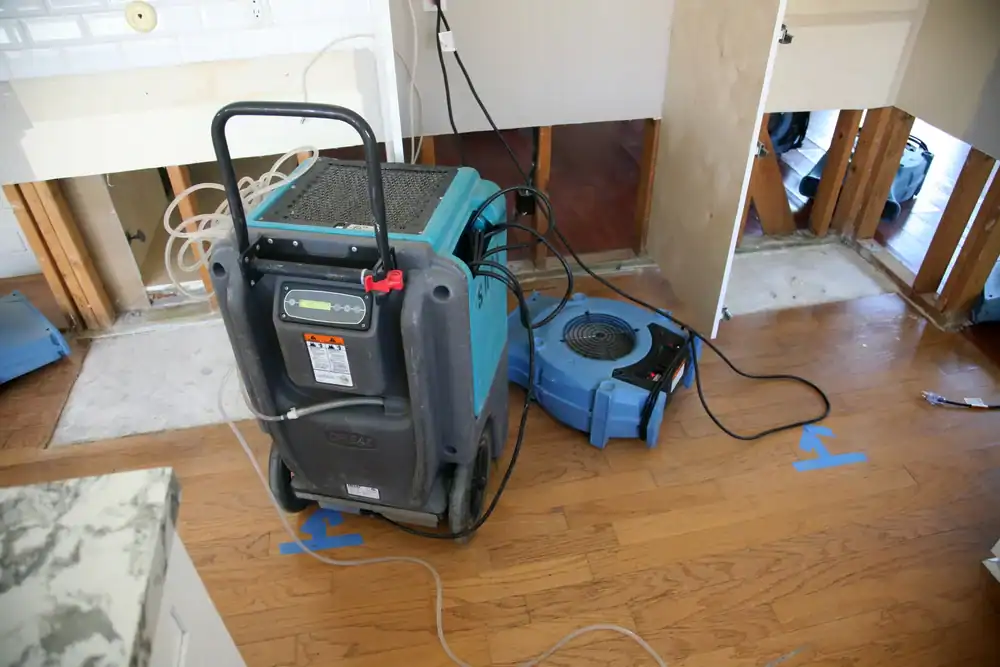
From there, we extract standing water, set up commercial-grade drying equipment, and monitor moisture levels daily until the readings confirm the structure is dry. If the damage requires structural repairs or drywall replacement, we handle the permitting through the Town of Oyster Bay’s Building Department — something a lot of restoration companies either skip or don’t know how to navigate. Throughout the process, we document everything for your insurance claim and communicate directly with your adjuster so you’re not stuck in the middle.
Built for the Conditions Hicksville Homeowners Actually Face
Water damage restoration here covers the full scope — emergency water extraction, structural drying, moisture mapping, mold remediation, and reconstruction. But what that looks like in practice depends heavily on the type of home and the conditions that caused the damage in the first place.
In Hicksville, that usually means one of a few scenarios: a burst pipe in an older home with cast iron or galvanized supply lines, basement flooding from Nassau County’s high water table during heavy rainfall, an appliance failure in a finished basement, or storm-driven water intrusion from a nor’easter or summer system. Each of those situations requires a different approach, and we’ve handled all of them in this community.
On the mold side, New York State’s 2016 Mold Law requires separate licensing for mold assessment and remediation — and the same company legally cannot do both on the same job. Green Island Group holds the required New York State Department of Labor mold remediation license. That’s not a marketing point — it’s a legal requirement that a surprising number of operators in Nassau County don’t meet. If mold is found during the restoration process, we handle remediation in full compliance with state law, and we’re transparent about exactly what was found, where, and what was done about it.
Does Hicksville's high water table make basement flooding more likely in older homes?
Yes, and it’s one of the most common reasons Hicksville homeowners call us. Nassau County sits atop the Long Island aquifer system, and the water table in central Nassau is naturally high. During periods of heavy rainfall — like the flash flooding that hit Long Island in August 2024 — groundwater rises and pushes through foundation walls, floor cracks, and sump pits in ways that older homes are particularly vulnerable to. Most of Hicksville’s residential housing was built in the 1950s and 60s, and those foundations were not designed with today’s drainage expectations in mind.
What that means practically is that basement flooding in Hicksville often isn’t a one-time event. It’s a recurring seasonal issue, especially in spring when snowmelt and rain combine to raise the water table quickly. If your basement has flooded more than once, the underlying moisture conditions in the walls and floor likely need to be addressed — not just the standing water from the most recent event. We assess both the immediate damage and the longer-term moisture profile so you understand the full picture.
How quickly does mold start growing after water damage in my home?
The EPA and IICRC both put the window at 24 to 48 hours under normal conditions. In Hicksville’s warm, humid summers — when basement moisture from the water table combines with heat — that timeline can effectively compress. Mold doesn’t need much: a wet surface, warmth, and a little time. The materials most common in Hicksville’s older homes, including original plaster, wood framing, and drywall, are exactly the kind of organic surfaces mold colonizes quickly.
This is why the speed of the initial response matters so much. Every hour between the water event and the start of professional drying is an hour mold has to establish itself inside your walls. By the time you can see or smell mold, it’s already been growing for a while. A proper restoration job — one that uses moisture meters and thermal imaging to find all the wet areas, not just the obvious ones — gives you the best chance of avoiding remediation entirely. Acting fast is genuinely the most cost-effective thing you can do.
Will my homeowners insurance cover water damage restoration in Hicksville, NY?
It depends on the cause. Standard homeowners insurance in New York typically covers sudden and accidental water damage — a burst pipe, an appliance failure, a roof leak from a storm. What it generally does not cover is gradual damage from a slow leak you didn’t address, or flooding from outside the home (storm surge, overland flooding) unless you carry a separate flood insurance policy through the NFIP or a private carrier.
For Hicksville homeowners, this distinction matters. If your basement flooded because Nassau County’s water table overwhelmed your sump pump during a storm, that may be considered groundwater intrusion — which is often excluded from standard policies. If a pipe burst and caused the flooding, that’s typically covered. The line isn’t always obvious, and insurance adjusters are trained to find exclusions. We document damage from the moment we arrive, communicate directly with your adjuster, and help ensure your claim reflects the full scope of what’s covered. We’ve done this with every major carrier that serves Nassau County homeowners.
Do I need a permit for water damage repairs in Hicksville, and who handles that?
For basic drying and water extraction, no permit is required. But if the restoration work involves structural repairs — replacing drywall, repairing framing, or any reconstruction work — you’ll need a permit filed through the Town of Oyster Bay’s Building Department. Hicksville is an unincorporated hamlet within the Town of Oyster Bay, so there’s no village-level permit authority here. Everything goes through Oyster Bay’s building department, and the requirements and timelines are specific to that municipality.
A lot of homeowners don’t realize this, and some restoration companies either skip the permit process entirely or aren’t familiar with Oyster Bay’s specific procedures. Unpermitted work can create problems when you go to sell your home or file a future insurance claim — inspectors and adjusters do check. We handle the permitting process for any reconstruction work as part of the job, so you’re not left to figure that out on your own while you’re also dealing with a damaged home.
What's the difference between water damage restoration and mold remediation in New York?
Water damage restoration covers the full process of extracting water, drying the structure, and repairing the physical damage — flooring, walls, framing, and anything else affected by the water event. Mold remediation is a separate process that addresses mold growth that has already established itself, and in New York State, it’s governed by its own legal framework.
Under New York’s 2016 Mold Law, mold assessors and mold remediators must hold separate licenses issued by the New York State Department of Labor. Critically, the same company cannot legally perform both the assessment and the remediation on the same job — those must be done by two independent licensed parties. This law exists to prevent conflicts of interest, and it applies to every job in Nassau County, including Hicksville. Green Island Group holds the required New York State mold remediation license. If mold is discovered during a restoration job, we’ll walk you through exactly what the law requires, what we can do, and what needs to be handled by a licensed assessor — no confusion, no shortcuts.
How do I choose a reliable water damage restoration company in Hicksville, NY?
Start with licensing and certification. Any company doing mold remediation in New York needs a New York State Department of Labor mold remediation license — ask to see it. For water damage restoration specifically, IICRC certification (particularly WRT — Water Damage Restoration Technician — and ASD — Applied Structural Drying) means the technicians working in your home have been trained to an industry standard, not just sent out with a wet vac.
Beyond credentials, the local ownership question is worth thinking about. A locally owned company with a Nassau County address and a crew that’s already on Long Island is a different thing entirely from a franchise operation that may subcontract labor and vary in quality. You also want someone who can communicate clearly about the insurance process, because that’s where a lot of homeowners get lost. Ask any company you’re considering how they handle insurance documentation and adjuster communication — the answer will tell you a lot about how they operate.