When Reynolds Channel Comes Inside, You Need Someone Who Knows This Island
Island Park isn’t a coastal community — it’s a literal island, surrounded by water on every side. When flooding hits here, it hits differently. We at Green Island Group provide 24/7 water damage restoration in Island Park, NY, built around the specific conditions that make this place unlike anywhere else in Nassau County.
I needed a professional consultation explanation of procedure for safe removal of Asbestos in my apartment complex. Without having an account yet, I was very impressed with the caring, knowledgeable and generous advice offered by Jessica, and will look forward to doing business in the future. Thank you so much! I feel much more informed about a sometimes scary endeavor. Peace. Nancy Silva Mineola, NY.
Mia Munoz
Used this company to clean up some water flood in my house. They were fast and easy to work with.very professional, Would recommend to anyone!
Nini Valle
Great company, had a flood and they responded quickly and efficiently. Billed my insurance company directly. I highly recommend this company!
joe colapietro, jr
I had pipe freeze in my basement right before a snow storm and they made to within an hour to help start the clean up process. They we by our side throughout the entire process and even helped with the insurance company. They did such a great job with the cleanup, repair, remidiation, I contracted them to perform the repairs and finishes in the basement. They came with enough manpower and material to get the job done. Leo and Jessica were nothing but a pleasure to deal with!!
Cristian Arredondo c
I had some water damage in my home and Green Island was able to take care of my issue quickly and effectively. I am very pleased with the work they did. They responded quickly and were very professional.
Michael M
Outstanding service! From the office to the field crew everyone was friendly, helpful and responsive. I highly recommend Green Island Group.
Water damage in Island Park doesn’t behave like it does in Plainview or Bethpage. You’re sitting on backfilled sand from the 1920s, a few feet above a tidal waterway, in a home that may be 80 or 90 years old. Water doesn’t just come through the walls here — it comes up through the floor, pushed by hydrostatic pressure from a water table that’s naturally just a few feet below grade. Standard extraction alone won’t fix that.
What proper restoration looks like here is thermal imaging that finds moisture inside wall cavities and under subfloors, industrial drying equipment that reaches the places a shop dehumidifier never will, and a crew that understands why a Harbor Isle canal-front property dries differently than a Barnum Island home two blocks from the power station. The work has to match the building, and the building has to match the ground it’s sitting on.
When it’s done right, you’re not just dry — you’re protected against the mold that starts growing within 24 to 48 hours of water intrusion. In Island Park, where that window is critical given the age of most homes and the naturally high water table, getting it right the first time matters more than it does almost anywhere else in Nassau County.
5,000 Nassau County Restorations — and We Know Island Park Specifically
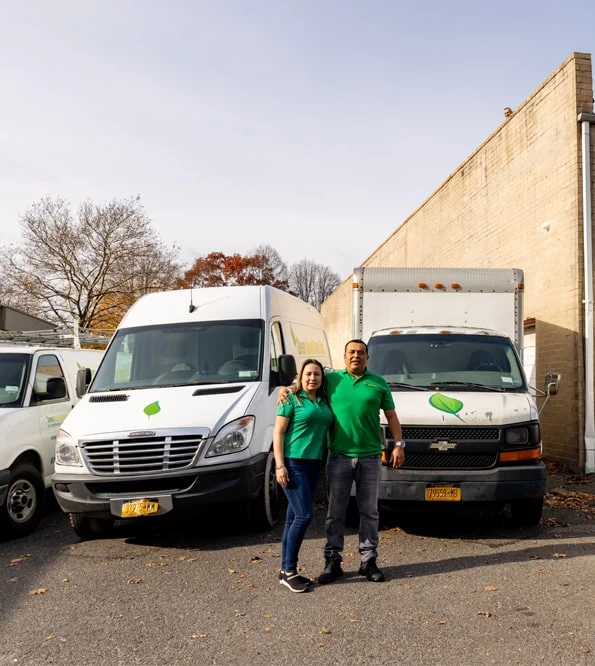
We’re a minority and woman-owned restoration company based on Long Island, and over the years, we’ve restored more than 5,000 Nassau County properties — hundreds of them right here in Island Park, across the Village, Harbor Isle, and Barnum Island. We’re not routing your call through a national call center. We’re a local company with real roots in this county, and the people picking up the phone are the same people who show up.
We understand what Sandy did to Island Park in 2012. We know that USGS recorded water levels at Hog Island Channel at nearly 11 feet above the FEMA 100-year flood elevation during that storm. We know that many homes here were never fully remediated afterward, and that latent moisture issues from that event are still surfacing today. That history isn’t background noise to us — it shapes how we approach every job in Island Park.
We’re IICRC certified and fully licensed under New York State’s Mold Law, which means we can legally perform the full scope of work that Island Park homes typically need after a flood event. A lot of operators in this market can’t say the same.
Water Damage Restoration Service in Island Park, NY
From the First Call to a Dry, Documented, Mold-Clear Home
When you call, we respond 24 hours a day, seven days a week — and because we’re positioned on the South Shore, we’re not fighting traffic from Central Nassau to reach you. That matters in Island Park specifically, where bridge access over Reynolds Channel can tighten up fast during and after a storm. Getting there quickly isn’t just a service promise — it’s a logistical reality we’ve built around.
Once we’re on site, the first step is a full moisture assessment. That means thermal imaging cameras and calibrated moisture meters, not a visual walkthrough. In Island Park’s older housing stock, water travels in ways you can’t see — through subfloors, behind plaster walls, into crawl spaces that haven’t been accessed in decades. We map it all before we touch anything, so nothing gets missed and nothing gets dried out of order.
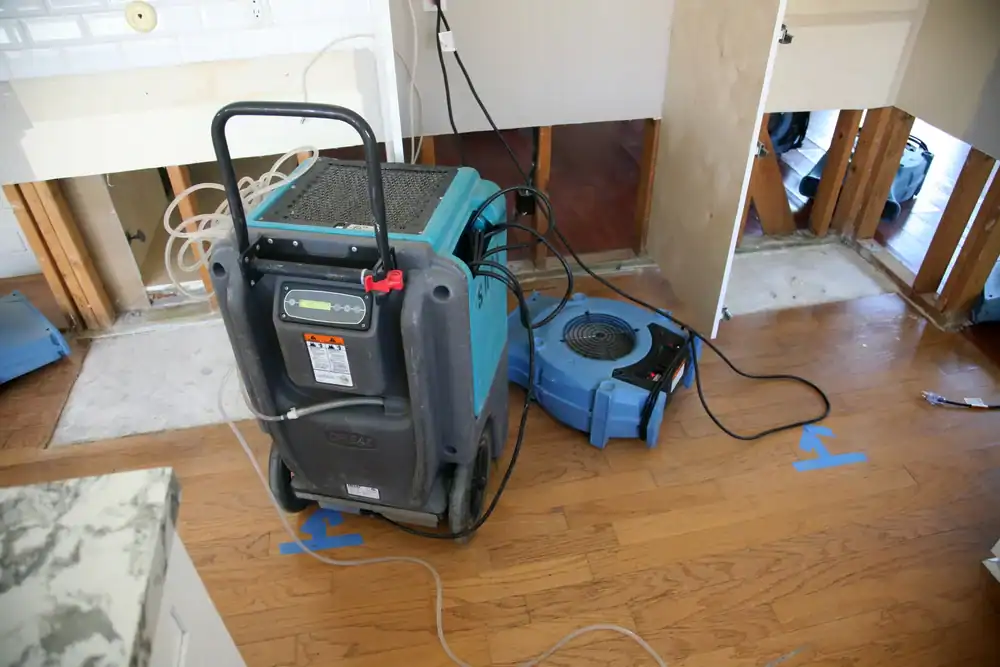
From there, we set up industrial air movers, desiccant dehumidifiers, and antimicrobial treatment across all affected areas. We document everything — photos, moisture readings, equipment logs — because most Island Park homeowners are filing NFIP flood insurance claims, not standard homeowners claims, and NFIP adjusters require specific documentation that many restoration companies don’t know how to produce. We handle that process directly, so you’re not left translating between your insurer and your contractor. When the drying is complete, we do a final clearance check before we close anything up.
Water Restoration Service, Nassau County South Shore
Built for Barrier Island Homes, Not Generic Long Island Properties
The full scope of what we do in Island Park goes well beyond water extraction. It starts with emergency water removal and structural drying, but it includes mold remediation, moisture mapping, antimicrobial treatment, and complete insurance documentation — because in this community, those aren’t add-ons. They’re the baseline.
New York State’s Mold Law requires separate licensing for mold assessment and mold remediation. That law exists for a reason, and in Island Park — where virtually every significant water event carries real mold risk given the age of the housing stock and the naturally high water table — it’s a requirement that eliminates a lot of operators who show up after a storm offering cheap quotes. We hold the required New York State Department of Labor mold contractor licenses, and we carry IICRC certification under the S500 Water Damage Restoration Standard, which is the same framework your insurance adjuster uses to evaluate whether the work was done correctly.
For Island Park homeowners carrying NFIP flood insurance policies — which applies to most properties in FEMA-designated high-risk flood zones here — we handle the claim documentation directly. We know what NFIP adjusters need, how to present the damage record, and how to give you the best shot at a full recovery. If you’re also navigating a standard homeowners policy alongside your flood policy, we coordinate both. The goal is that you recover what you’re owed, not just what’s easiest to document.
How quickly does mold actually start growing after flooding in Island Park?
Mold can begin growing within 24 to 48 hours of water intrusion — that’s the documented standard from the IICRC and EPA. In Island Park specifically, that window is even more critical because of the conditions already present in most homes here. You’re dealing with older construction, naturally high humidity from Reynolds Channel and the surrounding waterways, a water table that sits just a few feet below grade in many areas, and housing stock that in many cases was never fully remediated after Sandy. Those factors don’t cause mold on their own, but they create an environment where mold takes hold faster once moisture is introduced.
The practical takeaway is this: the longer water sits in your walls, subfloor, or crawl space — even water you can’t see — the more likely you are to be looking at a mold remediation job on top of a water damage restoration job. Getting our crew in quickly, with the right moisture detection equipment, is the most effective way to keep a water damage event from turning into something significantly more expensive and disruptive.
Does my flood insurance actually cover water damage restoration costs in Island Park?
It depends on the source of the water and the specific terms of your policy, but for most Island Park homeowners in FEMA-designated flood zones, yes — NFIP flood insurance is designed to cover structural damage and certain contents losses from flooding, and water damage restoration costs are generally a covered expense under a properly documented claim.
The catch is documentation. NFIP claims have specific requirements that differ from standard homeowners insurance claims, and adjusters are looking for a particular format of damage records, moisture readings, and equipment logs. A restoration company that doesn’t understand NFIP protocols can inadvertently undermine your claim by failing to produce what the adjuster needs. We’ve worked with NFIP claims extensively across Nassau County, and we handle the documentation on our end so that your claim file is complete from day one. If you’re carrying both an NFIP policy and a standard homeowners policy — which some Island Park residents do — we coordinate across both to make sure nothing falls through the gap between them.
What makes water damage in Island Park different from other towns in Nassau County?
The short answer is geography. Island Park is a literal island — 0.37 square miles of land surrounded by Reynolds Channel, tidal canals, and waterways, sitting on backfilled sandy terrain that was originally developed as a resort community in the 1920s. The ground beneath most homes here is porous fill material, not native soil, and the water table in many areas is only a few feet below grade. That means water doesn’t just enter homes from above during a storm — it can be pushed up from below by hydrostatic pressure, through floor slabs and crawl spaces, with no obvious visible source.
Add to that a housing stock that’s largely 70 to 100 years old, with aging plumbing, original construction that predates modern waterproofing standards, and in many cases incomplete remediation from Sandy-era flooding that’s still creating latent moisture problems today. The combination of all those factors means water damage restoration in Island Park requires a different level of assessment and a different approach to drying than a job in an inland Nassau County community like Merrick or Wantagh. The equipment is the same — the knowledge of how to deploy it here is not.
How do I know if my Island Park home has hidden moisture damage behind the walls?
You often can’t tell by looking. That’s the honest answer. Water in older Island Park homes — particularly those built between the 1920s and 1950s — migrates through plaster walls, original wood framing, and subflooring in ways that leave no visible sign on the surface until mold has already been growing for weeks or months. By the time you see a stain or smell something musty, you’re already past the easy fix.
The right way to find hidden moisture is thermal imaging combined with calibrated moisture meters. Thermal imaging cameras detect temperature differentials in building materials that indicate trapped moisture — wet framing reads differently than dry framing, even through a finished wall. Moisture meters then confirm the readings at specific points. Together, they give us a complete map of where water traveled and where it’s still sitting, before any demolition or drying begins. For Island Park homes with Sandy-era history, we often find moisture in areas that were patched and painted over years ago but never properly dried. Finding it now, before it becomes a full mold remediation project, is almost always significantly less expensive than finding it later.
How long does the full water damage restoration process take for a typical Island Park home?
For most residential water damage events — a burst pipe, a backed-up storm drain, water intrusion from a nor’easter — the structural drying phase typically takes three to five days with industrial equipment running continuously. That’s the drying phase alone. The full process, from initial assessment through final clearance testing and documentation, generally runs seven to ten days for a contained event in a single area of the home.
For larger flooding events — storm surge from Reynolds Channel, full-basement flooding from a major storm, or a situation where water reached multiple floors — the timeline extends accordingly, and in some cases mold remediation adds additional time if growth is already present. Island Park’s older housing stock can also add complexity: original plaster walls hold moisture differently than modern drywall, and some structural assemblies need more time to dry completely without causing secondary damage. We give you a realistic timeline at the assessment stage, not an optimistic one, because the last thing you need is a job that gets called “done” before the moisture readings actually support it.
Can a water damage restoration company in Island Park help with the insurance claim process?
Yes, and in Island Park specifically, this is one of the more important things to clarify before you hire anyone. Because most properties here sit in FEMA-designated high-risk flood zones, the majority of water damage claims following a storm event go through the National Flood Insurance Program rather than a standard homeowners policy. NFIP claims are processed differently — they have their own adjuster network, their own documentation standards, and their own timeline — and a restoration company that only knows how to work with State Farm or Allstate is going to leave gaps in your claim file that cost you money.
We handle NFIP documentation directly as part of every job in Island Park. That means complete moisture mapping records, equipment placement logs, daily drying readings, and photo documentation formatted the way NFIP adjusters expect to receive it. Nassau County has recorded over $2.3 billion in NFIP payouts since 1978 — this is not an unusual or edge-case process for this community. We’ve been through it enough times to know what a complete claim file looks like, and we build it from day one so that your adjuster has everything they need to process your claim fully and accurately.