When Water Hits a Jackson Heights Pre-War Building, Every Hour Costs You More
Water damage in a Jackson Heights co-op doesn’t wait. We respond fast, dry it right, and handle the insurance process so you’re not left figuring it out alone.
I needed a professional consultation explanation of procedure for safe removal of Asbestos in my apartment complex. Without having an account yet, I was very impressed with the caring, knowledgeable and generous advice offered by Jessica, and will look forward to doing business in the future. Thank you so much! I feel much more informed about a sometimes scary endeavor. Peace. Nancy Silva Mineola, NY.
Mia Munoz
Used this company to clean up some water flood in my house. They were fast and easy to work with.very professional, Would recommend to anyone!
Nini Valle
Great company, had a flood and they responded quickly and efficiently. Billed my insurance company directly. I highly recommend this company!
joe colapietro, jr
I had pipe freeze in my basement right before a snow storm and they made to within an hour to help start the clean up process. They we by our side throughout the entire process and even helped with the insurance company. They did such a great job with the cleanup, repair, remidiation, I contracted them to perform the repairs and finishes in the basement. They came with enough manpower and material to get the job done. Leo and Jessica were nothing but a pleasure to deal with!!
Cristian Arredondo c
I had some water damage in my home and Green Island was able to take care of my issue quickly and effectively. I am very pleased with the work they did. They responded quickly and were very professional.
Michael M
Outstanding service! From the office to the field crew everyone was friendly, helpful and responsive. I highly recommend Green Island Group.
Most people think the damage stops when the water stops. It doesn’t. In Jackson Heights’s older buildings many of them built between 1914 and the 1940s moisture hides inside plaster walls, beneath original hardwood floors, and in the below-grade spaces that run through pre-war construction. If it’s not fully extracted and dried with professional equipment, you’re looking at mold within 24 to 48 hours.
When the job is done right, you get your unit back in livable condition walls dry, floors intact, air quality clean. If you’re in a basement apartment, which a significant portion of Jackson Heights residents are, that also means no residual sewage contamination, no lingering odor, and no hidden moisture that quietly destroys the structure behind your walls over the next few months.
For co-op shareholders and small property owners along Roosevelt Avenue or in the historic district, a complete restoration also means having the documentation you need moisture readings, photos, a written scope of work to move your insurance claim forward without delays. That paperwork matters as much as the drying does.
Water Restoration Companies Serving Jackson Heights
Queens-Based, and We Know Jackson Heights Buildings Inside Out
We’re a Queens-area water restoration company. When something goes wrong in a 1930s co-op off Northern Boulevard or a flooded basement apartment near 74th Street, we’re not learning the neighborhood on the way over. We know what these buildings look like behind the walls. We know how water moves through them. And we know what it takes to restore them correctly.
We’ve worked in Jackson Heights’s dense, multi-unit residential buildings the kind where one pipe failure can affect three floors and four families before anyone realizes what’s happening. We understand the co-op structure, the building management dynamic, and the NYC regulatory environment that comes with working in a designated historic district. That’s not something a national franchise call center can offer you.
What you get with us is a local team that’s accountable, reachable, and genuinely familiar with the conditions that make water damage in Jackson Heights different from anywhere else in Queens.
Water Damage Restoration Service, Jackson Heights NY
From the First Call to a Dry, Restored Jackson Heights Property
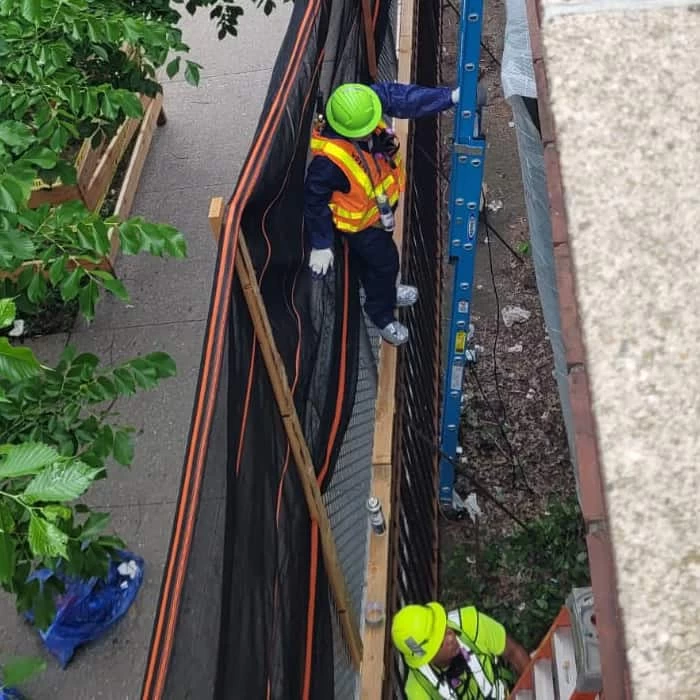
When you call, we respond immediately 24 hours a day, seven days a week. Water damage in a Jackson Heights multi-unit building doesn’t pause for business hours, and neither do we. The first thing we do when we arrive is assess the full scope of what’s happening: where the water came from, where it’s traveled, and what’s been affected. In Jackson Heights’s pre-war buildings, that often means checking adjacent units, below-grade utility spaces, and areas behind plaster walls that look fine on the surface but aren’t.
From there, we extract standing water and begin the structural drying process using professional-grade equipment air movers, dehumidifiers, and thermal imaging to confirm moisture levels in areas you can’t see. This isn’t a one-visit job. We monitor drying progress over multiple days to make sure the structure is genuinely dry, not just surface-dry.
If your building falls within the Jackson Heights Historic District, we factor in NYC Landmarks Preservation Commission requirements before any structural work begins because cutting corners on that process creates bigger problems down the road. Once drying is complete, we handle mold assessment, remediation if needed, and full reconstruction, so you’re not left coordinating three separate contractors to get your property back to where it was.
Water Restoration and Mold Remediation, Jackson Heights
Full Restoration Built for Jackson Heights Properties
Water damage restoration in Jackson Heights isn’t one-size-fits-all. The neighborhood’s housing stock predominantly pre-war co-ops, basement apartments, and multi-unit rental buildings creates specific challenges that require a restoration approach built around how these properties actually work.
Emergency water extraction is where it starts. Whether it’s a burst cast-iron pipe in a building that’s been standing since the 1930s, a sewer backup that pushed sewage through a basement floor drain during a storm, or a water main break that flooded a commercial space on a busy block, we arrive equipped to handle it. Sewage events require biohazard remediation protocols not just extraction and we handle that in full compliance with NYC Department of Health guidelines and NYC Local Law 55 mold remediation requirements.
After extraction comes structural drying, moisture mapping, and mold assessment. If mold is present which is common in Jackson Heights’s older buildings after any significant moisture event we remediate it properly rather than covering it up. From there, we move into reconstruction: walls, flooring, ceilings, whatever the damage affected. For properties in the Jackson Heights Historic District, that includes working with the original materials and architectural details that make these buildings what they are, not replacing them with generic modern finishes. Throughout all of it, we document everything for your insurance claim because getting reimbursed is part of getting your life back to normal.
Who is responsible for water damage in a Jackson Heights co-op building?
This is one of the most common questions we get from Jackson Heights residents, and the answer depends on where the water came from. In a co-op building, responsibility is generally divided between the co-op board and the individual shareholder based on the proprietary lease. Damage that originates from a building system a shared pipe, the roof, a common area typically falls on the co-op board and the building’s master insurance policy. Damage that originates within your unit, or that you caused, typically falls on you and your individual HO-6 policy.
Where it gets complicated is when water travels from one unit into another which happens constantly in Jackson Heights’s older buildings. In those cases, you may be dealing with two insurance claims, two sets of adjusters, and a co-op board that has its own position on the matter. That’s exactly why thorough documentation from the moment we arrive matters so much. We photograph everything, record moisture readings, and produce a written scope of work that clearly identifies the source and path of the damage giving you what you need to navigate the claim without ambiguity.
How quickly does mold start growing after water damage in a Jackson Heights apartment?
In most cases, mold can begin developing within 24 to 48 hours of a water event and in Jackson Heights’s pre-war buildings, that timeline can move even faster. The combination of aging plaster walls, original wood framing, and limited ventilation in below-grade spaces creates conditions where moisture gets trapped and mold establishes quickly. By the time you can see mold on a surface, it’s typically already been growing behind it for days.
This is why the drying phase of restoration is just as important as the extraction phase. Pulling the standing water out of a room doesn’t dry the wall cavity behind it. We use thermal imaging cameras and professional moisture meters to find hidden moisture that standard visual inspection misses entirely. If we confirm mold is present, remediation follows NYC Local Law 55 protocols which apply to residential buildings throughout the five boroughs, including every building in Jackson Heights. Skipping that step, or doing a surface-level treatment and calling it done, creates a health hazard and a liability that will come back to you later.
My Jackson Heights basement apartment flooded during a storm is that covered by insurance?
It depends on what caused the flooding, and this distinction matters a lot. If your basement flooded because a building pipe failed or a building system malfunctioned, that’s typically covered under your renters insurance or the building’s policy as a water damage event. If your basement flooded because stormwater backed up through the floor drain which is exactly what happened to thousands of basement apartments in Jackson Heights during Hurricane Ida in September 2021 that’s classified as flood damage or sewer backup, and it requires separate coverage that most standard renters policies don’t include.
Jackson Heights’s combined sewer system, which handles both stormwater and sewage in the same pipes, is particularly vulnerable to backup during heavy rainfall events. When the system gets overwhelmed, the water has nowhere to go but back up through the lowest drain in the building which is almost always a basement floor drain. If you’re in a basement apartment near Roosevelt Avenue or anywhere in the blocks that saw significant flood heights during Ida, this is a real and recurring risk. We’d recommend reviewing your policy specifically for sewer backup coverage before the next major storm, not after.
How long does the full water damage restoration process take in Jackson Heights?
The honest answer is that it varies depending on how much water was involved, how long it sat before extraction began, and what materials were affected. For a contained event a single appliance leak caught within a few hours structural drying alone can take three to five days, with reconstruction following shortly after. For a more significant event, like a multi-unit water cascade in a Jackson Heights pre-war building or a basement flooding event that involved sewage contamination, the full process from extraction through reconstruction can take two to four weeks.
In Jackson Heights specifically, the timeline can also be affected by the permitting environment. If the damage is significant enough to require structural repairs in a building that falls within the Jackson Heights Historic District, we may need to factor in NYC Department of Buildings permits and, in some cases, NYC Landmarks Preservation Commission review before reconstruction work begins. We handle that process on your behalf and keep you informed at every step. The goal is always to move as fast as the work allows not faster, because cutting the drying phase short is the most common reason mold becomes a problem after restoration.
What should I do immediately after discovering water damage in my Jackson Heights home?
The first thing is to stop the source if you safely can shut off the water supply to the affected area, or contact your building superintendent immediately if it’s a building system issue. In Jackson Heights’s co-op buildings, the super often has access to shutoffs that individual shareholders don’t, so that call matters. Do not wait to see if it dries on its own. Water spreads faster than it looks like it’s spreading, especially in older buildings where it can travel through wall cavities and along original wood framing across multiple floors.
Once the source is controlled, document everything before any cleanup begins. Take photos and video of every affected area walls, floors, ceilings, belongings, and any visible damage. This documentation is the foundation of your insurance claim, and the more thorough it is, the smoother the process tends to go. Then call a professional restoration company. Moving furniture and running fans on your own can help in the very short term, but it won’t dry a wall cavity, and it won’t tell you whether there’s moisture behind the plaster that’s already creating conditions for mold. Professional equipment and professional moisture readings are the only way to know the job is actually done.
Does Green Island Group work directly with insurance companies on water damage claims?
Yes and in Jackson Heights, that matters more than it might in a simpler housing market. Between co-op shareholders navigating proprietary lease disputes, renters dealing with building management, and small business owners on Roosevelt Avenue or 74th Street trying to reopen as fast as possible, the insurance process here tends to be more layered than a standard homeowner claim. We produce the documentation that adjusters need: detailed photos, moisture readings at multiple points in the structure, a written scope of work that clearly identifies what was damaged, what caused it, and what it takes to restore it.
We communicate directly with your adjuster when needed and make sure the claim reflects the actual scope of the damage not a minimized version of it. That’s not about inflating anything. It’s about making sure the documentation is complete and accurate so you’re not underpaid on a legitimate claim. Jackson Heights residents have dealt with real flooding events Ida being the most significant in recent memory and the last thing you need after that kind of event is an insurance process that drags on because the paperwork wasn’t done right the first time.