When Peconic Bay Comes Inside, You Need a Fast Answer
Water damage on the North Fork moves fast and so does mold. We respond 24/7 to water damage restoration emergencies in Laurel, NY, so you’re not left waiting while the clock runs out.
I needed a professional consultation explanation of procedure for safe removal of Asbestos in my apartment complex. Without having an account yet, I was very impressed with the caring, knowledgeable and generous advice offered by Jessica, and will look forward to doing business in the future. Thank you so much! I feel much more informed about a sometimes scary endeavor. Peace. Nancy Silva Mineola, NY.
Mia Munoz
Used this company to clean up some water flood in my house. They were fast and easy to work with.very professional, Would recommend to anyone!
Nini Valle
Great company, had a flood and they responded quickly and efficiently. Billed my insurance company directly. I highly recommend this company!
joe colapietro, jr
I had pipe freeze in my basement right before a snow storm and they made to within an hour to help start the clean up process. They we by our side throughout the entire process and even helped with the insurance company. They did such a great job with the cleanup, repair, remidiation, I contracted them to perform the repairs and finishes in the basement. They came with enough manpower and material to get the job done. Leo and Jessica were nothing but a pleasure to deal with!!
Cristian Arredondo c
I had some water damage in my home and Green Island was able to take care of my issue quickly and effectively. I am very pleased with the work they did. They responded quickly and were very professional.
Michael M
Outstanding service! From the office to the field crew everyone was friendly, helpful and responsive. I highly recommend Green Island Group.
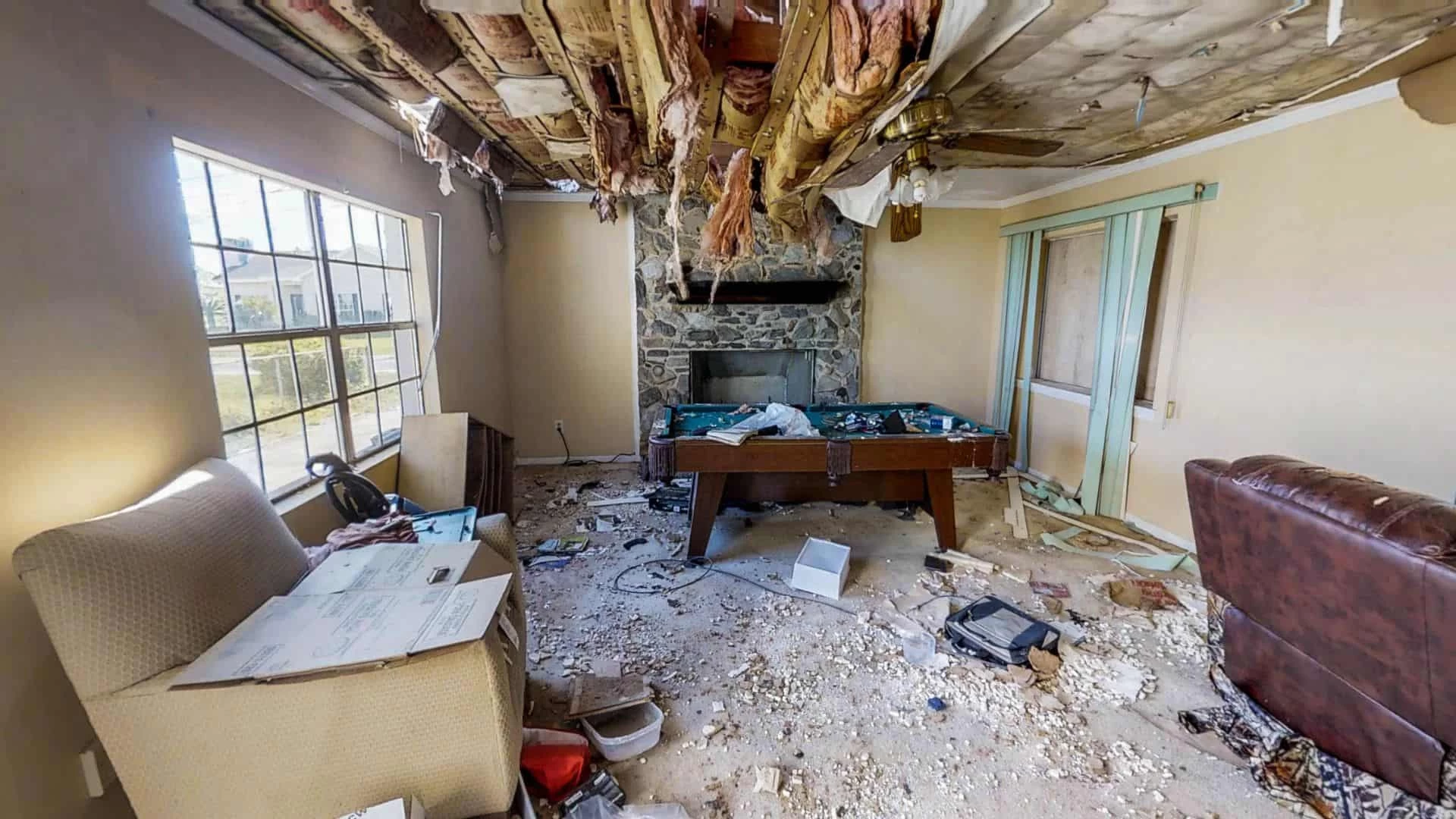
Most homeowners think water damage is over when the floor feels dry. It’s not. Moisture hides in wall cavities, soaks into subfloor systems, and settles into insulation long after the surface looks fine and in Laurel’s coastal climate, where humidity off Peconic Bay stays elevated for most of the year, that hidden moisture doesn’t dry on its own. It becomes mold. And mold in a North Fork home doesn’t just affect your health it becomes a disclosure issue at resale, a liability in a rental, and a problem that compounds every week you wait.
When water damage restoration is done right, you get your home back not a version of it that’s waiting to fail again. That means dry framing, tested moisture levels, restored drywall and flooring, and documentation your insurance company can actually use. For Laurel homeowners protecting properties worth well over $900,000, that documentation matters. It’s the difference between a clean claim and a dispute.
If your home is a seasonal property near Laurel Lake or along Peconic Bay Boulevard, the stakes are even higher. Unoccupied homes are where water damage does its worst work slow leaks and failed sump pumps left unchecked for weeks can turn a manageable repair into a full gut job. Getting ahead of it, fast, is the only play that makes sense.
North Fork Expertise Without the National Franchise Runaround
We’re a Long Island-based environmental and property restoration company not a national franchise, not a call center routing you to whoever’s available. When you call, you reach a real team that knows Laurel, knows the roads, and can actually get to you on the North Fork.
What sets us apart in a market full of water-only operators is the full scope of what we handle: water damage, mold remediation, asbestos abatement, lead testing, and air quality assessment all under one roof. That matters in Laurel, where a water event in an older structure can quickly reveal complications that a water-only company can’t legally or safely touch. No subcontractors, no handoffs, no waiting on a second crew to schedule.
Laurel sits across both the Town of Southold and Town of Riverhead and we understand how to navigate that dual-municipality permitting reality without slowing your project down.
From the First Call to a Fully Dry, Documented Home
The first step is getting someone to your property fast. Whether you’re a year-round resident on Route 25 or a seasonal homeowner who just got a call from a neighbor about your Peconic Bay cottage, the process starts the same way emergency response, on-site assessment, and containment before the damage spreads further.
Once on-site, our team uses moisture meters and thermal imaging to find water that isn’t visible to the naked eye. This step is especially important in Laurel homes, where coastal humidity and a shallow water table mean moisture migrates into structural cavities in ways that a basic visual inspection will miss entirely. You’ll know exactly where the damage is not just where it looks like it might be.
From there, commercial-grade extraction and drying equipment goes to work. Industrial dehumidifiers, air movers, and targeted drying systems pull moisture out of the structure systematically, with readings tracked over time to confirm the building is actually dry not just surface-dry. After drying is complete, we handle the restoration work: drywall, flooring, and whatever else needs to be rebuilt. Everything is documented throughout for your insurance claim. If permits are required through the Town of Southold or Town of Riverhead depending on your property’s location, that’s handled as part of the process not an afterthought.
Everything the Job Needs Without Calling Three Different Companies
Water damage restoration with us covers the full scope of what a Laurel home actually needs after a water event. That starts with emergency water extraction and structural drying, but it doesn’t stop there. Mold inspection and remediation, air quality testing, and where older structures are involved asbestos and lead assessment are all available through our team. In a hamlet where some properties include older outbuildings, cottages, or additions that predate the 1990s primary housing stock, that matters.
For waterfront and near-water properties along Peconic Bay Boulevard or around Laurel Lake, we include a thorough assessment of groundwater intrusion risk and subfloor moisture the two most common sources of long-term structural damage in low-lying coastal areas. Thermal imaging is standard, not an add-on, because in this environment you can’t afford to guess.
Every job includes full documentation for insurance purposes. We work directly with insurance carriers, which means you’re not left translating damage reports for your adjuster or fighting for coverage on your own. In New York State, you have the right to choose your own restoration company regardless of who your insurer suggests and having a team that knows how to document and present a claim properly can make a significant difference in how that process goes.
How quickly can mold develop after water damage in a Laurel home?
Mold can begin colonizing within 24 to 48 hours of water exposure that’s not an exaggeration, it’s the standard documented in IICRC S500 restoration guidelines. In Laurel’s coastal environment, where humidity off Peconic Bay stays elevated through much of the year, conditions for mold growth are already favorable before water damage even enters the picture. That compressed timeline is why emergency response speed matters so much here.
For seasonal or part-time properties and there are a lot of them in Laurel the risk is even more acute. A pipe that bursts in a vacant cottage in January may not be discovered for days or weeks. By the time someone shows up, you’re not dealing with water damage anymore. You’re dealing with a mold remediation project. Getting a restoration team on-site as fast as possible, even if you’re calling from off the North Fork, is the single most important decision you can make in the first hour.
Does homeowners insurance cover water damage restoration in Laurel, NY?
It depends on the source of the water, and the distinction matters more than most people realize. Standard homeowners insurance typically covers sudden and accidental water damage a burst pipe, a washing machine supply line failure, an appliance leak. It generally does not cover flooding from an outside water source, which is classified as flood damage and requires a separate flood insurance policy through FEMA’s National Flood Insurance Program.
In Laurel, this distinction is critical. Properties near Peconic Bay, along the waterfront corridor, or in low-lying areas near Laurel Lake may sit in designated FEMA flood zones where flood insurance is either required by your lender or strongly advisable. If a nor’easter pushes water into your home from the bay side, that’s a flood claim not a homeowners claim. Knowing which policy applies before something happens is worth a conversation with your insurance agent. When you do file a claim, having a restoration company that documents damage thoroughly and communicates directly with your adjuster can make a meaningful difference in what you recover.
What's the difference between water damage restoration and water damage repair?
Water damage repair typically refers to fixing what’s visibly broken replacing a section of drywall, pulling up wet flooring, patching a damaged ceiling. Restoration goes further. It means returning the entire structure to its pre-loss condition, which requires finding all the moisture first, drying the building to documented standards, addressing any mold or air quality concerns, and then completing the physical repairs.
The reason this distinction matters is that repair without proper restoration leaves hidden moisture in place. In a coastal environment like Laurel where salt air, high humidity, and proximity to water bodies create conditions that accelerate mold growth doing the repair without the restoration is essentially setting a timer. You’ll fix what you can see, and the problem you can’t see will resurface in six to eight weeks as mold growth behind the wall or soft spots in the subfloor. Full restoration, done to IICRC standards with moisture readings to confirm dryness, is the only approach that actually closes the loop.
How do I handle water damage at my Laurel vacation or seasonal property when I'm not there?
This is one of the most common situations on the North Fork, and the answer is straightforward: call a restoration company that can respond and assess without you needing to be present. We can deploy to your Laurel property, document the damage with photos and moisture readings, begin mitigation immediately, and keep you informed throughout all before you’ve had a chance to get back to the North Fork yourself.
The key is acting fast even from a distance. If a neighbor calls you, your property manager sends an alert, or a smart home sensor triggers an alarm, don’t wait until you can physically get there to make the call. The 24 to 48 hour mold window doesn’t pause while you arrange travel. A restoration team that can get to your property on Route 25 quickly and start the process immediately is worth far more than waiting for a convenient time. Make sure whoever you call can actually reach Laurel not all companies operating on Long Island have genuine North Fork coverage.
What causes most water damage in Laurel, NY homes?
The majority of water damage in Laurel comes from one of four sources: plumbing failures, storm-related flooding, groundwater intrusion, and appliance leaks. Plumbing failures burst pipes, failed supply lines, aging water heaters account for the largest share nationally, and in Laurel’s predominantly 1990s housing stock, those systems are now 30 or more years old. Supply lines and water heaters in that age range are approaching or past their expected service life, especially in a coastal environment where salt air accelerates corrosion.
Storm-related flooding is the other major driver here specifically. Nor’easters hitting the North Fork have produced documented coastal flooding along Peconic Bay with water levels two feet above ground in vulnerable areas. Laurel’s position between the bay and the Long Island Sound, combined with a shallow water table documented by local civic organizations, means groundwater intrusion in basements is a recurring issue during wet seasons not just after major storms. Knowing which source caused your damage matters for both the restoration approach and the insurance claim.
Does water damage restoration in Laurel require permits from the town?
It can, and in Laurel the answer is more complicated than in most Long Island towns because the hamlet spans two municipalities the Town of Southold and the Town of Riverhead. Depending on exactly where your property sits, restoration work that involves structural repairs, drywall replacement, or any work touching electrical or plumbing systems may require a permit from either Southold or Riverhead. Working with a restoration company that understands this dual-jurisdiction reality from the start prevents delays that can stall a job mid-project.
For properties near Peconic Bay or in designated coastal zones, the Town of Southold also has specific regulations around work near wetlands and waterfront areas regulations that apply to restoration work on bay-adjacent properties and aren’t something an out-of-area contractor is likely to flag on their own. Our familiarity with Long Island’s municipal landscape, including the North Fork’s specific permitting environment, means these details get handled as part of the job not discovered after the fact when a project is already underway.