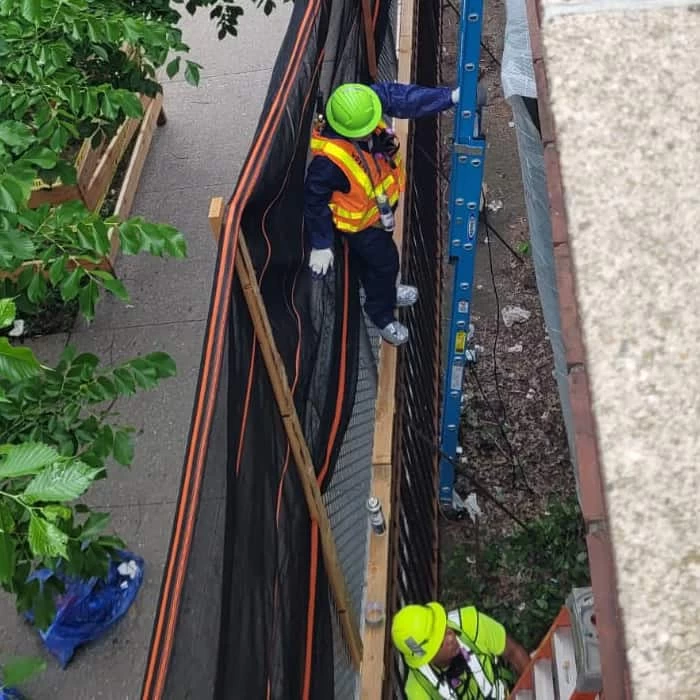
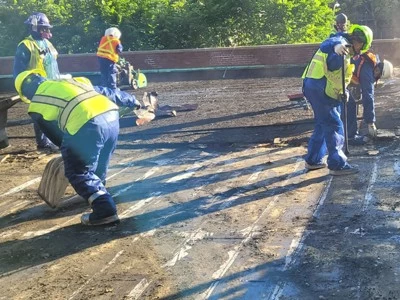
In a 17-story building, water doesn’t stay where it started. We respond fast to water damage restoration calls in Lefrak City before one unit’s problem becomes your whole floor’s problem.
I needed a professional consultation explanation of procedure for safe removal of Asbestos in my apartment complex. Without having an account yet, I was very impressed with the caring, knowledgeable and generous advice offered by Jessica, and will look forward to doing business in the future. Thank you so much! I feel much more informed about a sometimes scary endeavor. Peace. Nancy Silva Mineola, NY.
Mia Munoz
Used this company to clean up some water flood in my house. They were fast and easy to work with.very professional, Would recommend to anyone!
Nini Valle
Great company, had a flood and they responded quickly and efficiently. Billed my insurance company directly. I highly recommend this company!
joe colapietro, jr
I had pipe freeze in my basement right before a snow storm and they made to within an hour to help start the clean up process. They we by our side throughout the entire process and even helped with the insurance company. They did such a great job with the cleanup, repair, remidiation, I contracted them to perform the repairs and finishes in the basement. They came with enough manpower and material to get the job done. Leo and Jessica were nothing but a pleasure to deal with!!
Cristian Arredondo c
I had some water damage in my home and Green Island was able to take care of my issue quickly and effectively. I am very pleased with the work they did. They responded quickly and were very professional.
Michael M
Outstanding service! From the office to the field crew everyone was friendly, helpful and responsive. I highly recommend Green Island Group.
The obvious damage soaked floors, wet walls, a ruined ceiling is only part of what you’re dealing with. What you can’t see is what causes the real long-term problems. Moisture that gets left behind inside wall cavities and under flooring becomes mold within 24 to 48 hours. In Lefrak City’s older towers, where building materials date back to the 1960s, that moisture holds longer than it would in newer construction. It doesn’t dry itself out. It sits, and it spreads.
When water damage restoration is done correctly, you’re not just getting a dry floor. You’re getting a confirmed dry-out one backed by moisture readings, not just a visual check. That matters especially in Lefrak City, where the buildings were constructed on former marshland along what was once Horse Brook. The ground beneath this complex drains differently than higher-elevation parts of Queens, and that affects how moisture behaves inside the structure during and after a flood event.
What you’re left with after the right restoration job is a unit that’s genuinely safe to live in no hidden mold starting behind the drywall, no lingering odor, no insurance claim that falls apart because the documentation wasn’t done properly. That’s the outcome worth paying for.
We’re a Queens-based water damage restoration company. We’re not a national franchise routing your call through a dispatch center in another state. When you call us, you’re reaching a local team that actually knows the difference between a water damage job in a Lefrak City high-rise and one in a single-family home in Bayside.
That difference matters more than most people realize. In Lefrak City 20 towers, over 4,600 apartments, and a building stock that’s been here since the 1960s water damage doesn’t behave the way it does in a two-story house. It travels vertically. It affects multiple units. It requires coordination with building management, proper documentation for renters’ insurance, and a team that understands how large residential complexes actually operate.
We’ve seen what happens when water intrusion in this part of Queens doesn’t get addressed the right way. The LeFrak City Library branch still hasn’t fully recovered from what Hurricane Ida did in September 2021. We take that seriously. Every job we do here gets treated like it matters because for the people living in these towers, it does.
When you call, we pick up. Day or night. The first thing we do is ask the right questions what happened, which floor you’re on, whether neighboring units are affected so we arrive with the right equipment for the situation, not a generic setup.
Once we’re on-site, we assess the full scope of the damage using moisture meters and thermal imaging, not just a visual walkthrough. In Lefrak City’s towers, water often travels further than it looks. A pipe failure on a higher floor can push water through wall cavities and ceiling assemblies before it ever shows up as visible damage in the unit below. We map where the moisture actually is before we start drying anything.
From there, we set up industrial-grade drying equipment dehumidifiers, air movers, and where needed, structural drying panels for walls and floors. We monitor the dry-out daily with readings until we hit the target moisture levels. In New York State, any mold remediation work over 10 square feet requires a licensed assessor and remediator under New York State Labor Law. If we find mold, we handle the process in full compliance assessment, remediation plan, and licensed execution. We also provide complete written documentation throughout, which your renters’ insurance adjuster will need to process your claim.
Most water damage restoration companies build their process around single-family homes. That’s not the reality for most Lefrak City residents. You’re in a rental apartment inside a building managed by a property company, potentially sharing walls with neighbors who are also affected, and navigating a claims process that involves your renters’ insurance, the building’s property coverage, and possibly the LeFrak Organization’s own maintenance protocols.
Our water damage restoration service is built to handle exactly that environment. We extract standing water, dry structural materials to confirmed moisture levels, assess for mold, and remediate it if found all under proper New York State licensing. We document every step with photos, moisture readings, and written reports that hold up with insurance adjusters. If you need help understanding what your renters’ policy covers, we walk you through it. We’ve done this in Lefrak City before, and we know how to communicate with building management teams professionally so the process doesn’t stall.
For Lefrak City residents dealing with storm-related flooding the kind that hit this community hard when Ida came through in 2021 we also handle water intrusion from below-grade sources, including sump failure, drain backup, and foundation seepage. The area’s low elevation and former wetland substrate make those scenarios more common here than in other parts of Queens. We know that, and we come prepared for it.
Who is responsible for water damage in my Lefrak City apartment?
This is one of the most common questions we hear from renters in Lefrak City, and the honest answer is: it depends on the source. If the damage came from a building system a burst pipe in the wall, a roof leak, a failure in the central plumbing that’s generally the landlord’s responsibility to repair. If it came from something inside your unit, like an overflowing washing machine or a dishwasher leak, your renters’ insurance typically comes into play for your personal property and any damage you caused to neighboring units.
What gets complicated in a complex like Lefrak City is the overlap. Water from a higher floor can damage your unit through no fault of yours or the building’s it’s a neighbor’s appliance that failed. In those cases, multiple insurance policies may be involved. The most important thing you can do immediately is document everything photos, written notice to building management, and a call to a restoration company that can provide an independent damage assessment. That documentation is what protects you when the back-and-forth between insurers starts.
How quickly does mold start growing after water damage in my apartment?
Mold can begin developing within 24 to 48 hours of a water event, depending on temperature and humidity levels. In Queens during the summer months when indoor humidity in older buildings can stay elevated for days that window is even tighter. Lefrak City’s towers were built in the 1960s, and the wall materials and insulation in buildings of that era tend to hold moisture longer than modern construction. That’s not a criticism of the buildings it’s just a physical reality that affects how quickly you need to act.
The risk isn’t just cosmetic. Mold that gets established inside wall cavities or under flooring can affect air quality for everyone in the unit, particularly children and elderly residents. Under New York State law, any mold remediation project covering more than 10 square feet requires a licensed mold assessor to evaluate the situation and prepare a remediation plan before work begins. That’s a protection for you. It means the work gets done to a documented standard, not just sprayed and painted over.
What does water damage restoration actually include from start to finish?
A complete water damage restoration job covers several distinct phases, and understanding them helps you know whether a company is actually finishing the job or just stopping halfway. The first phase is water extraction removing standing water using truck-mounted or portable extraction equipment. That’s what most people picture when they think of water damage work, but it’s only the beginning.
After extraction comes structural drying, which is the phase most companies rush or skip. This involves placing industrial dehumidifiers and air movers throughout the affected space and monitoring moisture levels in walls, floors, and ceilings daily until they reach acceptable levels. In a Lefrak City apartment, where moisture can travel through shared walls and floor assemblies into neighboring units, this monitoring step is especially important. Once the structure is confirmed dry, any affected materials drywall, flooring, insulation that can’t be dried in place get removed and replaced. If mold is found during any phase, remediation follows under New York State’s licensed contractor requirements. The final step is reconstruction: putting the space back together so it’s livable again.
Does renters' insurance cover water damage in a Lefrak City apartment?
Renters’ insurance typically covers your personal belongings and, in some cases, additional living expenses if your unit becomes uninhabitable. What it generally does not cover is the structural repair of the apartment itself that falls under the building’s property insurance. The line between the two can get blurry fast, especially when the damage source is disputed or when multiple units are involved.
The most important thing to know is that renters’ insurance coverage for water damage usually depends on the cause. Sudden, accidental events a pipe bursting, a washing machine hose failing are typically covered. Gradual damage from a slow leak that went unreported is often not. That distinction matters in Lefrak City’s older building stock, where slow leaks from aging plumbing can go unnoticed for weeks before they become visible. When you call us, we document the damage in a way that clearly establishes the cause and timeline, which is exactly what your adjuster needs to process a claim without unnecessary delays or denials.
Can water damage in one Lefrak City apartment affect the units below it?
Yes and it happens more often than most residents in Lefrak City realize. In a 17-story tower, water follows gravity through every available pathway: floor assemblies, pipe chases, wall cavities, and electrical conduit runs. A significant water event on one floor can affect two, three, or even four floors below it before anyone in those lower units sees a single drop. By the time ceiling stains appear in the unit below yours, the water has often already been sitting inside the structure for hours.
This is one of the reasons a thorough moisture assessment matters so much in buildings like the ones here. A visual inspection alone won’t find water that’s already migrated into a shared floor-ceiling assembly. We use moisture meters and thermal imaging to trace where the water actually went not just where it’s visible. If neighboring units are affected, we coordinate the scope of work across all impacted areas and communicate with building management to make sure nothing gets missed and every affected resident has documentation for their own insurance purposes.
How does Lefrak City's location affect water damage risk?
Lefrak City’s position along the Long Island Expressway corridor isn’t just a commuter detail it’s a geographic one that affects flood risk in a real way. The entire complex was built on former marshland, specifically atop Horse Brook, a stream that once ran through this part of Elmhurst before the LIE was constructed. That history means the ground here retains water differently than higher-elevation neighborhoods in Queens. During heavy rain events, drainage in this area can be slower and more problematic than the infrastructure was designed to handle.
That became very clear during Hurricane Ida in September 2021, when record rainfall overwhelmed the city’s sewer system and caused widespread flooding throughout this corridor. The LeFrak City Library branch was devastated and remained closed for years afterward. For residents here, that means storm-related water intrusion is a real and recurring risk, not a once-in-a-generation event. We respond to those calls with the same urgency as any other water damage emergency, because we understand the conditions this community actually lives with.