Long Beach’s barrier island location means water damage hits harder and spreads faster than almost anywhere else in Nassau County. We respond 24/7 with licensed crews who know this city — and know what’s at stake when moisture gets behind your walls.
I needed a professional consultation explanation of procedure for safe removal of Asbestos in my apartment complex. Without having an account yet, I was very impressed with the caring, knowledgeable and generous advice offered by Jessica, and will look forward to doing business in the future. Thank you so much! I feel much more informed about a sometimes scary endeavor. Peace. Nancy Silva Mineola, NY.
Mia Munoz
Used this company to clean up some water flood in my house. They were fast and easy to work with.very professional, Would recommend to anyone!
Nini Valle
Great company, had a flood and they responded quickly and efficiently. Billed my insurance company directly. I highly recommend this company!
joe colapietro, jr
I had pipe freeze in my basement right before a snow storm and they made to within an hour to help start the clean up process. They we by our side throughout the entire process and even helped with the insurance company. They did such a great job with the cleanup, repair, remidiation, I contracted them to perform the repairs and finishes in the basement. They came with enough manpower and material to get the job done. Leo and Jessica were nothing but a pleasure to deal with!!
Cristian Arredondo c
I had some water damage in my home and Green Island was able to take care of my issue quickly and effectively. I am very pleased with the work they did. They responded quickly and were very professional.
Michael M
Outstanding service! From the office to the field crew everyone was friendly, helpful and responsive. I highly recommend Green Island Group.
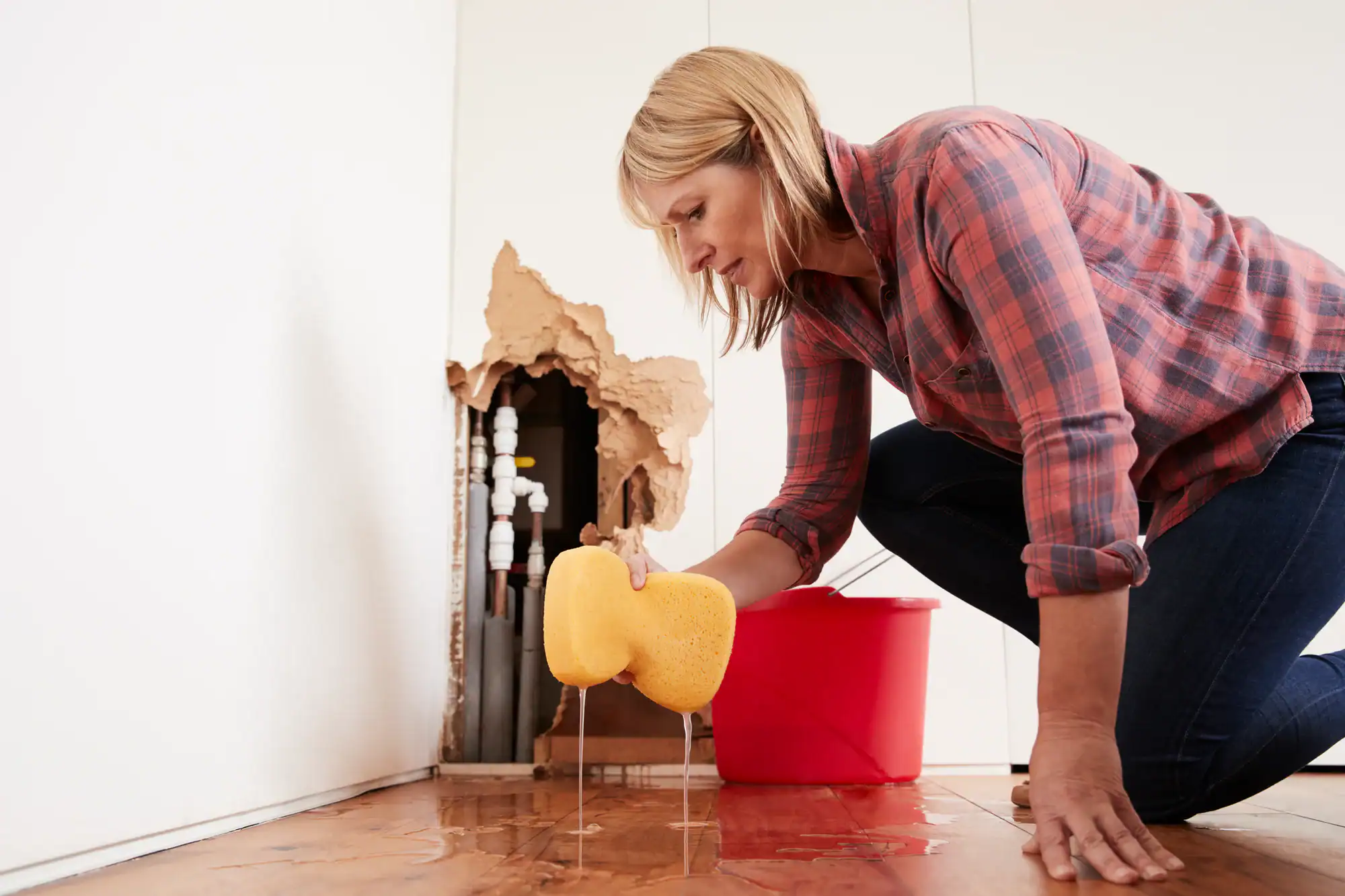
Water damage doesn’t stay where you can see it. It moves into wall cavities, under flooring, through shared ceilings in condo buildings — and in Long Beach’s coastal humidity, it doesn’t need much time to become a mold problem. The standard window before mold begins to grow is 24 to 48 hours. On a humid August afternoon a few blocks from the Atlantic, that window can close faster than it would in any inland town.
What you’re really paying for when you call us isn’t just equipment — it’s the certainty that the job was done completely. That means moisture readings confirming dry structural materials, not just surfaces that look dry. It means thermal imaging to find what your eyes can’t. It means documentation that holds up when your insurance adjuster or NFIP claims processor asks for it.
For homeowners in the Canals, the West End, or the boardwalk corridor, the stakes are even higher. These properties carry some of the most significant flood exposure in Nassau County, and many of them have already been through this once before. A restoration that leaves moisture behind isn’t a restoration — it’s a delayed problem. You deserve to know the job is actually finished.
Local Knowledge That Franchise Companies Can't Buy
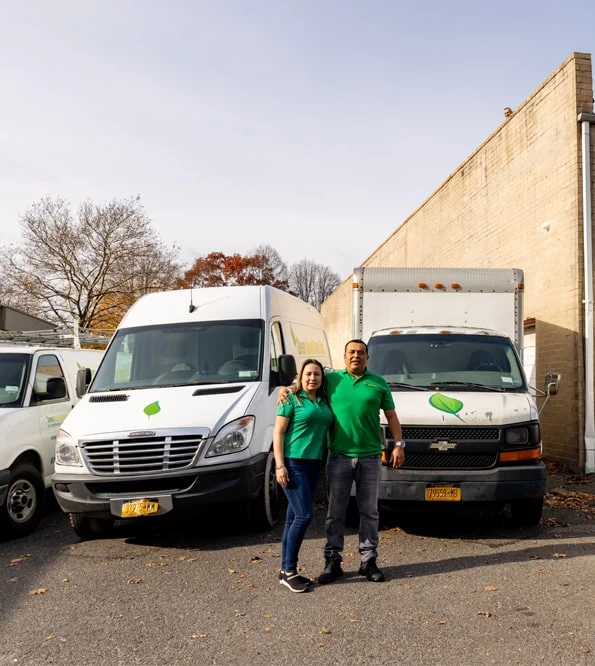
We are a locally operated water damage restoration company serving Long Beach and the surrounding Nassau County communities. There’s no national call center routing your emergency to whoever’s available. When you call, you’re reaching a team that has worked in Long Beach — in West End bungalows with crawl spaces two feet above the water table, in canal-side homes that took on water from two directions at once, in boardwalk condominiums where one unit’s pipe failure became three units’ problem.
Long Beach is one of the only communities on Long Island to participate in FEMA’s Community Rating System, which means the city holds its restoration and reconstruction work to above-minimum floodplain standards. We understand those requirements. We document to National Flood Insurance Program standards from the first hour on-site — not as an afterthought when the adjuster shows up.
This city has a history with water damage that most Nassau County towns don’t share. We take that seriously on every job.
The first call triggers an emergency dispatch. Given Long Beach’s barrier island access — essentially one main bridge and the Loop Parkway — we know the routes, the timing windows after major storm events, and how to reach you without the delays that slow down companies routing from distant locations. Response time here isn’t just a marketing claim. It’s a geographic variable, and we account for it.
When we arrive, the first priority is stopping the source if it hasn’t been stopped already, then assessing the full scope of damage — including areas that aren’t visually obvious. We use moisture meters and thermal imaging cameras to find water inside walls, under flooring, and in structural cavities before it has a chance to become something worse. Every affected area is photographed and documented from the start, because your claim is only as strong as the record behind it.
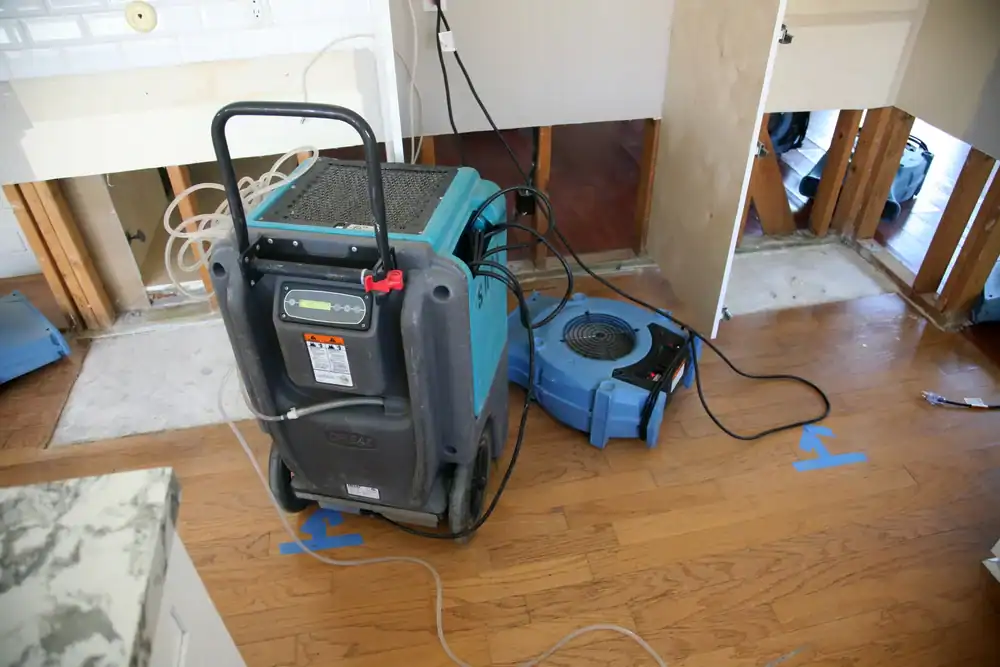
From there, we deploy industrial-grade drying equipment — air movers, desiccant dehumidifiers — calibrated to the specific conditions of your space. In Long Beach’s coastal humidity, standard residential dehumidifiers don’t cut it. We monitor moisture readings throughout the drying process and don’t sign off until the numbers confirm the structure is genuinely dry. If mold remediation is needed, we handle that under New York State’s separate mold licensing requirements — legally and completely.
Built for Barrier Island Conditions, Not Generic Checklists
Long Beach isn’t a typical Nassau County restoration job. The housing stock alone covers more ground than most towns — pre-war West End bungalows with aging plumbing and limited waterproofing, mid-century apartment buildings along the boardwalk with shared infrastructure and complex insurance arrangements, canal-side homes with private docks and compounded flood exposure from both Reynolds Channel and ocean-side surge, and post-Sandy new construction built to modern elevation standards but still vulnerable to plumbing failures and roof intrusion. Each of these property types requires a different approach, and our crews know the difference.
Every job we perform includes full moisture mapping, thermal imaging, water extraction, structural drying, and complete documentation formatted for both standard homeowners insurance and National Flood Insurance Program claims. Because so many Long Beach properties carry NFIP policies — a direct result of the city’s Special Flood Hazard Area designations — we document to NFIP standards from the first hour on every job. Most restoration companies mention insurance assistance generically. We specifically understand the documentation requirements that NFIP adjusters look for, and that difference shows up in your settlement.
We are fully licensed under New York State’s 2016 Mold Law for both mold assessment and mold remediation — separate licenses, as the law requires. In a city where 99% of properties carry severe flood risk over the next 30 years and coastal humidity accelerates mold colonization, that licensing isn’t a formality. It’s the legal and practical foundation of a remediation that actually holds up.
How quickly can water damage restoration begin at my Long Beach home?
Speed matters more in Long Beach than it does almost anywhere else in Nassau County. The combination of coastal humidity and a shallow water table means that moisture left in a structure — in walls, under flooring, in a crawl space — moves toward mold faster than it would in an inland community. The standard 24-to-48-hour window before mold begins to grow is a worst-case figure for average conditions. In Long Beach during summer, ambient humidity can compress that window further.
We dispatch emergency response 24 hours a day, seven days a week. We know Long Beach’s access routes — Long Beach Boulevard, Loop Parkway — and we know how to navigate the timing constraints that come with barrier island geography, particularly in the hours after a major storm event when bridge access may be delayed or complicated. The goal on every call is to have equipment on-site and mitigation underway before that mold window closes, not after.
Does my flood insurance cover water damage restoration costs in Long Beach?
It depends on the source of the water and which policy you’re filing under. Long Beach properties commonly carry two separate policies — a standard homeowners insurance policy and a National Flood Insurance Program policy. Standard homeowners insurance typically covers sudden and accidental water damage from internal sources, like a burst pipe or appliance failure. Your NFIP policy covers flood damage caused by rising water from external sources — storm surge, tidal flooding, the kind of event that Long Beach experiences regularly given its position between Reynolds Channel and the Atlantic Ocean.
The documentation requirements for NFIP claims are different from standard homeowners insurance claims, and the adjustment process works differently. Many restoration companies aren’t set up for that distinction. We document every Long Beach job to NFIP standards from the first hour on-site — moisture readings, thermal imaging results, affected material inventories, equipment logs — so your claim is supported regardless of which policy is paying. If you’re unsure which policy applies to your specific loss, we can walk you through that during the initial assessment.
How do I know if there's water damage inside my walls that I can't see?
Hidden moisture is the most common reason water damage turns into a mold problem weeks after the visible water is gone. A surface can look and feel dry while the structural material behind it — drywall, insulation, wood framing — is still holding significant moisture. This is especially common in Long Beach’s older housing stock, including West End bungalows and mid-century apartment buildings, where walls may have limited vapor barriers and original materials that absorb and retain water more readily than modern construction.
We use two tools to find what you can’t see: calibrated moisture meters that measure moisture content inside structural materials, and thermal imaging cameras that detect temperature differentials caused by wet areas behind surfaces. Neither of these is a visual inspection — they measure what’s actually happening inside the wall, not just what the surface looks like. Every assessment we perform includes both, and we map the full moisture profile of the affected area before any drying equipment is placed. You get a clear picture of what’s actually wet — not just what looks wet.
What's the difference between water damage restoration and mold remediation in Long Beach?
Water damage restoration covers the emergency response, water extraction, structural drying, and documentation. The goal is to remove moisture from the structure before mold colonization begins. Mold remediation is a separate process that addresses mold growth that has already taken hold — it involves containment, physical removal of contaminated materials, air filtration, and treatment of affected surfaces.
In New York State, mold assessment and mold remediation are legally separate services that require separate licenses under the 2016 NY Mold Law. A company cannot legally perform mold remediation in New York without holding the appropriate Department of Labor license. This matters in Long Beach specifically because the conditions here — coastal humidity, shallow water table, older housing stock with limited vapor barriers — make mold a realistic outcome of any water intrusion event that isn’t addressed quickly and completely. We hold the required New York State licenses for both mold assessment and mold remediation. If your water damage job reveals active mold growth, we can address it legally and completely without bringing in a separate contractor.
Can a sump pump failure really cause serious water damage in Long Beach?
Yes — and in Long Beach, it’s one of the most common water damage scenarios we respond to. The barrier island sits on an extremely shallow water table. In many parts of the city, groundwater is only a few feet below grade. That means any property with a basement or below-grade space is relying on a functioning sump pump to keep groundwater from rising into the structure during any significant rain event — not just major storms, but ordinary heavy rainfall.
When a sump pump fails — whether from a power outage, a mechanical failure, or simply because it was overwhelmed by the volume of water — the flooding can happen quickly and affect a large area of the lower level. Standing water in a basement that sits for even a few hours begins saturating flooring, wall framing, insulation, and stored contents. In Long Beach’s humidity, the secondary damage timeline is short. If your sump pump has failed and you have water in your basement, the right call is to start extraction immediately — not to wait and see if it dries on its own. It won’t dry fast enough, and the cost of waiting is almost always higher than the cost of acting.
How does water damage restoration work in a Long Beach condo or co-op building?
Condo and co-op water damage situations in Long Beach are more complicated than single-family home jobs, and the boardwalk corridor has a significant concentration of these buildings. The core challenge is that water doesn’t respect unit boundaries. A pipe failure in a unit above yours can saturate your ceiling, walls, and flooring. A washing machine supply line failure in an adjacent unit can migrate through shared walls. The question of who is responsible — your individual unit policy, the building’s master policy, or the unit owner where the water originated — depends on your building’s specific documents and the source of the loss.
What doesn’t change is the restoration process itself. Moisture needs to be extracted and the structure needs to be dried, regardless of which insurance policy ultimately pays for it. We have experience working in Long Beach’s multi-unit buildings — documenting damage across affected units, coordinating with building management, and producing the kind of detailed moisture mapping that multiple insurance adjusters can review. If your building has a management company or a board involved in the claim, we can work within that structure. The documentation we produce from the first hour is formatted to support the claim regardless of how many parties are involved.