When Water Hits a Lynbrook Home, Hours Matter More Than Days
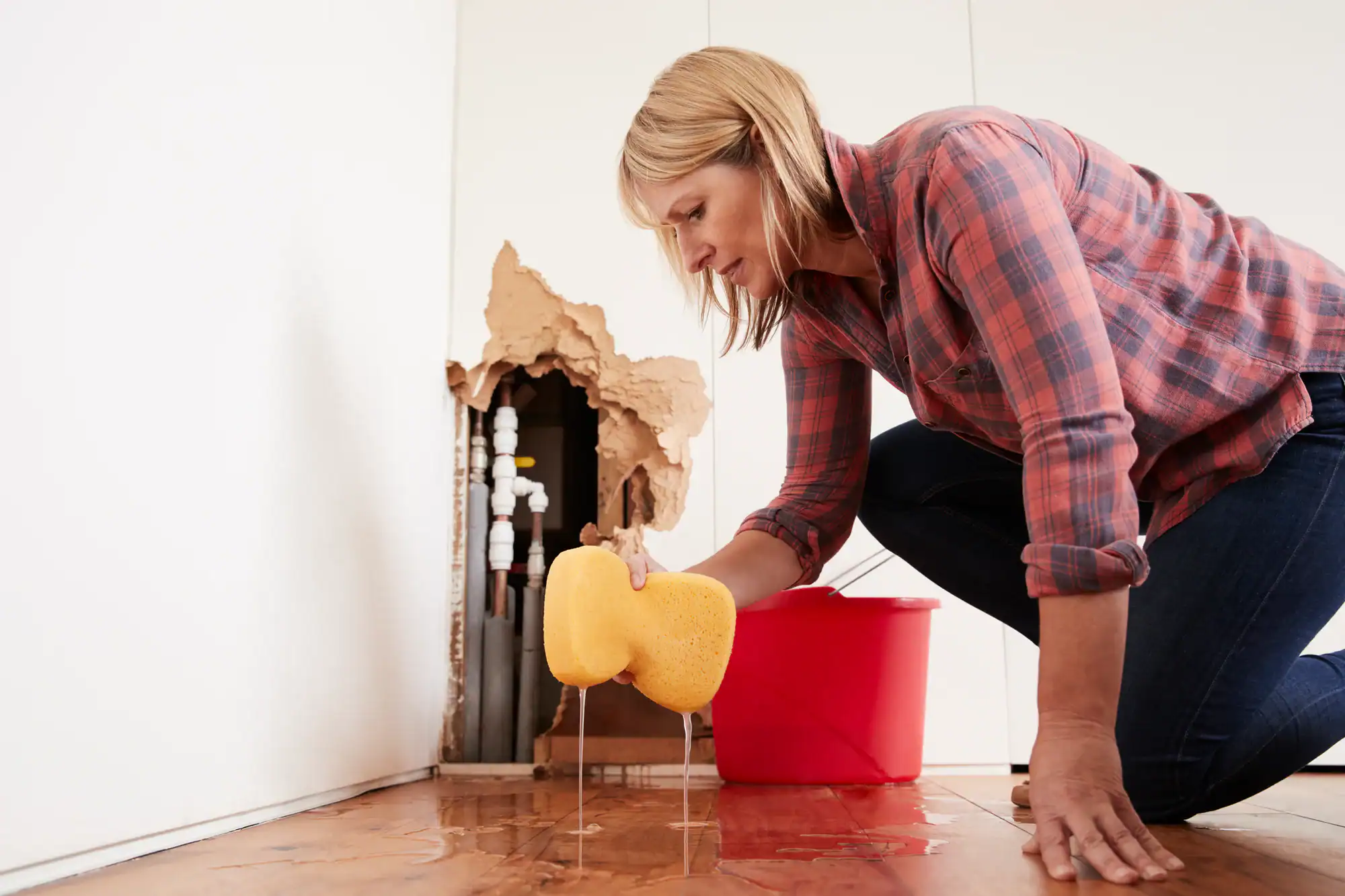
The pre-war homes that line Lynbrook’s tree-lined streets weren’t built with modern drainage in mind. When water gets in, it moves into plaster walls, old wood framing, and subfloor systems that absorb and hold moisture in ways newer construction doesn’t. We respond fast, document everything, and handle your insurance — so you’re not managing a crisis alone while water is still moving through your walls.
I needed a professional consultation explanation of procedure for safe removal of Asbestos in my apartment complex. Without having an account yet, I was very impressed with the caring, knowledgeable and generous advice offered by Jessica, and will look forward to doing business in the future. Thank you so much! I feel much more informed about a sometimes scary endeavor. Peace. Nancy Silva Mineola, NY.
Mia Munoz
Used this company to clean up some water flood in my house. They were fast and easy to work with.very professional, Would recommend to anyone!
Nini Valle
Great company, had a flood and they responded quickly and efficiently. Billed my insurance company directly. I highly recommend this company!
joe colapietro, jr
I had pipe freeze in my basement right before a snow storm and they made to within an hour to help start the clean up process. They we by our side throughout the entire process and even helped with the insurance company. They did such a great job with the cleanup, repair, remidiation, I contracted them to perform the repairs and finishes in the basement. They came with enough manpower and material to get the job done. Leo and Jessica were nothing but a pleasure to deal with!!
Cristian Arredondo c
I had some water damage in my home and Green Island was able to take care of my issue quickly and effectively. I am very pleased with the work they did. They responded quickly and were very professional.
Michael M
Outstanding service! From the office to the field crew everyone was friendly, helpful and responsive. I highly recommend Green Island Group.
There’s a difference between a basement that looks dry and a home that actually is dry. In Lynbrook, where so much of the housing stock dates back before World War II, moisture doesn’t just sit on the surface — it moves into plaster walls, old wood framing, and subfloor systems that were never designed with modern drainage in mind. If it isn’t pulled out completely, you’re not done. You’re just waiting for mold.
The other thing worth knowing about Lynbrook specifically is the soil. The clay-heavy ground common to this part of Nassau County doesn’t drain the way sandy soil does. When a nor’easter rolls through or a heavy rain event saturates the area, that water has nowhere to go — and it finds its way toward your foundation. Combine that with the combined sewer system running under older neighborhoods here, and a heavy storm can push sewage water back through your basement drain. That’s not a shop-vac situation. That’s a Category 3 contamination event that requires proper equipment, licensed technicians, and full antimicrobial treatment.
When we complete water damage restoration the right way, you get your home back — not a version of it that’s quietly building a mold problem inside the walls. You get documentation our insurance company will actually accept. You get confirmation, with moisture readings, that the structure is dry. That’s what the process looks like when it’s done properly.
A Long Island Company That Works in Lynbrook Every Week
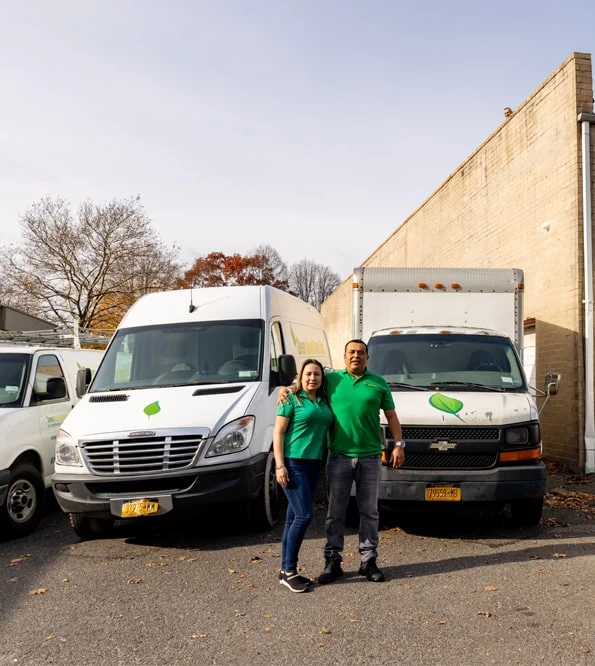
Green Island Group is locally owned and operated, serving Lynbrook, Nassau County, and the broader Long Island area. When you call, you’re reaching a team that works here — not a national franchise routing your emergency through a centralized dispatch system to whoever happens to be available in the region.
That distinction matters in Lynbrook. The homes here are older, the drainage infrastructure carries its own set of vulnerabilities, and the South Shore storm exposure is real. A crew that’s never worked on a pre-war home off Atlantic Avenue or dealt with a flooded basement near the Five Corners area is going to miss things that an experienced local team won’t. We know how water moves through these structures. We know what to look for behind the walls and under the floors of homes built in the 1920s and 1930s.
Every job gets the same standard: proper equipment, licensed technicians, and work that holds up when your insurance adjuster reviews the documentation.
The first thing that happens when you call is simple — we find out what you’re dealing with and we get there. Water damage doesn’t wait, and neither do we. Once on-site, our team does a full assessment before any equipment goes down. That means thermal imaging, moisture meters, and a clear picture of where the water has traveled — including areas you can’t see. In a Lynbrook home built before the 1950s, that hidden moisture is often the bigger problem.
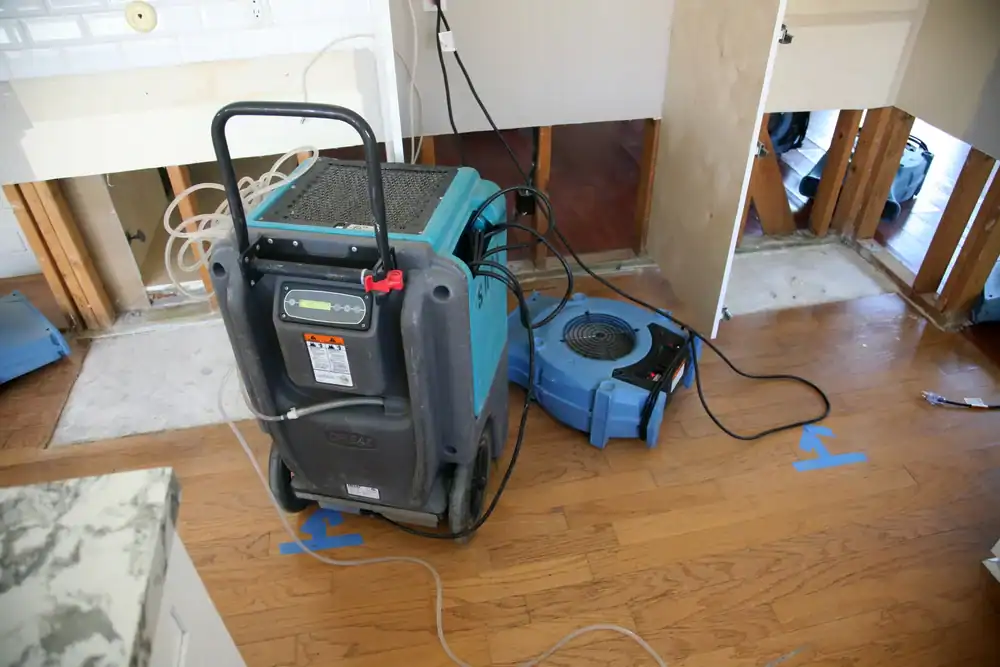
From there, extraction comes first. Industrial water removal equipment pulls out standing water faster and more completely than anything available at a hardware store. Then drying begins — not with box fans, but with commercial air movers and desiccant dehumidifiers that create the pressure differential needed to pull moisture out of structural cavities. In Nassau County, where humidity levels and clay soil can slow the drying process, this equipment makes a real difference in how long it takes and how thoroughly it works.
Throughout the process, everything is documented — photos, moisture readings, scope of work — in the format your insurance carrier needs. We communicate directly with your adjuster so you’re not translating between our restoration crew and an insurance rep while trying to manage everything else. When the final moisture readings confirm the structure is dry, the job is done. Not when it looks done — when it actually is.
Water damage restoration isn’t one thing — it’s a sequence of steps that each matter. Extraction, structural drying, moisture mapping, antimicrobial treatment, and full documentation are all part of what we deliver on every job in Lynbrook. If mold is already present or the contamination source involves sewage — which is a real risk given the combined sewer infrastructure in older parts of the village — remediation is handled in compliance with New York State’s Mold Law, which requires separate licensing for assessment and remediation. That’s not optional here. It’s state law, and it matters when your insurance claim is being reviewed.
For Lynbrook homeowners specifically, the age of the housing stock shapes how this work gets done. Plaster walls, older wood framing, and foundations that weren’t built to modern waterproofing standards all require a more thorough approach than a newer construction would. We don’t call a job complete based on visual inspection. We use calibrated moisture meters to confirm the structure has reached acceptable dryness levels before we close out.
The service also includes full insurance claim support — documentation, adjuster communication, and the kind of organized paper trail that keeps your claim from getting complicated. For a community of busy commuters who can’t afford to spend weeks navigating the back-and-forth with a carrier, that part of the process matters just as much as the physical restoration work.
How quickly does mold start growing after water damage in a Lynbrook home?
Mold can begin growing within 24 to 48 hours of water intrusion — and in a Lynbrook home with plaster walls, older wood framing, and limited natural airflow in basement spaces, that timeline can feel even shorter. The materials in pre-war construction absorb and retain moisture differently than modern drywall. Water gets in and stays in, and the structural cavities in these older homes give mold exactly the dark, damp environment it needs to establish itself quickly.
This is why response time isn’t just a selling point — it’s a structural reality for homes in Lynbrook. The longer water sits, the deeper it moves, and the more of the home’s original materials end up in a dumpster instead of being dried and saved. Calling us within the first few hours of discovering water damage is the single most effective thing you can do to limit the scope and cost of the job.
Does homeowners insurance cover water damage and flooding in Lynbrook, NY?
Standard homeowners insurance typically covers sudden and accidental water damage — a burst pipe, an appliance failure, a roof leak from a storm. What it usually does not cover is flooding from an external source, like storm surge or overland water flow. For Lynbrook homeowners, that distinction is important given the village’s South Shore location and the history of storm impact in Nassau County, including the effects of Hurricane Sandy on properties throughout this area.
Sewer backup coverage is another separate question. Given that Lynbrook’s older combined sewer system is prone to backing up during heavy rain events, this is worth checking on your policy specifically. Many standard policies exclude it unless you’ve added a sewer backup rider. The good news is that when a covered loss does occur, we handle all documentation and adjuster communication from start to finish — which significantly reduces the chance of a claim getting delayed or underpaid due to incomplete paperwork.
What is Category 3 water damage, and is it common in Lynbrook basements?
Category 3 water damage — sometimes called black water — refers to contaminated water that carries bacteria, sewage, or other hazardous materials. It requires a completely different response than clean water from a burst pipe. You can’t treat it with a wet vac and some fans. It requires full personal protective equipment, specialized antimicrobial treatment, and proper disposal of all porous materials that came into contact with the water.
In Lynbrook, this type of event is more common than most homeowners realize. The village’s combined sewer system — where stormwater and sanitary sewage share the same underground pipes — can be overwhelmed during heavy rain events, pushing sewage water back through basement floor drains. This is a known vulnerability in older South Shore Nassau County neighborhoods, and it’s one of the reasons it matters who you call. A company that treats a sewage backup the same way it treats a clean water leak is cutting corners that put your family’s health at risk.
How much does water damage restoration typically cost in Lynbrook, NY?
Costs vary depending on the size of the affected area, the category of water involved, and how far the moisture has traveled into the structure. In the Lynbrook market, water removal typically runs in the range of $4 to $8 per square foot. Drying a flooded basement can run from roughly $4,000 to $5,000 or more depending on conditions. If mold remediation is also required, that can add anywhere from $500 to $10,000 depending on the extent of the growth and the materials involved.
The age of Lynbrook’s housing stock is a real cost factor here. Older homes tend to have more hidden moisture pathways, which means the drying process can take longer and require more equipment than a newer construction would. That said, the bigger cost driver is almost always delay — the longer water sits in a pre-war home, the more material gets damaged beyond saving, and the more expensive the job becomes. Acting fast is the most effective cost-control measure available to you.
Does Green Island Group handle water damage in Lynbrook's older pre-war homes?
Yes — and the age of the housing stock in Lynbrook is something we’re specifically experienced with. Homes built before World War II have plaster and lathe walls instead of drywall, original or partially-updated cast iron and clay pipes, foundation systems that weren’t built to modern waterproofing standards, and structural configurations that hold moisture in ways that newer construction doesn’t. Our approach that works in a pre-war Lynbrook home differs from what we’d do in a 1990s build.
The practical difference shows up in the assessment phase. Thermal imaging and moisture mapping are especially important in these older structures because water travels further and hides in more places. You can’t rely on a visual inspection to tell you what’s happening inside the walls. We use calibrated equipment to map every affected area before drying begins, which is the only way to confirm that a pre-war home is actually dry — not just dry on the surface.
How does New York's Mold Law affect water damage restoration work in Lynbrook?
New York State enacted its Mold Law in 2016, requiring separate licensing for mold assessment and mold remediation. The law came directly out of the post-Hurricane Sandy crisis that hit Long Island hard — including communities throughout Nassau County — where a wave of unlicensed operators performed mold work that didn’t meet any enforceable standard. The law exists to protect homeowners from exactly that situation.
What this means practically for a Lynbrook homeowner is that any company performing mold work on your property needs to hold the appropriate New York State licenses. If they don’t, the work may not be reimbursable under your insurance policy, and you could be left with a code compliance issue on a property worth well over $600,000. Before you hire anyone for post-water-damage mold work, ask for their license number. We hold the required licenses and perform all mold-related work in full compliance with state law — because in New York, that’s not optional, and your home’s value depends on it being done right.