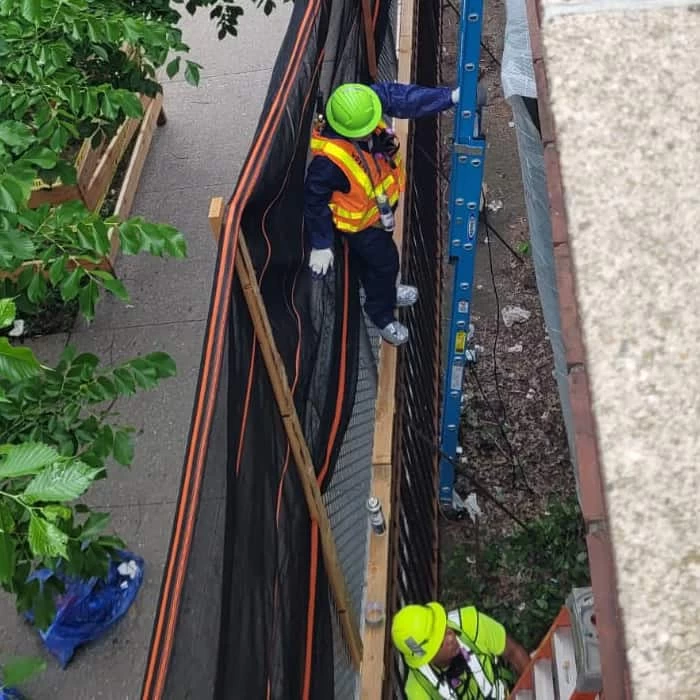
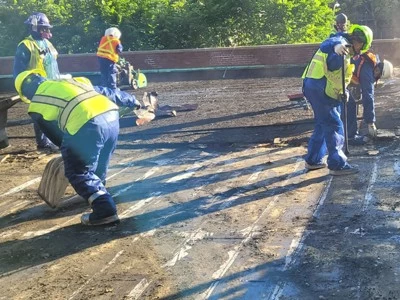
I needed a professional consultation explanation of procedure for safe removal of Asbestos in my apartment complex. Without having an account yet, I was very impressed with the caring, knowledgeable and generous advice offered by Jessica, and will look forward to doing business in the future. Thank you so much! I feel much more informed about a sometimes scary endeavor. Peace. Nancy Silva Mineola, NY.
Mia Munoz
Used this company to clean up some water flood in my house. They were fast and easy to work with.very professional, Would recommend to anyone!
Nini Valle
Great company, had a flood and they responded quickly and efficiently. Billed my insurance company directly. I highly recommend this company!
joe colapietro, jr
I had pipe freeze in my basement right before a snow storm and they made to within an hour to help start the clean up process. They we by our side throughout the entire process and even helped with the insurance company. They did such a great job with the cleanup, repair, remidiation, I contracted them to perform the repairs and finishes in the basement. They came with enough manpower and material to get the job done. Leo and Jessica were nothing but a pleasure to deal with!!
Cristian Arredondo c
I had some water damage in my home and Green Island was able to take care of my issue quickly and effectively. I am very pleased with the work they did. They responded quickly and were very professional.
Michael M
Outstanding service! From the office to the field crew everyone was friendly, helpful and responsive. I highly recommend Green Island Group.
When water gets into a pre-war building in Madison Square, it doesn’t stay where you can see it. It moves through original plaster walls, travels down into subfloors, and finds its way into the mechanical chases that connect your unit to the floors above and below. By the time you notice the stain on the ceiling, the moisture has already been sitting inside the wall for hours sometimes longer. That’s when mold becomes a real possibility, not just a hypothetical one.
The buildings surrounding Madison Square Park were mostly built between the 1880s and the 1940s. That means original galvanized or cast iron plumbing that corrodes over time, steam pipe insulation that often contains asbestos, and floor and ceiling materials that may have lead paint. A water event in this building stock isn’t just a cleanup job it’s a situation that legally requires licensed contractors for mold, asbestos, and lead. Getting the water out is step one. Making sure you don’t end up with a bigger, more expensive problem six weeks later is the actual goal.
When the job is done right, you’re not just dry you’re documented. Moisture readings, photo records, and a completed remediation that your insurance adjuster can actually work with. For co-op owners, building managers, and commercial tenants in Madison Square, that paper trail matters just as much as the drying equipment.
New York City has some of the strictest contractor licensing requirements in the country, and Madison Square sits squarely in the middle of all of them. We hold the NYC General Contractor license, the NYC BIC Trade Waste license, the NYS Department of Labor Mold license, the NYS Department of Labor Asbestos license, the USEPA Lead certification, and the USEPA RRP certification. That’s not a marketing list those are legal requirements for the work that comes up in buildings like the ones on 24th Street, Park Avenue South, and throughout the NoMad and Flatiron blocks.
Most restoration companies that advertise in Manhattan hold licenses from Nassau or Suffolk County. Those licenses are not valid for contracting work in the five boroughs. Before anyone opens a wall in your Madison Square building, that distinction matters. We’re built for this market specifically not a national franchise with a local phone number, but a New York company with New York credentials that are publicly verifiable and legally current.
It starts with a call any hour, any day. We run 24/7 emergency response, and customers have documented technicians on-site within two hours of that first call. In a multi-unit building where water from one floor can reach three others before morning, that window is everything.
Once on-site, our team does a full moisture assessment before any work begins. Industrial moisture detection equipment maps where the water actually went not just where it’s visible. That assessment drives the drying plan, which uses commercial-grade air movers and dehumidifiers calibrated to IICRC S500 standards. If the work uncovers asbestos-containing materials which is common in any Madison Square building constructed before 1970 we don’t stop and refer you to someone else. We hold the NYS DOL Asbestos license and handle it under the same contract, without interruption.
In New York City, certain structural repair work following water damage requires permits from the NYC Department of Buildings. Work in landmark or historically designated buildings and there are several in and around the Madison Square North Historic District may also require Landmarks Preservation Commission review. We’re familiar with that process and navigate it as part of the job, not as an afterthought. By the time the project closes, you have a documented record of every moisture reading, every remediation step, and every repair exactly what your insurance carrier needs to process the claim correctly the first time.
Built for Madison Square's Oldest, Most Complex Buildings
Water damage restoration in Madison Square isn’t one-size-fits-all, and the scope of work here reflects that. We handle emergency water extraction, structural drying, moisture mapping, mold prevention, mold remediation, asbestos abatement, lead-safe work practices, structural repair, and full reconstruction all under one contract. That matters in a neighborhood where a single water event can trigger multiple licensed trades simultaneously.
For residential clients co-op owners, condo owners, renters dealing with damage from a neighboring unit the process includes direct coordination with building management and insurance adjusters, with documentation built to carrier standards. For commercial tenants and building managers in the Flatiron District and NoMad, the focus is on minimizing business interruption while meeting the full compliance requirements that come with NYC commercial property work. Hotels, restaurants, and office tenants all have different operational pressures, and our restoration approach accounts for that.
The area’s water infrastructure adds another layer of urgency. The 36-inch water main that broke at 23rd Street and Broadway directly at Madison Square Park was 98 years old when it failed. It sent nearly three feet of water into the subway station below and flooded surrounding streets. That’s not a hypothetical risk for this neighborhood; it’s documented local history. When something like that happens, basement-level commercial spaces and ground-floor residential units in Madison Square need a contractor who can be there fast and handle everything legally. That’s what we’re set up to do.
Does water damage restoration in a Madison Square co-op require special permits?
It depends on the scope of work. Water extraction and drying typically don’t require a permit on their own, but any structural repair work replacing drywall, repairing subfloors, restoring framing generally requires a permit from the NYC Department of Buildings. If your building is within the Madison Square North Historic District or another locally designated area, work that affects the building’s exterior or certain interior elements may also need review from the Landmarks Preservation Commission before it can proceed.
Beyond permits, there’s the co-op or condo board layer. Most boards require advance notice before any contractor begins work, and many require proof of licensing and insurance before they’ll grant access. We carry the NYC General Contractor license and full insurance documentation, so that part of the process moves quickly. If your building management needs paperwork before work can start, it’s ready.
How quickly can water damage turn into a mold problem in my Madison Square building?
Mold can begin germinating within 24 to 48 hours of water exposure and in a pre-war Manhattan building, that timeline is compressed by the fact that water travels fast through old plaster walls, original hardwood subfloors, and the shared mechanical systems that connect units vertically and horizontally. By the time visible mold appears, it’s already been growing inside the wall for days.
In a multi-unit building like the ones throughout Madison Square and the surrounding Flatiron and NoMad blocks, mold doesn’t stay contained to one unit. It spreads through wall cavities, HVAC ducts, and common-area chases. New York State law requires a NYS DOL-licensed contractor for any mold remediation project exceeding 10 square feet. We hold that license, which means if the drying process uncovers active mold growth, the remediation can begin immediately without stopping to find a separate contractor.
What happens if water damage uncovers asbestos in my pre-war Madison Square apartment?
In a building constructed before 1970 which covers the vast majority of residential and commercial buildings surrounding Madison Square Park asbestos-containing materials are common. Pipe insulation, floor tiles, ceiling textures, and wall finishes from that era frequently contain asbestos. When restoration work disturbs those materials, the law requires a NYS DOL-licensed asbestos abatement contractor to take over before any further work can proceed.
What this means practically is that if you hire a general restoration company that doesn’t hold the asbestos license, the job stops the moment asbestos is found. You’re then left coordinating a second contractor, waiting for availability, and restarting the process all while your building stays wet and the clock on mold growth keeps running. We hold the NYS DOL Asbestos license alongside every other credential required for this work, so when asbestos turns up behind a water-damaged wall, the project doesn’t pause. It continues under the correct legal authority without interruption.
Will my insurance cover water damage restoration in my Manhattan apartment?
Most standard homeowner’s and renter’s insurance policies cover sudden and accidental water damage a burst pipe, an overflow from a unit above, or a washing machine failure. What they typically don’t cover is gradual damage from a slow leak that went unaddressed, or flooding from an external source like a street-level water main break, which requires separate flood insurance.
In Madison Square specifically, the age of the building’s plumbing is a factor worth knowing. Original galvanized or cast iron pipes in pre-war buildings corrode over time, and if an adjuster can argue the leak was a slow-developing condition rather than a sudden event, coverage can become complicated. Having a restoration contractor who documents everything from the first moisture reading forward with timestamped photos, moisture maps, and written records gives you the strongest possible position when the claim is reviewed. We build that documentation into every job, not as an add-on, but as standard practice.
How does a water main break near Madison Square Park affect nearby buildings?
The 36-inch water main that broke at 23rd Street and Broadway was 98 years old when it failed. It sent nearly three feet of water into the subway station below and flooded the surrounding streets. For the buildings immediately adjacent to Madison Square Park, the risk isn’t just street-level flooding it’s water finding its way into basement-level commercial spaces, below-grade mechanical rooms, and ground-floor residential units through foundation walls, utility penetrations, and drainage systems that weren’t designed to handle that kind of sudden volume.
New York City records more than 400 water main breaks per year citywide, with the oldest infrastructure concentrated in neighborhoods like Madison Square and the broader Flatiron District. When a break happens close to your building, the response window is short. Water that sits in a basement mechanical room for even a few hours can damage electrical systems, HVAC equipment, and structural elements and in a building where those systems serve multiple floors and units, the downstream cost grows fast. Our 24/7 emergency response is set up specifically for situations like this.
Does Green Island Group handle both the water damage and the mold remediation, or are those separate jobs?
They’re handled under the same contract. Water damage and mold remediation are legally distinct scopes of work in New York State mold remediation above 10 square feet requires a NYS DOL Mold license, separate from a general contractor’s license. Many restoration companies are licensed for one but not the other, which means the job either stops when mold is found, or the mold gets handled by someone who isn’t legally authorized to do it.
We hold both the water damage restoration credentials and the NYS DOL Mold license, along with the asbestos and lead certifications that frequently come into play in Madison Square’s pre-war building stock. For building managers handling a multi-unit water event in the Flatiron or NoMad blocks, having one accountable contractor responsible for the full scope from extraction through mold clearance eliminates the coordination gaps that create liability and delay. One contract, one point of contact, one documented outcome from start to finish.