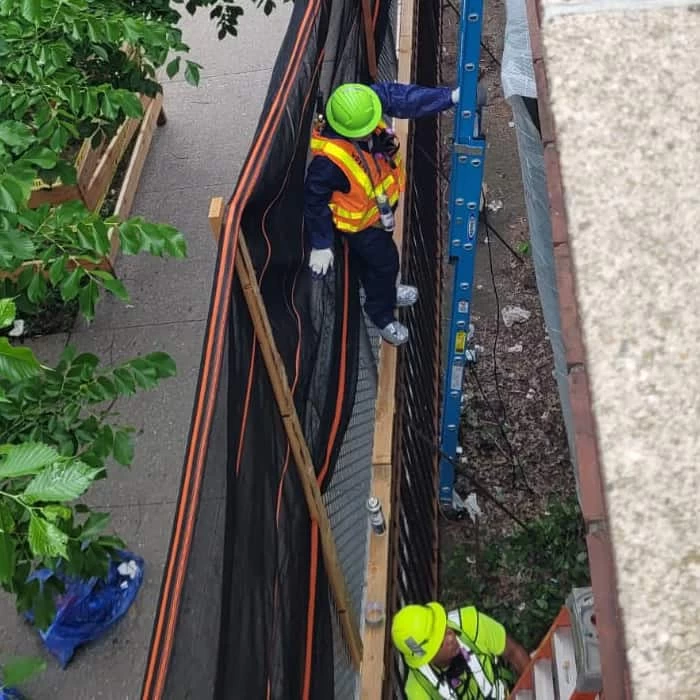
I needed a professional consultation explanation of procedure for safe removal of Asbestos in my apartment complex. Without having an account yet, I was very impressed with the caring, knowledgeable and generous advice offered by Jessica, and will look forward to doing business in the future. Thank you so much! I feel much more informed about a sometimes scary endeavor. Peace. Nancy Silva Mineola, NY.
Mia Munoz
Used this company to clean up some water flood in my house. They were fast and easy to work with.very professional, Would recommend to anyone!
Nini Valle
Great company, had a flood and they responded quickly and efficiently. Billed my insurance company directly. I highly recommend this company!
joe colapietro, jr
I had pipe freeze in my basement right before a snow storm and they made to within an hour to help start the clean up process. They we by our side throughout the entire process and even helped with the insurance company. They did such a great job with the cleanup, repair, remidiation, I contracted them to perform the repairs and finishes in the basement. They came with enough manpower and material to get the job done. Leo and Jessica were nothing but a pleasure to deal with!!
Cristian Arredondo c
I had some water damage in my home and Green Island was able to take care of my issue quickly and effectively. I am very pleased with the work they did. They responded quickly and were very professional.
Michael M
Outstanding service! From the office to the field crew everyone was friendly, helpful and responsive. I highly recommend Green Island Group.
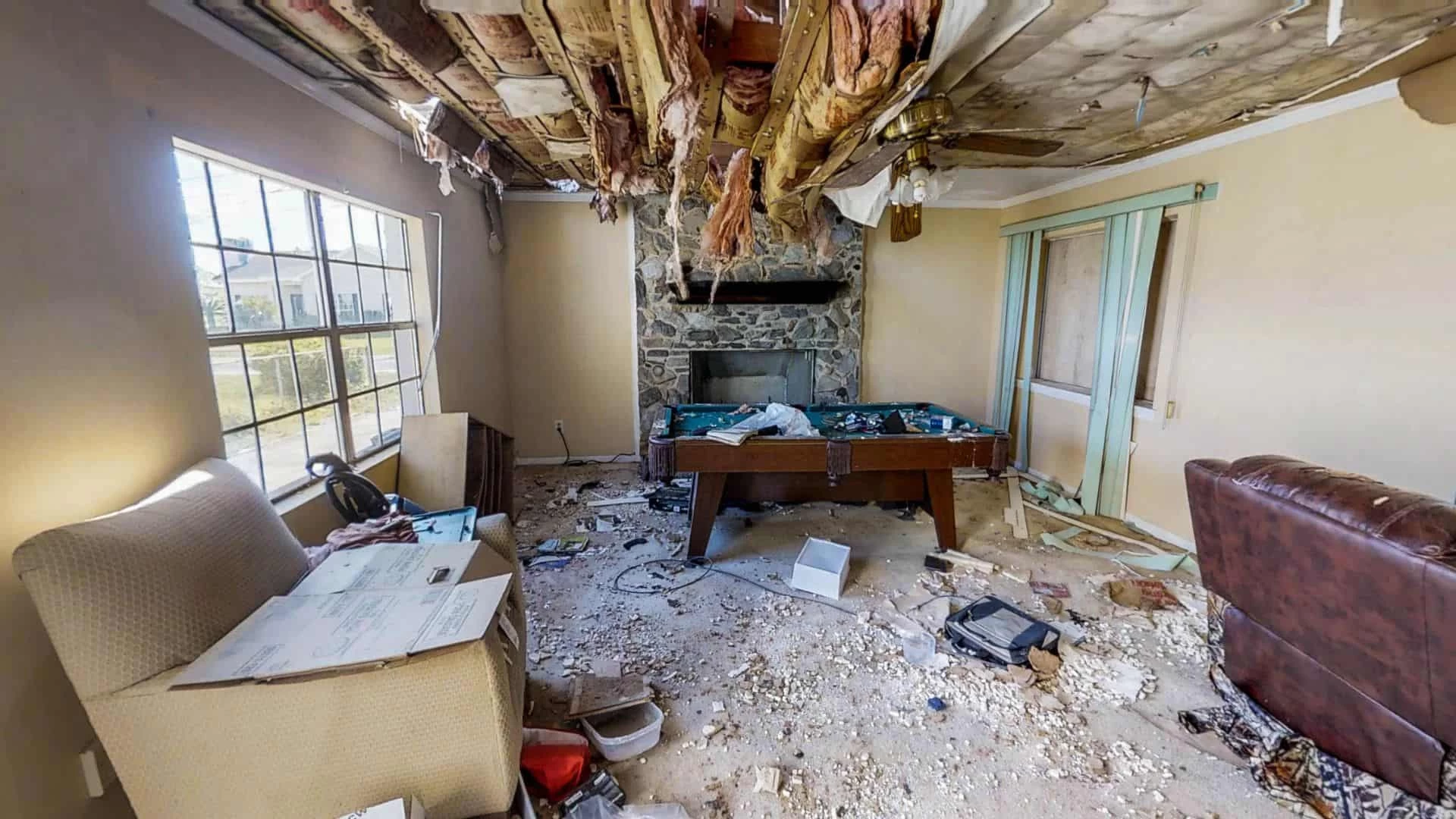
Water damage in Mastic isn’t just a wet floor. It’s a high water table pushing through your foundation after a storm, a sump pump that quit at midnight, or a pipe that finally gave out in a wall that’s been holding it together since 1964. When it happens, the clock starts immediately. Mold can begin growing within 24 to 48 hours and in a coastal community like Mastic, where ambient humidity is higher than inland Suffolk County towns, that window closes even faster.
Getting it dried out properly not just surface-dry, but structurally dry means your walls, floors, and framing aren’t quietly rotting behind drywall six months from now. It means you’re not dealing with a mold remediation bill that’s three times the size of the original repair. And it means the air your kids are breathing in a William Floyd School District home is clean, not compromised.
For homes built in the 1950s and 60s which describes most of Mastic a proper restoration also means someone checked for what’s behind those walls before they opened them. Asbestos in floor tiles, pipe wrap, and drywall compound was standard in that era. A company that can handle water damage and hazardous materials under one roof isn’t a luxury here. It’s the only way to do the job right.
One Local Team. Every Problem That Comes With Water Damage.
We’re a Suffolk County-based restoration company with a 631 area code and a team that actually shows up not a national call center that dispatches a subcontractor you’ve never heard of. When you call, you’re talking to the same people who will be at your door.
Our service area runs across Long Island, and Mastic has been part of that territory for years. We know this peninsula the Forge River, the aging housing stock off Montauk Highway, the basements that flood when the water table rises after a storm. That’s not a sales pitch. It’s just what comes from doing this work in Mastic long enough to know what these homes actually look like on the inside.
Beyond water damage, we handle mold remediation, asbestos abatement, lead paint testing and removal, fire and smoke restoration, and sewage cleanup. That matters in Mastic because water damage rarely travels alone especially in a home that’s been standing since the Eisenhower administration.
No Guesswork. Here's Exactly How a Mastic Water Damage Job Gets Done.
It starts with a call and a fast response. In Mastic where water can move quickly through low-lying ground and into a home’s foundation our first priority is stopping the damage from spreading. When we arrive, we assess the full scope using thermal imaging cameras and moisture meters, not just what’s visible to the eye. In older Mastic homes, water hides in wall cavities, under subfloor framing, and inside insulation that looks fine from the outside.
Once the scope is documented, extraction and drying begin. We deploy industrial air movers and commercial-grade dehumidifiers that pull moisture out of structural materials at a rate that a hardware store fan simply cannot match. The drying process is monitored daily with readings logged at each visit because in a Town of Brookhaven home near the water, “dry enough” isn’t good enough. The goal is to hit IICRC-standard dryness levels before any reconstruction begins.
If the assessment turns up asbestos or lead paint which is a real possibility in any Mastic home built before 1978 we handle it in-house without stopping the project or handing you off to a separate contractor. Once the structure is dry and clear, reconstruction begins: drywall, flooring, ceilings, whatever was damaged. The job isn’t done until the home looks the way it did before the water got in. Throughout all of it, we manage the insurance documentation and adjuster communication directly, so you’re not buried in paperwork on top of everything else.
What's Actually Included When You Call Green Island Group in Mastic
This isn’t a company that extracts the water, drops off a few fans, and sends you an invoice. Our full scope of water damage restoration includes emergency water extraction, thermal imaging and moisture mapping, structural drying with commercial equipment, mold prevention treatment, and complete reconstruction of damaged areas drywall, flooring, ceilings, and framing if needed.
For Mastic homeowners, there are a few things worth knowing specifically. First, if your home is in or near a FEMA-designated flood zone on the peninsula and parts of Mastic are we have experience working with both standard homeowner’s insurance policies and NFIP flood insurance claims. Those are two different documentation processes, and handling them wrong costs you money. Second, if your home was built before 1978, any restoration work that opens walls or removes flooring triggers EPA RRP (Renovation, Repair and Painting) Rule requirements. We’re certified and licensed to handle that, including asbestos abatement under New York State Department of Labor requirements which means the job stays compliant with Town of Brookhaven building codes from start to finish.
If you’re in the middle of the Mastic-Shirley Forge River Sewer Project transition and you’ve discovered water intrusion or sewage backup during the connection process, that falls under Category 2 or Category 3 water damage. We handle biohazard remediation for sewage-contaminated water which is not a service every restoration company offers, and it’s one that’s directly relevant to what’s happening in your community right now.
Does homeowner's insurance cover water damage from basement flooding in Mastic, NY?
It depends on the cause. Standard homeowner’s insurance typically covers sudden, accidental water damage a burst pipe, a failed appliance, or an overflowing washing machine. What it usually does not cover is flooding caused by storm surge, tidal overflow, or rising groundwater, which is exactly the kind of flooding that happens on the Mastic peninsula when the Forge River backs up or Moriches Bay pushes inland during a major storm. That type of damage falls under flood insurance, which is a separate policy issued through the National Flood Insurance Program.
The distinction matters a lot in Mastic because parts of the peninsula sit in FEMA-designated flood zones, and many homeowners carry both types of coverage without fully understanding which applies when. We document the damage in a way that supports your specific claim whether it’s a homeowner’s policy, a flood policy, or both and communicate directly with your adjuster so the documentation holds up. Getting that wrong from the start can delay your claim or reduce your payout significantly.
How quickly does mold start growing after water damage in a Mastic home?
The IICRC standard puts it at 24 to 48 hours under typical indoor conditions. In Mastic, that window is compressed. The hamlet sits on a peninsula surrounded by the Forge River and Moriches Bay, and the ambient humidity in coastal South Shore communities runs higher than in inland Suffolk County towns like Holbrook or Hauppauge. Warmer, more humid air accelerates the conditions mold needs to colonize porous materials drywall, insulation, wood framing, carpet padding.
What makes this especially important for Mastic’s older housing stock is that the materials most common in 1950s and 60s construction cellulose insulation, wood-framed walls without vapor barriers, and original subfloor planking are highly absorbent. They hold moisture longer and give mold more to work with. Professional drying with commercial equipment removes moisture from those materials at a rate that slows or stops mold growth before it starts. If you wait more than a day or two to call, you’re no longer just dealing with water damage you’re dealing with both.
What happens if asbestos is found during a water damage repair in my older Mastic home?
It stops most companies cold. If a restoration crew opens a wall or pulls up flooring in a pre-1980s Mastic home and suspects asbestos in the floor tiles, pipe wrap, joint compound, or ceiling material they’re legally required to stop disturbing the material until it’s tested and, if necessary, abated by a licensed contractor. For most water damage companies, that means calling a separate asbestos firm, waiting for their schedule to open up, and adding days or weeks to your project while your home sits partially opened and still wet.
We’re licensed for asbestos abatement under New York State Department of Labor requirements, which means the process doesn’t stop when hazardous material is found. Testing, abatement, and restoration continue under one contractor, one timeline, and one point of accountability. Given that a substantial portion of Mastic’s housing stock was built during the era when asbestos was standard, this isn’t an edge case it’s a realistic scenario that comes up regularly in this community.
How long does water damage restoration typically take for a Mastic, NY home?
The drying phase alone usually takes three to five days for a standard water loss, assuming commercial equipment is used and the source of the water has been stopped. Structural drying in an older Mastic home where walls are thicker, insulation is denser, and original framing has had decades to absorb ambient moisture can take longer than in a newer construction home. We monitor moisture readings daily and don’t move to reconstruction until the structure hits IICRC-standard dryness levels. Rushing that phase is how you end up with mold behind new drywall.
Reconstruction time depends on the scope of the damage. A contained pipe burst in one room might be resolved in a week to ten days total. A basement flooding event that saturated framing, insulation, and flooring across a larger area the kind of loss that happens on the Mastic peninsula during a major nor’easter or a storm surge event can take several weeks from extraction to final walkthrough. We give you a realistic timeline upfront, not a number designed to win the job.
Should I use the restoration company my insurance company recommends, or can I choose my own?
You can absolutely choose your own. New York homeowners have the legal right to select any licensed restoration contractor your insurance company cannot require you to use their preferred vendor. When an insurer recommends or dispatches a contractor, that contractor typically has a cost-containment agreement with the insurer, which means their first obligation is to keep the claim cost low, not to make sure your home is fully restored.
This matters in Mastic specifically because the losses here tend to be more complex than a simple interior pipe burst. A home on the peninsula that flooded during a storm may have Category 3 contaminated water, potential asbestos in the walls, and structural damage that requires permits from the Town of Brookhaven’s Department of Building, Planning and Zoning. A contractor chosen for cost efficiency may not be equipped to handle all of that and the gaps show up later, after they’re gone. Choosing us means choosing a contractor whose accountability is to you, not to the insurer’s bottom line.
What should I do in the first hour after discovering water damage in your Mastic home?
Stop the source if you can shut off the water supply valve if it’s a plumbing failure, or stop using the affected area if it’s storm-related. Don’t run fans over standing water before extraction; it spreads moisture into areas that weren’t yet affected. Don’t pull up saturated carpet or flooring yourself if your home was built before 1978 there’s a real chance the adhesive or the material underneath contains asbestos, and disturbing it without testing creates a hazard that complicates the entire restoration.
Call a restoration company before you call your insurance company. That might feel counterintuitive, but getting a professional assessment documented first with moisture readings, photos, and a scope of damage gives your insurance claim a much stronger foundation than a self-reported description. In Mastic, where losses can involve both a homeowner’s policy and a flood insurance policy depending on the cause, having that documentation done correctly from the start is the difference between a smooth claim and a drawn-out dispute. We can be on-site fast and will handle the insurance communication from there.