When the Pine Barrens Water Table Rises, Your Middle Island Basement Pays the Price
We respond 24/7 to water damage in Middle Island with the local knowledge, licensed crew, and full-service capability to handle what’s behind your walls, not just what’s on your floor.
I needed a professional consultation explanation of procedure for safe removal of Asbestos in my apartment complex. Without having an account yet, I was very impressed with the caring, knowledgeable and generous advice offered by Jessica, and will look forward to doing business in the future. Thank you so much! I feel much more informed about a sometimes scary endeavor. Peace. Nancy Silva Mineola, NY.
Mia Munoz
Used this company to clean up some water flood in my house. They were fast and easy to work with.very professional, Would recommend to anyone!
Nini Valle
Great company, had a flood and they responded quickly and efficiently. Billed my insurance company directly. I highly recommend this company!
joe colapietro, jr
I had pipe freeze in my basement right before a snow storm and they made to within an hour to help start the clean up process. They we by our side throughout the entire process and even helped with the insurance company. They did such a great job with the cleanup, repair, remidiation, I contracted them to perform the repairs and finishes in the basement. They came with enough manpower and material to get the job done. Leo and Jessica were nothing but a pleasure to deal with!!
Cristian Arredondo c
I had some water damage in my home and Green Island was able to take care of my issue quickly and effectively. I am very pleased with the work they did. They responded quickly and were very professional.
Michael M
Outstanding service! From the office to the field crew everyone was friendly, helpful and responsive. I highly recommend Green Island Group.
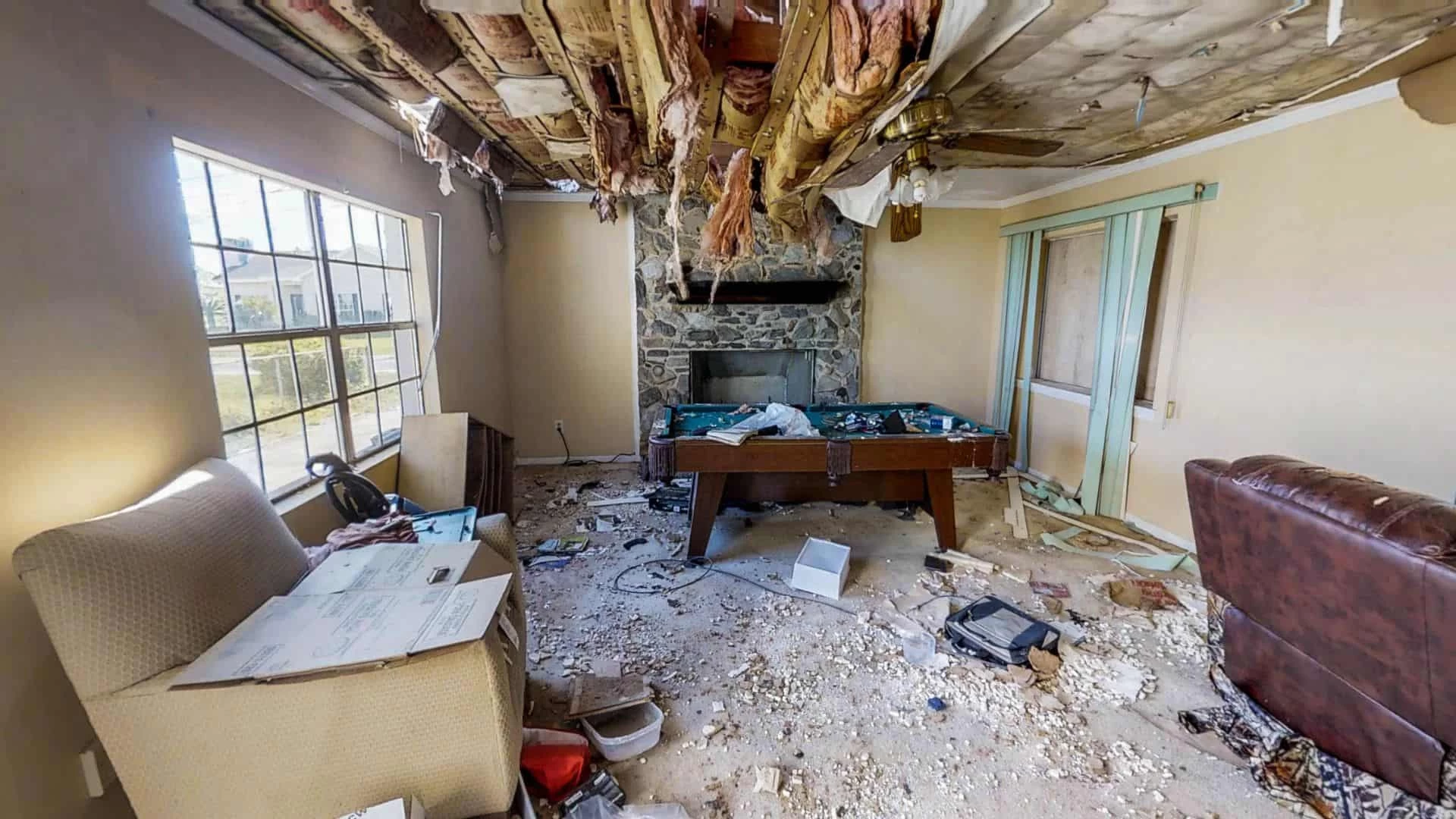
Surface-dry is not structurally dry. In Middle Island, that distinction matters more than it does in most towns on Long Island. The hamlet sits directly above the Central Pine Barrens aquifer one of the most significant groundwater reserves in the entire region and that water table sits close to the surface. After a heavy rain event, moisture doesn’t just enter through a cracked window well or a failed sump pump. It migrates through your foundation walls under hydrostatic pressure. It wicks up through your concrete slab. It saturates the subfloor of your home from below, not above. And none of it is visible until the damage is already done.
What you get when the job is finished correctly isn’t just a dry floor. It’s moisture readings at or below baseline inside every wall cavity, under every section of subfloor, and in every corner of the affected area confirmed with professional-grade meters and thermal imaging, not a visual check. For the aging colonial or hi-ranch built in Middle Island between 1970 and 1990, that matters enormously. Those homes were built with waterproofing materials and drainage systems that are now 35 to 50 years old. When they fail and eventually, they do the damage runs deeper than it looks.
Getting this right the first time also means mold doesn’t become your next problem. Mold colonization can begin within 24 to 48 hours of water exposure. In a community surrounded by the Pine Barrens, with humid summers and basements that frequently sit close to the water table, that window is not generous. A thorough dry-out, done to IICRC S500 standards, is what closes it.
We’re a Long Island-based environmental and property restoration company not a franchise, not a call center, not a lead-generation site with a crew dispatched from three towns over. When you call, you reach people who actually know what it means to restore a home in the Town of Brookhaven, where the drainage infrastructure was never designed for what Suffolk County is getting from storms today.
What separates us in a market full of national operators is the scope of what we handle in-house. Water damage in a Middle Island home built in the late 1970s doesn’t always stop at wet drywall. Sometimes it means saturated floor tiles that may contain asbestos. Sometimes it means disturbed materials near original lead paint. We’re licensed for asbestos testing and abatement, mold remediation, lead paint removal, and air quality testing in addition to water damage restoration. That’s not a sales pitch. It’s a practical advantage for homeowners in Middle Island, where the housing stock is old enough to make those questions real.
No handoffs. No delays waiting for a separate abatement contractor to clear the job. One company, start to finish.
What Happens from Your First Call to the Final Moisture Reading
When you call, the first thing that happens is a real conversation not a hold queue or an automated intake form. You describe what you’re seeing, and we determine the right response. For active flooding or a burst pipe, that means same-day emergency dispatch. For a slower discovery water stains, a musty smell, a basement that was wet after the last storm it means scheduling a thorough assessment before anything else.
On arrival, our crew conducts a full moisture assessment of the affected area using thermal imaging cameras and calibrated moisture meters. This step is non-negotiable, especially in Middle Island, where groundwater intrusion through aging foundation walls can leave moisture in places that look completely dry on the surface. The source of the water is identified first, because treating the symptom without understanding the cause is how water damage comes back. From there, industrial extraction equipment removes standing water, and commercial-grade drying systems air movers and dehumidifiers positioned based on the moisture map begin the structural drying process.
Drying is monitored daily, with moisture readings documented at each check. When the structure reaches the target drywall and subfloor readings consistent with IICRC S500 standards, the equipment comes out. If any materials in your home require testing or abatement before they can be safely removed a real consideration for Middle Island homes built before 1980 that work is handled in-house, without adding a second contractor and a second timeline to your situation. Throughout all of it, your insurance carrier is kept in the loop with documentation that supports your claim.
Water Damage Restoration Service in Middle Island, NY
Built for Middle Island's Homes, Not a Generic Checklist
The water damage restoration service we provide in Middle Island is shaped by what this community actually deals with not a standardized package designed for a different region’s housing stock or climate. Middle Island’s three lakes, the Carmans River headwaters running through Cathedral Pines County Park, and the Pine Barrens aquifer beneath the hamlet create a groundwater environment that makes basement flooding and foundation moisture intrusion a recurring reality for homeowners here, not a freak event.
Every job includes moisture mapping of the full affected area, professional water extraction, structural drying with daily monitoring, and final clearance readings documented for your records and your insurer. For homes near Artist Lake, Spring Lake, or in low-lying areas of the Golf Course Estates neighborhood, we pay particular attention to groundwater intrusion patterns rather than treating every job as a simple surface-water cleanup. When water damage reveals materials that require testing asbestos-containing floor tiles, pipe insulation, or joint compound common in pre-1980 construction we handle that assessment and any required abatement without bringing in a third party.
Direct insurance billing is included. We document the damage, communicate with your adjuster, and submit the scope of work in the format insurers require. For a Middle Island homeowner navigating a first major claim, that support is often the part of the process that makes the biggest difference.
Why does my Middle Island basement keep flooding even without a major storm?
This is one of the most common questions from Middle Island homeowners, and the answer usually comes down to groundwater, not surface water. Middle Island sits above the Central Pine Barrens aquifer, and the water table in this area is notably close to the surface. After sustained rainfall even moderate rainfall over several days the water table rises. When it rises high enough, hydrostatic pressure builds against your foundation walls and slab, forcing water through hairline cracks and porous concrete even when there’s no visible entry point like an open window well or a failed pipe.
This type of flooding is called groundwater intrusion, and it behaves differently from surface flooding. It tends to appear a day or two after the rain stops, which confuses a lot of homeowners who assume the storm is the direct cause. The fix isn’t just pumping out the water it requires identifying where the pressure is entering, drying the structure thoroughly to IICRC standards, and understanding whether your foundation’s waterproofing has degraded to the point where this will keep happening. A proper moisture assessment is the starting point.
How quickly does mold start growing after water damage in a Suffolk County home?
The IICRC S500 standard the industry’s benchmark for water damage restoration establishes that mold colonization can begin within 24 to 48 hours of water exposure. That’s not a worst-case scenario. That’s the realistic baseline under normal conditions. In a Middle Island home during a humid Long Island summer, with a basement that may already have limited airflow and elevated moisture levels from groundwater proximity, that window can feel even tighter.
What this means practically is that response time is not just a convenience issue it’s a mold prevention issue. Every hour of standing water or wet structural material that goes unaddressed is an hour of mold risk accumulating inside your walls and under your floors. Professional extraction and drying equipment works significantly faster than consumer fans and dehumidifiers, which is why the time between your call and our crew’s arrival genuinely matters. If you’re already seeing discoloration, a musty odor, or visible growth, mold remediation may need to run alongside the water restoration both of which we handle without bringing in a separate contractor.
Does homeowners insurance cover water damage from a flooded basement in New York?
It depends on the source of the water, and that distinction is where most homeowners run into confusion. Standard homeowners insurance policies in New York typically cover sudden and accidental water damage a burst pipe, a washing machine supply line failure, or an appliance malfunction. What they generally do not cover is flooding from an external source, which includes storm surge, overland flooding, and in many cases, groundwater intrusion through your foundation.
For Middle Island homeowners, this matters because a significant portion of basement flooding here is groundwater-driven the aquifer rising and pushing through foundation walls rather than a pipe failure or a roof leak. That type of flooding typically requires a separate flood insurance policy, often through the National Flood Insurance Program (NFIP). If you’re unsure what your policy covers, the best first step is to call your insurer before any cleanup begins and document everything thoroughly. We work directly with insurance carriers and can help you present the damage in the format adjusters need which makes a real difference in how quickly your claim moves and how much of the cost gets covered.
What should I do in the first hour after discovering water damage in my home?
The first thing is to stop the source if you can. If it’s a burst pipe, shut off the main water supply. If it’s an appliance, disconnect it. If it’s groundwater coming through your foundation, there’s no shutoff but knowing that helps you describe the situation accurately when you call for help. Once the source is addressed or confirmed as ongoing, call a restoration company immediately. Do not wait to see if it dries on its own, because it won’t not in the walls, not under the floor, and not in the insulation.
While you’re waiting for the crew to arrive, document everything with photos and video before moving anything. This documentation is important for your insurance claim and should capture the water level, affected materials, and any visible damage to walls, flooring, and belongings. Do not use a standard household vacuum to remove water it won’t work on saturated materials and can create electrical hazards. If the water level is significant and you have a sump pump that’s running, make sure the discharge line is clear and draining away from the foundation. Beyond that, let the professionals handle the extraction and drying consumer fans and dehumidifiers delay the process more than they help when structural materials are saturated.
How long does water damage restoration typically take for a Middle Island home?
The drying phase alone which is the core of the restoration process typically takes three to five days for a standard residential water damage job when professional equipment is used correctly. That timeline can extend depending on how long the water was present before extraction began, how much of the structure was affected, and what materials are involved. Finished basements with drywall, insulation, and flooring take longer to dry than unfinished ones, because moisture has more places to hide and fewer pathways to escape.
For Middle Island homes specifically, the groundwater intrusion scenario adds a variable that doesn’t exist in every market. If the water table is still elevated when drying begins, moisture can continue migrating into the structure even as the equipment is running which is why daily moisture readings matter and why the job isn’t finished until the readings confirm it. If the restoration reveals materials that require asbestos testing or abatement a real possibility in homes built before 1980, which describes a large portion of Middle Island’s housing stock that adds time to the overall project. We handle that in-house, which keeps the delay shorter than it would be if you were coordinating between two separate companies.
Are there specific water damage risks in Middle Island that differ from other Long Island towns?
Yes, and they’re worth understanding before you have a problem. Middle Island’s position above the Central Pine Barrens aquifer means the water table here is shallower than in many other parts of Long Island. That makes groundwater intrusion through basement foundations more common, particularly after sustained rainfall or during spring snowmelt when the aquifer recharges aggressively. The Carmans River actually originates within Middle Island its headwaters run through Cathedral Pines County Park which means the ground around the western and northern edges of the hamlet is among the first to saturate during heavy rain events.
The three lakes within the hamlet Artist Lake, Spring Lake, and Pine Lake create additional drainage complexity in the neighborhoods surrounding them. Homes near Artist Lake in particular sit in a low-lying area where stormwater doesn’t always route efficiently. Add to that a housing stock where the median construction year is 1980 meaning most homes have plumbing, sump pumps, and waterproofing systems that are now several decades old and you have a community where water damage risk is real, recurring, and worth taking seriously before the next nor’easter or heavy summer storm arrives.