When Your 1950s Home Takes on Water, Every Hour Counts
New Hyde Park’s mid-century homes weren’t built to hide water damage quietly — they absorb it fast, spread it far, and give mold exactly what it needs. We respond locally, move quickly, and handle the insurance process so you don’t have to.
I needed a professional consultation explanation of procedure for safe removal of Asbestos in my apartment complex. Without having an account yet, I was very impressed with the caring, knowledgeable and generous advice offered by Jessica, and will look forward to doing business in the future. Thank you so much! I feel much more informed about a sometimes scary endeavor. Peace. Nancy Silva Mineola, NY.
Mia Munoz
Used this company to clean up some water flood in my house. They were fast and easy to work with.very professional, Would recommend to anyone!
Nini Valle
Great company, had a flood and they responded quickly and efficiently. Billed my insurance company directly. I highly recommend this company!
joe colapietro, jr
I had pipe freeze in my basement right before a snow storm and they made to within an hour to help start the clean up process. They we by our side throughout the entire process and even helped with the insurance company. They did such a great job with the cleanup, repair, remidiation, I contracted them to perform the repairs and finishes in the basement. They came with enough manpower and material to get the job done. Leo and Jessica were nothing but a pleasure to deal with!!
Cristian Arredondo c
I had some water damage in my home and Green Island was able to take care of my issue quickly and effectively. I am very pleased with the work they did. They responded quickly and were very professional.
Michael M
Outstanding service! From the office to the field crew everyone was friendly, helpful and responsive. I highly recommend Green Island Group.
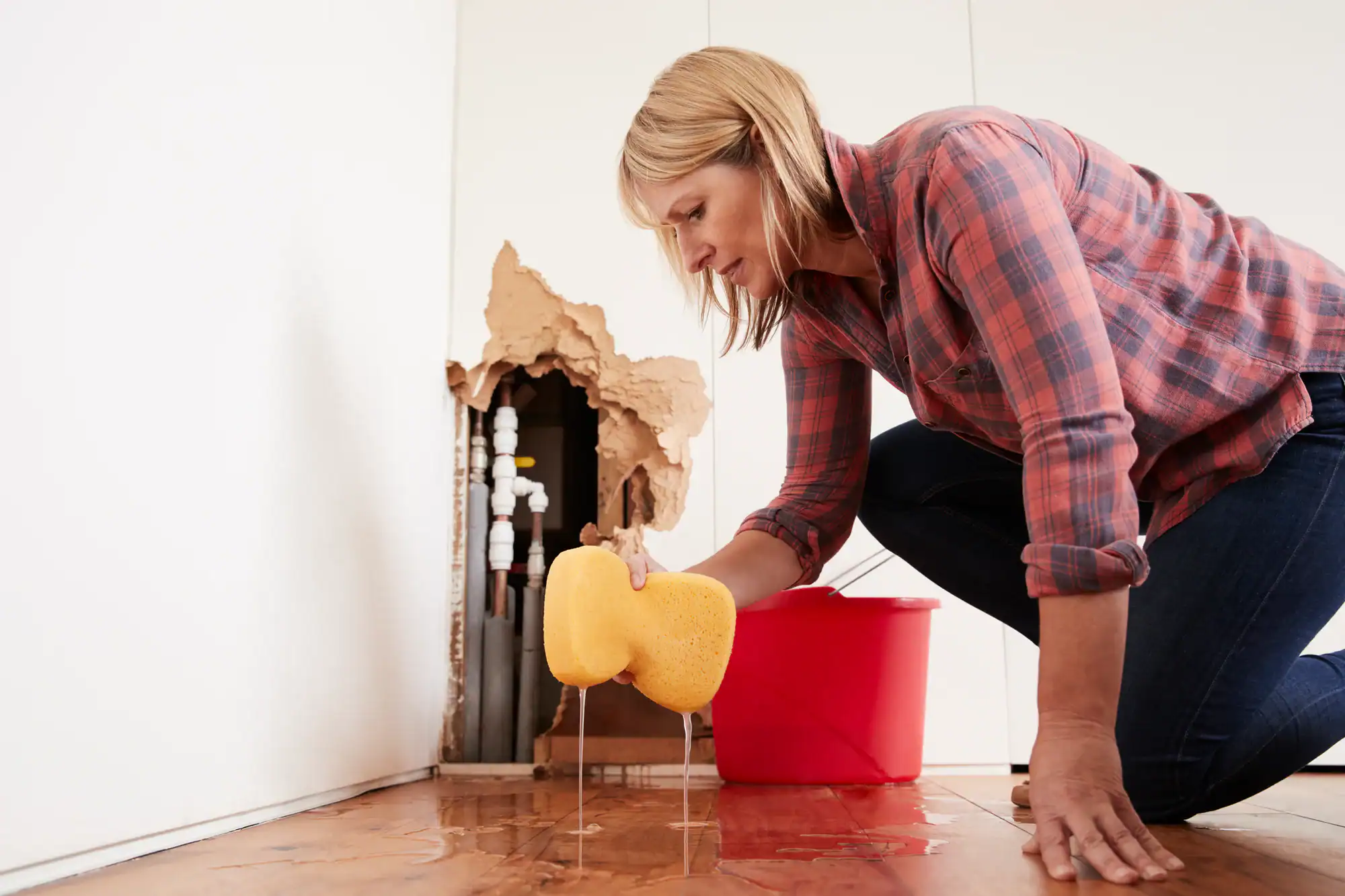
Water damage in a New Hyde Park home doesn’t behave the way it does in newer construction. The plaster walls, wood subfloors, and poured concrete basements common in homes built between 1940 and 1969 pull moisture inward — deep into framing, behind walls, under flooring — long before you see a single wet spot on the surface. By the time it’s visible, it’s already spread further than most homeowners expect.
That’s the reality of living in a home with 60-plus years of history. The bones are solid, but the infrastructure is aging. Galvanized pipes that were standard in 1955 are well past their expected lifespan. Basements that weren’t waterproofed to modern standards sit vulnerable every time a heavy storm overwhelms the storm drains on your block. And in a neighborhood this dense — where homes sit close together on tight lots — water that gets into one property doesn’t always stay there.
What you get when this is handled correctly is simple: a home that’s genuinely dry, not just surface-dry. Moisture readings that confirm the job is done, not just the equipment packed up. And a completed insurance claim that reflects the full scope of what happened — not a lowball settlement because documentation was weak.
Local Crews, Real Accountability, No 1-800 Numbers
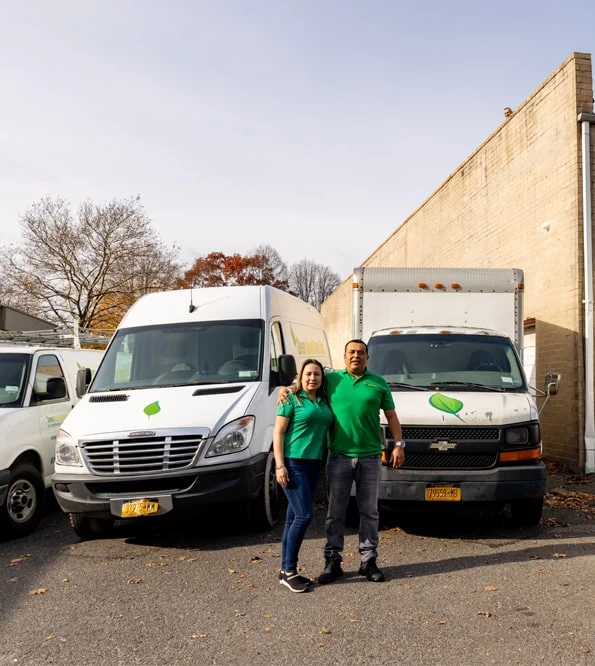
We’re a locally owned restoration company serving Nassau County. When you call, you reach us — not a national dispatch center routing your job to whoever’s available. The crew that shows up at your door is our crew. The project manager walking you through the process is the same person who answers when you call back with a question.
We’ve worked throughout the New Hyde Park area — from the residential blocks near the LIRR station on New Hyde Park Road to the neighborhoods surrounding the LIJ Medical Center campus in North New Hyde Park. We know how the homes here were built, how water moves through them, and what it actually takes to dry them out properly.
That local knowledge isn’t something you get from a franchise manual. It comes from doing this work in this community, in these homes, through these seasons.
From Your First Call to Final Walkthrough: How We Handle Water Damage in New Hyde Park
It starts the moment you call. We confirm your location, ask a few quick questions about what you’re dealing with, and dispatch a local crew. Because we’re already in Nassau County — not routing through a national system — response time is real, not a promise buried in fine print.
When we arrive, the first thing we do is assess the full extent of the damage using thermal imaging cameras and calibrated moisture meters. In a New Hyde Park home, this step matters more than it might in newer construction. Water in a 1960s colonial doesn’t stay where it entered — it travels through wall cavities, soaks into subfloor joists, and pools behind plaster. We map all of it before any equipment goes down, because drying what you can see and missing what you can’t is how mold problems start.
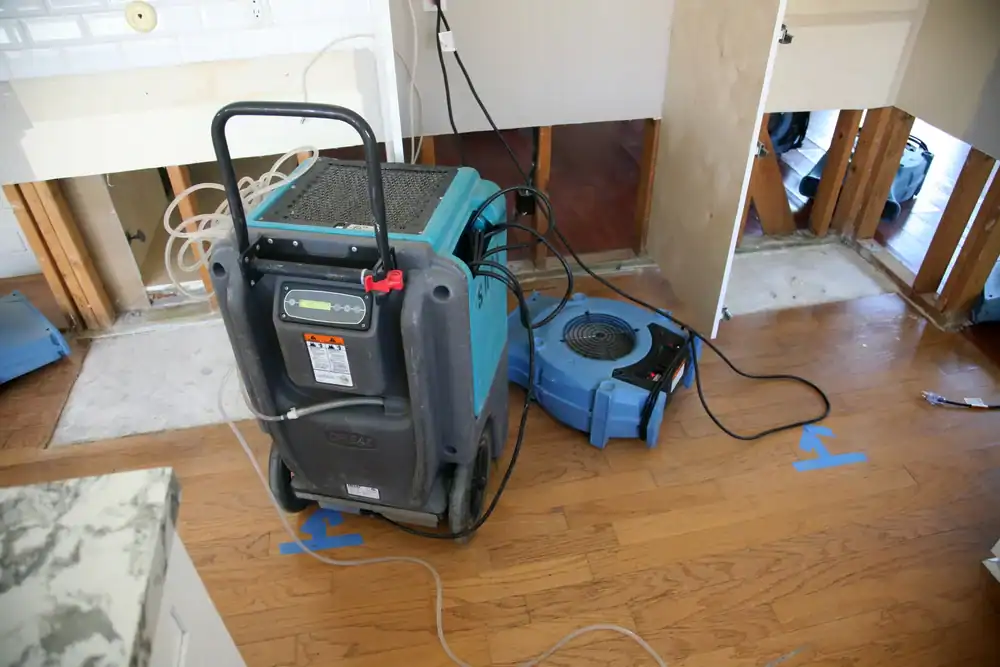
From there, we extract standing water, set industrial-grade drying equipment, and monitor moisture levels throughout the process. We don’t call a job complete because it looks dry — we call it complete when the readings confirm it. We also handle the full insurance documentation and communicate directly with your adjuster, which matters especially here: New Hyde Park’s dual-municipality structure means permits may fall under the Town of Hempstead or the Town of North Hempstead depending on your address, and getting that right from the start prevents delays down the line.
Water damage restoration isn’t one thing — it’s a sequence of connected steps, and skipping any one of them is how you end up with a mold problem six weeks after the water is gone. Here’s what’s covered when we handle a job in New Hyde Park.
Emergency water extraction comes first — getting standing water out fast to limit how far it spreads into your subfloor and walls. Structural drying follows, using industrial desiccant dehumidifiers and high-velocity air movers that remove moisture from inside building materials, not just from the air in the room. We monitor with moisture meters throughout, and we don’t pack up until the numbers confirm your home is dry. If mold is already present — or if the conditions are right for it to develop — we handle full mold remediation under New York State’s Mold Law, which requires separately licensed contractors for assessment and remediation. We hold both licenses, which matters for your insurance claim and your peace of mind.
We also manage the insurance process end-to-end: damage documentation, direct adjuster communication, and claim support that’s designed to get you a fair settlement rather than a fast one. Many Nassau County homeowners we’ve worked with have had little to no out-of-pocket cost. If you’re in the 11040 zip code — whether that’s Hillside Manor, North New Hyde Park near Marcus Avenue, or closer to Jericho Turnpike — the process is the same: thorough, documented, and handled locally.
How quickly can a water damage company actually arrive in New Hyde Park?
Response time is one of the most important factors in a water damage situation, and it’s also one of the most overpromised. National franchises often advertise fast response, but if the nearest available crew is coming from outside Nassau County, “fast” is relative. We operate locally, which means when you call, a crew is already in the area — not en route from a neighboring county.
In practical terms, our goal is to be at your door within the hour for emergency calls in New Hyde Park and the surrounding 11040 zip code. That window matters because mold can begin colonizing porous building materials within 24 to 48 hours of water intrusion. In a home with plaster walls and wood subfloors — standard in most New Hyde Park homes built in the 1950s and 1960s — that clock starts the moment water enters the structure. The faster extraction begins, the better the outcome.
Does homeowners insurance cover water damage from a burst pipe in New York?
Generally, yes — but the details matter. Homeowners insurance in New York typically covers sudden and accidental water damage, which includes burst pipes, appliance failures, and certain types of internal flooding. What it usually does not cover is gradual damage — a slow leak behind a wall that went unaddressed for months, or a basement seepage issue that’s been ongoing.
For New Hyde Park homeowners, this distinction is especially relevant. Many homes in the area have galvanized steel plumbing that’s decades past its expected service life. If a pipe fails suddenly, that’s typically a covered event. But if an adjuster determines the pipe showed signs of long-term corrosion that should have been caught earlier, coverage can get complicated. That’s one reason documentation matters so much. We handle the full claims process — capturing the evidence that supports your claim, communicating directly with your adjuster, and making sure the scope of damage is accurately represented so you’re not left with a settlement that doesn’t cover the full job.
What are the signs of water damage inside the walls of an older Long Island home?
In a newer home, water damage often announces itself — you see the stain, feel the soft spot, smell the mustiness. In a New Hyde Park home built in the 1950s or 1960s, it’s often quieter than that. Plaster walls can absorb significant moisture before showing a visible stain. Wood subfloors can begin to warp or soften before the surface flooring gives anything away. Older drywall, where it exists alongside plaster, holds moisture differently and can harbor mold growth well before you notice any odor.
The signs to watch for include paint bubbling or peeling away from the wall surface, a musty smell that doesn’t go away after ventilation, soft or spongy spots on the floor, visible discoloration or tide marks on basement walls, and unexplained increases in your water bill that might indicate a slow internal leak. If you’ve had any kind of water event — a burst pipe, a backed-up drain, a flooding basement after a heavy storm on Jericho Turnpike — and you’re not certain the drying was thorough, it’s worth having a moisture assessment done before you assume everything is fine.
Does New York State require a license for mold remediation after water damage?
Yes, and this is something every New Hyde Park homeowner should know before hiring anyone for post-water-damage mold work. New York State enacted its Mold Law in 2016, and it requires that mold assessment and mold remediation be performed by separately licensed contractors — both licensed by the New York State Department of Labor. These are two distinct licenses, and a company that holds one does not automatically hold the other.
This matters for a few reasons. Work performed without the required licenses is illegal in New York State. It can also complicate your insurance claim — if an adjuster or inspector determines that unlicensed work was performed, it can create liability issues for you as the homeowner. We hold the required licenses for both mold assessment and mold remediation. If you’re vetting other companies in the Nassau County area, ask for their license numbers before any work begins. A legitimate operator will give them to you without hesitation.
Why do New Hyde Park basements flood more often than homeowners expect?
A few things work against New Hyde Park basements specifically. The first is the age of the homes — most were built between 1940 and 1969, using basement construction methods that were standard for the era but were never designed to meet modern waterproofing expectations. Poured concrete and block basements from this period are susceptible to hydrostatic pressure, meaning that when the ground becomes saturated — during heavy spring rain or a late-summer nor’easter — water pushes through the foundation from the outside in.
The second factor is the storm drain infrastructure. New Hyde Park’s residential grid was built to mid-century capacity standards, and during intense rainfall events, those drains can be overwhelmed. When that happens on a dense block where homes sit close together on small lots, the water has nowhere to go except into the lowest available space — which is usually your basement. This is a community-wide pattern, not a one-house problem, and it’s one reason we see multiple calls from the same street after a significant storm. Addressing the immediate damage is step one. Understanding why it happened — and what it means for your home specifically — is a conversation worth having before the next storm season.
How much does water damage restoration typically cost in Nassau County, NY?
The honest answer is that cost depends on the scope, and scope in an older New Hyde Park home is often larger than it first appears. A straightforward water extraction and drying job for a single room might run anywhere from $1,500 to $3,500. Once you factor in structural drying of wall cavities, subfloor remediation, or mold treatment — which is common in homes where water sat for more than a day or two before being addressed — costs can range from $4,000 to $10,000 or more depending on the extent of the damage.
That said, the majority of water damage events caused by sudden and accidental causes — burst pipes, appliance failures, backed-up drains — are covered under standard homeowners insurance policies in New York. Many Nassau County homeowners we’ve worked with have had little to no out-of-pocket expense because we handle the documentation and claims process in a way that accurately captures the full scope of the damage. The goal is a fair settlement, not a fast one. If you’re unsure what your policy covers, we can walk you through what to expect before any work begins — no pressure, just clarity.