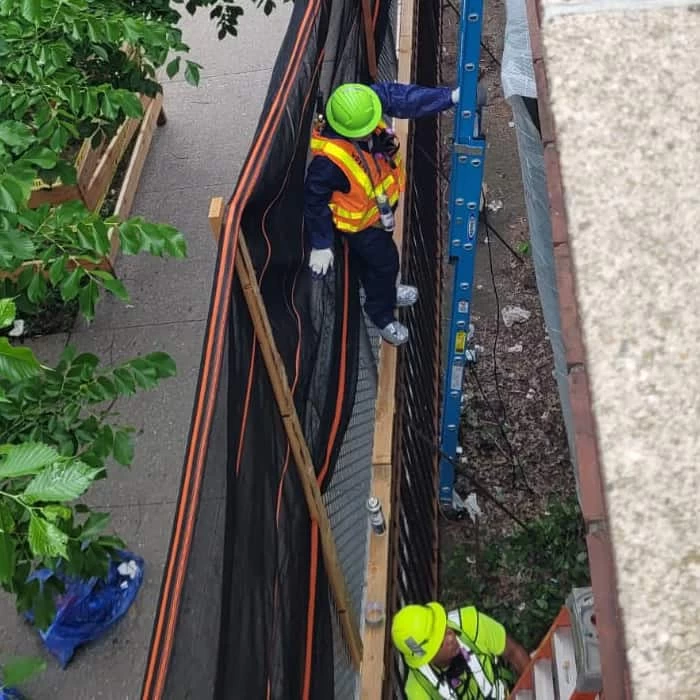
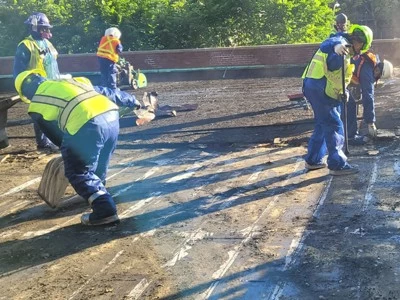
I needed a professional consultation explanation of procedure for safe removal of Asbestos in my apartment complex. Without having an account yet, I was very impressed with the caring, knowledgeable and generous advice offered by Jessica, and will look forward to doing business in the future. Thank you so much! I feel much more informed about a sometimes scary endeavor. Peace. Nancy Silva Mineola, NY.
Mia Munoz
Used this company to clean up some water flood in my house. They were fast and easy to work with.very professional, Would recommend to anyone!
Nini Valle
Great company, had a flood and they responded quickly and efficiently. Billed my insurance company directly. I highly recommend this company!
joe colapietro, jr
I had pipe freeze in my basement right before a snow storm and they made to within an hour to help start the clean up process. They we by our side throughout the entire process and even helped with the insurance company. They did such a great job with the cleanup, repair, remidiation, I contracted them to perform the repairs and finishes in the basement. They came with enough manpower and material to get the job done. Leo and Jessica were nothing but a pleasure to deal with!!
Cristian Arredondo c
I had some water damage in my home and Green Island was able to take care of my issue quickly and effectively. I am very pleased with the work they did. They responded quickly and were very professional.
Michael M
Outstanding service! From the office to the field crew everyone was friendly, helpful and responsive. I highly recommend Green Island Group.
What Gets Fixed When the Right Team Shows Up in Your Building
Water damage in New York City doesn’t behave the way it does in a suburban split-level. One burst pipe on the 10th floor of a pre-war walk-up in the Upper West Side can soak through three or four units before anyone realizes what’s happening. By the time you call, the damage is already spreading into walls, into subfloors, into the unit below yours. What you need isn’t just extraction. You need someone who can stop it, document it, dry it, and rebuild it without handing you off to three different contractors along the way.
In a city where the median residential building is roughly 90 years old, water damage almost always comes with complications. Asbestos pipe insulation. Lead paint on the walls being opened up. Mold that starts forming within 24 to 48 hours in the tight, poorly ventilated spaces that define so much of New York’s housing stock. Most restoration companies hit one of those walls and stop. They’re not licensed to go further. We hold the NYS DOL Mold license, NYS DOL Asbestos license, USEPA Lead certification, and NYC General Contractor license so the work doesn’t stop when something unexpected turns up inside your walls.
After Hurricane Ida hit in September 2021 and dropped 3.47 inches of rain in a single hour at Central Park, neighborhoods that had never flooded before were underwater. Basements in Hollis, Queens. Garden apartments in Astoria. Cellar units across Brooklyn that had been dry for decades. The storm made one thing clear: flood risk in New York City isn’t a coastal problem anymore. It’s a city-wide reality. And when it happens whether it’s a storm, a pipe, or a failed appliance the outcome depends almost entirely on how fast a qualified team gets there and how completely they handle it.
Every License New York City Requires Already in Hand
We’re a New York-based environmental remediation, restoration, and demolition company serving residential, commercial, and public-sector clients across all five boroughs and Long Island. We’re not a franchise. We’re not a Long Island outfit trying to work in the city on the wrong credentials. We hold the NYC General Contractor license specifically along with Nassau and Suffolk County GC licenses, NYC BIC Trade Waste licensing, NYS DOL Asbestos certification, NYS DOL Mold certification, and USEPA Lead and RRP certifications.
That matters in New York City more than almost anywhere else. The DOB is active. The regulatory requirements are layered. And in a pre-war building which describes most of Manhattan, the Bronx, and large portions of Brooklyn and Queens the odds of finding asbestos or lead during a water damage job are high. Having one contractor who’s licensed to handle all of it isn’t a luxury. It’s the only way the job gets done legally and completely. We’ve built our entire operation around that reality.
From the First Call to a Fully Restored Space Here's How We Work
It starts with a call any hour, any day. We operate 24/7, and when water damage is active, response time is everything. Our customers have documented us arriving within two hours of the initial call. In a city where a flooding event in one unit can cascade into a building-wide emergency by morning, that window matters more than almost any other factor.
Once on site, our team assesses the full scope of damage not just what’s visible, but what moisture mapping and thermal imaging reveal inside walls and under floors. In New York City’s older building stock, that assessment also includes identifying whether asbestos-containing materials or lead paint are present in the affected areas. If they are, the work doesn’t pause while you find a separate abatement contractor. We handle it in sequence, under the same job, with the proper licenses already in place.
From there, industrial extraction equipment pulls standing water, and high-capacity drying systems bring structural moisture levels down to safe thresholds. Every step is documented moisture readings, photos, drying logs in a format that satisfies insurance adjuster requirements. If the damage requires structural reconstruction, our NYC GC license covers that too. Permits get pulled correctly. Work passes inspection. And when the job is done, you have a fully restored space and a complete paper trail, not a half-finished remediation and a stack of unanswered questions.
Full-Scope Restoration Built for New York City's Building Reality
Water damage restoration in New York City involves a set of conditions that don’t exist in most other markets. The building stock is old. The regulatory environment is strict. The density means damage spreads fast and affects multiple parties tenants, landlords, co-op boards, building managers, and multiple insurance policies all at once. Our service is built around that reality, not adapted from a suburban template.
The full scope of what we handle includes emergency water extraction, structural drying with industrial-grade equipment, moisture mapping and documentation, mold prevention and remediation, asbestos and lead abatement in pre-1978 buildings, and complete structural reconstruction. Every phase is covered under our own licenses no subcontracting the hazardous material work to an outside firm, no gap in accountability between the remediation and the rebuild. For co-op and condo owners navigating the line between a building’s master policy and their own HO-6 coverage, we also provide the damage documentation that insurance carriers and adjusters actually need to process a claim correctly.
Whether the job is in a Midtown high-rise, a Bed-Stuy brownstone, a ground-floor commercial space in the Financial District, or a flooded basement apartment in Queens, the licensing, the equipment, and the process are the same. One team. One point of contact. City-wide.
Does water damage restoration in New York City require a permit from the DOB?
It depends on the scope of work. Water extraction and structural drying alone typically don’t require a DOB permit. But once the restoration involves opening walls, replacing structural elements, or touching plumbing or electrical systems which is common in any significant water damage job a permit is required. In New York City, that work must be performed by a contractor holding an NYC General Contractor license, which is a separate credential from Nassau or Suffolk County GC licenses. Working without the proper permit in New York can result in stop-work orders, DOB violations, and fines that fall on the property owner, not the contractor. We hold the NYC GC license and pull permits correctly for every job that requires one, so you’re not left holding a violation after the work is done.
My upstairs neighbor's pipe burst and flooded my New York City apartment who is responsible for the restoration?
This is one of the most common and most complicated questions in New York City water damage situations. The short answer is: it depends on the source of the leak, the building’s governing documents, and what type of building you’re in. In a co-op, the proprietary lease usually defines what the building’s master policy covers versus what falls to individual shareholders. In a condo, the condo declaration governs the same split. In a rental building, the landlord is generally responsible for damage to the structure, but your personal belongings may only be covered if you have renters insurance. In most cases, both the building’s insurance and the affected unit owner’s policy will be involved. What matters most in those early hours is that the damage gets documented thoroughly moisture readings, photos, affected areas mapped before anything dries out or gets cleaned up. That documentation is what makes or breaks an insurance claim, and it’s something we handle as a standard part of every job.
How quickly can mold grow after water damage in a New York City apartment?
Mold can begin growing within 24 to 48 hours of water exposure under the right conditions and New York City apartments, particularly in pre-war buildings, often provide exactly those conditions. Poor ventilation, older building materials that absorb moisture readily, and the dense wall cavities common in pre-war construction all accelerate mold growth. What makes this especially important in New York is that mold in a multi-unit building doesn’t stay contained to one unit. It spreads through shared wall cavities, ductwork, and floor assemblies. By the time it’s visible, it’s usually been growing for a while. This is why the drying phase of water damage restoration isn’t just about removing standing water it’s about bringing structural moisture levels down to a threshold where mold cannot establish itself. We use moisture mapping and industrial drying equipment to hit those thresholds and verify them before the job is considered complete.
Is water damage from a storm or flooding covered by standard homeowner's insurance in New York?
Standard homeowner’s and renter’s insurance policies in New York generally do not cover flooding caused by external water meaning rainwater, storm surge, or overland flooding. That type of damage requires a separate flood insurance policy, typically through FEMA’s National Flood Insurance Program (NFIP). What standard policies usually do cover is sudden and accidental water damage from internal sources burst pipes, appliance failures, HVAC leaks, and similar events. After Hurricane Ida in 2021, many New York City residents discovered this distinction the hard way: their apartments had flooded from rainfall overwhelming the stormwater system, and their standard policies didn’t cover it. If you’re in a flood-prone area and after Ida, that includes many inland neighborhoods in Queens, Brooklyn, and the Bronx that were previously considered low-risk it’s worth reviewing your coverage before the next storm. In the meantime, thorough documentation of any water damage event is critical regardless of what caused it, because it affects how any claim gets evaluated.
What happens if asbestos is found during water damage restoration in a pre-war New York City building?
In New York City’s pre-war building stock which makes up the majority of residential buildings in Manhattan, the Bronx, and large portions of Brooklyn and Queens asbestos-containing materials are common. Pipe insulation, floor tiles, ceiling materials, and joint compound in buildings constructed before 1980 frequently contain asbestos. When water damage restoration requires opening walls or disturbing those materials, the work must stop until a licensed asbestos contractor assesses and, if necessary, abates the hazard. For most restoration companies, that means a hard stop, a referral to a separate contractor, and a weeks-long delay before restoration can resume. We hold the NYS DOL Asbestos Contractor license, which means when asbestos is identified during a water damage job, the abatement happens in sequence under the same contractor no referral, no delay, no gap in accountability. The job moves forward.
How does Green Island Group handle water damage restoration in New York City co-op buildings?
Co-op buildings in New York City come with a specific set of dynamics that most restoration companies aren’t set up to navigate. Access to the building requires coordination with the superintendent or building management. Work hours may be restricted by building rules. The question of who’s responsible and whose insurance applies is governed by the proprietary lease, which varies from building to building. And because co-op boards take a strong interest in any work that affects the building’s structure or common elements, the documentation and permitting have to be done correctly from the start. We have experience working within these constraints. We coordinate directly with building management, pull the proper NYC permits, and produce the damage documentation that satisfies both the building’s insurance carrier and the individual unit owner’s carrier. For co-op owners on the Upper West Side, in Gramercy, or anywhere else across the five boroughs, that means the restoration gets handled without creating additional friction with your board which, if you’ve ever dealt with a co-op board in New York City, you know is half the battle.