When You Step Off the LIRR to a Flooded Home, You Need Someone Already Moving
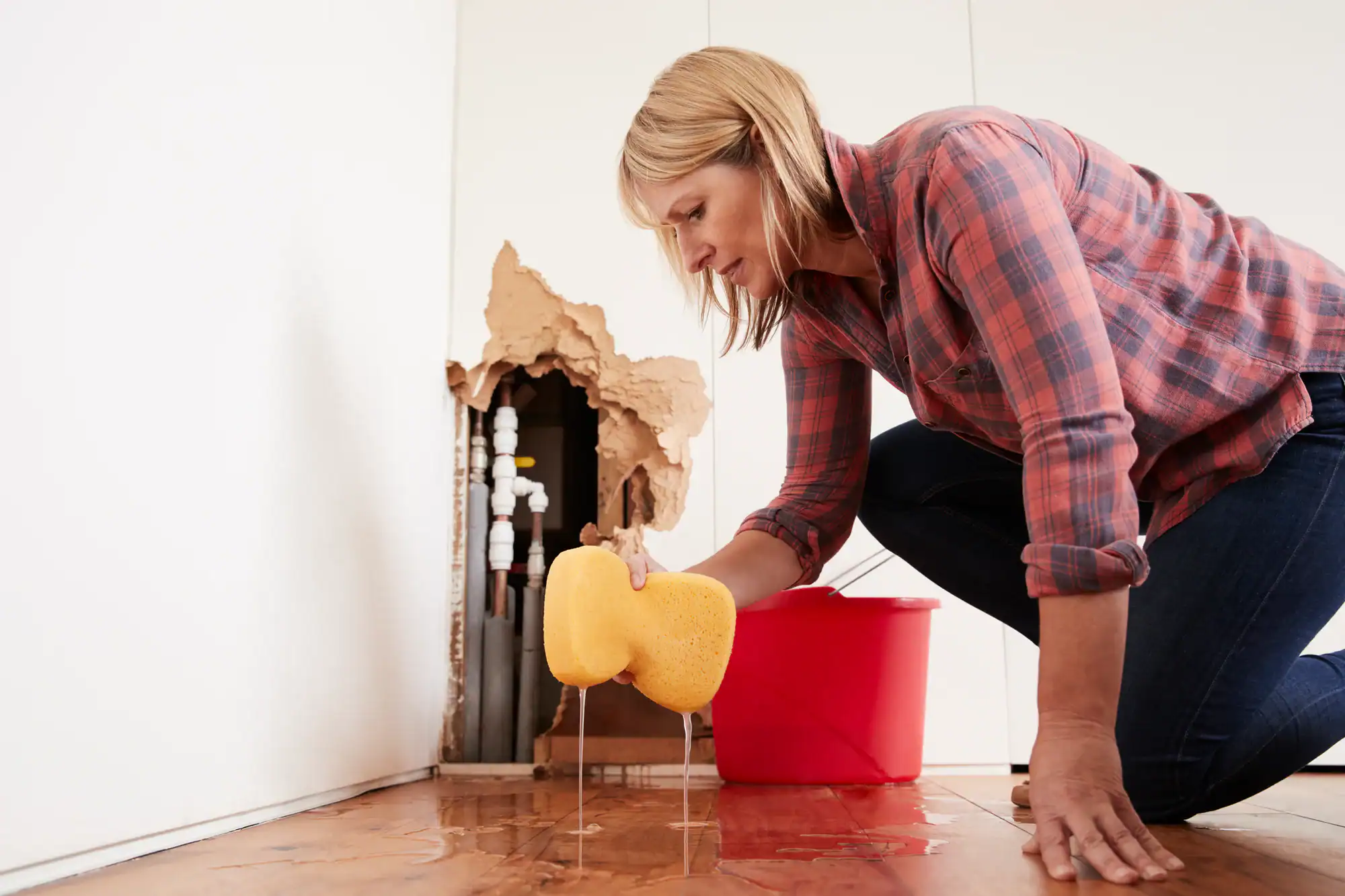
Water damage doesn’t wait for a convenient time — and in North Hempstead, where most homeowners are gone for ten hours a day, it rarely gets caught early. We deliver fast, certified water damage restoration so the situation is handled before it becomes something far worse.
I needed a professional consultation explanation of procedure for safe removal of Asbestos in my apartment complex. Without having an account yet, I was very impressed with the caring, knowledgeable and generous advice offered by Jessica, and will look forward to doing business in the future. Thank you so much! I feel much more informed about a sometimes scary endeavor. Peace. Nancy Silva Mineola, NY.
Mia Munoz
Used this company to clean up some water flood in my house. They were fast and easy to work with.very professional, Would recommend to anyone!
Nini Valle
Great company, had a flood and they responded quickly and efficiently. Billed my insurance company directly. I highly recommend this company!
joe colapietro, jr
I had pipe freeze in my basement right before a snow storm and they made to within an hour to help start the clean up process. They we by our side throughout the entire process and even helped with the insurance company. They did such a great job with the cleanup, repair, remidiation, I contracted them to perform the repairs and finishes in the basement. They came with enough manpower and material to get the job done. Leo and Jessica were nothing but a pleasure to deal with!!
Cristian Arredondo c
I had some water damage in my home and Green Island was able to take care of my issue quickly and effectively. I am very pleased with the work they did. They responded quickly and were very professional.
Michael M
Outstanding service! From the office to the field crew everyone was friendly, helpful and responsive. I highly recommend Green Island Group.
Here’s the part most people don’t realize until it’s too late: water doesn’t just damage what it touches. It moves — through drywall, under flooring, into wall cavities — and within 24 to 48 hours, mold can begin growing in places you’ll never see without professional equipment. By the time you notice a smell or a stain, the problem inside the wall is already weeks old.
For North Hempstead homeowners, that window is especially tight. A lot of people here leave for Manhattan before 7 a.m. and don’t get back until evening. A pipe that bursts at 8 in the morning has been running for nine hours before anyone walks through the door. That’s not a cleanup job anymore — that’s a restoration.
The other thing worth knowing: North Hempstead’s housing stock is older than most people think. A significant portion of homes in communities like Roslyn, Great Neck, and Port Washington were built between the 1920s and 1960s. Aging plumbing, stone foundations, and older construction methods mean water finds its way in more easily — and hides more effectively. Getting it fully dry, not just surface dry, is what separates a real restoration from a job that comes back to haunt you six weeks later.
North Hempstead Is Where We Work — Not Just Where We're Listed
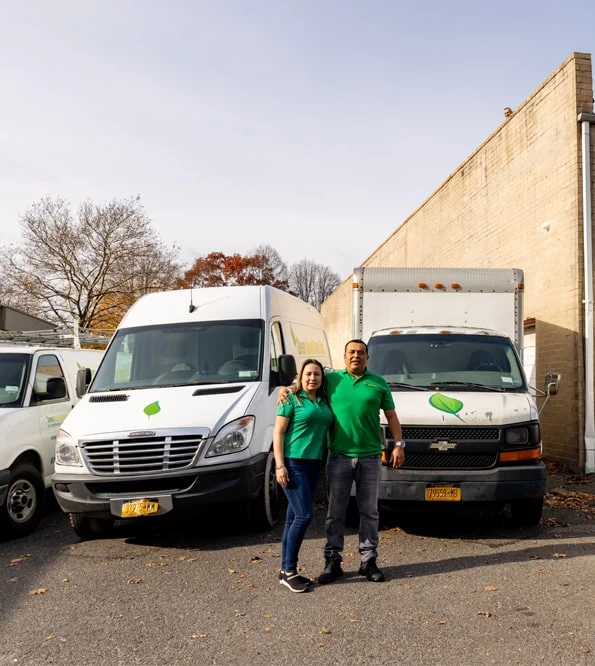
We are a locally owned and operated water damage restoration company serving North Hempstead, Nassau County, and the surrounding areas. We’re not a franchise. There’s no national call center routing your emergency to whoever picks up. When you call, you’re talking to someone who actually works here — and who can have a crew moving toward Port Washington, Great Neck, or Manhasset without the lag that comes with corporate dispatch systems.
We carry IICRC certification — including Water Damage Restoration Technician (WRT) and Applied Structural Drying (ASD) credentials — and we’re fully licensed under New York State’s 2016 Mold Law. That last part matters more than most homeowners realize. Unlicensed mold work in New York isn’t just a quality issue — it can complicate your insurance claim and create legal exposure.
What you get with us is a consistent crew, a clear process, and someone accountable at every step. For homeowners managing things from a Manhattan office while their basement is being dried out in Plandome or Albertson, that accountability isn’t a nice-to-have — it’s the whole point.
What Actually Happens From Your First Call to a Dry, Documented Home
It starts the moment you call. We ask a few quick questions — what happened, where the water is, how long it’s been sitting — and we move from there. For emergencies, we’re available around the clock, because a nor’easter hitting the Port Washington waterfront at 2 a.m. doesn’t care about business hours.
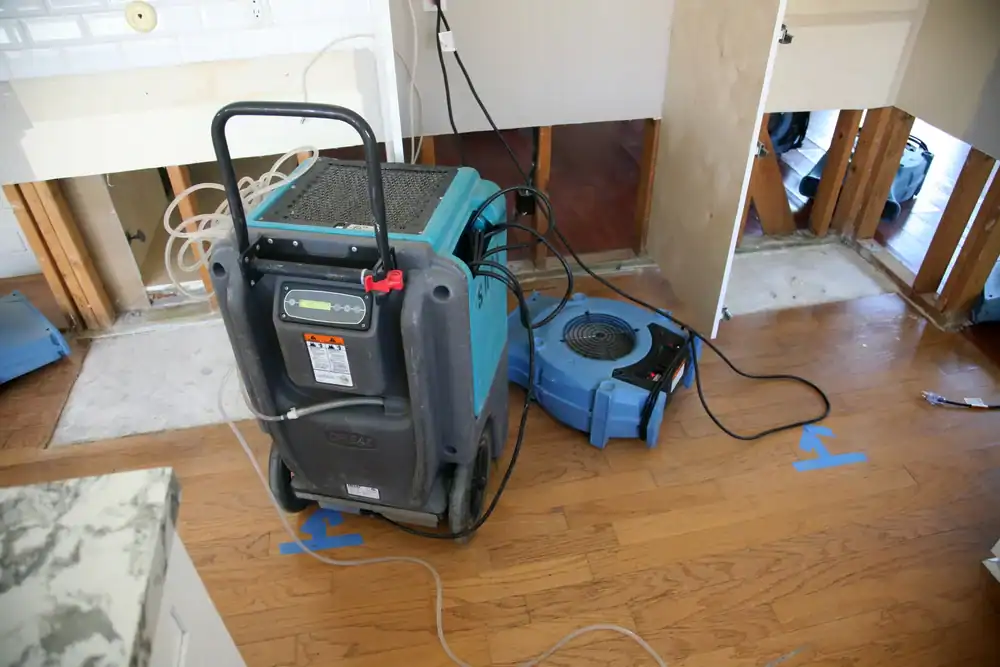
When we arrive, the first thing we do is assess the full scope of the damage — not just what’s visible. We use thermal imaging cameras and moisture meters to find water that has migrated inside walls, beneath flooring, and into structural framing. This step is especially important in North Hempstead’s older homes, where plaster walls, original subfloors, and older insulation materials create more places for moisture to hide and linger. What looks dry on the surface is often far from it.
Once we have a complete picture, we extract standing water, set industrial-grade drying equipment, and begin the structural drying process. We monitor moisture readings daily — not by feel, not by appearance, but by actual measurement — and we don’t sign off until the numbers confirm the structure is dry. Throughout the process, we document everything: photos, moisture logs, equipment records. That documentation isn’t just for our records — it’s what your insurance adjuster needs to process your claim, and we make sure it’s thorough. In North Hempstead, where many properties carry both standard homeowners policies and separate FEMA flood insurance, having complete documentation from day one protects your claim from the start.
Everything the Job Requires — Nothing Left for Later to Reveal
Water damage restoration isn’t a single task — it’s a sequence of connected steps, and skipping or rushing any one of them is how you end up with a mold problem three weeks after the crew leaves. What we do covers the full scope: emergency water extraction, structural drying, moisture mapping, mold assessment coordination, content protection, and complete documentation for your insurance claim.
For North Hempstead properties specifically, there are a few things that consistently come up. Homes near Manhasset Bay and Hempstead Harbor often deal with hydrostatic pressure — groundwater pushing through foundation walls because the water table is simply that high. That’s a different problem than a burst pipe, and it requires different equipment and a different drying approach. We know the difference, and we come prepared for it.
When mold remediation is needed — which, in Nassau County’s coastal humidity and in homes with older construction, it often is — we follow New York State’s 2016 Mold Law to the letter. That means a licensed assessor evaluates the situation independently, and our licensed remediation crew handles the work separately. It’s a legal requirement in New York, and it’s one that protects you as the homeowner. Any restoration company that skips this step is cutting a corner that could void your insurance coverage or leave you with a liability. We don’t cut that corner.
Does homeowners insurance actually cover water damage in North Hempstead, NY?
It depends on the source of the water, and that distinction matters more than most people realize. Standard homeowners insurance typically covers sudden, accidental water damage — a burst pipe, an appliance failure, a roof leak from a storm. What it usually does not cover is flooding from an external source, like storm surge from Long Island Sound or overflow from Manhasset Bay. That type of damage falls under flood insurance, which is a separate policy administered through FEMA’s National Flood Insurance Program.
In North Hempstead, this is a real and common issue. A number of communities — particularly those near the waterfront in Port Washington, Great Neck, and along Hempstead Harbor — sit within FEMA-designated Special Flood Hazard Areas. If your home is in one of those zones and you have a federally backed mortgage, you’re likely required to carry flood insurance. If you’re not sure what your policy covers, we can help you work through the documentation and communicate directly with your adjuster so nothing falls through the cracks.
How quickly can a water damage restoration crew reach my North Hempstead home?
We serve North Hempstead and the surrounding Nassau County communities, which means we’re not driving in from a distant dispatch location. Response time varies depending on the time of day and current call volume, but for emergency situations, we prioritize getting there fast — because the difference between a two-hour response and a six-hour response can be the difference between drywall that’s salvageable and drywall that has to come out entirely.
For North Hempstead’s commuter population, this matters in a specific way. A lot of homeowners here find out about water damage while they’re still on the LIRR heading home from the city. If you’re at Penn Station and you just got a text from a neighbor about your basement, you want to know that a crew is already moving — not waiting for you to get home and assess it yourself first. Call us from wherever you are. You don’t need to be there for us to start.
What should I do immediately after discovering water damage in my home?
The most important thing is to stop the source if you safely can — shut off the main water supply if it’s a burst pipe, or stop using any fixtures connected to a backed-up drain. After that, don’t run fans from the hardware store and assume the problem is being addressed. Household fans move air, but they don’t remove moisture from inside walls, subflooring, or structural framing. In many cases, they actually spread moisture further before it evaporates from the surface, leaving the hidden damage untouched.
Document what you see before anything is moved or cleaned up. Take photos and video of the affected areas — this becomes part of your insurance claim, and the more thorough it is, the better. Then call a certified restoration company as quickly as possible. In Nassau County’s climate, especially during the humid summer months or after a nor’easter, the 24 to 48 hour mold window is not a theoretical risk — it’s a real timeline that experienced restoration crews take seriously. The sooner professional drying equipment is running, the better your outcome will be.
How long does the water damage restoration process typically take?
The honest answer is that it depends on how much water was involved, how long it sat, and what type of materials were affected. A contained pipe burst in a finished basement with laminate flooring is a different job than storm surge flooding in a pre-war Roslyn colonial with plaster walls and original hardwood throughout. Most residential water damage restoration projects take between three and five days for the drying phase alone — and that’s if the work is done correctly, with daily moisture monitoring rather than a one-time equipment drop.
If mold remediation is needed, that adds time. Under New York State’s 2016 Mold Law, a licensed assessor must evaluate the situation before remediation begins, and the remediation itself has to be completed by a separately licensed crew. That process is regulated for good reason — it protects you as the homeowner — but it does mean the timeline extends. We’ll give you a realistic estimate from the start and keep you updated throughout, which matters especially if you’re managing the situation remotely from work.
My basement floods every time it rains hard — is that a water damage restoration issue?
Recurring basement flooding after heavy rain is usually a hydrostatic pressure problem, not a plumbing problem. In parts of North Hempstead — particularly communities near Manhasset Bay, Hempstead Harbor, and the lower-lying areas of the Great Neck peninsula — the water table sits close to the surface. When significant rainfall hits, groundwater rises and pushes through foundation walls and floor drains. It’s not coming from a pipe. It’s coming from the ground itself.
Restoration addresses the immediate damage — water extraction, structural drying, moisture remediation — but it won’t stop the next flood on its own. If your basement floods repeatedly, the long-term answer involves waterproofing and drainage solutions. What we can do is make sure each event is handled thoroughly so moisture isn’t accumulating in your foundation walls over time, which is exactly how recurring minor flooding turns into a serious mold problem. If you’re dealing with this pattern, we can walk you through what we’re seeing and what options make sense for your specific situation.
Do I need a permit for water damage repairs in North Hempstead?
For the drying and water extraction phase of restoration, permits are generally not required. But once the work moves into structural repairs — replacing drywall, flooring, framing, or any electrical or plumbing components — permitting requirements apply, and in North Hempstead, the jurisdiction depends on exactly where your home is located. If you live in one of the town’s 30 incorporated villages, like Great Neck, Roslyn, Mineola, or Westbury, the village building department has authority over permits. If you’re in an unincorporated hamlet like Manhasset, Port Washington, or Albertson, the Town of North Hempstead Building Department handles it.
This is one of the reasons working with a restoration company that knows Nassau County matters. The permitting landscape here is more layered than in most areas, and getting it wrong — pulling the wrong permit or skipping one entirely — can create problems when you go to sell the home or file a future insurance claim. We handle the documentation side of the job thoroughly, and if structural repairs require permits, we make sure that process is addressed correctly from the start.