Water Damage Restoration in North Valley Stream, NY
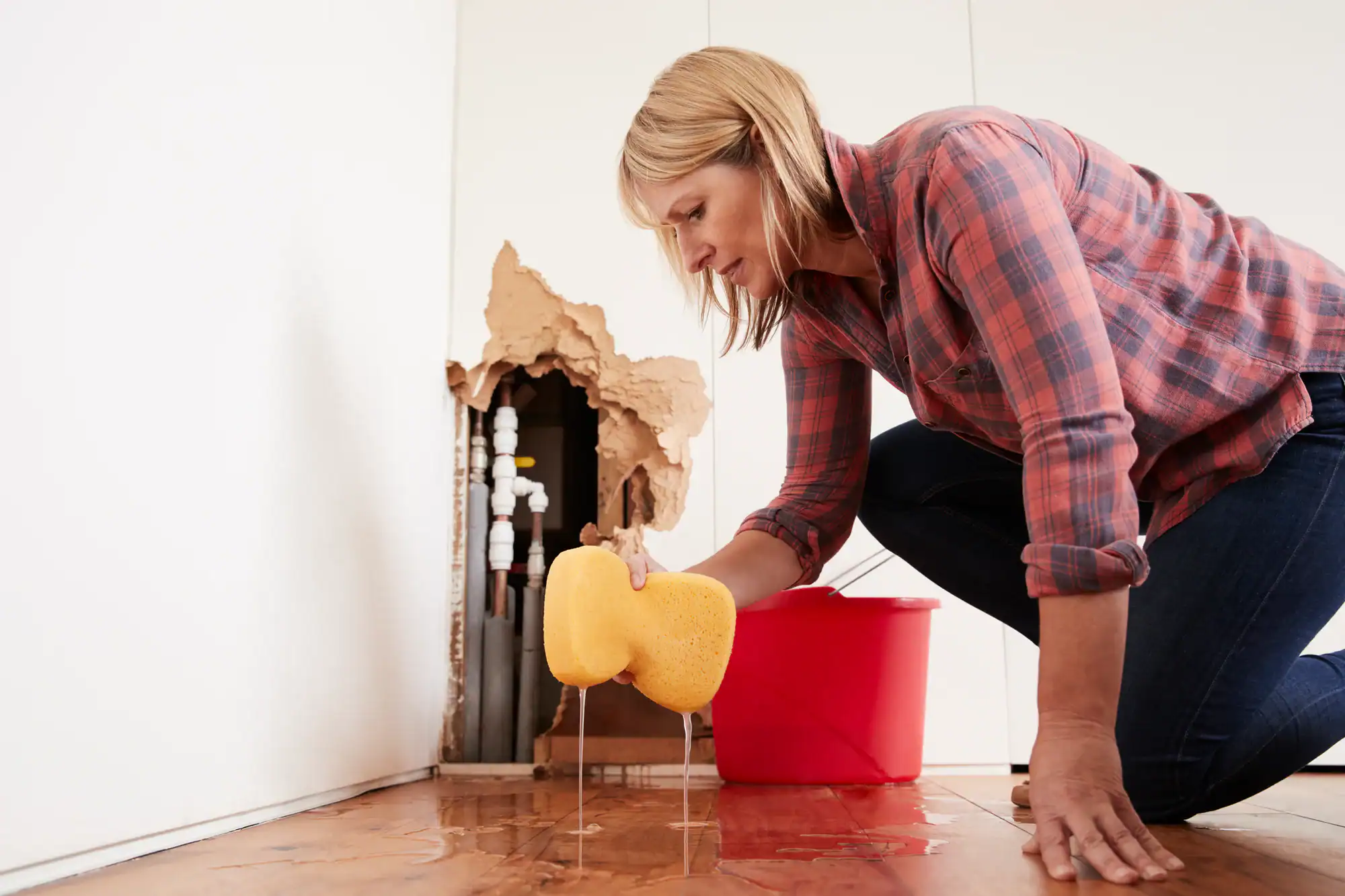
When Your Basement Floods in North Valley Stream, Every Hour Counts
The homes here were built in the 1950s. The pipes are aging. The stormwater system wasn’t designed for what Ida dropped on this neighborhood. When water gets in, we get there fast — and we handle everything, including your insurance company.
I needed a professional consultation explanation of procedure for safe removal of Asbestos in my apartment complex. Without having an account yet, I was very impressed with the caring, knowledgeable and generous advice offered by Jessica, and will look forward to doing business in the future. Thank you so much! I feel much more informed about a sometimes scary endeavor. Peace. Nancy Silva Mineola, NY.
Mia Munoz
Used this company to clean up some water flood in my house. They were fast and easy to work with.very professional, Would recommend to anyone!
Nini Valle
Great company, had a flood and they responded quickly and efficiently. Billed my insurance company directly. I highly recommend this company!
joe colapietro, jr
I had pipe freeze in my basement right before a snow storm and they made to within an hour to help start the clean up process. They we by our side throughout the entire process and even helped with the insurance company. They did such a great job with the cleanup, repair, remidiation, I contracted them to perform the repairs and finishes in the basement. They came with enough manpower and material to get the job done. Leo and Jessica were nothing but a pleasure to deal with!!
Cristian Arredondo c
I had some water damage in my home and Green Island was able to take care of my issue quickly and effectively. I am very pleased with the work they did. They responded quickly and were very professional.
Michael M
Outstanding service! From the office to the field crew everyone was friendly, helpful and responsive. I highly recommend Green Island Group.
What Changes When the Water Is Gone and the Job Is Done Right
Standing water is the obvious problem. What comes after it — mold growing inside your walls, moisture trapped under original hardwood floors, structural damage hiding behind drywall — is what actually costs you. In North Valley Stream, where most homes are 60 to 70 years old and basements took the full force of events like Ida, the damage you can’t see is usually worse than what you can.
When the job is done correctly, you get your home back without the anxiety of wondering what’s still wet inside the walls. Thermal imaging confirms the moisture is gone — not just dried on the surface. The finished basement you use as a family room, a home office, or storage for things that matter gets restored to where it was, not just patched.
The other thing that changes is the insurance process. Most homeowners in North Valley Stream have never filed a major property damage claim before. We document everything, communicate directly with your adjuster, and handle the billing — so you’re not fronting $12,000 out of pocket while waiting for reimbursement.
Water Restoration Companies Serving North Valley Stream
Local Crews Based Right Here in North Valley Stream's Neighborhood
We’re a Long Island-based water damage restoration company — not a franchise, not a call center routing jobs to whoever’s available. When you call 631-613-8945, you’re reaching people who are already on Long Island and can be in North Valley Stream quickly via the Southern State Parkway.
What that means practically is that the same crew that extracts the water is the same crew that dries your home and signs off on the moisture readings. There are no handoffs, no “I don’t know what the last team did,” and no rotating subcontractors showing up each day with no context. That consistency is what separates a restoration job that’s actually finished from one that just looks finished.
We’ve worked throughout North Valley Stream and Nassau County — in the mid-century Cape Cods, ranches, and split-levels that make up most of this community — and we understand what these houses deal with. Aging infrastructure, high groundwater pressure, and stormwater systems that weren’t built for modern rainfall events. We know what we’re walking into before we get there.
Emergency Water Removal Process in North Valley Stream
From the First Call to the Final Moisture Reading — Here's What Happens
When you call, the first thing that happens is a real conversation — not a hold queue. We find out what you’re dealing with, what caused it, and how long the water has been sitting. That matters because mold can begin growing within 24 to 48 hours of water intrusion, and in a finished basement with original drywall and wood framing, that clock moves fast.
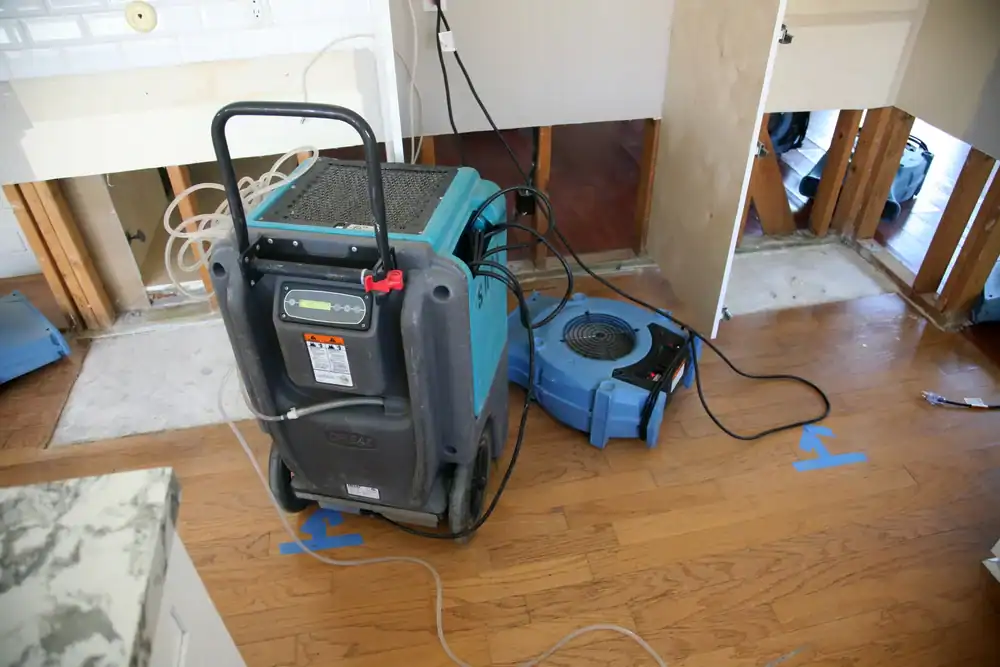
Once we arrive, we assess the full scope of the damage using thermal imaging cameras to find moisture inside walls and under floors — places a visual inspection will miss entirely. In North Valley Stream’s older housing stock, this step is not optional. Water travels in ways that 1950s construction wasn’t designed to contain, and what looks dry on the surface is often still saturated behind it. We then extract standing water, set up industrial drying equipment, and monitor moisture levels throughout the drying process until readings confirm the structure is dry — not just surface-dry.
For any structural repairs that follow — drywall replacement, framing work, anything that affects the building envelope — permits go through the Town of Hempstead’s Building Department, since North Valley Stream is an unincorporated hamlet. We’re familiar with that process and can help you understand what’s required so there are no surprises when it comes time to close out the job or sell the home down the line.
Water Damage Restoration Service in North Valley Stream, NY
Everything Covered — From Burst Pipes to Sewage Backup to Mold Prevention
Water damage in North Valley Stream doesn’t come from one place. It comes from a pipe that froze during a February cold snap and burst during the March thaw. It comes from nine inches of rain overwhelming a stormwater system that was never built for that volume. It comes from a washing machine hose that failed quietly behind a wall for three days before anyone noticed. Each of those scenarios requires a different approach, and we handle all of them.
For sewage backup — which happens regularly in this area when Nassau County’s ground recharge basins get overwhelmed during extreme rainfall — we follow full Category 3 contamination protocols. That means proper protective equipment, antimicrobial treatment, and disposal procedures that meet New York State standards. This is not a shop-vac-and-bleach situation, and any company telling you otherwise is cutting corners that will cost you later.
New York State also requires separate licensing for mold assessment and mold remediation under the 2016 NY Mold Law. In a community like North Valley Stream, where recurring basement flooding and aging housing stock create persistent mold risk, that licensing matters. It means the work is done to state standards and will hold up with your insurance adjuster. We document all damage with photographs and moisture readings, communicate directly with your insurance company, and provide the paperwork that adjusters require — so the claim process doesn’t fall on you to figure out alone.
How quickly can you respond to water damage in North Valley Stream, NY?
Speed is everything with water damage, and our crews are already based on Long Island — not dispatched from a regional hub somewhere else. For North Valley Stream specifically, we can reach you quickly via the Southern State Parkway, which begins its run right at the Belt Parkway interchange in this community. That’s a geographic advantage that works in your favor when you’re watching water spread across a basement floor at midnight.
We answer emergency calls 24 hours a day, 7 days a week. One of our North Valley Stream customers called during a pipe freeze right before a snowstorm and had a crew on-site within an hour. That kind of response time is what actually limits the damage — and limits the cost. Every hour water sits in a finished basement is another hour it’s soaking into drywall, subfloor, and framing that will need to be replaced.
Does homeowners insurance cover basement flooding and water damage repair costs?
It depends on the cause, and this is where a lot of homeowners in North Valley Stream get caught off guard. Standard homeowners insurance typically covers sudden and accidental water damage — a burst pipe, a failed appliance, a roof leak during a storm. What it usually does not cover is flooding from outside the home, which is a separate flood insurance policy through FEMA’s National Flood Insurance Program.
The distinction matters in North Valley Stream because the flooding here is mostly inland — overwhelmed stormwater systems, hydrostatic groundwater pressure, and sewer backup — not coastal storm surge. Sewer backup coverage is often a rider you have to add to your policy, and many homeowners don’t realize they don’t have it until they need it. We document everything from the moment we arrive — photographs, moisture readings, cause of loss — and we communicate directly with your insurance adjuster. We’ve handled enough Nassau County claims to know what documentation adjusters require and how to present it clearly.
How do I know if there's mold growing after my basement flooded in North Valley Stream?
Mold doesn’t always announce itself visibly, especially in the early stages. In North Valley Stream’s mid-century housing stock — most of it built in the 1950s with materials and construction methods of that era — moisture gets trapped inside wall cavities, under original hardwood floors, and in subfloor layers that were never designed to dry quickly. You can have active mold growth behind drywall that looks completely fine on the surface.
The honest answer is that you can’t know for certain without professional moisture testing and, in many cases, thermal imaging. A musty smell is the most common early indicator, but by the time you’re smelling it, the mold has already established itself. If your basement flooded — whether during a nor’easter, a pipe failure, or a sewer backup — and it’s been more than 24 to 48 hours, mold assessment is not optional. Under New York State’s 2016 Mold Law, assessment and remediation require separate licenses from the NY Department of Labor. Make sure whoever you hire holds those licenses, because unlicensed mold work won’t hold up with your insurance company and doesn’t protect you legally.
What causes basement flooding in North Valley Stream homes specifically?
North Valley Stream’s flooding risk is almost entirely inland — and that’s an important distinction from the coastal communities further south. The community sits in a low-lying, flat area where the Southern State Parkway, Belt Parkway, and Cross Island Parkway all converge. That geography means stormwater has limited natural drainage gradient. When heavy rain hits — and the Valley Stream area recorded roughly nine inches during Hurricane Ida’s remnants in September 2021 — Nassau County’s stormwater recharge basins get overwhelmed and water backs up through storm drains and sewer connections directly into residential basements.
Beyond storm events, the most common causes we see in North Valley Stream are burst and frozen pipes in homes with original 1950s-era galvanized steel plumbing, hydrostatic groundwater pressure pushing through aging foundation walls and floor slabs, and appliance failures like water heaters and washing machines. The freeze-thaw cycles that have become more unpredictable in recent years — a hard freeze in February followed by a warm spell in March — are especially hard on older pipes that have already been through 60 or 70 winters. If your home was built before 1975 and has never had a plumbing update, that’s a vulnerability worth knowing about before the next cold snap.
How long does water damage restoration take for a flooded basement?
The honest range is two to five days for the drying process alone, depending on how long the water sat, how much material absorbed it, and what the baseline humidity conditions are in your home. Nassau County’s naturally high groundwater table and the humid conditions common in older, partially-finished basements can extend drying time compared to newer construction with better vapor barriers and airflow.
After drying is confirmed — not assumed, confirmed with actual moisture meter readings — any structural repairs begin. Drywall replacement, framing repairs, flooring, and anything that affects the building envelope will require permits through the Town of Hempstead’s Building Department, since North Valley Stream operates under town jurisdiction rather than a village building department. The permit process adds time, but skipping it creates problems with insurance claims and future property sales. We walk you through what’s required so you’re not navigating that alone. Total timeline from first call to completed restoration for a typical finished basement in this area runs one to two weeks, depending on the scope.
Why should I hire a local water restoration company instead of a national franchise?
The core issue with national franchise restoration brands is how they’re structured. Most operate as independently owned local franchises that run under a national name. Calls often route through centralized dispatch, crews are sometimes subcontracted, and on a multi-day job, you can end up with different people showing up each day who don’t know what the previous team did. The complaints are consistent across reviews of these companies: no continuity, estimates that change without explanation, and a general feeling of being processed rather than helped.
In North Valley Stream — where neighbors talk, word-of-mouth travels fast through tight residential blocks, and most homeowners have real emotional investment in homes that have been in the family for decades — that kind of experience lands badly. A locally based company with Long Island crews, a 631 number that someone actually answers, and a reputation that lives or dies in this specific market operates under a completely different set of incentives. We’re not managing a national brand image. We’re managing our standing in the communities we actually work in, including yours.