When Your 1950s North Wantagh Home Takes On Water, Every Hour Counts
North Wantagh’s aging housing stock doesn’t forgive slow responses. We deliver water damage restoration that stops the spread before your walls, floors, and insurance claim turn into a bigger problem.
I needed a professional consultation explanation of procedure for safe removal of Asbestos in my apartment complex. Without having an account yet, I was very impressed with the caring, knowledgeable and generous advice offered by Jessica, and will look forward to doing business in the future. Thank you so much! I feel much more informed about a sometimes scary endeavor. Peace. Nancy Silva Mineola, NY.
Mia Munoz
Used this company to clean up some water flood in my house. They were fast and easy to work with.very professional, Would recommend to anyone!
Nini Valle
Great company, had a flood and they responded quickly and efficiently. Billed my insurance company directly. I highly recommend this company!
joe colapietro, jr
I had pipe freeze in my basement right before a snow storm and they made to within an hour to help start the clean up process. They we by our side throughout the entire process and even helped with the insurance company. They did such a great job with the cleanup, repair, remidiation, I contracted them to perform the repairs and finishes in the basement. They came with enough manpower and material to get the job done. Leo and Jessica were nothing but a pleasure to deal with!!
Cristian Arredondo c
I had some water damage in my home and Green Island was able to take care of my issue quickly and effectively. I am very pleased with the work they did. They responded quickly and were very professional.
Michael M
Outstanding service! From the office to the field crew everyone was friendly, helpful and responsive. I highly recommend Green Island Group.
Dry Walls, No Hidden Moisture, No Mold Surprise Later
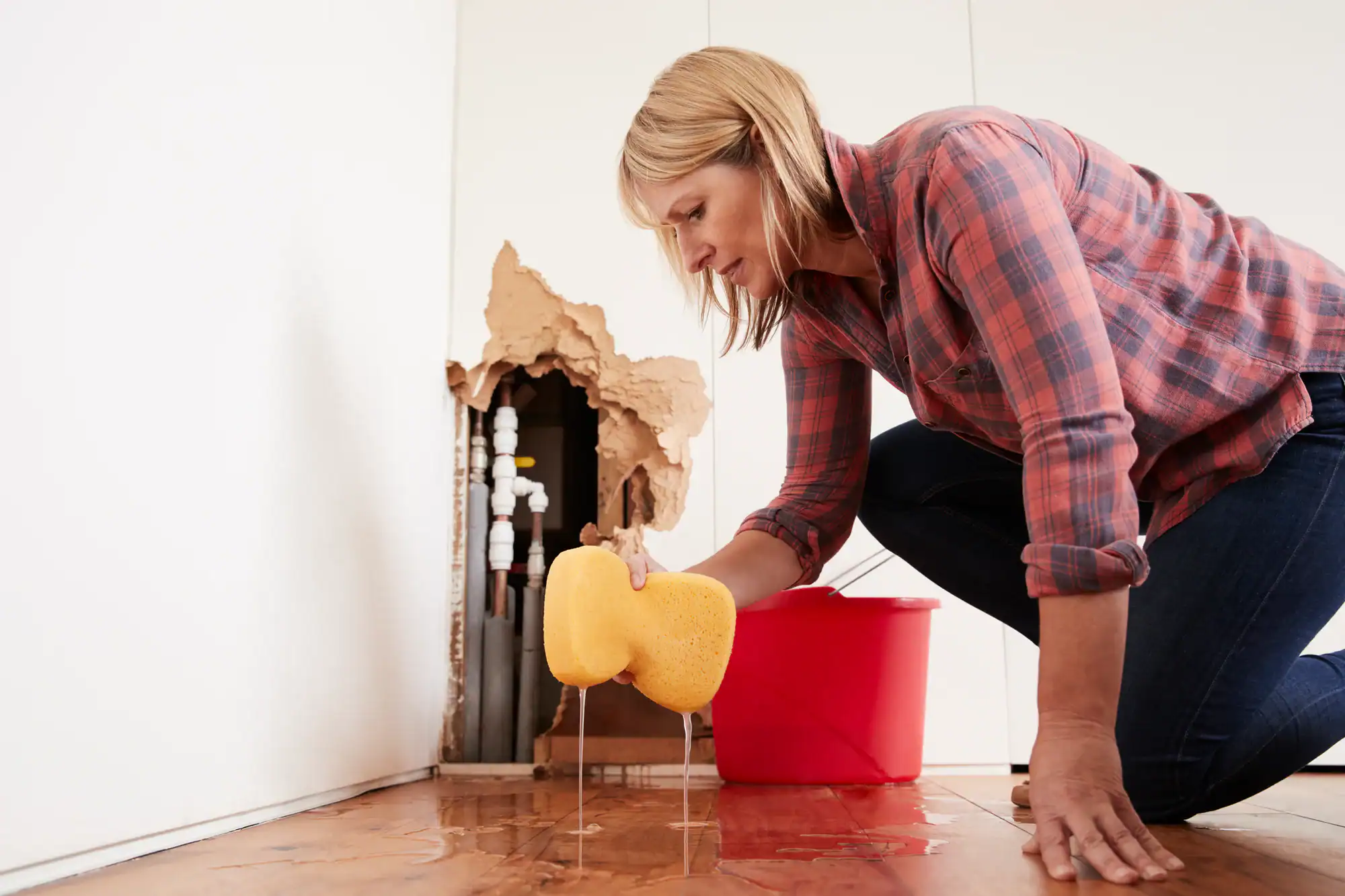
When water gets into a home built in the 1950s, it doesn’t just wet the surface — it soaks into original wood framing, wicks through plaster walls, and settles into subfloor assemblies that haven’t been touched in decades. What looks dry on the outside is often still saturated inside. That’s where the real damage lives, and that’s exactly what gets missed when the job isn’t done right.
Nearly 60% of homes in North Wantagh’s ZIP code were built between 1950 and 1959. These homes have character, but they also have galvanized pipes approaching the end of their lifespan, original basement waterproofing that’s long since broken down, and wall cavities that hold moisture longer than modern construction ever would. A proper restoration here isn’t the same as drying out a house built in 2005 — the approach has to account for what’s actually inside those walls.
After a water damage restoration is done correctly, you’re not just looking at dry surfaces. You’re looking at moisture readings that confirm structural dryness, documentation we provide that your insurance adjuster will accept without pushback, and a home that isn’t quietly growing mold behind the drywall. That’s what the process is supposed to deliver — and that’s the standard we hold every job to.
Local Water Restoration Companies in North Wantagh
Long Island-Based, North Wantagh-Accountable
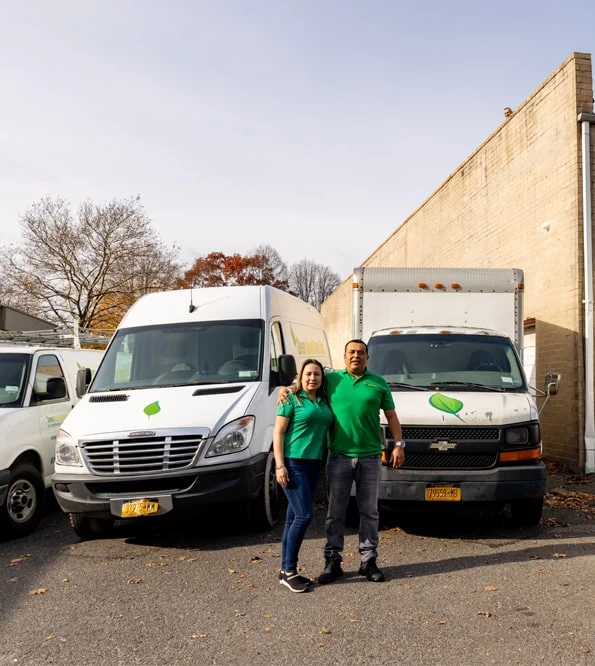
We’re a locally owned restoration company serving Long Island — not a national franchise with a territory map that happens to include your ZIP code. When you call, you’re reaching a team that actually operates in Nassau County, knows the housing stock in communities like North Wantagh, and has worked on the same post-war Cape Cods and ranch homes that line the streets between Wantagh Avenue and Jerusalem Avenue.
That local presence matters more than it sounds. It means faster response, real familiarity with how these homes behave when water gets in, and a team whose reputation depends on doing right by the people who live in North Wantagh. No call centers. No crews dispatched from three counties away.
We carry full licensing required under New York State law — including compliance with the NY State Mold Law — and Nassau County’s home improvement contractor requirements. Every job is documented to IICRC standards, which is what your insurance company will be looking for when they review the claim.
Water Damage Restoration Service, North Wantagh NY
What Actually Happens From Your First Call to Final Clearance
The first call gets someone on the phone who can make decisions — not a dispatch queue. From there, a crew is on the way, and the first thing we do on-site is assess the full scope using thermal imaging cameras and calibrated moisture meters. In a North Wantagh home with original plaster walls or wood subfloors, that step is non-negotiable. You can’t dry what you haven’t found, and visible water is rarely the whole story.
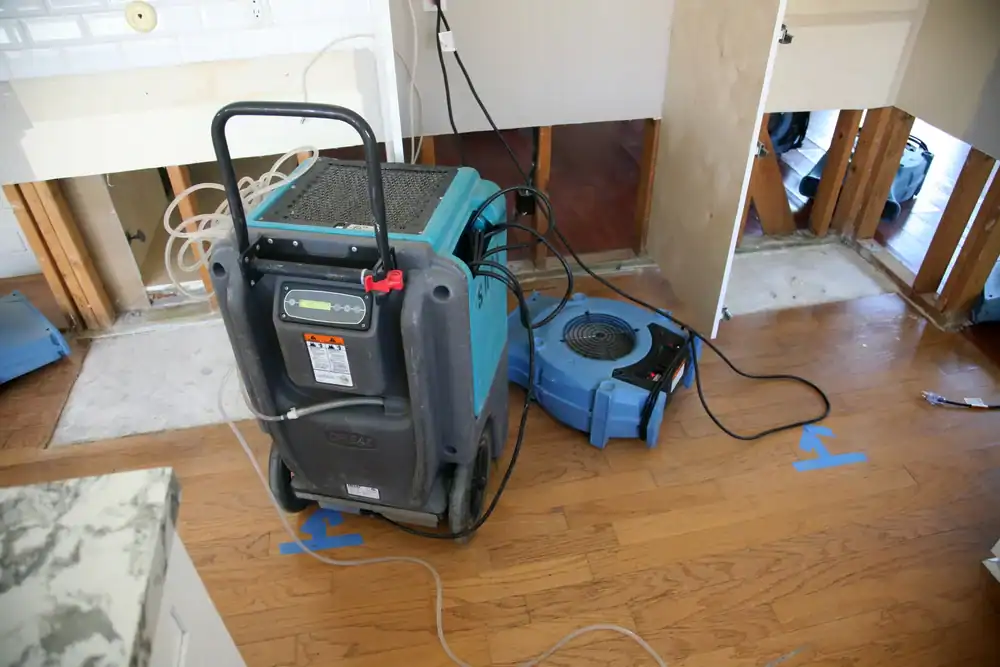
Once the scope is confirmed, water extraction begins immediately. We deploy industrial-grade equipment — air movers, dehumidifiers, drying mats for subfloors — placed based on the actual moisture map, not a generic setup. In older homes along Nassau County’s South Shore, the groundwater table is high and the soil stays saturated longer after heavy rain events, which means the drying timeline has to account for conditions outside the house, not just inside it. Every reading gets logged throughout the process.
Before the job closes, we check moisture levels against a dry standard specific to your home’s materials. Nassau County and the Town of Hempstead may require permits for structural repairs following water damage — we handle that conversation so you don’t have to. When clearance is confirmed, you get full documentation: every reading, every photo, every step — formatted for your insurance claim and ready to go.
Built for the Homes and Conditions North Wantagh Actually Has
Water damage in North Wantagh doesn’t usually come from storm surge or tidal flooding — this neighborhood sits inland, buffered from the direct coastal exposure of communities like Seaford or Wantagh’s southernmost streets. What drives water damage here is the age of the infrastructure: burst pipes during February freeze-thaw cycles, sump pump failures during nor’easters, basement seepage when the water table rises after days of heavy rain, and roof leaks that push water into attic spaces and down through original ceiling assemblies. Our service is built around those specific scenarios.
Every water damage restoration we perform includes emergency water extraction, full moisture mapping with thermal imaging, structural drying calibrated to the materials in your home, and mold prevention treatment where indicated. For homes in North Wantagh with original wood framing and plaster construction, the drying process takes longer than it would in modern drywall construction — and we account for that in both the timeline and the documentation.
On the insurance side, every step is documented to IICRC S500 standards — the protocol insurance adjusters use to evaluate whether restoration work was performed correctly. We work directly with major carriers and can communicate with your adjuster throughout the process. Given that the median home value in North Wantagh is over $624,000, getting the claim right isn’t a secondary concern — it’s a core part of the job.
How quickly does mold actually start growing after water damage in North Wantagh homes?
Mold can begin colonizing within 24 to 48 hours of water intrusion — and that clock starts the moment moisture reaches a surface, not when you notice it. In North Wantagh homes built in the 1950s, the risk is compounded by the materials inside the walls. Original wood lathe, older insulation, and decades of accumulated organic material in wall cavities give mold ideal conditions to spread quickly and invisibly.
The more important point is that mold doesn’t announce itself on the surface first. It starts in the hidden spaces — behind plaster, under subfloors, inside wall cavities — and by the time you see discoloration or smell something off, it’s already been there for a while. That’s why moisture mapping with thermal imaging isn’t optional on these jobs. Finding the moisture before mold has time to establish is the whole game, and it’s why response time in the first 24 hours matters as much as it does.
Will my homeowners insurance cover water damage restoration in Nassau County, New York?
Most standard homeowners insurance policies in New York cover sudden and accidental water damage — a burst pipe, an appliance failure, a roof leak from a storm. What they typically don’t cover is gradual damage or flooding from an external water source, which falls under a separate flood insurance policy. For North Wantagh homeowners, it’s worth knowing that basement seepage driven by a rising water table after heavy rain is often categorized differently than a pipe failure inside the home, so the source of the water matters when the claim is filed.
The other factor that affects claims in Nassau County is documentation. Insurance adjusters evaluate water damage claims against IICRC S500 standards — the industry protocol for moisture mapping, drying procedures, and clearance testing. If the restoration work wasn’t performed to that standard, or if the documentation is incomplete, adjusters have grounds to reduce or dispute the payout. Having us handle the restoration means every step is documented from the start, which protects your claim from the beginning, not just at the end.
What should I do immediately after my basement floods in North Wantagh?
The first thing is safety — don’t enter a flooded basement if there’s any possibility that electrical systems have been compromised. Water and live circuits are a serious hazard, and older homes in North Wantagh are more likely to have electrical panels or outlets in basement areas that weren’t designed with modern safety clearances in mind. If there’s any doubt, stay out and call your utility company before anyone goes down there.
Once it’s safe to enter, stop the source if you can — shut off the main water supply if it’s a pipe failure, or check the sump pump if the water came in during a storm. Then call us immediately. Every hour that standing water sits in contact with your floors, walls, and framing extends the drying timeline and increases the mold risk. Don’t run consumer fans and assume the job is done — they move surface air but don’t address moisture inside the structural materials, which is where the real damage accumulates in a home of this age and construction type.
Does New York State's Mold Law affect how water damage restoration is handled in my home?
Yes, and it’s something most homeowners in North Wantagh don’t know about until it becomes a problem. New York State’s Mold Law, which has been in effect since 2016, requires that mold assessment and mold remediation be performed by separately licensed contractors. A single company cannot legally perform both on the same project — the assessment and the remediation must be handled independently to avoid a conflict of interest. This applies to any home in Nassau County, including North Wantagh.
What this means practically is that if water damage in your home leads to mold — which is a real possibility given the 24 to 48 hour colonization window and the age of the housing stock here — you need to verify that whoever you hire is properly licensed under New York State law. Hiring an unlicensed operator isn’t just a quality risk. It can complicate your insurance claim and create liability issues if you sell the home later and a buyer’s inspector finds evidence of prior mold work that wasn’t performed to code. Any legitimate restoration company operating in Nassau County should be able to provide their NY State license number on request.
How long does the water damage drying process take for older homes in North Wantagh?
The honest answer is that it depends on the materials involved, the volume of water, and how quickly the job started — but for a home built in the 1950s, you should plan for a drying process that takes longer than it would in newer construction. Modern drywall releases moisture more readily than original plaster walls over wood lathe. Original wood subfloors hold water longer than engineered products. And in Nassau County, where the water table on the South Shore is naturally high, the soil around the foundation stays saturated longer after heavy rain events, which slows the drying of below-grade spaces.
In most residential water damage jobs, the active drying phase runs between three and five days under normal conditions — but that timeline gets extended when materials are dense, when the moisture has migrated deep into structural assemblies, or when the job started late. We keep drying equipment in place until moisture meter readings confirm that every affected area has reached the dry standard for its specific material type. Pulling equipment early because things look dry is one of the most common ways a restoration job leads to a mold problem weeks later.
How do I know if a water damage restoration company in North Wantagh is actually legitimate?
There are a few things worth checking before you let anyone start work on a home worth $600,000 or more. First, ask for their Nassau County Home Improvement Contractor license number — this is required for restoration and repair work in Nassau County, and any legitimate operator should be able to give it to you immediately. Second, ask about their New York State Mold Law licensing if mold is a concern, since that’s a separate credential from general contractor licensing. Third, look at the phone number. Several companies that show up in local search results for North Wantagh are national directory listings with out-of-state phone numbers — they’re not local operators, and in an emergency, that distance matters.
Beyond licensing, ask whether the process follows IICRC S500 standards and whether you’ll receive written moisture documentation throughout the job. That documentation is what protects your insurance claim, and a company that can’t explain what moisture mapping is or why it matters is a company that may leave you with a claim dispute and a mold problem down the road. Word of mouth still carries real weight in a community like North Wantagh — asking a neighbor who they used and whether the job held up over time is as reliable as any online review.