When a Sacandaga Winter Breaks Your Pipes, We're the Call That Matters
Water damage in Northampton doesn’t wait for business hours and neither do we. We respond 24/7 to water damage restoration calls across Fulton County, including the Great Sacandaga Lake area. Whether it’s a frozen pipe in a year-round home on the outskirts of Northville or standing water discovered in a seasonal camp you haven’t visited since October, we’re the people who actually show up and handle it.
I needed a professional consultation explanation of procedure for safe removal of Asbestos in my apartment complex. Without having an account yet, I was very impressed with the caring, knowledgeable and generous advice offered by Jessica, and will look forward to doing business in the future. Thank you so much! I feel much more informed about a sometimes scary endeavor. Peace. Nancy Silva Mineola, NY.
Mia Munoz
Used this company to clean up some water flood in my house. They were fast and easy to work with.very professional, Would recommend to anyone!
Nini Valle
Great company, had a flood and they responded quickly and efficiently. Billed my insurance company directly. I highly recommend this company!
joe colapietro, jr
I had pipe freeze in my basement right before a snow storm and they made to within an hour to help start the clean up process. They we by our side throughout the entire process and even helped with the insurance company. They did such a great job with the cleanup, repair, remidiation, I contracted them to perform the repairs and finishes in the basement. They came with enough manpower and material to get the job done. Leo and Jessica were nothing but a pleasure to deal with!!
Cristian Arredondo c
I had some water damage in my home and Green Island was able to take care of my issue quickly and effectively. I am very pleased with the work they did. They responded quickly and were very professional.
Michael M
Outstanding service! From the office to the field crew everyone was friendly, helpful and responsive. I highly recommend Green Island Group.
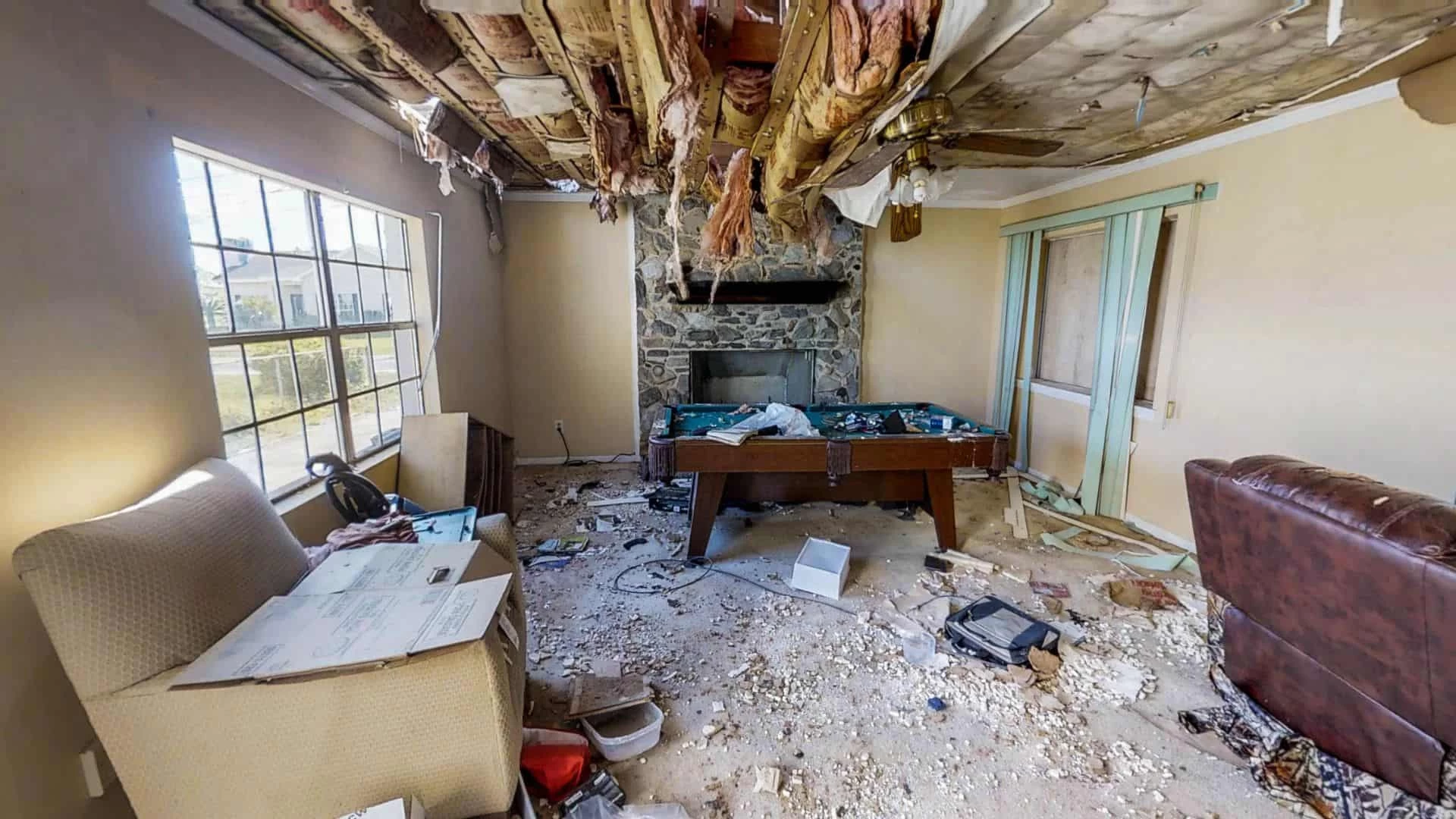
Most people think water damage ends when the visible water does. It doesn’t. What’s left behind soaked insulation, saturated subfloor, moisture trapped inside walls is what turns a manageable repair into a full gut job. The difference between a $3,000 fix and a $30,000 one is usually how fast the right people got there and how thoroughly they dried what you couldn’t see.
In Northampton, that gap matters more than almost anywhere else in New York. A lot of the homes here were built before 1980, and older construction holds moisture differently than newer builds. Wall cavities, wood framing, and unfinished basement spaces absorb water fast and release it slowly. If you’re dealing with a year-round home in Northville or a camp on the lake that sat closed all winter, the structure has likely been holding that moisture longer than you realize.
For seasonal property owners especially, the outcome of proper restoration isn’t just a dry house it’s a house you can actually use again. No mold smell when you open the door in May. No soft spots in the floor. No insurance dispute because the damage wasn’t documented correctly. When the job is done right, you walk back into your Northampton property and it feels like it did before any of this happened.
Water Restoration Companies Serving Northampton NY
We Know Northampton's Properties Better Than Anyone Else Around
We’re a New York-based environmental and property restoration company not a franchise, not a call center routing you to whoever’s available. When you call, you’re reaching people who are accountable for the outcome and familiar with the conditions that make water damage in the Adirondack region its own category of problem.
We serve Northampton, Northville, Sacandaga Park, and the surrounding Fulton County area. That means we understand what it looks like when a camp on the western shore of Great Sacandaga Lake has been sitting wet since January. We know the older housing stock here, the seasonal property dynamics, and the fact that getting a second contractor to come out to a rural Adirondack town isn’t always easy or fast.
That’s why we handle the full scope in-house water extraction, structural drying, mold remediation, air quality testing, and full restoration. One company, one call, no gaps between phases where damage keeps spreading while you wait on someone else.
Emergency Water Damage Restoration Process Northampton
From First Call to Finished How We Actually Work in Northampton
The first thing that happens when you call is an actual conversation not a form submission or a callback window. We ask the right questions to understand what you’re dealing with, whether that’s an active pipe failure at 2 AM in January or a camp you just opened to find standing water in the kitchen. From there, we get someone out to the property as fast as possible.
On-site, we don’t just look at what’s visible. We use moisture meters and thermal imaging to map exactly where water has traveled inside walls, under flooring, into structural framing. In Northampton’s older homes and seasonal properties, water almost always travels further than it looks. That assessment drives the entire plan, including what we document for your insurance claim.
Once the scope is clear, we begin extraction and controlled drying using professional-grade equipment. This isn’t fans and dehumidifiers from a hardware store it’s calibrated industrial drying systems that bring moisture levels down to measurable, verifiable targets. If mold is present, or if the property has been wet long enough that mold is likely, we handle remediation in the same process rather than sending you to a separate contractor. For properties near Great Sacandaga Lake that may be subject to Adirondack Park Agency considerations, we’re familiar with what restoration and reconstruction work may require from a permitting standpoint so that doesn’t become a problem for you after the fact.
Water Damage Restoration Service Near Northampton NY
Built for Adirondack Properties, Not Generic Suburban Jobs
Water damage restoration in Northampton isn’t the same job it is in a newer suburb. The properties here whether it’s a year-round home in Northville, a lakefront camp at Sacandaga Park, or a rental cottage that’s been closed since October have specific characteristics that change how restoration needs to be approached. Older construction means more porous materials. Seasonal vacancy means longer exposure windows. And the Adirondack climate means freeze-thaw damage patterns that don’t show up the same way as a burst pipe in a heated, occupied home.
What we bring to a Northampton job is the full range of services needed to actually finish the restoration: water extraction, structural drying, mold testing and remediation, asbestos awareness for pre-1978 construction where demolition may be involved, air quality verification, and full property restoration back to pre-loss condition. For seasonal property owners, that includes thorough documentation of the damage timeline and cause which matters significantly when your insurance company is trying to determine whether the loss qualifies as a covered sudden event or something else.
We also handle direct insurance communication throughout the process. If you’ve never filed a water damage claim before, that process is more complicated than most people expect, especially for a property that may have been unoccupied when the damage occurred. We know how to document it correctly, present it to the adjuster, and advocate for a fair outcome on your behalf.
Does water damage restoration in Northampton cover seasonal camp properties?
Yes and honestly, seasonal camp and cottage properties are one of the most common scenarios we deal with in this area. When a property on or near Great Sacandaga Lake sits unoccupied from October through April or May, a pipe failure that happens in January might not be discovered until the owner arrives in spring. By that point, the water has had months to soak into wood framing, subfloor, insulation, and wall cavities. Mold is almost always present in those situations.
Restoring a property that has been wet for an extended period requires a different approach than responding to a fresh flood. The assessment has to be thorough we’re looking for moisture that has migrated far beyond the original failure point. The drying process takes longer. And the mold remediation has to be addressed as part of the same project, not as an afterthought. We’ve handled this exact scenario enough times in Fulton County to know what it actually takes to bring one of these Northampton properties back to a usable condition.
How quickly can someone respond to water damage in a rural area like Northampton?
This is a legitimate concern for Northampton residents, and we don’t brush past it. You’re not in a suburb with five restoration companies within ten minutes. The nearest city, Gloversville, is roughly 12 to 15 miles south on NY-30, and Albany is closer to an hour away. For a lot of national franchise operators, Northampton is technically in their service area but practically speaking, getting someone out there fast is a different story.
We serve Fulton County and the Great Sacandaga Lake area as a real part of our coverage, not a geographic footnote. Our 24/7 availability means you’re reaching someone who can actually dispatch a team, not a call center that queues your request for the next business day. When you have active water damage, every hour matters mold can begin growing within 24 to 48 hours of water exposure. We take response time seriously because the cost of delay is real and measurable.
Will my homeowner's insurance cover water damage from a burst pipe in winter?
In most cases, yes a sudden pipe burst is typically covered under standard homeowner’s insurance policies as a sudden and accidental loss. But the details matter, and in Northampton’s seasonal property context, those details can get complicated. If the property was unoccupied and unheated when the pipes froze, some insurers will challenge the claim on the basis that the damage was preventable. The difference between a paid claim and a denied one often comes down to how the damage is documented and presented.
That’s where having a restoration company that understands the claims process is genuinely valuable. We document the damage thoroughly moisture readings, photos, timeline reconstruction, cause assessment in a format that supports your claim. We communicate directly with your adjuster throughout the process. We know the language insurers use to deny claims, and we know how to counter it with accurate documentation. For a Northampton property owner dealing with months-old winter damage, that advocacy can mean the difference between a fair settlement and a frustrating dispute.
What does water damage restoration actually cost in Northampton, NY?
The honest answer is that it depends on scope, and scope in Northampton’s older housing stock and seasonal property inventory can vary widely. A fresh pipe burst caught within a few hours in a year-round home might run a few thousand dollars. A seasonal camp that’s been wet since January and has developed significant mold throughout the structure could run considerably more. What we can tell you is that professional restoration almost always costs less than the alternative. Delayed remediation allows mold to spread, structural materials to deteriorate further, and secondary damage to compound. What starts as a $5,000 job can become a $20,000 job if it sits another few weeks. We provide a clear, honest assessment before any work begins so you understand the scope and cost before you commit no surprises, no pressure, no inflated estimates designed to maximize a claim.
Does water damage restoration work require any special permits in the Adirondack Park?
It depends on what the restoration involves. The remediation itself extraction, drying, mold removal generally doesn’t require Adirondack Park Agency permitting. But if the restoration work extends into structural reconstruction, additions, or any alteration that affects the building’s footprint or its relationship to a shoreline, APA regulations may come into play. For properties on or near Great Sacandaga Lake, shoreline setback rules and permissible structure guidelines are real considerations that an out-of-area contractor might not even know to ask about.
We’re familiar with the regulatory landscape for properties within the Adirondack Park, including when local building permits and APA review are required for reconstruction work following water damage. That familiarity matters because a contractor who doesn’t know these rules can create compliance problems that delay your project, trigger fines, or require work to be redone. We make sure the restoration is done correctly from a regulatory standpoint, not just a technical one.
How do I know if there's mold after water damage in my Northampton property?
Sometimes you can see it dark spots on drywall, discoloration on framing, visible growth in corners or along baseboards. But in a lot of Northampton properties, especially older homes and seasonal camps, the mold is behind walls or under flooring where you can’t see it at all. The more telling signs are often a musty smell when you enter the property, allergy-like symptoms while you’re inside, or simply knowing that the property was wet for an extended period. If water sat for more than 48 hours and for any seasonal property that was closed over winter, it almost certainly did mold should be assumed present until testing proves otherwise.
We conduct air quality testing and surface sampling as part of our assessment process, which gives you an accurate picture of what’s actually there rather than a guess. For a Northampton camp or cottage that’s been closed since fall, that testing is often the most important first step because it determines the full scope of what needs to be remediated before any drying or reconstruction work begins. Skipping that step and going straight to repairs is how mold problems get sealed back into a structure and show up again six months later.