Water damage on Fire Island doesn’t wait for the right tide or a convenient ferry schedule. We respond fast and we already know what it takes to work out here.
I needed a professional consultation explanation of procedure for safe removal of Asbestos in my apartment complex. Without having an account yet, I was very impressed with the caring, knowledgeable and generous advice offered by Jessica, and will look forward to doing business in the future. Thank you so much! I feel much more informed about a sometimes scary endeavor. Peace. Nancy Silva Mineola, NY.
Mia Munoz
Used this company to clean up some water flood in my house. They were fast and easy to work with.very professional, Would recommend to anyone!
Nini Valle
Great company, had a flood and they responded quickly and efficiently. Billed my insurance company directly. I highly recommend this company!
joe colapietro, jr
I had pipe freeze in my basement right before a snow storm and they made to within an hour to help start the clean up process. They we by our side throughout the entire process and even helped with the insurance company. They did such a great job with the cleanup, repair, remidiation, I contracted them to perform the repairs and finishes in the basement. They came with enough manpower and material to get the job done. Leo and Jessica were nothing but a pleasure to deal with!!
Cristian Arredondo c
I had some water damage in my home and Green Island was able to take care of my issue quickly and effectively. I am very pleased with the work they did. They responded quickly and were very professional.
Michael M
Outstanding service! From the office to the field crew everyone was friendly, helpful and responsive. I highly recommend Green Island Group.
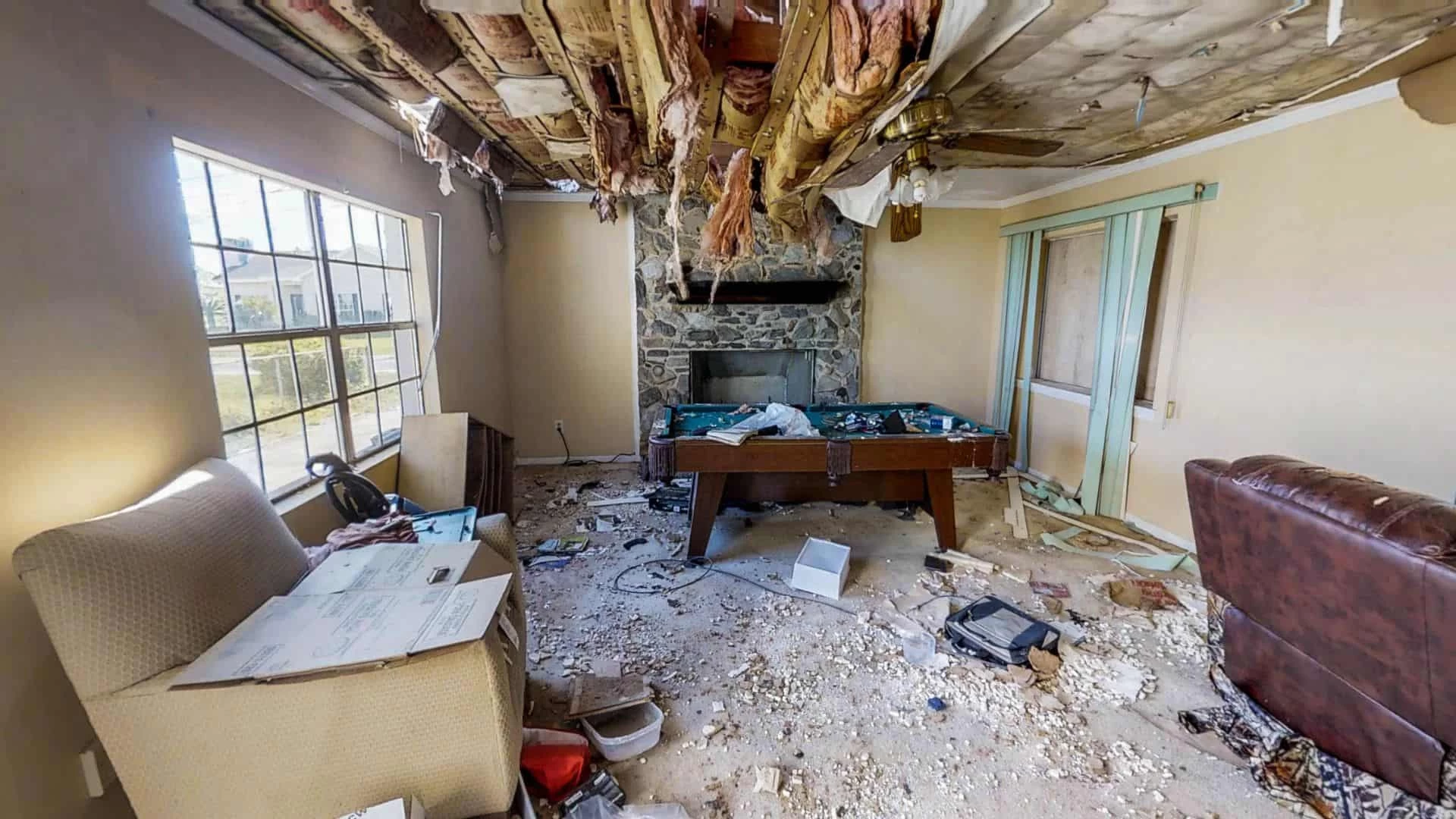
Ocean Beach isn’t a typical Long Island town, and water damage here doesn’t follow a typical pattern. With nearly 80% of homes sitting empty from October through May, the damage that happens in February doesn’t get discovered until you unlock the door in April. By then, what started as a slow roof leak or a pipe that didn’t get properly winterized has had months to work its way into the framing, the subfloor, the walls. That’s not a drying job anymore that’s a full remediation.
The IICRC standard is clear: mold can begin forming within 24 to 48 hours of water exposure. In a home that’s been closed up through a Fire Island winter high humidity, salt air, no airflow, no heat monitoring that window closes fast. The damage compounds quietly while you’re on the mainland, and the longer it goes, the more expensive the fix becomes.
Getting ahead of it changes everything. A proper extraction and dry-out in the early stages typically costs a fraction of what full structural remediation runs. For a home worth $730,000 or more, and one that may generate six figures in seasonal rental income, that difference isn’t just financial it’s the difference between opening on time for summer and losing an entire rental season.
We’re a Suffolk County-based restoration company not a national franchise routing your call through a dispatch center three states away. We serve the South Shore communities where Ocean Beach property owners live the rest of the year, and we understand what it takes to actually work on Fire Island.
That means knowing the Fire Island Ferries schedule out of Bay Shore. It means understanding the Village of Ocean Beach’s building permit process and the Fire Island National Seashore’s oversight requirements. It means showing up with the right equipment already staged, because there’s no hardware store across the street and no driving back to the shop.
We handle water damage, mold remediation, asbestos abatement, and air quality testing under one roof. For homes built in the early 20th century and many Ocean Beach cottages are that full-service capability matters. You’re not coordinating three different contractors across a ferry schedule. You’re making one call.
Emergency Water Damage Restoration, Ocean Beach, NY
What the Process Looks Like When You're Managing It from the Mainland
The first call is where it starts. You tell us what you know a neighbor’s text, a property manager’s photo, a caretaker’s voicemail. We take it from there. Our team assesses the damage, documents everything thoroughly with photos and written reports, and gives you a clear picture of what you’re dealing with before any work begins. You don’t have to be on the island for that conversation.
Once we have a scope, we coordinate logistics equipment transport via ferry, any required permits through the Village of Ocean Beach and the Fire Island National Seashore, and a realistic timeline built around access. These aren’t surprises to us. We’ve done this before, and we build the island’s constraints into the plan from day one, not after the fact.
From there, it’s extraction, structural drying, and moisture testing to confirm the job is actually done not just surface-dry. If mold is present, or if the age of the home raises asbestos concerns in the materials being disturbed, we handle that in the same project. No handoffs, no gaps, no discovering a second problem six weeks later. And throughout the entire process, we communicate directly with your insurance carrier so the claim is documented the right way from the start.
Water Damage Restoration Service in Ocean Beach, NY
Built for Barrier Island Properties, Not Mainland Assumptions
Water damage restoration in Ocean Beach covers a lot of ground, and what’s included has to reflect the reality of where you are. This isn’t a suburban split-level with a sump pump and a dry basement. These are coastal homes many of them built before World War II sitting on a narrow barrier island between the Atlantic and the Great South Bay, exposed to storm surge from both directions, salt air year-round, and a water table that’s essentially at sea level.
Our water damage restoration service includes full water extraction, structural drying with commercial-grade equipment, moisture mapping, and clearance testing to confirm the structure has reached safe moisture levels before we close anything up. Given the age of Ocean Beach’s housing stock, we also assess for asbestos-containing materials before any demolition or drywall removal because disturbing those materials without proper protocols creates a separate, serious problem.
For properties dealing with recurring flood exposure and after the December 2023 and January 2024 flooding events that had residents navigating Bay Walk by kayak, that’s more Ocean Beach homes than ever we also provide post-restoration documentation that supports insurance claims and helps you understand your property’s ongoing risk. Everything is coordinated directly with your insurer. You shouldn’t have to fight for coverage you’ve already paid for, and we make sure the documentation backs up every dollar of your claim.
Can a water damage restoration company actually work in Ocean Beach, NY?
Yes, but not every company is set up to do it. Ocean Beach has no road access the only way in is by ferry from Bay Shore, private boat, or water taxi. That means any restoration company working on Fire Island needs to transport equipment by ferry, which requires planning, staging, and familiarity with the Fire Island Ferries schedule. On top of that, construction and business vehicles operating on Fire Island National Seashore lands require permits that are, by the Village’s own description, notoriously difficult to secure.
We’re built for this. We know the Bay Shore terminal, we understand the NPS permit process, and we stage equipment appropriately before we ever board the ferry. We also understand the Village of Ocean Beach’s building permit requirements and the Seashore’s oversight role in any structural repair work. If a restoration company tells you they’ll “figure it out when they get there,” that’s a red flag the logistics of working in Ocean Beach need to be handled before the crew leaves the mainland.
How quickly does mold start growing after water damage in a coastal home?
According to the IICRC S500 standard the industry benchmark for water damage restoration mold colonization can begin within 24 to 48 hours of water exposure. In a typical home, that’s already a tight window. In an Ocean Beach home that’s been closed up for the off-season, it’s even more critical, because the conditions that accelerate mold growth are already present: high ambient humidity from the ocean and bay, salt air that degrades building materials over time, and zero airflow in a sealed structure.
What makes this especially dangerous for seasonal properties is that the damage often goes undetected for weeks or months. A pipe that fails in January doesn’t get discovered until April. By then, you’re not dealing with 48 hours of moisture exposure you’re dealing with months of it. The mold situation in that scenario isn’t theoretical; it’s near-certain. Acting quickly once damage is discovered, and getting a professional assessment before you assume the worst has passed, is the most important thing you can do to limit the scope and cost of the problem.
Does homeowners insurance cover water damage from storm flooding in Ocean Beach?
This is one of the most important questions Ocean Beach property owners face, and the answer depends on the type of damage and the type of policy you carry. Standard homeowners insurance typically covers sudden and accidental water damage a burst pipe, an appliance failure, a roof leak from wind-driven rain. It generally does not cover flooding caused by storm surge, tidal inundation, or rising water from outside the structure. For that, you need a separate flood insurance policy, typically through the National Flood Insurance Program (NFIP).
Given Ocean Beach’s history Hurricane Sandy in 2012, the recurring nor’easter flooding, and the December 2023 and January 2024 events severe enough to require kayaks on Bay Walk flood insurance isn’t optional for most property owners here, it’s essential. The distinction between what’s covered under each policy matters enormously when you’re filing a claim, and proper documentation of the damage source is critical to getting a fair outcome. We work directly with insurance adjusters and provide the documentation that supports both types of claims, so you’re not navigating that process alone.
What happens if water damage is found in an older Ocean Beach home with asbestos?
Many Ocean Beach homes were built in the early-to-mid 20th century, and some date back to the early 1900s. In homes built before 1980, asbestos-containing materials were commonly used in floor tiles, pipe insulation, drywall joint compound, roofing materials, and more. When water damage restoration requires removing or disturbing those materials cutting into drywall, pulling up flooring, accessing pipe chases there’s a real risk of asbestos exposure if the work isn’t handled properly.
New York State requires licensed asbestos contractors for any regulated asbestos work, and we hold that licensing. Before any demolition or material removal in an older Ocean Beach home, we assess for the presence of asbestos-containing materials and follow proper abatement protocols if they’re identified. This isn’t an add-on or an upsell it’s a legal requirement and a safety necessity. Skipping this step to move faster creates liability for the property owner and a health risk for anyone in the home. We build it into the process from the start so there are no surprises mid-project.
How do you handle water damage restoration when I'm not on Fire Island to oversee it?
This is the reality for most Ocean Beach property owners, and it’s something we’ve built our process around. A large portion of the people we work with aren’t on the island when damage is discovered they’re in Bay Shore, or further out on Long Island, or in the city. They’re managing the situation by phone and email, trusting that the work is being done right without being able to check in person.
We handle that by making communication a non-negotiable part of the job. Before work begins, you get a written damage assessment and photo documentation of everything we find. During the project, you get updates at each significant milestone. When the job is complete, you get clearance documentation confirming the structure has been properly dried and restored. We also coordinate directly with your insurance carrier throughout, so you’re not playing relay between the adjuster and the restoration crew. The goal is that by the time you step off the ferry to inspect the property, you already know exactly what was done and why.
How much does water damage restoration typically cost for an Ocean Beach property?
The range is wide, and it depends heavily on how quickly the damage was caught. Water damage restoration for a contained, early-stage event a burst pipe discovered within a day or two, a roof leak caught before it spread can run anywhere from $3,000 to $8,000 for extraction, drying, and affected material removal. When damage goes undetected through an off-season, as is common in Ocean Beach’s seasonal homes, the scope expands significantly. Full remediation involving mold, structural drying of multiple rooms, and material replacement can reach $20,000 to $40,000 or more depending on the size of the home and extent of the damage.
There are also factors specific to Ocean Beach that affect cost. Ferry transport of equipment adds logistical overhead that mainland jobs don’t carry. The age of the housing stock means asbestos assessment and potential abatement may be part of the scope. And the regulatory environment Village building permits, Fire Island National Seashore oversight adds steps that take time and expertise to navigate correctly. The most important thing to understand is that waiting always costs more. A problem caught in week one is a fraction of the cost of the same problem discovered in month four.