When the Hudson Valley Hits Your Home Hard, Act Fast
Ossining’s older homes and riverside geography make water damage more than an inconvenience it’s a race against mold. We respond 24/7 with the crew, equipment, and credentials to stop the damage before it compounds.
I needed a professional consultation explanation of procedure for safe removal of Asbestos in my apartment complex. Without having an account yet, I was very impressed with the caring, knowledgeable and generous advice offered by Jessica, and will look forward to doing business in the future. Thank you so much! I feel much more informed about a sometimes scary endeavor. Peace. Nancy Silva Mineola, NY.
Mia Munoz
Used this company to clean up some water flood in my house. They were fast and easy to work with.very professional, Would recommend to anyone!
Nini Valle
Great company, had a flood and they responded quickly and efficiently. Billed my insurance company directly. I highly recommend this company!
joe colapietro, jr
I had pipe freeze in my basement right before a snow storm and they made to within an hour to help start the clean up process. They we by our side throughout the entire process and even helped with the insurance company. They did such a great job with the cleanup, repair, remidiation, I contracted them to perform the repairs and finishes in the basement. They came with enough manpower and material to get the job done. Leo and Jessica were nothing but a pleasure to deal with!!
Cristian Arredondo c
I had some water damage in my home and Green Island was able to take care of my issue quickly and effectively. I am very pleased with the work they did. They responded quickly and were very professional.
Michael M
Outstanding service! From the office to the field crew everyone was friendly, helpful and responsive. I highly recommend Green Island Group.
Your Ossining Home Dry, No Mold, No Second Contractor Needed
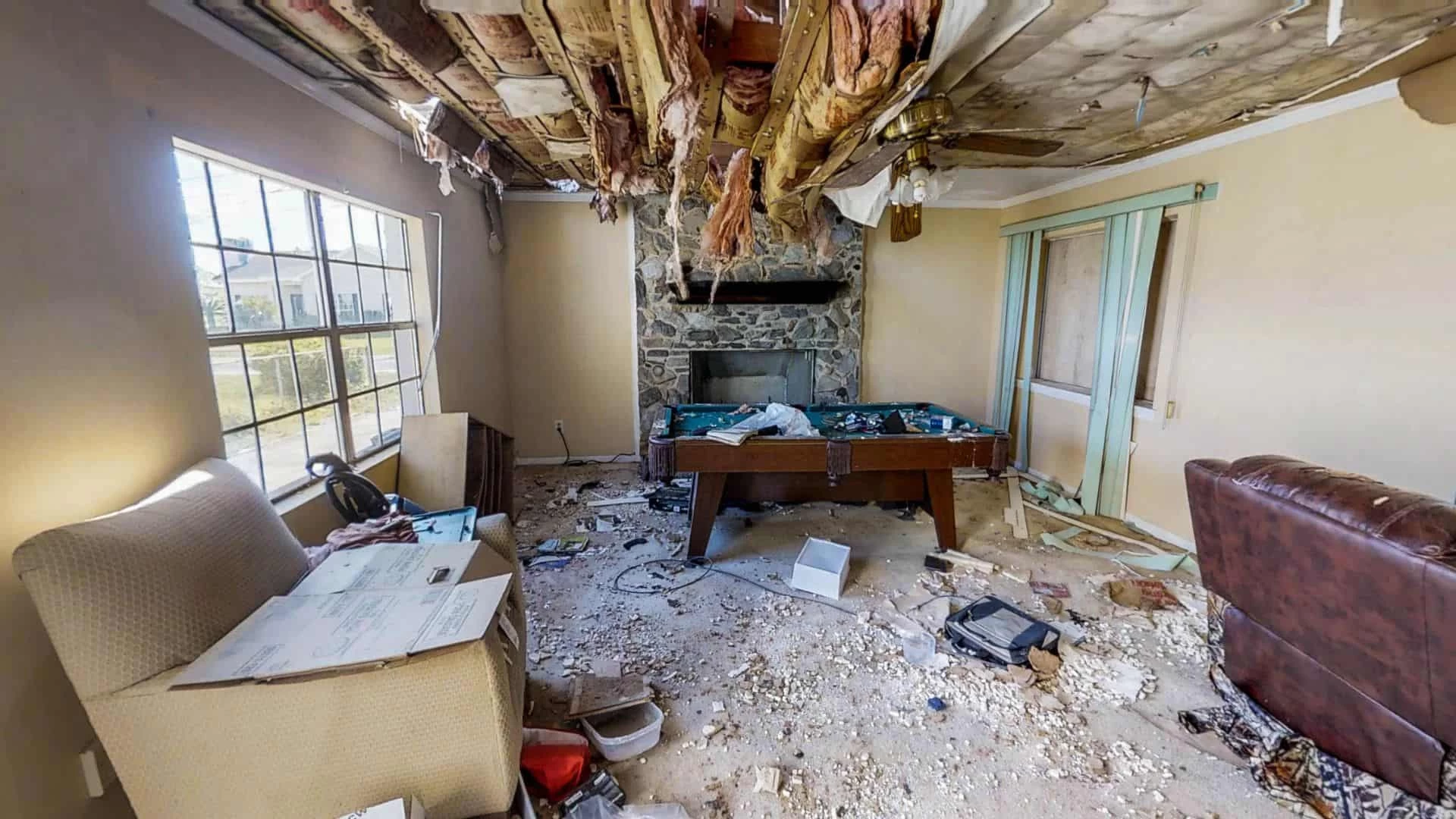
When water gets into your home, the clock starts immediately. Mold can begin colonizing in as little as 24 to 48 hours and in Ossining’s older housing stock, where plaster walls, wood-frame construction, and stone foundations are common, moisture doesn’t just sit on the surface. It moves into wall cavities, subfloor systems, and structural framing in ways that newer construction simply doesn’t allow. By the time you can see the damage, more is already happening behind it.
That’s why response speed matters here more than almost anywhere else in Westchester County. A Victorian-era home in downtown Ossining or a 1920s Sherwood Park property holds moisture differently than a newer build in the suburbs. The remediation approach has to account for that and a company that’s worked in this area knows the difference.
What you get on the other side of this process is straightforward: a dry, structurally sound home with no active mold, no lingering moisture in the walls, and a clear record of the work completed for your insurance claim. No second company needed for mold. No separate contractor for asbestos if it turns up during the job. One call, one crew, start to finish.
Certified, Insured, and Built for Ossining's Older Homes
We’ve been doing this work for over 12 years across Westchester County and the Hudson Valley. That includes homes along the riverfront in Ossining, historic properties in the Scarborough district, and post-war colonials throughout North Ossining the full range of what this town actually looks like. This isn’t a franchise operation or a lead-generation site with a local phone number. We’re a fully insured, IICRC-certified restoration company that holds NYS and NYC M/WBE Certified Contractor status and has an established track record working with the NYS Office of General Services.
That level of accountability matters when the job involves your home, your insurance claim, and potentially your family’s health. Every technician is trained to industry standard. Every job is backed by a 100% Satisfaction Guarantee. And if the cost is a concern which it often is for a job that can run well into five figures we offer financing up to $200,000 at 0% APR. No competitor currently serving Ossining offers anything close to that.
Emergency Water Damage Restoration Process, Ossining NY
From the First Call to a Fully Dry Home Here's What Happens
It starts with a call any time, day or night. Ossining is a commuter town, and water damage doesn’t wait for business hours. A lot of homeowners discover a burst pipe or a flooded basement when they get off the Metro-North at Ossining Station after work. When you call, you’re talking to someone who can dispatch a crew, not a call center routing your request to whoever picks up next.
Once on-site, the first step is assessment. We identify the source, map the extent of the moisture using professional-grade detection equipment, and document everything for your insurance claim. In older Ossining homes, this step takes longer and matters more water in a plaster wall or a stone foundation doesn’t always show up where you’d expect it. That documentation also matters for compliance: if your property falls within one of Ossining’s FEMA-designated Special Flood Hazard Areas, restoration work may be subject to local flood damage prevention codes, and the scope of work needs to be recorded accordingly.
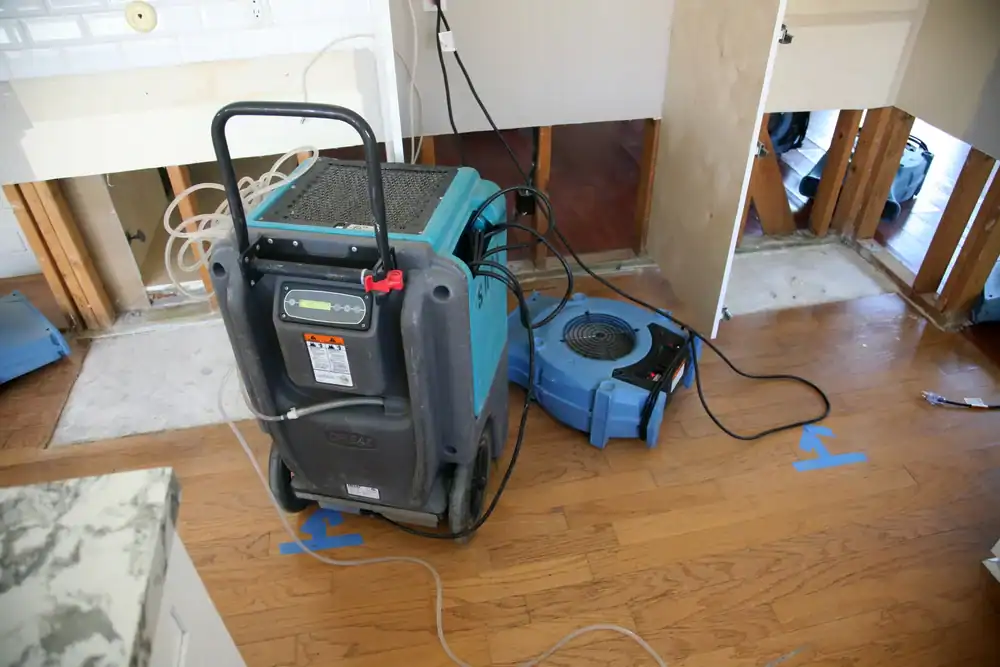
From there, our crew moves into extraction, structural drying, and dehumidification running continuously until moisture readings confirm the structure is dry. Mold prevention treatment is applied as part of the same job, not as an upsell. If the work uncovers asbestos-containing materials which happens regularly in pre-1980 Ossining properties we can handle abatement under the same roof without stopping the project or bringing in a second contractor.
Water Damage Restoration Services Near Ossining, NY
Full Restoration Coverage Built for What Ossining Homes Actually Face
Water damage restoration in Ossining isn’t a one-size job. The town sits on the eastern bank of the Hudson at the Tappan Zee the river’s widest point and FEMA updated Ossining’s floodplain maps specifically because waterfront properties here can face serious inundation in major storm events. Local reporting has noted that Ossining has experienced multiple so-called “100-year storms” in recent history. Add the town’s steep topography, which accelerates stormwater runoff into drainage systems and basements, and you have a community where water damage is a year-round risk, not just a seasonal one.
We provide full-scope water damage restoration coverage for what that risk produces: emergency water extraction, structural drying, dehumidification, mold remediation, and content protection. For Ossining’s older properties the Scarborough estate homes, the Sherwood Park 1920s houses, the Victorian and Second Empire buildings in the downtown historic district our service also includes asbestos abatement when needed, which is a capability no franchise competitor currently serving this market offers. That matters because water damage in a pre-war home frequently exposes pipe insulation, floor tiles, or joint compound that can’t legally be disturbed without proper abatement first.
We handle insurance coordination directly. Our team documents the damage, works with your adjuster, and manages the billing so you’re not navigating an unfamiliar claims process on top of an already stressful situation. And if the out-of-pocket exposure is a concern, we offer 0% APR financing up to $200,000 from the first conversation.
How quickly can a water damage restoration company reach my Ossining home?
We operate 24/7, which means response time isn’t tied to business hours. For Ossining specifically, the practical reality is that many homeowners discover water damage in the evening after commuting home on the Hudson Line which makes after-hours availability a genuine need, not a marketing point. Once you call, we can dispatch a crew immediately.
Response time also matters because of what’s at stake in Ossining’s older housing stock. In a pre-war home with plaster walls or a stone foundation, moisture spreads faster and deeper than in newer construction. Every hour before extraction begins is an hour the water is moving further into the structure. The faster our crew arrives, the smaller the total scope of damage and the lower your final restoration cost.
Does homeowner's insurance typically cover water damage restoration in Ossining, NY?
It depends on the source of the water, and the distinction matters. Most standard homeowner’s policies cover sudden and accidental water damage a burst pipe, an appliance failure, a roof leak from a storm. What they typically don’t cover is gradual damage from a slow leak you didn’t address, or flooding from an external source like the Hudson River or stormwater runoff. For that, you’d need a separate flood insurance policy, which is particularly relevant for Ossining properties in FEMA-designated Special Flood Hazard Areas along the riverfront.
If you’re not sure what your policy covers, that’s a normal starting point and it’s part of what we help you work through. Our team handles direct insurance billing and coordinates with your adjuster, which takes the documentation burden off you and helps ensure the claim is filed correctly. If there’s a coverage gap, we offer 0% APR financing up to $200,000 to bridge it without forcing you to delay remediation.
Can water damage in an older Ossining home lead to an asbestos problem?
Yes, and it’s more common than most homeowners expect. Ossining has a significant amount of housing stock built before 1980 the year asbestos use in residential construction effectively ended. In those homes, water damage regularly disturbs materials that contain asbestos: pipe insulation, floor tiles, ceiling tiles, joint compound, and certain roofing materials. Once those materials are disturbed or saturated, the restoration work legally cannot proceed until the asbestos is properly abated.
This is where having a contractor who handles both water damage restoration and asbestos abatement under the same roof makes a real difference. With a company that only does water damage, the project stops the moment asbestos is identified you’re waiting for a second contractor, managing two timelines, and potentially dealing with two separate insurance interactions. We can handle both, which keeps the project moving and keeps your home from sitting in a partially remediated state while you wait for another crew to schedule.
How do I know if there's hidden moisture or mold after a water event in my home?
The short answer is that you often can’t tell by looking. Moisture in a wall cavity, under a subfloor, or inside a ceiling system doesn’t always produce visible signs right away. By the time you see water staining, warping, or mold growth on a surface, the moisture has typically been present for a while and has already spread beyond what’s visible.
Professional detection equipment moisture meters, thermal imaging, and hygrometers can map moisture in areas that aren’t visually accessible. This step is part of the initial assessment on every job. In Ossining’s older homes, where plaster walls and wood-frame construction can hold and conceal moisture in ways that modern drywall doesn’t, this kind of thorough assessment isn’t optional it’s what separates a job that’s actually done from one that looks done but leaves a mold problem behind the walls six weeks later.
What should I do immediately after discovering water damage in my home?
The first thing is to stop the source if you safely can shut off the water supply valve if it’s a burst pipe, or stop using any fixtures connected to a backed-up drain. Don’t run fans on standing water before a professional assesses it, because circulating air over contaminated water can spread contaminants. And don’t wait to call every hour matters when it comes to mold risk.
Document what you can with your phone before anything is moved or cleaned up. Photos and video of the affected areas, the source of the water, and any visible damage are useful for your insurance claim and help our crew understand the scope before they arrive. If the damage involves sewage backup which is a real scenario in Ossining given the age of some of the village’s drainage infrastructure treat the affected area as a health hazard and keep people and pets out until our crew arrives.
How much does water damage restoration typically cost in Ossining, NY?
The range is genuinely wide, and it depends on the source of the water, the size of the affected area, and what the assessment finds once our crew is on-site. A straightforward clean-water event from a burst pipe in a single room might run $3,000 to $6,000. A Category 3 contaminated water event sewage backup, floodwater from an external source runs higher, often $7.00 to $7.50 per square foot before material replacement, and can reach $15,000 to $30,000 or more when structural drying, mold remediation, and reconstruction are all involved.
In Ossining specifically, older homes tend to push costs toward the higher end of any range because of the complexity involved plaster walls, wood framing, and less-accessible structural cavities take longer to dry and require more careful documentation. That’s the honest picture. What we offer that no competitor in this market currently does is 0% APR financing up to $200,000, which means the cost doesn’t have to determine whether you act now or delay. Delaying remediation almost always makes the final cost larger, not smaller so having a financing option that removes that barrier is worth knowing about from the start.