When the East River Comes to Your Peck Slip Building, Here's What Happens Next
Peck Slip sits in FEMA Flood Zone A the lowest-lying section of Lower Manhattan. When water gets in, we get there fast, with every license your historic building actually needs.
I needed a professional consultation explanation of procedure for safe removal of Asbestos in my apartment complex. Without having an account yet, I was very impressed with the caring, knowledgeable and generous advice offered by Jessica, and will look forward to doing business in the future. Thank you so much! I feel much more informed about a sometimes scary endeavor. Peace. Nancy Silva Mineola, NY.
Mia Munoz
Used this company to clean up some water flood in my house. They were fast and easy to work with.very professional, Would recommend to anyone!
Nini Valle
Great company, had a flood and they responded quickly and efficiently. Billed my insurance company directly. I highly recommend this company!
joe colapietro, jr
I had pipe freeze in my basement right before a snow storm and they made to within an hour to help start the clean up process. They we by our side throughout the entire process and even helped with the insurance company. They did such a great job with the cleanup, repair, remidiation, I contracted them to perform the repairs and finishes in the basement. They came with enough manpower and material to get the job done. Leo and Jessica were nothing but a pleasure to deal with!!
Cristian Arredondo c
I had some water damage in my home and Green Island was able to take care of my issue quickly and effectively. I am very pleased with the work they did. They responded quickly and were very professional.
Michael M
Outstanding service! From the office to the field crew everyone was friendly, helpful and responsive. I highly recommend Green Island Group.
Water damage in Peck Slip is not the same as water damage anywhere else in the city. Your building might be a converted 19th-century warehouse with 500-year-old pine timber framing, original brick masonry, and plumbing that the NYC Department of Design and Construction has confirmed is over a century old. When water gets into materials like that, the clock moves fast and the stakes are higher than they are in a standard drywall apartment.
Mold can begin growing within 24 to 48 hours of water exposure. In old-growth timber and historic masonry, it doesn’t just sit on the surface it colonizes deep into porous material that’s nearly impossible to fully remediate once it takes hold. Getting ahead of it isn’t optional. It’s the difference between a restoration and a gut job.
There’s also the regulatory layer that most contractors aren’t prepared for. The South Street Seaport Historic District is governed by the NYC Landmarks Preservation Commission, and any restoration work that touches historically significant elements is subject to LPC review. That means a contractor who doesn’t know those rules before they pick up a tool can expose you to stop-work orders and compliance violations on top of the water damage you’re already dealing with. We handle both problems not one that creates a third.
Every License Your Peck Slip Building Actually Requires
We are a New York City-based environmental remediation and restoration contractor. Not Long Island. Not a national franchise with a templated Peck Slip landing page and a 516 area code. We hold the NYC General Contractor license, NYC BIC Trade Waste certification, NYS DOL Asbestos license, NYS DOL Mold license, USEPA Lead certification, and USEPA RRP certification the full credential stack required to legally and safely complete a restoration in the kind of building stock that defines Peck Slip and the surrounding Seaport neighborhood.
That matters here more than almost anywhere else in the city. A building like 40 Peck Slip a late-1700s warehouse with original brick walls and ancient timber framing can reveal lead paint, asbestos pipe lagging, and structural moisture all in the same event. Most contractors can handle one of those. We handle all of them, under one contract, without stopping the job to call a subcontractor. For property owners and managers in the Seaport, that’s not a minor convenience. It’s the whole point.
What the Process Looks Like Inside a Historic Peck Slip Building
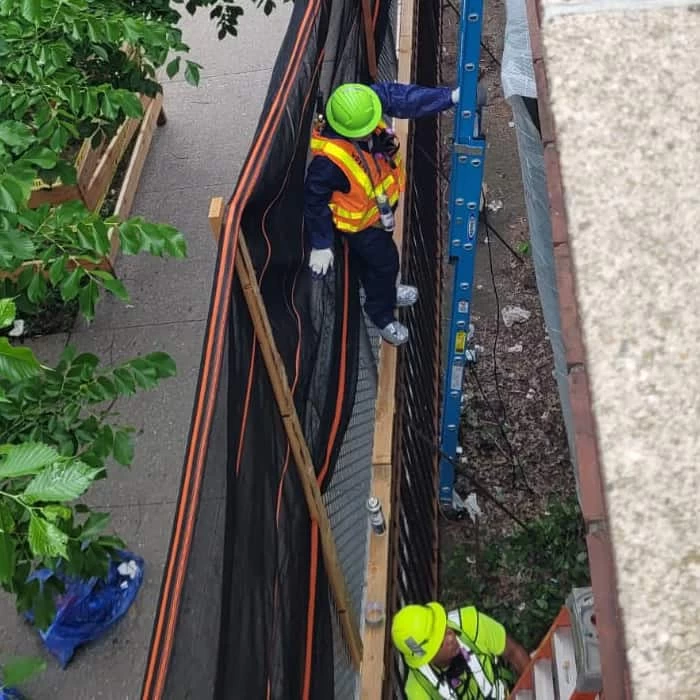
The first call triggers an emergency response. We’re on-site within two hours, which matters because every hour of standing water in a building with original timber framing is an hour mold spends getting ahead of you. The first thing we do is stop the source whether that’s storm surge intrusion, a burst pipe from a winter freeze-thaw cycle, or sewage backup from Peck Slip’s aging combined sewer system pushing water through your basement drain.
From there, we use industrial moisture detection equipment to map exactly where the water has traveled inside walls, beneath floors, within structural elements. Consumer fans and dehumidifiers move air. Our equipment tells us the actual moisture content inside your original masonry or timber, which is the only way to confirm those materials are genuinely dry before we close anything back up. In a building where those materials are irreplaceable, that documentation matters for your insurance claim as much as it does for the restoration itself.
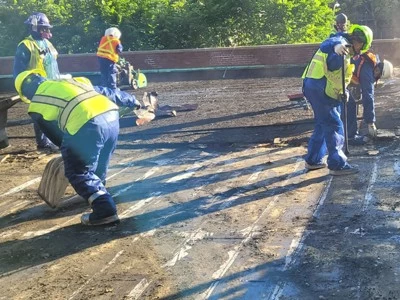
If the work reveals asbestos, lead, or mold which is common in Peck Slip’s pre-war and pre-1900 construction we handle it in-house under our NYS DOL and USEPA licenses. We also coordinate directly with your insurance carrier, which is especially relevant here because Flood Zone A properties often carry both standard homeowner’s coverage and a separate NFIP flood policy, and the documentation requirements for each are different. We know how to navigate that so your claim doesn’t get caught in a coverage dispute.
Water Restoration and Mold Remediation in Peck Slip
One Team, Every Hazard Your Peck Slip Building Can Throw at It
Water damage restoration in a neighborhood like Peck Slip covers more ground than the name suggests. The service starts with emergency water extraction and structural drying, but in buildings this old, it almost always extends into adjacent territory mold remediation, asbestos abatement, lead-safe demolition, and in some cases, full structural repairs to timber framing or masonry that has been compromised by prolonged moisture exposure.
For residential loft owners at addresses like 25 or 40 Peck Slip, we work carefully around architectural elements that can’t be replicated exposed brick, original ceiling beams, wide-plank floors while still meeting the technical requirements of a complete remediation. For commercial tenants and property managers overseeing ground-floor retail or restaurant spaces along the Seaport’s historic streetscape, it means getting the space back to operational condition without cutting corners that create liability later. For buildings inside the South Street Seaport Historic District specifically, it means every step of the process is documented in a way that satisfies both your insurance adjuster and, if needed, LPC review.
We also carry NYC BIC Trade Waste certification, which is a city-specific requirement for debris removal from restoration projects that many out-of-borough contractors simply don’t hold. It’s a small detail that can create a real compliance problem if it’s missing and it’s one less thing you need to think about when you’re already dealing with a flooded property.
Does my insurance cover water damage from East River flooding in Peck Slip?
This is one of the most important questions to get right before you file anything, because the answer depends on what caused the water not just that water came in. Standard homeowner’s and renter’s insurance policies cover sudden and accidental water damage, like a burst pipe or a failed appliance. They do not cover flooding from an external water source, which includes storm surge from the East River, tidal flooding, or street-level inundation from a nor’easter or hurricane. That type of damage requires a separate flood insurance policy, typically through FEMA’s National Flood Insurance Program or a private carrier.
Peck Slip sits in FEMA Flood Zone A, which means properties here are in a mandatory flood insurance zone if they carry a federally backed mortgage. If you have both policies, the documentation requirements for each are different and getting the categorization wrong can result in a denied claim or a coverage gap. When we respond to a water event in your property, we document the source, the scope, and the damage in the format that insurance adjusters actually need, so your claim has the best possible foundation from the start.
How quickly does mold actually become a problem after water damage in an old Peck Slip building?
The general answer is 24 to 48 hours but that timeline assumes modern construction materials like drywall and fiberglass insulation, which are relatively easy to dry and treat. In Peck Slip’s older buildings, the reality is more complicated. Original timber framing, historic masonry, and thick plaster walls are porous in ways that modern materials aren’t. Water penetrates deeper, dries slower, and gives mold a more hospitable environment to establish itself quickly.
Once mold colonizes inside a timber beam or behind a historic brick wall, surface treatment isn’t enough. Full remediation requires getting into the material itself, which in a landmarked building means doing it carefully and documenting every step. That’s why the response window matters so much here not just because mold is a health concern, but because the longer it’s left in materials that can’t simply be ripped out and replaced, the more complicated and costly the remediation becomes. Fast response isn’t a sales pitch. In a building like the ones on Peck Slip, it’s genuinely the deciding factor between a manageable restoration and a months-long project.
Do I need a permit for water damage restoration work in a NYC landmark building?
It depends on the scope of the work, but the short answer for most significant restoration projects in the South Street Seaport Historic District is yes and the permit requirements here go beyond the standard NYC Department of Buildings process. Any work that involves alterations to historically significant interior or exterior elements is subject to review by the NYC Landmarks Preservation Commission and may require a Certificate of Appropriateness before work can proceed.
For straightforward water extraction and drying, permits are typically not required. But once the work extends into structural repairs, replacement of historic materials, or alterations to exterior elements which water damage frequently causes you’re in LPC territory. A contractor who isn’t familiar with those requirements can inadvertently trigger a stop-work order or a compliance violation, which adds cost and delay on top of an already stressful situation. We know the DOB and LPC requirements for this district and handle the permitting process as part of the job, so you’re not left navigating it on your own.
What makes water damage restoration in Peck Slip different from other parts of Manhattan?
A few things, and they all compound each other. First, the geography: Peck Slip is built on 19th-century East River landfill, which means the ground beneath it has different drainage and groundwater behavior than native bedrock. That contributes to basement moisture intrusion and persistent dampness in lower-level units even without a major flooding event. Second, the building stock: properties in this neighborhood include some of the oldest occupied residential structures in New York City, with construction materials original timber, historic brick, century-old plumbing that require a fundamentally different approach than modern construction.
Third, the regulatory environment: the South Street Seaport Historic District adds an LPC compliance layer that doesn’t exist in most other Manhattan neighborhoods. And fourth, the flood exposure: the NYC government’s own Lower Manhattan Coastal Resiliency initiative specifically identifies the Seaport area as the most flood-vulnerable part of Lower Manhattan, with documented storm surge reaching up to 8 feet during Hurricane Sandy. All of that together means water damage restoration in Peck Slip isn’t a standard job. It requires a contractor who understands all of those factors not just one or two of them.
How long does water damage restoration typically take in a Peck Slip loft or condo?
The drying phase alone getting structural moisture levels back to acceptable ranges typically takes three to five days for a contained water event in a standard unit. In Peck Slip’s older buildings, that timeline can extend, because original timber and historic masonry hold moisture longer than modern materials and require more careful monitoring to confirm they’re genuinely dry rather than just surface-dry.
After drying, the reconstruction phase depends entirely on what the water revealed. A pipe failure in a unit with modern finishes might be resolved in a week. A storm surge event in a building with original plaster walls, timber framing, and potential asbestos pipe lagging might take three to four weeks once remediation, abatement, and restoration are all factored in. We give you a realistic timeline after the initial assessment not an optimistic number that changes once the walls come open. If you need to make temporary living arrangements, we’ll tell you that clearly upfront so you’re not caught off guard.
Is water damage restoration more expensive in Peck Slip than in other parts of the city?
Honestly, it can be and it’s worth understanding why before you compare quotes. The average water damage insurance claim nationally runs around $12,500, but several factors specific to Peck Slip push costs higher than that baseline. Historic materials cost more to restore correctly than to replace with modern equivalents, and in a landmarked building, replacing them with non-historic substitutes may not be an option. Asbestos abatement and lead-safe demolition both common in pre-war construction add licensed labor and disposal costs that don’t exist in newer buildings. And LPC compliance documentation, when required, adds process steps that take time.
What that means practically is that the cheapest quote you receive for a Peck Slip restoration job is probably not accounting for all of those factors. A contractor who doesn’t hold the asbestos or mold licenses, doesn’t know the LPC requirements, and doesn’t carry NYC BIC Trade Waste certification may quote less but they’re also leaving you exposed to compliance risk, incomplete remediation, and potential mold recurrence down the line. In a neighborhood where your property value and the integrity of irreplaceable historic materials are both on the line, the cost of doing it right the first time is almost always less than the cost of fixing a job that wasn’t done right.