I needed a professional consultation explanation of procedure for safe removal of Asbestos in my apartment complex. Without having an account yet, I was very impressed with the caring, knowledgeable and generous advice offered by Jessica, and will look forward to doing business in the future. Thank you so much! I feel much more informed about a sometimes scary endeavor. Peace. Nancy Silva Mineola, NY.
Mia Munoz
Used this company to clean up some water flood in my house. They were fast and easy to work with.very professional, Would recommend to anyone!
Nini Valle
Great company, had a flood and they responded quickly and efficiently. Billed my insurance company directly. I highly recommend this company!
joe colapietro, jr
I had pipe freeze in my basement right before a snow storm and they made to within an hour to help start the clean up process. They we by our side throughout the entire process and even helped with the insurance company. They did such a great job with the cleanup, repair, remidiation, I contracted them to perform the repairs and finishes in the basement. They came with enough manpower and material to get the job done. Leo and Jessica were nothing but a pleasure to deal with!!
Cristian Arredondo c
I had some water damage in my home and Green Island was able to take care of my issue quickly and effectively. I am very pleased with the work they did. They responded quickly and were very professional.
Michael M
Outstanding service! From the office to the field crew everyone was friendly, helpful and responsive. I highly recommend Green Island Group.
What Getting It Right Actually Looks Like in Plandome Manor
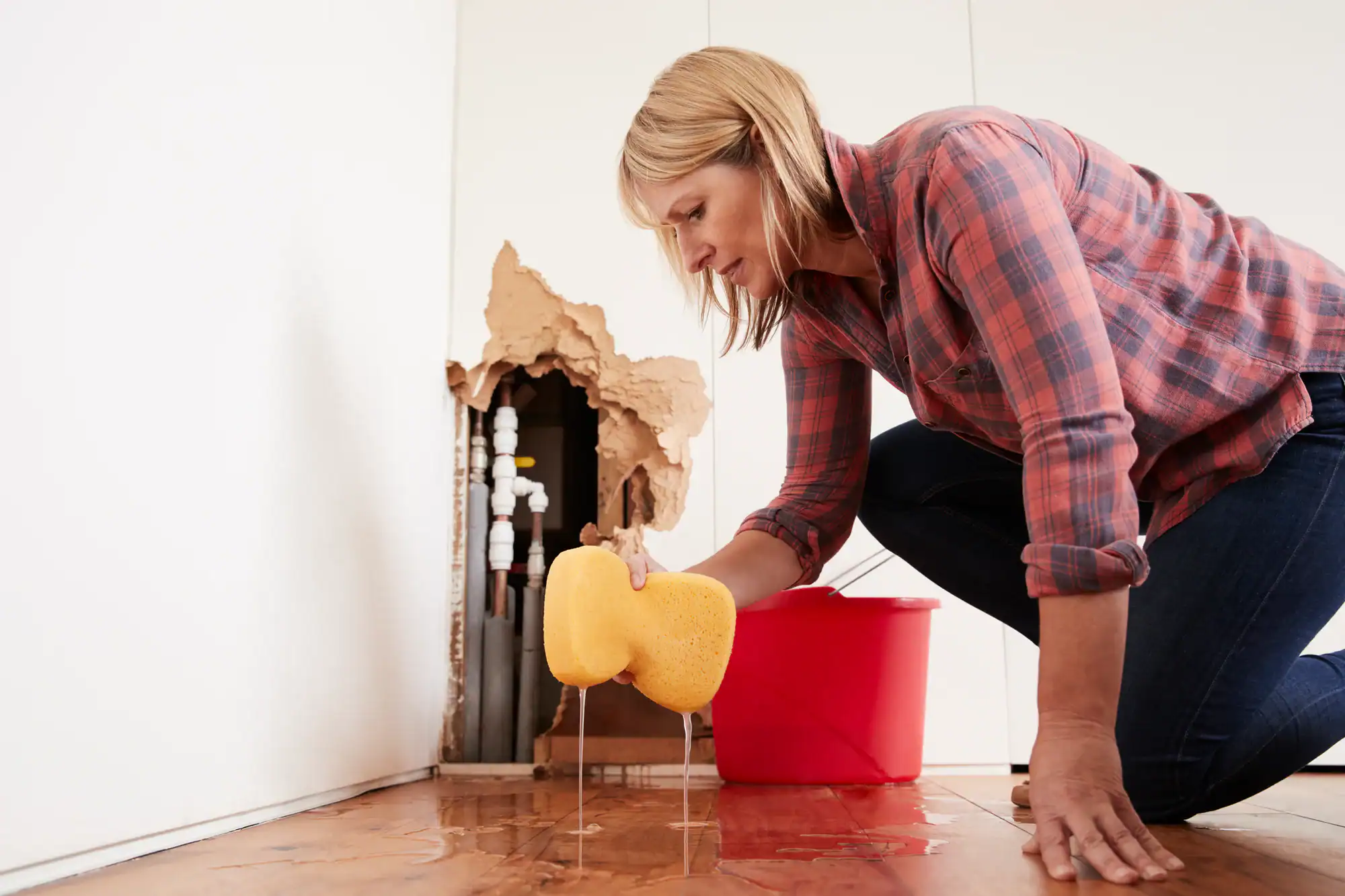
Most of the homes in Plandome Manor were built somewhere between the 1930s and 1960s. That means older plumbing, foundations without modern waterproofing, and wall assemblies that hold moisture longer than anything built in the last twenty years. When water gets in — whether it’s from a burst pipe, a backed-up cesspool, or groundwater pushing through a basement wall after a heavy rain — it doesn’t just sit on the surface. It moves into the framing, the subfloor, the insulation, and the spaces behind walls where you’ll never see it until mold shows up weeks later.
The Leeds Pond Subwatershed runs directly through Plandome Manor. There’s a brook that feeds Leeds Pond running beneath the backyards of several properties near Rockwood Road — and during extended rain events, that subsurface hydrology can raise groundwater levels and push moisture into basements from below. That’s not a surface flood you can mop up. It requires real extraction equipment, structural drying, and moisture readings to confirm the job is actually done.
When the work is done correctly, you get your home back — not just visually dry, but structurally dry. No hidden moisture. No mold risk building behind your walls. No second project six weeks from now. That’s the outcome that matters, and it’s the one we focus on from the first call.
We’re a locally owned and operated restoration company based on Long Island. When you call us, you’re not routed through a national call center or handed off to a subcontracted crew that’s never worked in Nassau County. You’re talking to people who know the North Shore, know the Town of North Hempstead, and have worked in homes throughout Plandome Manor and the surrounding area.
We’re IICRC-certified, fully licensed under New York State’s Mold Law, and carry general liability, workers’ compensation, and pollution liability insurance — the three coverages that actually protect you when a restoration crew is inside your home. We document every phase of the work with moisture readings, photographs, and written reports, and we communicate directly with your insurance adjuster so you don’t have to manage that process on top of everything else.
Plandome Manor is a small, tight-knit village. Fewer than 300 households. The kind of community where your neighbors will ask who you used. We work like that matters — because here, it does.
The first thing we do when we arrive is assess the full scope of the damage — not just what’s visible, but what’s hidden. We use thermal imaging cameras and calibrated moisture meters to find water inside wall cavities, beneath hardwood floors, and in structural framing that a visual inspection would completely miss. In a home built in the 1940s or 1950s, that step isn’t optional. It’s where the real damage usually is.
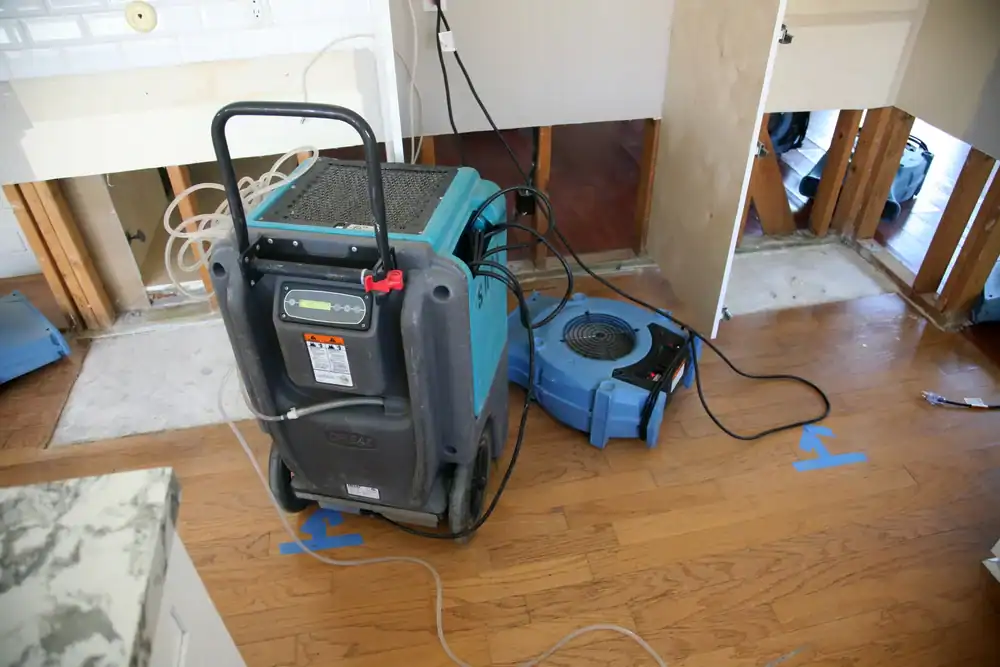
Once we know what we’re dealing with, we extract standing water and deploy commercial-grade drying equipment — industrial air movers, desiccant dehumidifiers, and injectidry systems that draw moisture out of structural cavities, not just off surfaces. This is the part that hardware store fans and consumer dehumidifiers simply cannot do. We monitor moisture readings daily and adjust equipment placement based on what the numbers show, not based on how things look.
Before we close out any project, we confirm that every affected material has returned to safe moisture levels. You get a written clearance report documenting those readings. If your property requires building permits for structural repairs — which is common for restoration work in the Town of North Hempstead — we’re familiar with that process and can walk you through what’s required. Nothing gets wrapped up until the work is actually finished.
Water Damage Restoration Services in Plandome Manor, NY
Built for Older Homes With Higher Stakes
Water damage restoration in Plandome Manor isn’t the same job it is in a newer suburb. The homes here are larger, older, and more complex — and the consequences of cutting corners are proportionally more expensive. A missed moisture pocket in a pre-war home with original hardwood floors and plaster walls doesn’t just become a mold problem. It becomes a historic materials problem. That’s a different category of damage, and it requires a team that understands the difference.
Our water damage restoration service covers emergency water extraction, structural drying, moisture monitoring, content protection, mold prevention, and full documentation for insurance claims. Because many Plandome Manor properties rely on private septic systems and cesspools rather than municipal sewer connections — a direct result of the village’s decision to remain independent from the Manhasset Sewer District — sewage backup events are a real and specific risk here. That’s Category 3 water damage, which requires a different handling protocol than a clean water pipe failure, and we’re equipped for both.
We also work directly with homeowners who carry National Flood Insurance Program policies in addition to standard homeowners insurance — which applies to some properties along the Manhasset Bay waterfront. The NFIP claims process runs differently than a standard homeowners claim, and having a restoration company that knows how to document for both simultaneously makes a real difference in your settlement outcome.
How quickly does mold start growing after water damage in my home?
Mold can begin growing within 24 to 48 hours of water intrusion. The catch is that mold doesn’t start on surfaces you can see. It starts inside wall cavities, beneath flooring, and in insulation — the places that stay wet long after the visible water is gone.
In Plandome Manor’s older housing stock, this risk is higher than in newer construction. Homes built in the 1940s and 1950s often have materials that absorb and hold moisture more readily than modern building products. Plaster walls, older wood framing, and original subfloor materials don’t dry the way engineered lumber or modern drywall does. The faster you get professional extraction and structural drying started, the more likely you are to avoid a mold remediation project on top of the water damage restoration — and that’s a significant cost difference.
Does homeowners insurance cover water damage restoration in Plandome Manor, NY?
It depends on the source of the water. Most standard homeowners insurance policies cover sudden and accidental water damage — a burst pipe, a washing machine failure, an appliance leak. What they typically don’t cover is flooding from an external source, like storm surge or groundwater intrusion. For that, you’d need a separate flood insurance policy, usually through FEMA’s National Flood Insurance Program.
For Plandome Manor homeowners with properties near the Manhasset Bay waterfront, this distinction matters a lot. Some properties in the area carry both types of coverage, and the two claims processes run independently of each other. We document restoration work in a way that supports both types of claims simultaneously — photographs, moisture readings, written scope of work — and we communicate directly with adjusters so you’re not trying to manage two separate insurance conversations while also dealing with an active water damage situation in your home.
What makes water damage in older Plandome Manor homes harder to restore?
The age of the housing stock is the biggest factor. Roughly 28 percent of homes in Plandome Manor were built before 1950, and the median construction year across the village is 1956. Homes of that era were built without modern vapor barriers, with plumbing systems that are now 60 to 90 years old, and with basement configurations that weren’t designed to current waterproofing standards. Galvanized steel and cast-iron pipes — common in homes of this age — are far more prone to sudden failures than modern copper or PEX plumbing.
Beyond the plumbing, older homes have materials that complicate the drying process. Original hardwood floors, plaster walls, and old-growth wood framing behave very differently under moisture than modern materials do. They require longer drying times, more careful moisture monitoring, and a team that knows how to dry them without causing secondary damage. Rushing the process in a home like this doesn’t save time — it creates a second project.
What is Category 3 water damage and does it apply to Plandome Manor properties?
Water damage is categorized by the contamination level of the water involved. Category 1 is clean water — a supply line break or a clean appliance overflow. Category 2 is gray water, which has some contamination — a dishwasher backup or a sump pump failure. Category 3 is black water, which is grossly contaminated and includes sewage, floodwater from outside, and any water that has been standing long enough to grow bacteria.
Plandome Manor has a specific exposure to Category 3 events that many other Nassau County communities don’t. Because the village historically declined to connect to the Manhasset Sewer District, a significant number of homes rely on private septic systems and cesspools. When those systems back up — which happens, especially after heavy rain events saturate the ground — the resulting water intrusion is Category 3 by definition. That requires a different remediation protocol, different personal protective equipment, and different disposal procedures than a clean water event. It’s also handled differently by your insurance carrier, which is another reason documentation matters from the very first hour.
How do I know if my basement has hidden water damage after a storm?
The short answer is that you often can’t tell without equipment. A basement floor can look and feel dry within 24 hours while the wall framing, insulation, and subfloor above it remain saturated for weeks. That’s not visible to the eye, and it’s not detectable by touch. The only reliable way to know is with calibrated moisture meters and thermal imaging cameras, which show temperature differentials that indicate moisture trapped inside building materials.
This is especially relevant on the North Shore after significant rain events. Plandome Manor sits within the Leeds Pond Subwatershed, and the groundwater dynamics in this area mean that basement moisture can come from below — hydrostatic pressure pushing through foundation walls and floor slabs — rather than from an obvious leak or surface flood. After storms like the remnants of Hurricane Ida in September 2021, which caused documented basement flooding throughout the Manhasset area, many homeowners found damage in places they hadn’t thought to look. A professional moisture assessment after any significant water event is the only way to know for certain what you’re dealing with.
Do I need a permit for water damage repairs in the Town of North Hempstead?
For the restoration and drying work itself — extraction, structural drying, mold prevention — no permit is typically required. But once the restoration phase is complete and reconstruction begins, the answer changes. Structural repairs, electrical work in areas that were opened for drying, insulation replacement, and certain types of framing work in the Town of North Hempstead may require building permits depending on the scope of what was damaged and what needs to be rebuilt.
This is something many homeowners don’t think about until they’re already mid-project, and it can create complications — especially when an insurance claim is involved and the adjuster is reviewing documentation. Working with a restoration company that’s familiar with North Hempstead’s permitting process means you’re not finding out about permit requirements after the fact. We can help you understand what your specific project is likely to require before reconstruction starts, so there are no surprises when it comes time to close out the claim or sell the property down the road.