When Shinnecock Bay Comes Inside, Every Hour Counts
Water damage in a Quogue home doesn’t wait for business hours and the gap between a fast response and a delayed one is often the difference between drying out and tearing out. We understand that homes along Dune Road and the bay-front properties face unique risks that inland properties simply don’t, and we’re built to respond to those risks immediately.
I needed a professional consultation explanation of procedure for safe removal of Asbestos in my apartment complex. Without having an account yet, I was very impressed with the caring, knowledgeable and generous advice offered by Jessica, and will look forward to doing business in the future. Thank you so much! I feel much more informed about a sometimes scary endeavor. Peace. Nancy Silva Mineola, NY.
Mia Munoz
Used this company to clean up some water flood in my house. They were fast and easy to work with.very professional, Would recommend to anyone!
Nini Valle
Great company, had a flood and they responded quickly and efficiently. Billed my insurance company directly. I highly recommend this company!
joe colapietro, jr
I had pipe freeze in my basement right before a snow storm and they made to within an hour to help start the clean up process. They we by our side throughout the entire process and even helped with the insurance company. They did such a great job with the cleanup, repair, remidiation, I contracted them to perform the repairs and finishes in the basement. They came with enough manpower and material to get the job done. Leo and Jessica were nothing but a pleasure to deal with!!
Cristian Arredondo c
I had some water damage in my home and Green Island was able to take care of my issue quickly and effectively. I am very pleased with the work they did. They responded quickly and were very professional.
Michael M
Outstanding service! From the office to the field crew everyone was friendly, helpful and responsive. I highly recommend Green Island Group.
Mold can begin colonizing within 24 to 48 hours of water exposure. That’s the documented standard from the IICRC, the governing body for water damage restoration. In a village like Quogue where a large share of homes sit vacant for months at a time, that window matters more than almost anywhere else on Long Island. A pipe that burst in January may not get discovered until you pull into the driveway on Memorial Day weekend. By then, you’re not dealing with water damage anymore you’re dealing with a mold situation that started as water damage.
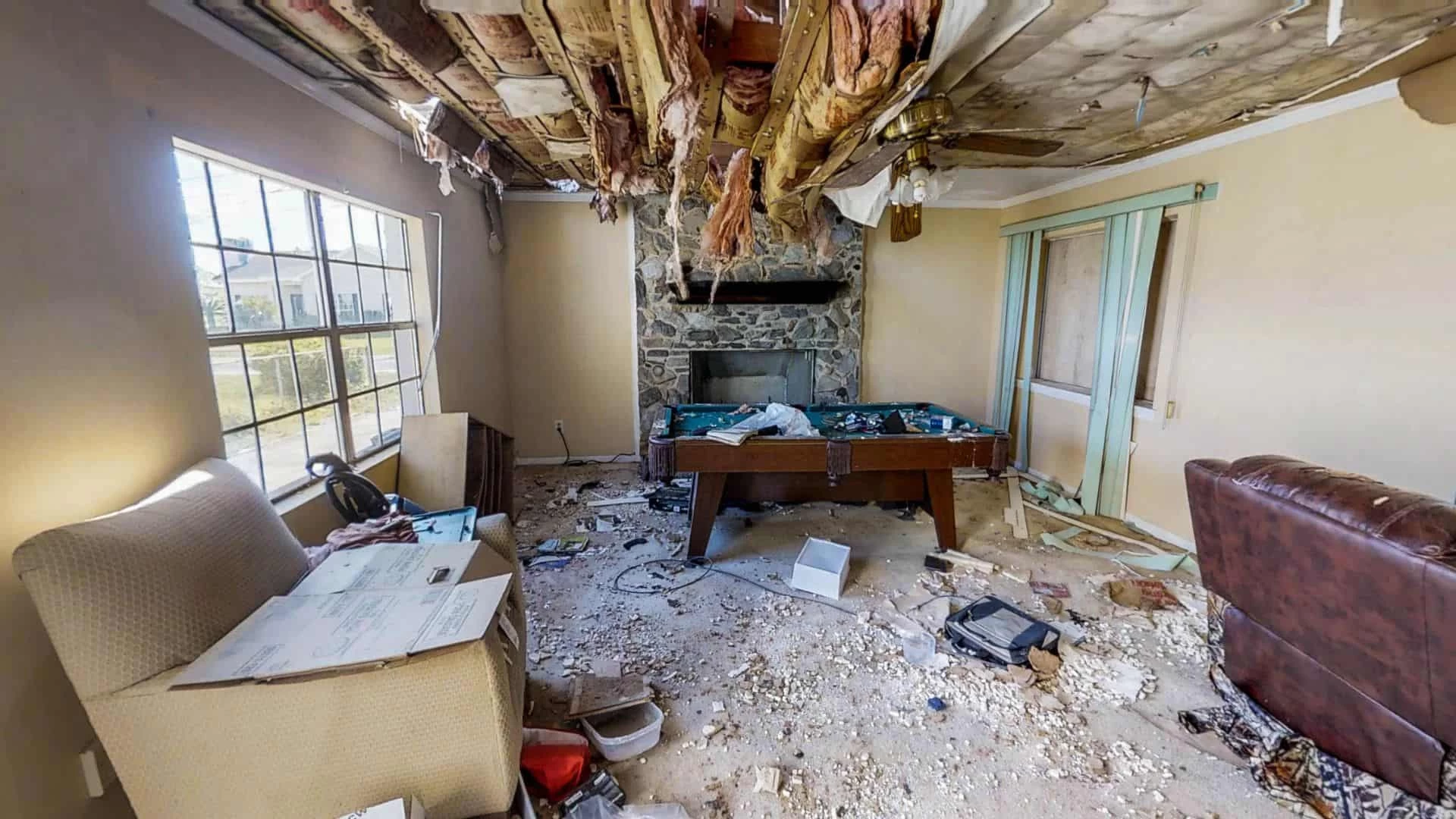
For homes in the Quogue Historic District many of them Victorian or shingle-style construction built before 1935 water doesn’t just wet a surface. It migrates through original plaster walls, wide-plank subfloors, and uninsulated crawl spaces in ways that modern construction simply doesn’t. The damage you can see is rarely the full picture. What’s behind the walls, under the floors, and inside the ceiling cavities is what determines whether this becomes a $5,000 restoration or a $50,000 rebuild.
Speed and thoroughness are what actually protect a property like yours. Getting the moisture out completely, documenting it correctly for insurance, and catching the hidden saturation before it becomes hidden mold that’s the outcome that matters. That’s what a professional water restoration process in Quogue has to deliver.
Local Roots, Not a Franchise Routing Your Call Somewhere Else
We’re a Long Island-based environmental and restoration company serving Quogue, the South Fork, and the broader Suffolk County area. This isn’t a national brand with a Quogue landing page we’re a real local operation that understands the difference between a storm surge event on Dune Road and a burst pipe in a year-round home on Jessup Avenue. Those are two very different problems, and they require two very different responses.
What sets us apart in a market like Quogue is the scope of what we handle in-house. Water damage, mold remediation, asbestos abatement, lead paint handling, and air quality testing all under one roof. For a village where nearly 250 Historic District structures predate 1940, that’s not a bonus service. It’s often a necessity. Opening a wall in a Victorian-era home to dry the framing can expose asbestos pipe insulation or lead paint. A company that can handle all of it without a handoff is a company that keeps your project moving and your liability contained.
From the First Call to a Fully Restored Quogue Property
The process starts the moment you call. Whether it’s 2am during a nor’easter or a Tuesday afternoon when you’ve just walked into a flooded room, the first step is getting a crew on-site as fast as possible. We begin emergency water extraction immediately removing standing water before it continues migrating into structural materials. For Dune Road and bay-front properties dealing with saltwater intrusion from storm surge, that urgency is even higher, because salt-laden water accelerates material degradation in ways clean water doesn’t.
Once extraction is complete, the real assessment begins. We use professional moisture meters and thermal imaging cameras to map the actual extent of water movement through the structure not just what’s visibly wet, but what’s saturated behind walls, under floors, and inside cavities. In Quogue’s older homes, this step is critical. Water travels further and hides more effectively in historic construction than in modern builds. We place drying equipment industrial dehumidifiers and air movers based on that moisture map, not guesswork.
From there, the process moves into structural drying, ongoing moisture monitoring, and when needed, mold assessment and remediation. If the restoration requires opening walls or replacing materials in a Village of Quogue Historic District structure, we work within the permitting requirements of the Village Building Department and coordinate with your insurance carrier throughout. For properties in FEMA flood zones which covers most of the bay-front and all of Dune Road we handle documentation to meet specific standards.
Water damage restoration in Quogue isn’t one-size-fits-all. The village’s geography flanked by Shinnecock Bay to the east, Quantuck Bay to the west, and the Atlantic directly south along Dune Road means the source of water intrusion varies significantly by property. Coastal storm surge, bay flooding, frozen pipe failures in vacant seasonal homes, and appliance or plumbing failures in occupied residences all require different initial responses and different restoration approaches. We assess the specific source and extent of damage before any plan is set.
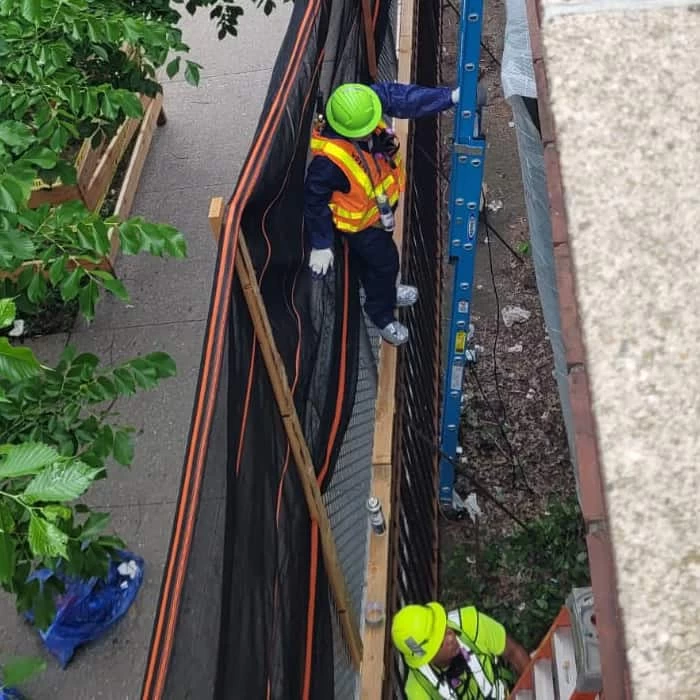
For properties in the Quogue Historic District, the restoration scope often goes beyond standard water damage work. Pre-1978 construction means lead paint is almost certain to be present. Pre-1980 homes may contain asbestos in pipe insulation, floor tiles, or ceiling materials. When water damage requires opening walls or replacing flooring, those materials need to be handled legally and safely not just ripped out and hauled away. We hold the required New York State Department of Labor asbestos handling license and EPA RRP certification for lead paint work, so those complications don’t stop the project or require you to find a separate contractor.
The full service includes emergency extraction, structural drying, moisture documentation, mold assessment, hazardous material handling where applicable, reconstruction, and direct coordination with both your homeowners insurance carrier and your NFIP flood insurance policy if your property sits in a FEMA Special Flood Hazard Area. From the first hour on-site through the final inspection, it’s one company managing the entire scope.
How quickly does mold grow after water damage in a Quogue home?
The IICRC standard puts mold colonization at 24 to 48 hours after water exposure under the right conditions warmth, moisture, and organic material to feed on. Most interior building materials qualify. In a Quogue vacation home that’s been closed since October, those conditions don’t just exist they’ve had weeks or months to develop unchecked. Dark, unventilated spaces with sustained moisture are exactly where mold establishes fastest.
By the time a seasonal homeowner arrives to discover a burst pipe, the question usually isn’t whether mold is present it’s how far it’s spread. That’s why the assessment process matters as much as the extraction. We use thermal imaging and moisture meters to identify saturation in areas that look dry on the surface, and a proper mold assessment determines whether remediation is needed before reconstruction begins. Skipping that step and patching over hidden mold is how a $15,000 restoration turns into a $60,000 problem two years later.
Does homeowners insurance cover water damage restoration in Quogue, NY?
Standard homeowners insurance typically covers sudden and accidental water damage a burst pipe, a failed appliance, an overflowing fixture. What it generally does not cover is flooding from external sources, which is where your NFIP flood insurance policy comes in. For Quogue properties in FEMA Special Flood Hazard Areas which includes virtually all of Dune Road and many bay-front properties along Shinnecock Road and the Quantuck Bay side that flood policy is usually required if you carry a federally backed mortgage.
The complication is that storm events often cause both types of damage simultaneously. A nor’easter might drive water through a roof (homeowners claim) and push bay water into the ground floor (flood claim). Documenting each type of damage correctly, for the right carrier, with the right supporting evidence, is something most homeowners have never had to navigate before. We handle direct billing and adjuster communication for both policy types, which takes a significant amount of the burden off you during an already stressful situation.
What happens if water damage in my Quogue home went undetected for weeks?
This is one of the most common scenarios in Quogue specifically, because of how many properties sit vacant through the winter. A pipe that fails in January in an unoccupied home can saturate walls, subfloors, insulation, and structural framing for weeks before anyone walks through the door. By the time it’s discovered, the damage profile looks very different from a fresh water loss.
The restoration process for a long-duration water event starts with a full structural assessment not just addressing what’s visibly damaged, but mapping the full extent of moisture migration and determining whether mold remediation is required before any drying or reconstruction begins. In Quogue’s older homes, that assessment also needs to account for the building materials involved. Saturated original plaster, water-damaged hardwood floors, and compromised historic millwork all require specific handling. The documentation from that assessment is also critical for insurance purposes particularly for establishing the scope of damage when the exact date of loss is unknown, which is common in vacant-property situations.
Do I need a permit for water damage restoration work in Quogue Village?
For work that goes beyond extraction and drying meaning any structural repair, drywall replacement, flooring replacement, or reconstruction yes, a building permit from the Village of Quogue Building Department is typically required. Quogue is an incorporated village with its own building department, separate from the Town of Southampton, so permits are issued at the village level.
For properties in FEMA flood zones, there’s an additional layer. The Village of Quogue Code includes provisions for reconstruction in flood hazard areas, and any work that qualifies as a “substantial improvement” generally defined as repairs costing more than 50% of the structure’s market value can trigger full NFIP compliance requirements, including potential elevation requirements. For historic structures in or near the Quogue Historic District, work on pre-1941 buildings may also require coordination with the Town of Southampton’s Landmarks and Historic Districts Board. A restoration company that’s unfamiliar with these local requirements can create delays and compliance problems that extend your timeline significantly. We navigate these permit and regulatory requirements as a standard part of the project.
How does saltwater flooding from storm surge affect restoration differently than regular water damage?
Saltwater damage is more aggressive than freshwater damage, and it requires a different restoration approach. Salt is hygroscopic it continues to draw moisture from the air long after the visible water is gone, which means materials that seem dry can continue to hold damaging moisture levels. Salt also accelerates corrosion in metal fasteners, wiring, and HVAC components, and it can destabilize adhesives in flooring and wall assemblies.
For Quogue properties on Dune Road or along the bay-front areas of Shinnecock Road and Quantuck Bay, storm surge events introduce saltwater into the structure. The restoration process for saltwater intrusion includes flushing affected materials where possible, more aggressive drying protocols, and a more thorough assessment of what can be saved versus what needs to be replaced. Structural materials that might survive a freshwater event often can’t be salvaged after prolonged saltwater exposure. The 1938 hurricane and Hurricane Sandy both demonstrated what ocean and bay flooding does to properties in this part of Quogue it’s not a theoretical risk, and the restoration response has to account for the specific chemistry of what came in.
Can Green Island Group handle both the water damage and the mold in the same project?
Yes and for most Quogue properties dealing with significant water damage, that’s the right way to handle it. Water damage and mold remediation are directly connected. If the water event created conditions for mold growth, addressing the water without addressing the mold leaves the job incomplete. Bringing in a separate mold contractor after the fact means additional scheduling delays, additional assessments, and the risk that the two scopes of work don’t align cleanly.
Our technicians hold IICRC certifications in both Water Damage Restoration (WRT) and Applied Microbial Remediation (AMRT), which means the mold assessment and remediation happen within the same project workflow not as a separate engagement. For Quogue homeowners managing a complex property from a distance, or trying to get a seasonal home ready before summer, that integrated approach matters. One point of contact, one documentation trail, one insurance submission covering the full scope. It’s a simpler process and a more complete outcome.