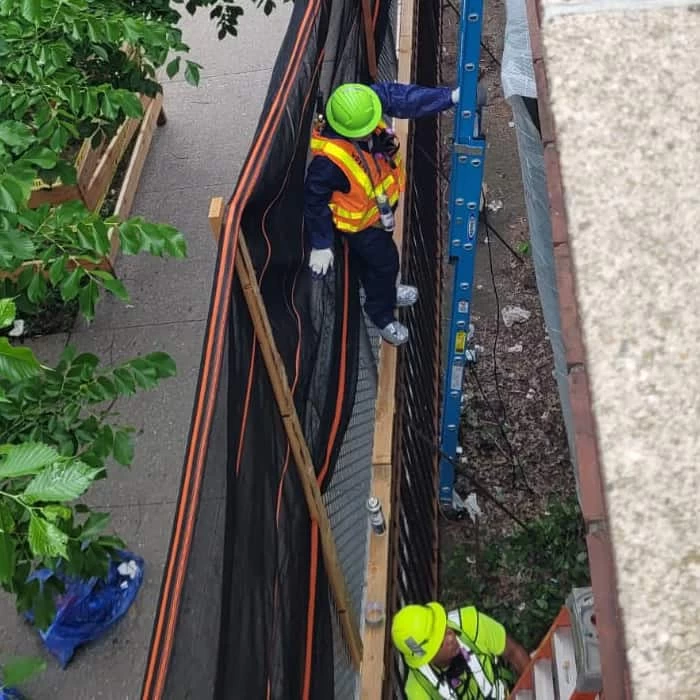
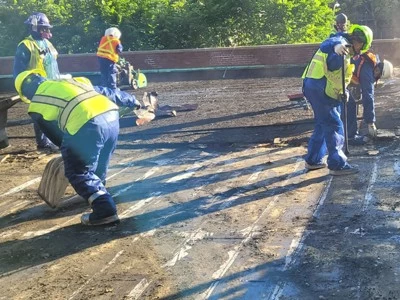
When water is spreading through your co-op or apartment in Rego Park, every hour counts. We respond 24/7 to water damage restoration calls across the neighborhood with the crew and equipment to stop the damage before it doubles.
I needed a professional consultation explanation of procedure for safe removal of Asbestos in my apartment complex. Without having an account yet, I was very impressed with the caring, knowledgeable and generous advice offered by Jessica, and will look forward to doing business in the future. Thank you so much! I feel much more informed about a sometimes scary endeavor. Peace. Nancy Silva Mineola, NY.
Mia Munoz
Used this company to clean up some water flood in my house. They were fast and easy to work with.very professional, Would recommend to anyone!
Nini Valle
Great company, had a flood and they responded quickly and efficiently. Billed my insurance company directly. I highly recommend this company!
joe colapietro, jr
I had pipe freeze in my basement right before a snow storm and they made to within an hour to help start the clean up process. They we by our side throughout the entire process and even helped with the insurance company. They did such a great job with the cleanup, repair, remidiation, I contracted them to perform the repairs and finishes in the basement. They came with enough manpower and material to get the job done. Leo and Jessica were nothing but a pleasure to deal with!!
Cristian Arredondo c
I had some water damage in my home and Green Island was able to take care of my issue quickly and effectively. I am very pleased with the work they did. They responded quickly and were very professional.
Michael M
Outstanding service! From the office to the field crew everyone was friendly, helpful and responsive. I highly recommend Green Island Group.
When the job is done right, you’re not left wondering if there’s moisture hiding behind your walls or mold forming under your floor. You get a space that’s fully dried, documented, and cleared not just surface-level clean.
That matters more in Rego Park than most people realize. The majority of buildings here were constructed between 1930 and 1960, which means galvanized pipes that have been corroding for decades, plaster walls that hold moisture longer than modern drywall, and aging drainage systems that weren’t designed for today’s rainfall intensity. When water gets in, it travels fast and hides deep.
Add to that the documented sewer overflow problem on streets like 63rd Avenue where raw sewage has backed up through basement floor drains during moderate rain events and you’re often dealing with contaminated water, not just clean water from a burst pipe. The outcome you need isn’t just “dry.” It’s sanitized, verified, and protected against what comes next.
We are a Queens-based restoration contractor that has been working in Rego Park and central Queens long enough to know exactly what’s behind the walls of a pre-war co-op on 63rd Drive and what it takes to restore it correctly. We’re not a national franchise dispatching from a distant hub. We’re local, and that changes how fast we get to you.
We’ve handled water damage in the dense apartment and co-op buildings that define Rego Park’s housing stock the kind of jobs where one burst pipe affects three floors and four shareholders, and where the co-op board needs documentation before any work can proceed. That’s not a complication for us. It’s just Tuesday.
Our technicians are IICRC-certified, our company holds all required New York State contractor licenses and mold remediation credentials under NY State Labor Law Article 32, and we carry full insurance. When you hire us, you’re not taking a chance on a name you found in a search result at 2 a.m. You’re calling a company that already knows your neighborhood.
What Actually Happens From First Call to Final Clearance
When you call, you reach a real person not a voicemail. We dispatch immediately, and our crew arrives with truck-mounted extraction equipment, commercial air movers, and industrial dehumidifiers. Not residential fans. The first priority is stopping the spread, because every hour water sits in an older Rego Park building, more material absorbs it.
Once extraction is complete, we use thermal imaging to find moisture that isn’t visible to the eye. This step matters in Rego Park’s pre-war building stock, where water migrates through plaster, travels along pipe chases, and pools in areas you’d never think to check. We don’t guess. We scan, document, and then dry with precision.
From there, we monitor moisture levels daily until the structure meets drying standards. If mold remediation is needed, we handle it licensed under New York State’s Article 32 requirements for any project over 10 square feet. If the NYC Department of Buildings requires a permit for structural repairs, we manage that process too. And throughout all of it, we document everything in a format your insurance adjuster can actually use.
Built for Co-Ops, Apartments, and Older Rego Park Buildings
Water damage restoration in Rego Park isn’t one-size-fits-all. A sewage backup on 63rd Avenue is a Category 3 contamination event it requires full sanitization, not just drying. A burst pipe in a pre-war co-op building may have sent water through two floors before anyone noticed, which means the scope of damage is almost always larger than it looks from the surface.
Our service covers the full scope: emergency water extraction, structural drying, moisture mapping with thermal imaging, mold assessment and remediation, odor elimination, and damage documentation for insurance claims. For co-op shareholders in Rego Park, we coordinate directly with building management and provide the detailed written documentation your board will require before approving any repairs. For multi-unit buildings in the LeFrak City area or along the Queens Boulevard corridor, we have experience managing jobs that affect multiple units simultaneously.
We also assist with the insurance claim process from start to finish documenting damage, communicating with adjusters, and making sure your claim reflects the full scope of what happened. For residents navigating the intersection of a personal HO-6 policy and a building master policy, that guidance is often the difference between a claim that covers the job and one that falls short.
How fast can you respond to a water damage emergency in Rego Park?
We respond 24 hours a day, 7 days a week, including weekends and holidays. When you call, you reach a live dispatcher not an answering service and we aim to have a crew on-site as quickly as possible. For Rego Park residents, that speed is especially critical.
Rego Park’s pre-war and post-war buildings are built close together, with shared walls and interconnected plumbing systems. When a pipe fails or a sewer backs up, water doesn’t stay contained to one unit for long. The faster extraction begins, the less material absorbs the damage, and the lower your total restoration cost. Waiting until morning to call isn’t just inconvenient in an older Rego Park building, it’s the difference between drying out a room and replacing a floor.
What should I do immediately after discovering water damage in my apartment?
The first thing is to stop the source if you can shut off the water supply valve if it’s a plumbing failure, or move away from the area if it’s sewage backup. Do not walk through sewage-contaminated water without protection, and don’t use electrical outlets or switches in any area where water is present.
After that, call a restoration company immediately and then notify your building super or co-op management. In Rego Park’s co-op buildings, notifying management early matters both for liability documentation and because water in your unit may already be affecting a neighboring shareholder below you. Take photos of everything visible before any cleanup begins. That documentation will be important for your insurance claim, and the more you capture in those first minutes, the stronger your claim will be.
Is sewage backup in Rego Park covered by standard homeowner's insurance?
Standard homeowner’s insurance policies including the HO-6 policies most co-op shareholders carry typically do not cover sewer backup damage unless you’ve added a specific sewer backup rider or endorsement. This is a common and costly gap, and it’s one that Rego Park residents are particularly exposed to given the neighborhood’s documented history of sewer overflow events, especially along 63rd Avenue near Woodhaven Boulevard.
If you don’t have a sewer backup endorsement and you’re dealing with sewage damage, you may still have options. The NYC Department of Environmental Protection has assisted residents with property damage claim forms following large-scale sewer events in Queens. It’s worth contacting your insurer immediately, documenting everything thoroughly, and asking specifically about what your policy covers. We help our clients build that documentation from the moment we arrive, because a well-documented claim even a partial one is better than a claim filed with incomplete records.
How do I know if there's mold after water damage in my Rego Park co-op?
Mold doesn’t always announce itself visibly. In Rego Park’s older buildings, it often starts inside walls, under flooring, or in areas with poor ventilation and by the time you can see or smell it, it’s been growing for weeks. The most common signs are a musty odor that doesn’t go away, discoloration on walls or ceilings, and recurring respiratory irritation in people who spend time in the space.
After any water intrusion event even one that seemed minor mold can begin developing within 24 to 48 hours in the right conditions. New York City’s humid summers accelerate that timeline significantly. If your building has older plaster walls and limited airflow, the risk is higher. We use thermal imaging and moisture meters to detect elevated moisture levels in areas that look dry on the surface, which is the only reliable way to know whether mold conditions exist before they become visible. Under New York State Labor Law Article 32, any mold remediation project over 10 square feet must be performed by a licensed contractor and we hold that license.
How does water damage restoration work in a co-op building with multiple units affected?
Multi-unit water damage in a co-op is one of the more complicated restoration scenarios, and it’s one we deal with regularly in Rego Park. When water originates in one unit and travels to others through the floor, along pipe chases, or through shared walls you’re dealing with multiple affected shareholders, multiple insurance policies, and a co-op board that needs to approve the scope of work before repairs can begin.
We handle this by documenting each affected unit separately, with detailed photos, moisture readings, and written scope-of-loss reports that each shareholder can submit to their own insurer. We communicate directly with building management and provide the co-op board with whatever documentation they need to authorize the work. If the NYC Department of Buildings requires a permit for any structural repairs which is common in older Rego Park buildings when walls need to be opened we manage that filing. The goal is to make sure every affected party has what they need, so the job doesn’t stall while people wait on paperwork.
Why does water damage in Rego Park buildings tend to be worse than it looks at first?
It comes down to how these buildings were constructed. Most of Rego Park’s residential stock was built between 1930 and 1960, using materials and layouts that behave very differently from modern construction when they get wet. Plaster walls absorb and hold moisture for much longer than drywall. Original hardwood floors swell and warp from below before the surface shows any visible damage. Pipe chases and wall cavities in pre-war buildings create pathways for water to travel laterally and vertically in ways that aren’t obvious from a visual inspection.
On top of that, many of the sewer and drainage issues specific to Rego Park including the overflow events that have been reported on streets near Woodhaven Boulevard involve Category 3 contaminated water, which requires a different remediation approach than a clean water pipe burst. Contaminated water saturates porous materials quickly and creates conditions for bacterial growth that won’t resolve with drying alone. That’s why we use thermal imaging on every job rather than relying on what we can see, and why we verify moisture levels before closing any wall or floor not just when the surface feels dry to the touch.